The wildebeest do not check a calendar. That is the single most important thing to understand about planning a Masai Mara migration safari in 2026, because the operators who tell you otherwise are selling you a fixed date when what you actually need is a positioning strategy.
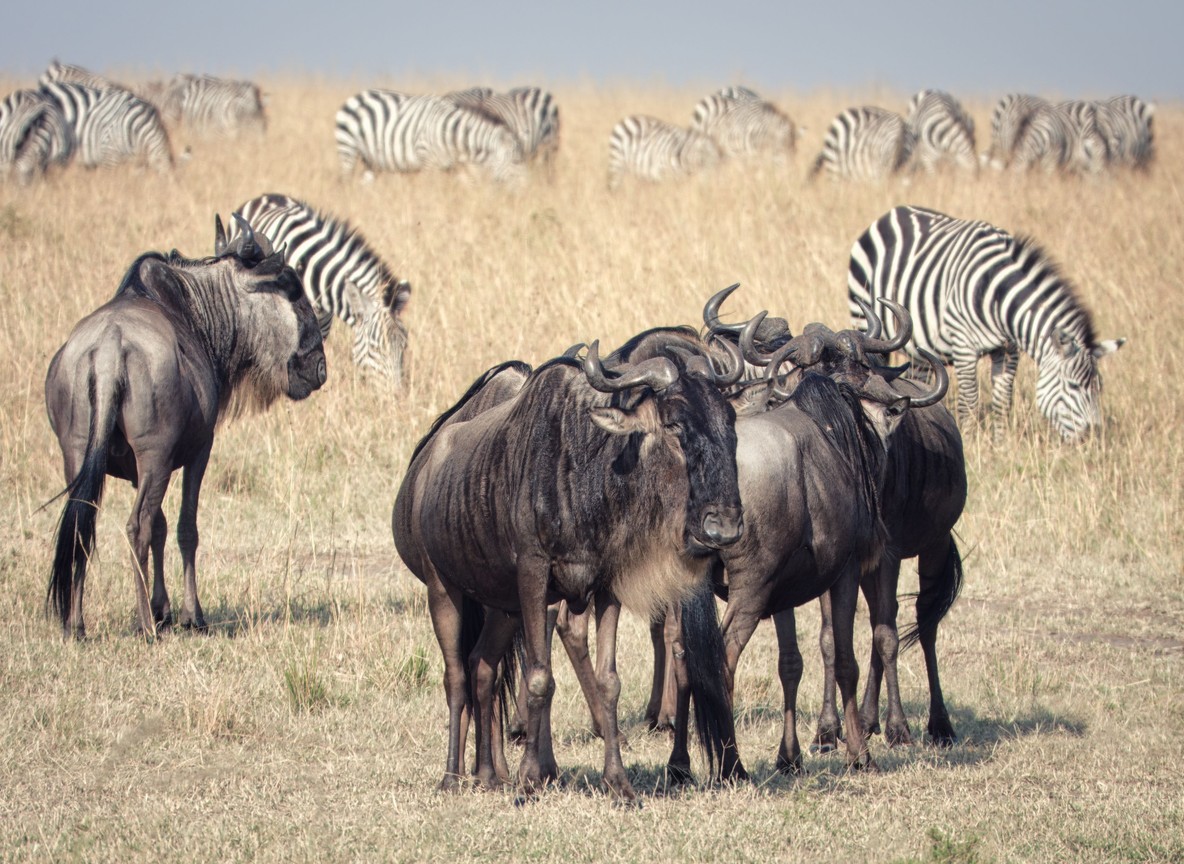
Every year, roughly 1.5 million wildebeest, 200,000 zebra, and 500,000 Thomson’s gazelle rotate through a 1,800-kilometre circuit between Tanzania’s Serengeti and Kenya’s Masai Mara. The crossing window in Kenya runs from late June through October. But crossing events — the moment a column of wildebeest commits to the Mara River — can happen on any given day within that window and can be over in four minutes or last four hours. The travelers who understand crossing mechanics consistently have better experiences than those who book by month name alone.
What Drives Wildebeest River Crossing Timing
The Masai Mara migration season is governed by rainfall, not the human calendar. In the Serengeti’s southern short-grass plains, calving begins in January and February. As rains shift northward, the herds follow fresh grass. By May and June, the northern Serengeti fills with wildebeest. By late June, the front-runners reach the Mara River.
Three river systems matter for Kenya-based migration watching:
The Mara River (main crossings): The most-filmed crossing point in the world. The river loops through the Masai Mara National Reserve and cuts across multiple points between the Mara Serena Bridge area in the south and the Musiara Marsh region in the north. Crossings here are high-drama: steep banks, dense crocodile aggregations, large herd buildups on the Tanzanian side before the plunge.
The Talek River (eastern crossings): Shallower and calmer than the Mara main stem. Crossings at the Talek tend to be faster and less chaotic, and herd numbers are typically lower than at the main Mara crossing points. Best positioned for travelers staying in conservancies east of the reserve — Naboisho, Ol Kinyei, and similar.
Sand River (southern crossings): Straddling the Kenya-Tanzania border near the Serengeti. Sand River crossings happen earlier in the season as herds first enter Kenya, and the 2026 crossing season showed early Sand River activity consistent with the rainfall tracking through April and May.
Which river you are positioned near determines what you will see as much as when you arrive.
Masai Mara Migration 2026: Month-by-Month Probability
| Month | Crossing Probability | Herd Location | What to Expect |
|---|---|---|---|
| June (late) | Low-medium | Northern Serengeti / Sand River border | First herds crossing Sand River into Kenya; Mara crossings rare |
| July | Medium-high | Throughout reserve; Mara River building | Peak buildup on Mara banks; multiple daily crossing attempts likely |
| August | High | Full Mara system active | Most reliable river crossing month; highest wildlife density |
| September | High-medium | Mara River and Talek active | Crossings continue; some herds beginning southward return |
| October | Low-medium | Return migration underway | Sporadic crossings; final herds crossing back to Tanzania |
2026 specific note: Early rainfall reports from the Mara ecosystem indicate the long rains ended later than the 2024 average. This pushed peak herd density at the Mara River slightly later than the typical pattern, with August the strongest crossing month and early September crossings remaining active longer than usual. The Masai Mara Research Centre publishes wildlife movement updates throughout the season; the Kenya Wildlife Service publishes seasonal advisories covering major park movements.
Where to Watch: River Positioning for 2026
Timing and river section choice interact — the same week at the wrong crossing point can look like a failure; the right section at the same week can look like one of the best mornings of your life.
Mara River, Crossing Point 1 (near Musiara Marsh): The high-drama zone. Steep banks, dense crocodile presence, and the largest herd buildups. Vehicle concentration here is highest on active crossing days. Best photography light runs from the east bank in the morning.
Mara River, Crossing Points 5 and 12 (Lookout Hill area): Less congested than Point 1. Herds that refuse Point 1 frequently move north to these crossings. Access is primarily through conservancy-based camps in the Mara North area.
Talek River crossings: Conservancy camps east of the reserve — Naboisho, Ol Kinyei — position you for Talek crossings. Less dramatic than the main Mara stem, but vehicle limits per sighting apply under conservancy rules. Far fewer vehicles on even active crossing days.
Sand River (early season): Best positioned for the first herds entering Kenya. Only accessible through camps in the far south of the reserve or adjacent to the Tanzania border.
The Crossing Itself: What Actually Happens
A Mara River crossing follows a recognizable pattern once you know what to look for.
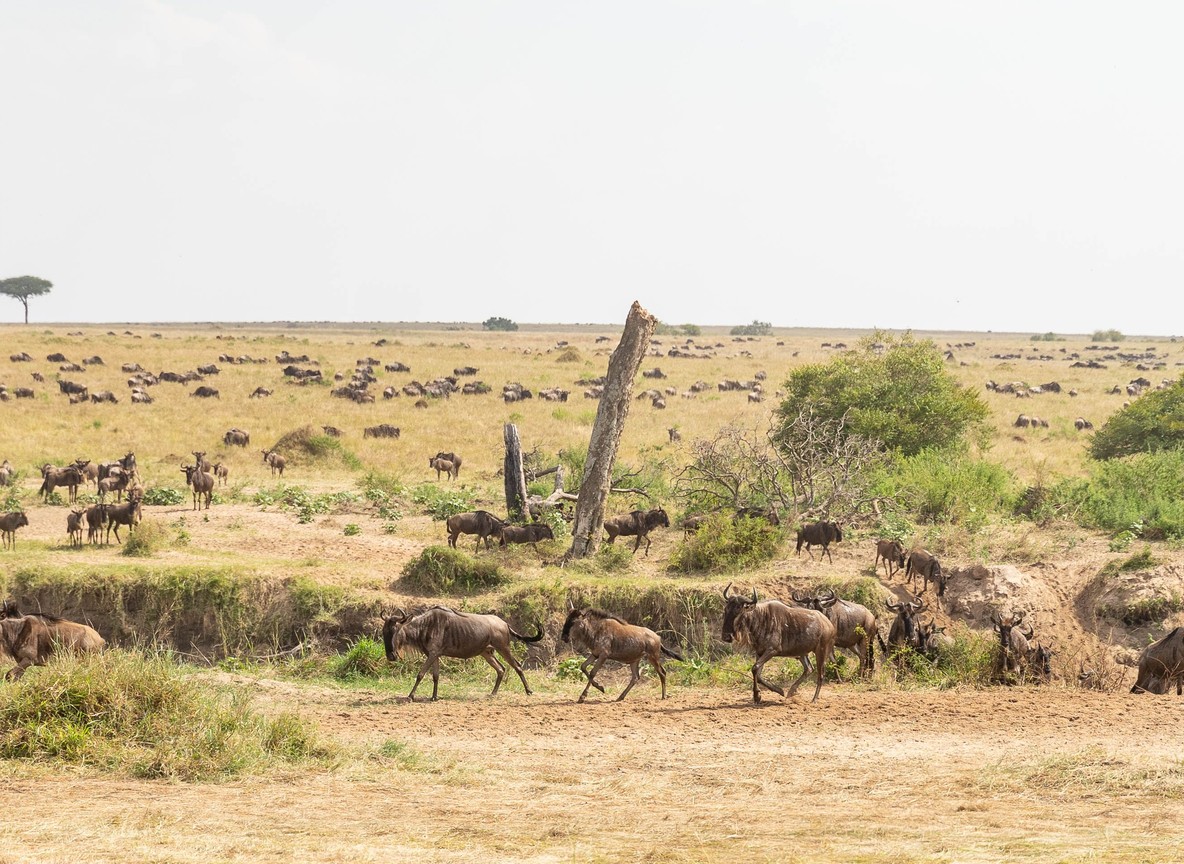
The herd arrives at the bank in waves, sometimes building to several thousand animals on the slope. The wildebeest at the front sniff the water, retreat, mill in circles — and then one animal steps in. That is the trigger animal. If the commitment holds, a column forms within seconds and the full crossing begins.
Crocodiles are not the main danger at that moment. The riverbank itself is the primary hazard. The slope is steep and muddy, calves separate from their mothers in the press, and wildebeest drown from crushing and exhaustion more often than from crocodile predation. The Nile crocodiles — some reaching five metres — wait in the deeper central channel.
A crossing can last four minutes. It can also last four hours if multiple columns form and break. Guides who have watched the buildup for two hours before you arrive will read the body language of the lead animals and have a reasonable read on whether a crossing is imminent. That knowledge is not in a tourist pamphlet. It is in years of watching the same animals on the same river.
Conservancy vs National Reserve for Crossing Views
The choice between the Masai Mara National Reserve and the surrounding private conservancies is particularly important for travelers who want the complete ecological picture, not just the crossing spectacle.
Inside the National Reserve: Crossing Points 1, 5, and 12 on the Mara River are accessible to all vehicles with a reserve gate pass. On high-probability crossing days, vehicle numbers at Point 1 can exceed 100. The crossing still happens; the wildlife is still extraordinary. But the experience includes diesel engines, radio chatter, and competition for position.
Private conservancies (Olare Motorogi, Mara North, Naboisho, Ol Kinyei, Mara Nyika): Exclusive game drive rights mean vehicle limits per sighting. Conservancies border the reserve and have access to the northern Mara River bank and Talek crossings. Night drives and bush walks are available in addition to the standard game drive schedule, which means you can observe pre-crossing herd behavior at dawn and again at dusk — something not possible inside the reserve after 7pm.
The conservancy option is the stronger product for travelers who want meaningful observation time at each sighting rather than a competitive viewing experience. For a full breakdown, see the Masai Mara reserve vs conservancy guide.
Best Time to Visit Masai Mara in 2026: Honest Advice
If river crossings are the primary goal: Book August. It is the most reliable month. Late July and early September extend the window without significantly reducing probability.
If crossings matter but so does crowd level: The first or second week of July (before the main school holiday pressure from major source markets) and mid-September after school holidays end both offer lower vehicle density at sightings. Herd density is slightly below August peak but the difference at the river is often smaller than the vehicle-count difference suggests.
If you want the migration story in full, not just the highlight: July gives you the complete buildup — herds arriving, scouts at the river, crossing attempts that fail, plains covered with wildebeest across 10 kilometres. It is the ecological context, not just the moment.
If you cannot travel July-October: January and February in the Serengeti for calving season. The Masai Mara has strong resident wildlife year-round, and a February or March visit will show big cat concentrations, elephant family herds, and a landscape that most migration visitors never see.
For 2026 specifically, the later rainfall pattern makes late August and early September worth prioritizing if dates are flexible.
Explorer Notes: Building Your Migration Itinerary
The practical advice that guides with years on the Mara consistently give: do not build an itinerary around a single crossing date. Build it around a four-to-seven-day river window. The longer you are camped near an active river section, the higher your probability of witnessing multiple crossing events. Three nights at the Mara River is worth more than seven nights split between the Mara and another park if river crossings are the primary goal.
Camp selection matters as much as timing. Which side of the river, which conservancy, which crossing points your guide can access — these are variables that guide quality and camp location determine, not just the month on the calendar.
Next Steps
- Compare Masai Mara in July vs August for a detailed month-specific breakdown
- Read about migration arrival timing in 2026 for the specific herd tracking data
- trunktrailssafaris.com runs migration safaris with real-time herd tracking and conservancy access across the Mara system
Prefer a different route, budget, or travel style? This plan can be adapted to fit.
Customise Your TripFurther reading
- Maasai Mara Wildlife Conservancies Association
- Magical Kenya (Kenya Tourism Board)
- Kenya Wildlife Service
More safari planning resources
- Wildebeest migration route map from Valley Safaris
- Great Migration safari collection on FindMySafari
- Best time to visit Kenya month-by-month map from Valley Safaris
- Interactive Maasai Mara map from Valley Safaris
Related guides: Kichwa Tembo: A Mara Camp Built Around Migration River Crossings, Masai Mara July vs August: The Two Peak Migration Months Compared, Wildebeest Migration Safari 2026: When to Go, Where to Position, and What to Expect.