

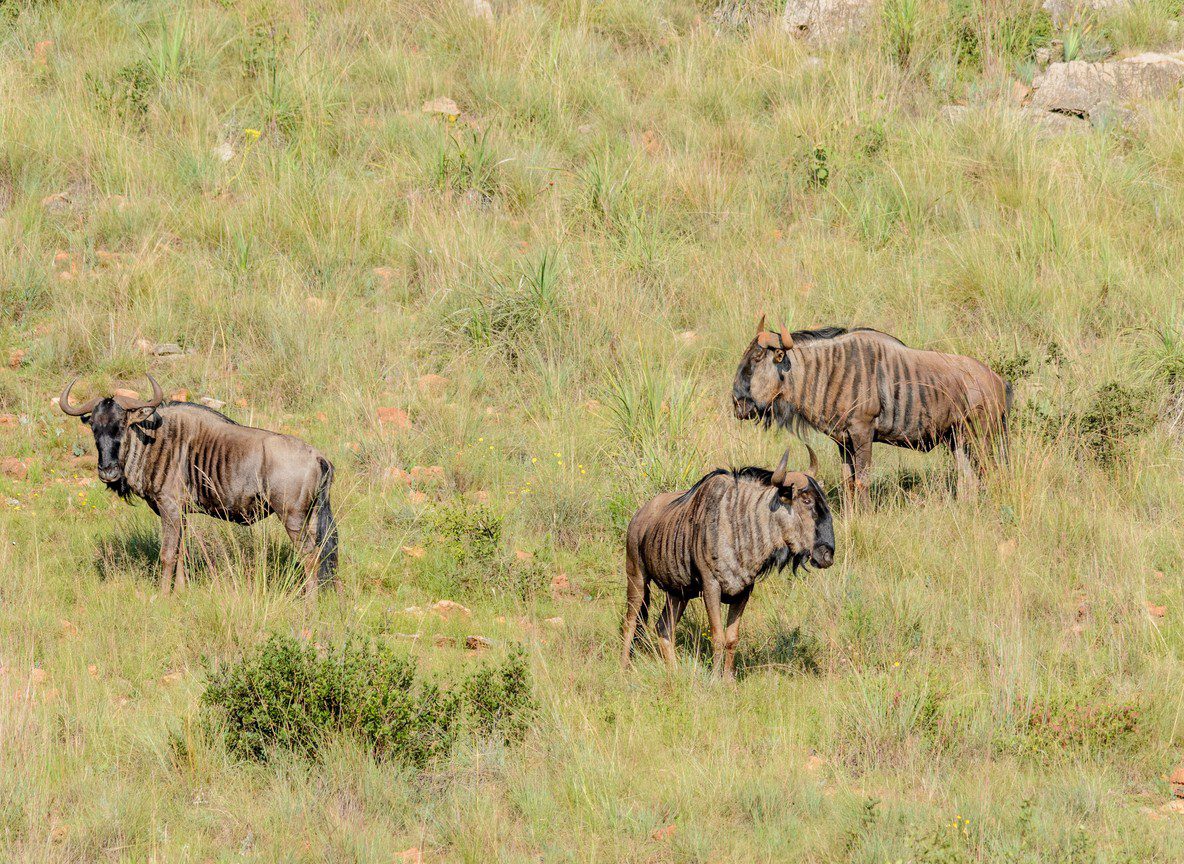
The wildebeest migration is the most searched wildlife event in East Africa, and probably the most misunderstood. People ask “when does the migration arrive in the Mara?” as though there is a date you can print on a calendar. The reality is more layered than that, and understanding it is the difference between arriving to empty plains and positioning yourself for one of the most dramatic wildlife experiences on the continent.
Based on herd movement data tracked through 2026, mega-herds reached the northern Mara ecosystem by mid-July, with Mara River crossing activity beginning on the Triangle side in the third week of July. Here is what that means in practice and how to interpret the timing for your own booking decisions.
What the Migration Actually Is
The migration is not a single event. It is a continuous, year-round circuit of approximately 1.5 million wildebeest, supplemented by zebra and gazelle, moving clockwise through the Serengeti-Mara ecosystem in response to rainfall and the fresh grass it produces. The circuit has no true beginning or end.
What most visitors call “the migration” refers specifically to the July-to-October phase, when the herds move north from Tanzania into Kenya and cross the Mara River. This is the crossing event: wildebeest descending steep banks into crocodile-dense water, climbing out on the far side, driven by the pull of fresh grass on the Mara’s northern plains.
The full annual circuit:
| Period | Location | Wildlife Event |
|---|---|---|
| January to March | Southern Serengeti, Ndutu area | Calving season: approximately 500,000 calves born |
| April to June | Central and western Serengeti | Long-grass movement; Grumeti River crossings |
| July to October | Northern Serengeti and Masai Mara | Mara River crossings; peak predator activity |
| November to December | Eastern Serengeti | Return migration south |
The Kenya phase is peak season because it delivers the river crossing spectacle and because the Mara’s open savanna makes wildlife visible at range. But the herd does not arrive on a fixed date. Rainfall in the Serengeti drives when the leading edge moves north, and rainfall varies from year to year by weeks in either direction.
The 2026 Arrival: What Happened
Rainfall in the Serengeti ecosystem through the first half of 2026 tracked broadly in line with the 10-year average. This supported conventional timing rather than indicating a significantly early or late movement of the herds.
Ground reports from the Mara Triangle and Mara North Conservancy confirmed large herd presence in the northern Mara plains by mid-July 2026. The leading edge of the migration crossed the Kenya-Tanzania border during the second week of July. By the third week of July, multiple large herds were established in the Mara Triangle and the northern reserve areas.
Mara River crossing activity began during the third week of July 2026 and intensified through early August, consistent with the typical pattern in years with average or near-average rainfall.
For visitors booked from late July onward: you were in the prime window. For visitors booked in early July: the situation called for a camp or itinerary with flexible access to both the northern Serengeti and the Mara, so a guide could follow the leading edge rather than waiting in a fixed position.
What “Third Week of July” Actually Means for Bookings
If you are booked for late July into August, you are in the prime migration window. The period from late July through September consistently delivers the highest frequency of Mara River crossings and the most concentrated predator activity around the migration herds.
If you are booked for early July, the risk is arriving before the bulk of the herds have moved north. In some years, early July delivers excellent game viewing as the first advance groups cross and predator activity picks up in anticipation of the main migration. In other years, early July means sitting in the Mara watching relatively quiet open plains while the main herds are still 80 to 100 kilometres south in the northern Serengeti.
An experienced operator who tracks current herd position through ground contacts in the ecosystem can advise on whether to adjust arrival dates or whether early July conditions look promising for a specific year.
Why Timing Varies Year to Year
Three factors drive migration timing variability:
Rainfall in the Serengeti. The herds follow grass. If the southern Serengeti received unusually good rainfall through March and April, the grass stays green longer and the herds linger in the south. If the long rains end early, the herds move north earlier. Tracking Serengeti rainfall in the months leading up to your visit is the most reliable predictor of early or late arrival in any given year.
Herd fragmentation. The wildebeest do not move as a single unit. The leading edge may cross the Kenya border weeks before the main mass of the herd. Early sightings in the Mara do not guarantee full migration conditions, and “confirmed herds in the Mara” reported in early July sometimes refers to a few thousand animals, not the million-plus of peak movement.
Crossing site unpredictability. Crossings are not daily events. Herds may gather at a river bank and decline to cross for days before a trigger animal pushes the group forward and sets off a mass movement. Even in peak August, a specific crossing site can be quiet for several consecutive days and then produce three crossings in a single afternoon. This unpredictability is intrinsic to the event, not a sign that you have picked the wrong week.
Where in the Mara to Position Yourself
Not all parts of the Masai Mara ecosystem offer the same migration experience:
| Your Priority | The Best Position |
|---|---|
| Mara River crossings with dramatic steep banks | Mara Triangle, near Oloololo Gate |
| Dense herd concentrations on open plains | Main reserve Musiara area or Mara North Conservancy |
| Lowest vehicle numbers at crossing events | Mara Triangle or private conservancies |
| Most flexibility across accommodation price points | Main reserve |
| Night drives and walking safaris alongside migration | Private conservancies (Mara North, Naboisho, Olare Motorogi) |
The most photogenic and dramatically staged river crossings in the Mara are on the Triangle side of the Mara River, near the steep-bank crossing points below the Oloololo escarpment. This is the terrain featured in most BBC and National Geographic migration coverage.
The open-plains experience, watching large columns of wildebeest moving across the savanna in every direction, is best from the main reserve’s northern zones and the conservancies that border the reserve to the north and east.
A well-structured Mara migration safari combines both perspectives: a camp with access to the Triangle crossing sites and enough guide mobility to follow the herds onto the open plains when the situation calls for it.
Predator Activity and the Migration
One aspect of migration season that surprises first-time visitors is how dramatically predator activity increases as the herds arrive. Lions, cheetahs, leopards, and hyenas concentrate near the river crossing sites and along the routes the herds travel across the open plains.
Lions in particular shift their behaviour during migration season. Prides that operate on a broader territory compress their activity around the crossing sites, where injured and exhausted wildebeest provide reliable hunting opportunities. Cheetah activity on the open plains intensifies as fresh prey arrives after months of relatively sparse conditions.
For visitors whose primary interest is big-cat viewing rather than the crossing event itself, the migration period from late July through September is the best time in the Mara ecosystem for predator sightings. The abundance of prey concentrates cats into predictable areas and drives hunting frequency well above the typical rate.
The Early-Booking Paradox
There is a timing tension in planning a migration safari. The camps with the best positions at the Mara River crossing sites fill first, often a year or more in advance for peak August. By the time you confirm that herds have arrived and crossings are happening, the best beds are gone.
The practical resolution is to book based on the conventional timing model (late July through September), then track herd position through reliable ground sources as your dates approach. Reputable operators in the ecosystem provide weekly wildlife updates during migration season, and several independent sources including camp newsletters and Kenya tourism monitoring networks publish current herd position data.
If you are booking within six weeks of your intended travel dates, be realistic about camp availability. The best-positioned camps in the Mara Triangle and in the private conservancies at this lead time are typically waitlisted or fully committed through August.
Explorer Notes: Planning Your Migration Safari
Book camps before you settle on exact dates. Identify the camp positions you want, check availability, and then build your travel dates around what is available. Working in reverse, picking dates first and then searching for camps, consistently results in second-tier options in the most in-demand areas.
Include at least four nights. Three nights gives you five game drives at most. The migration is unpredictable day to day. Four to five nights significantly improves your odds of witnessing a major river crossing event.
Do not expect a guaranteed crossing. Any operator or camp that guarantees a river crossing is overpromising. The herds move on their own schedule. What you can control is positioning yourself where crossings happen and staying long enough that probability works in your favour.
Combine with another Kenyan destination. A Mara migration safari pairs naturally with Samburu in the north or Amboseli in the south. Both offer fundamentally different wildlife and landscapes and allow you to make a full Kenya circuit rather than a single-destination trip.
Pack layers. July and August mornings on the Mara can be cold, particularly for early dawn drives. The open vehicles used for game drives in the Mara have no windshield. Temperatures drop well below what visitors from tropical climates expect.
Where to Go from Here
For detail on which side of the Mara River to position yourself during the migration, including the management difference between the Triangle and the main reserve, see our Mara Triangle safari guide. For a complete breakdown of the 2026 park fee structure, including the new $200 peak rate and 12-hour ticket rule, see our Masai Mara park fees guide.
For migration safaris with real-time ground intelligence on herd movement, the team at Trunktrails Safaris tracks herd position through direct contact networks across the Mara-Serengeti ecosystem throughout the migration season.