January is Kenya’s quiet month. The holiday travelers have gone home, the migration spectacle is months away, and most safari itineraries for this time of year point south toward the Serengeti. What that means for the Masai Mara is almost paradoxical: the ecosystem is running at full biological intensity, and almost no one is there to see it.
The reason is calving season.
Across the Serengeti-Mara ecosystem, the main wildebeest calving event happens at Ndutu in the southern Serengeti through late January and February. But the Mara’s own resident wildebeest population produces calves through December and January, and those calves, combined with dry-season water concentration that pulls prey into predictable ground, make January one of the highest-predator-density months in the Mara’s calendar. The ratio of predators to tourists in January looks almost inverted from August.
This guide covers what January actually delivers and who it suits.
January Weather in the Masai Mara
January sits in Kenya’s short dry season — the gap between the short rains (November-December) and the long rains (March-May). On the ground, that means:
- Dry and warm: Daytime temperatures run 24-30°C with clear skies most days
- Cold mornings: Night temperatures drop to 10-14°C; pre-dawn game drives need warm layers
- Low grass: The post-rain vegetation begins drying and shortening in January, opening sightlines significantly
- Dust and golden light: By late January, fine dust builds on the open plains and gives sunrise a warm amber quality that photographers seek out
January is comfortable safari weather. No mud, reliable driving surfaces throughout the park, and clear sky for early-morning drives rather than the rain risk you get in November.
What Makes January Wildlife Different
The January dynamic in the Mara has two engines: dry-season water concentration and the presence of resident wildebeest calves that act as high-value prey for every predator in the system.
Big cats:
Lions hunt largest prey in January. Resident wildebeest, zebra and topi cluster near the Mara River and luggas, and lion prides follow them in. Hunts happen in daylight more often than during the green months when cooler temperatures compress activity into early morning and late afternoon. Many people who have been to the Mara in both August and January say January produces more complete hunting sequences — you watch the whole story, not just the end.
Cheetah cub visibility peaks in January. Cubs born in October-November are now three to four months old — old enough to accompany their mother on hunts but young enough that she keeps them close. January’s short grass means open sightlines for watching the full sequence of a cheetah teaching her cubs to hunt. This is behavioral observation at a depth that the migration season rarely delivers.
Leopard sightings are above the wet-month average. Dry conditions concentrate activity near the Talek River and Sand River tributaries, where leopards work established territories and can be found predictably near known perch trees.
Spotted hyena clans are in territorial competition in January. Morning drives near den sites produce excellent behavioral observation, including cubs emerging from dens at first light.
Elephants and buffalo:
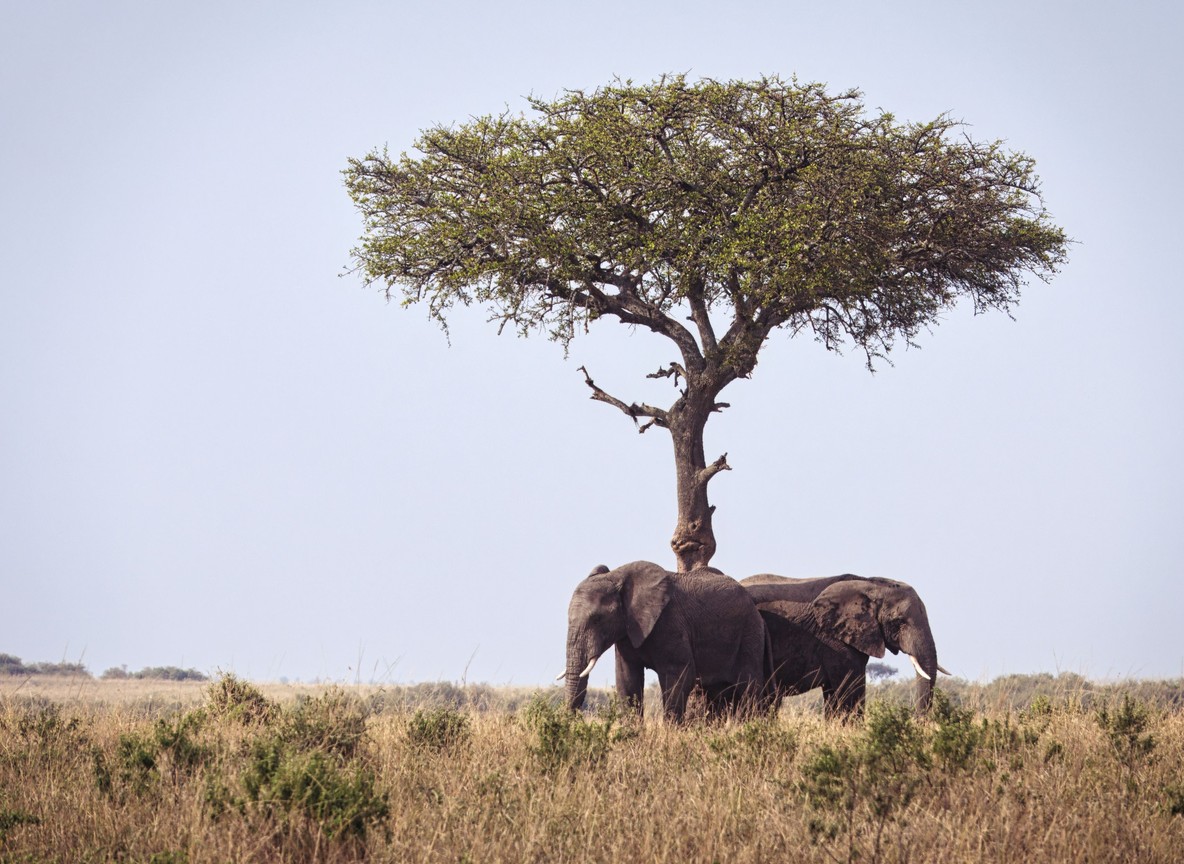
Elephant herds consolidate near permanent water. Large breeding herds of 20-40 animals are common along the Mara River banks in January. Buffalo bulls are abundant on the open plains, and mixed herds that attract lion and hyena attention are a regular feature of morning drives.
Calving Season: The Wildlife Context
The main migratory wildebeest calving event happens at Ndutu in the southern Serengeti, not in the Masai Mara. But the Mara’s resident wildebeest population produces its own calves in December and January, and these early calves attract intense predator interest.
Watching a cheetah mother teach her cubs to hunt a week-old calf is one of the most ethologically rich wildlife encounters available anywhere in Africa. It is not comfortable viewing — the predation dynamic is immediate and vivid. For travelers who want to understand the Mara ecosystem rather than simply witness its peak spectacle, January offers a behavioral depth the crossing season does not.
For those with the time, a combined itinerary capturing Ndutu calving (late January to February in Tanzania) plus a Masai Mara predator-focused stay is achievable in a 10-12 day circuit and tells the complete migration story in sequence.
January Rates: What the Numbers Look Like
| Camp Category | Peak Rate (Jul-Sep) | January Rate | Saving |
|---|---|---|---|
| Top conservancy camps | USD 900-1,500 pppn | USD 500-750 pppn | 40-50% |
| Mid-range tented camps | USD 400-700 pppn | USD 250-400 pppn | 35-45% |
| Budget camps | USD 80-150 pppn | USD 60-110 pppn | 20-30% |
January combines low-season pricing with dry-season conditions and peak predator activity. It is one of the best-value combinations in the Mara calendar, and availability is typically strong — most camps carry open inventory without the six to nine months advance booking required for August.
How January Compares to Other Quiet Months
| Month | Rain | Grass Height | Predator Activity | Rates | Calves |
|---|---|---|---|---|---|
| January | Dry | Short-medium | Very high | Low | Resident wildebeest calves |
| February | Dry | Short | High | Low | Serengeti calving peak |
| November | Wet | Tall | High | Low | No calves |
| April | Heavy rain | Very tall | Moderate | Lowest | No calves |
January wins on the combination of dry conditions, short grass visibility, predator density and calving prey concentration. February is similar but the grass is shorter still. November has strong predator sightings but tall grass limits visibility.
Explorer Notes: Practical Planning for January
Warm layers are not optional. The Mara plateau sits at 1,600-1,800 metres altitude. January nights reach 10-12°C and pre-dawn game drive departures at 06:00 are genuinely cold before the sun rises. A fleece mid-layer plus a light windproof are essential regardless of the afternoon temperature.
Park fees from July 2026: The non-resident peak conservation fee is USD 200 per day per person. For visits in January 2027 and beyond, confirm the current low-season rate, which has historically been lower than the July-October peak. Factor the fee structure into your total budget calculation.
Flight booking: January has easy seat availability on Safarilink and AirKenya. Three to four weeks advance booking is sufficient without difficulty.
Camp selection for predators: Camps adjacent to the Mara River and Talek River consistently produce the most reliable predator sightings in January. Olare Motorogi Conservancy and Mara North Conservancy are the strongest picks for January predator observation and include night drive access that the national reserve does not permit.
Conclusion: The Case for January
The Masai Mara in January is not a secondary option for people who couldn’t get August. It is a different mode of the same ecosystem — quieter, drier, and with a predator-prey dynamic that the crossing season’s vehicle density actively disrupts. If you want to watch a lion hunt from start to finish without another vehicle in your sightline, or follow a cheetah family through a morning’s work, January gives you that experience at a fraction of the August cost.
The trade is straightforward: fewer tourists, better predator observation, lower rates. Whether that matches what you want from a safari is the only question worth asking.
Next Steps
- Read the Masai Mara migration vs non-migration season guide to understand the full year-round picture
- Compare Masai Mara in November if your travel window is flexible
- For camp selection and itinerary planning, trunktrailssafaris.com covers the Mara year-round with field-level knowledge of what each month delivers
If this guide has you ready to travel, a safari specialist can handle the route, camps, and logistics end to end.
Want to Book a Tour With Us?Further reading
More safari planning resources
- Best time to visit Kenya month-by-month map from Valley Safaris
- Great Migration safari collection on FindMySafari
- Wildebeest migration route map from Valley Safaris
- Interactive Maasai Mara map from Valley Safaris
Related guides: Masai Mara Christmas vs January: Which Safari Month Is Right for You?.