

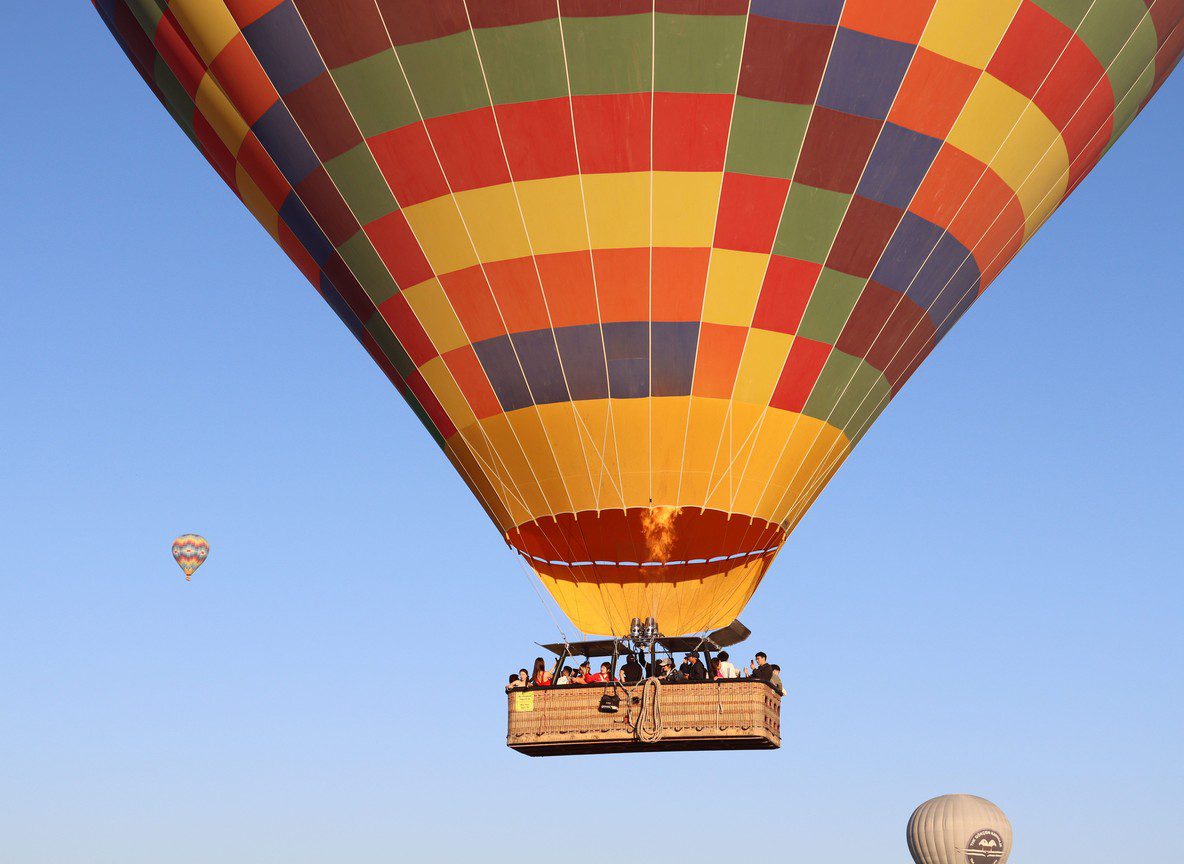
The alarm goes off at 4:30 in the morning. The Mara air is cold, the stars are still out, and a truck takes you to a wide clearing where a ground crew is filling an enormous balloon with flame. By 6:15 you are floating above the greatest wildlife spectacle on earth as the sun breaks the horizon over a landscape that, from this height, looks genuinely infinite.
A Masai Mara hot air balloon flight is one of the most requested safari experiences in Africa, and one of the most frequently misunderstood. People ask whether the cost justifies the experience, what they will actually see from the air, how it compares with a morning game drive, and whether it suits them. This guide answers all of those questions with real figures, operator details, and honest advice for making the decision.
What Does a Masai Mara Hot Air Balloon Cost?
Prices vary by operator, season, and group configuration. The following figures apply for 2026 from licensed operators flying over the Mara ecosystem.
| Package Type | Price Per Person | What Is Included |
|---|---|---|
| Standard shared flight | $450 to $500 | 1-hour flight, champagne bush breakfast, KCAA-licensed pilot, camp transfers |
| Premium shared flight | $550 to $650 | Same as above plus private vehicle game drive afterward |
| Private charter (up to 12) | $4,500 to $5,500 total | Exclusive balloon, flexible routing, extended breakfast |
Peak season pricing applies July through October, when the Great Migration is active and demand is highest. Shoulder season (November through June) sometimes brings rates down by 10 to 15 percent, though availability shrinks with the reduction. Most operators require full prepayment at the time of booking.
Not included in the above: Masai Mara National Reserve park entry fees, travel insurance, and gratuities for the ground crew and pilot.
For a complete breakdown of reserve fees, the Masai Mara park fees guide covers the current structure.
Which Operators Fly Over the Mara?
Only operators holding a valid Kenya Civil Aviation Authority (KCAA) Air Operator Certificate are permitted to run commercial balloon flights. Two names dominate the Mara ecosystem.
Governors’ Balloon Safaris has been operating since 1976, flying multiple balloons across the Mara Triangle and Mara North Conservancy. Their bush breakfast under an acacia, laid out on white linen in the open Mara, is widely regarded as the gold standard in the industry. Flights depart from Governors’ Camp and affiliated properties.
Kili Balloon Safaris focuses on the eastern Mara and the Olare Motorogi Conservancy sector, running smaller flights for a more intimate feel.
Both operators enforce strict weight limits. Each balloon carries between 8 and 16 passengers depending on the basket configuration. Solo travellers join shared flights; families and groups can book a basket section or a full private charter.
The Full Morning: What Actually Happens
The balloon price is often quoted as a single number, but the experience is built from several layers, and knowing the sequence helps you prepare.
The pre-dawn transfer. Your camp sends a vehicle to the launch site before sunrise. The drive itself passes through active wildlife territory at a time of day when predators are often still moving. A lion sighting at 5:30 in the morning is not unusual on this short transfer.
Inflation and briefing. Ground crew spend around 45 minutes inflating the balloon by torchlight. The pilot walks you through safety procedures and boarding before take-off.
The flight itself. One hour in the air, typically from 06:15 to 07:15. The pilot flies low (30 to 50 feet) to track wildlife, or climbs to 1,500 feet for panoramic views of the Mara basin. The transition between the two modes, dropping from height to follow a cheetah at treetop level, is one of the more memorable moments in any wildlife experience.
Landing. Controlled but energetic. You hold a padded bar, the basket tips sideways, and you come down in the long grass while the ground crew closes in. First-timers often describe it as the most exciting 20 seconds of the morning.
Bush breakfast. Tables are set in the open Mara with white linen, fresh fruit, eggs cooked to order, and a champagne toast. This portion lasts around 90 minutes and, for many travellers, earns as much of the morning’s price as the flight itself.
What to Expect on the Morning: Practical Preparation
The most common question is about cold. Ground temperature at 6 a.m. in the Mara runs 12 to 16 degrees Celsius. At altitude with wind chill, closer to 8 to 10. For a comfortable flight:
- A warm base layer (long-sleeved merino or fleece) under a light wind-proof jacket works well; avoid bulky coats since you are standing in an open basket
- Closed-toe shoes, sunglasses, and a hat with a chin strap
- A fully charged camera with your settings already dialled in: the golden hour light lasts roughly 20 minutes and conditions change fast
Weight limits. Most basket configurations set a per-section maximum of 100 to 110 kilograms. Operators ask for accurate weights at booking. This is a structural safety requirement applied consistently across all operators.
What Wildlife Do You See from the Air?
The aerial perspective on the Mara is fundamentally different from a game drive. You are not tracking individual animals through grass. You are reading the landscape itself: the geometry of migration columns, river crossings in progress, predator positioning relative to prey.
What you are most likely to see, depending on season:
During the Great Migration (July to October): Wildebeest columns stretching to the horizon. Rivers backed up with animals waiting to cross. Zebra threading through the flow. From 1,000 feet, the sheer scale of the migration becomes clear in a way that no ground-level view can convey.
Year-round: Elephant herds in formation, hippo pods in the Mara River, giraffe browsing the treeline, and buffalo on open plains. Lions, cheetah, and hyena often look up when the balloon’s shadow passes overhead, which occasionally produces some of the more unusual wildlife sightings of the morning.
What you will not see from the air: The detail. You will not catch a wildebeest’s expression or a cheetah’s posture before a hunt. A game drive delivers intimacy and stillness. The balloon delivers scale and context. Most experienced Mara visitors do both, and describe each as adding to the other.
Best Months for a Masai Mara Balloon Safari
| Month | Conditions | Recommended? |
|---|---|---|
| July to October | Peak Great Migration, best wildlife density, stable weather | Yes, prime season |
| November to December | Short rains, fewer crowds, green landscape, lower prices | Good option |
| January to February | Dry season, resident wildlife, no migration | Yes, excellent for non-migration wildlife |
| March to June | Long rains, reduced visibility, some operators pause flights | Not ideal |
A July flight over a river crossing and a January flight over an elephant herd are both worthwhile, and quite different. The decision should be based on what matters most to you on that trip, not on a blanket recommendation to go in August.
Balloon Flight vs Morning Game Drive: An Honest Comparison
| Criteria | Hot Air Balloon | Morning Game Drive |
|---|---|---|
| Wildlife viewing style | Landscape, scale, aerial perspective | Close-up, intimate, ground tracking |
| Duration | 1 hour flight, 90 min breakfast | 3 to 4 hours |
| Physical demand | Low, standing with some jostling on landing | Very low |
| Best for | Milestone experience, landscape photography, first Mara visit | All levels, repeatable daily value |
| Cost | $450 to $650 per person | Included in most safari packages |
| Weather dependent | Yes, cancelled in heavy rain or high wind | Rarely cancelled |
A useful sequencing note: doing the balloon on day two or three of a Mara stay, rather than day one, tends to produce a richer experience. After a few game drive sessions, the aerial view adds context to places and animals you have already spent time observing from the ground.
Is It Worth It?
For first-time Mara visitors: yes. The $450 to $500 per person cost buys a perspective on the ecosystem that no vehicle-based activity replicates, and the bush breakfast is an experience in its own right.
For repeat visitors who have already done the Mara from the ground multiple times: also yes. The balloon is the one angle the Mara still has to offer.
For travellers with mobility challenges: most guests in their 60s and 70s complete the experience without difficulty. The main physical requirements are standing for one hour and stepping over the basket rim on landing. Talk to the operator directly if you have specific joint or balance conditions.
The one category for which a balloon is genuinely not recommended: travellers with a serious fear of heights. The basket is open-sided, which some people find reassuring, but you are at real altitude. Know your own comfort level before booking.
Frequently Asked Questions
How long does a Masai Mara balloon safari last in total? The flight is one hour. Including the pre-dawn transfer, inflation, landing, and bush breakfast, the full morning runs 3.5 to 4 hours from camp departure to return.
Are balloon safaris safe? All commercial operators must hold a KCAA Air Operator Certificate. Pilots have thousands of logged hours. Operators monitor weather conditions from 3 a.m. and cancel flights in high wind or rain. The safety record for established Mara operators is strong.
What is the best time of year for a balloon in the Mara? July through October for the migration. January and February for resident wildlife with fewer vehicles and crowds. Both seasons have their own character.
Do I need to book far in advance? Yes. Governors’ Balloon Safaris fills July and August slots three to four months ahead, sometimes more. Book your balloon at the same time you confirm your camp, not as an afterthought.
Can older travellers do a balloon safari? Yes, in most cases. The experience has no minimum age and no upper age limit. The physical requirements are modest. Contact the operator with any specific health questions before your trip.
Planning Your Next Step
A Masai Mara hot air balloon flight works best as part of a broader Mara itinerary rather than a standalone activity. Consider pairing it with a conservancy stay for night drive access and private game drives: the Mara North Conservancy guide covers the northern conservancy options closest to the balloon launch zones operated by Governors’ Balloon Safaris.
For travellers focused on the migration itself, the timing and positioning detail in the Mara River crossing guide will help you plan a stay that gives the best odds of seeing a crossing from the ground, which is a different experience from the aerial one but equally worth planning for.