

Some Kenya itineraries are built around one ecosystem and go deeper in a single region. Others try to show the country through contrast. The Grand Kenya safari Samburu to Diani Beach belongs firmly to the second category. It moves from the dry, sculpted north to the Rift Valley lakes, into the predator-heavy plains of the Mara, across the elephant country of Amboseli, through the vast Tsavo landscape, and finally to the Indian Ocean coast.
On paper, that kind of route can look almost too ambitious. In practice, it can become one of the clearest ways to understand Kenya if the sequencing and pacing are handled properly. This guide breaks down why the bush-to-beach arc works, what each stop contributes, and what readers should watch for when judging whether an 11-day multi-park safari is immersive or simply overloaded. Readers who want the smaller route-building logic first can pair it with the Kenya safari planning guide.
Why This Route Feels Bigger Than a Standard Circuit
The southern Kenya circuit alone can already feel substantial. Add Samburu in the north and a Diani finish on the coast, and the itinerary starts to function less like a safari package and more like a cross-section of the country.
What makes the route compelling is not only park count. It is the changing logic of the landscapes:
- Samburu introduces arid northern wildlife and a harder visual texture
- Rift Valley stops reset the rhythm with lake systems and birdlife
- the Mara concentrates predator drama and classic savanna scale
- Amboseli brings mountain-backed elephant country
- Tsavo restores breadth and roughness
- Diani ends the route with complete environmental contrast
For readers who want to feel Kenya changing around them rather than repeating itself, this is the core appeal of a Kenya safari and beach holiday built on geographic range.
Samburu: Why the Northern Start Matters
Beginning in Samburu changes the emotional tone of the whole route. Instead of opening with the best-known southern parks, the itinerary starts in a semi-arid landscape shaped by red earth, river lines, sparse trees, and species that do not define the average first-time safari imagination. The regional context for that northern opening is best explained in the northern Samburu guide.
This is where the so-called Samburu Special Five enter the picture:
- Grevy’s zebra
- reticulated giraffe
- gerenuk
- Beisa oryx
- Somali ostrich
That immediately distinguishes the trip from a more conventional Mara-first route. Samburu also introduces a stronger sense of frontier and remoteness, which makes the later transition into greener and more crowded ecosystems feel even sharper.
Rift Valley Reset: Nakuru and Naivasha
The middle of a long itinerary often determines whether the whole route feels thoughtful or exhausting. In this kind of circuit, the Rift Valley lakes perform an important structural role. They break the journey, vary the visual vocabulary, and prevent the trip from becoming an uninterrupted run of savanna game drives.
Lake Nakuru
Nakuru contributes compact, high-yield wildlife viewing with rhino and a very different landscape profile. It can feel more contained than the larger parks, which is exactly why it works inside a broad itinerary. The park-level logic is clearer when paired with the Lake Nakuru guide.
Lake Naivasha
Naivasha changes the pace again. Boat activity, freshwater scenery, and walking-focused add-ons create a softer day before the route intensifies again. Readers comparing multi-park safari itineraries should pay attention to this kind of reset point. Without it, long routes can begin to blur. The lake-and-land pairing works best when this is read alongside the Lake Naivasha guide.
The Masai Mara Chapter
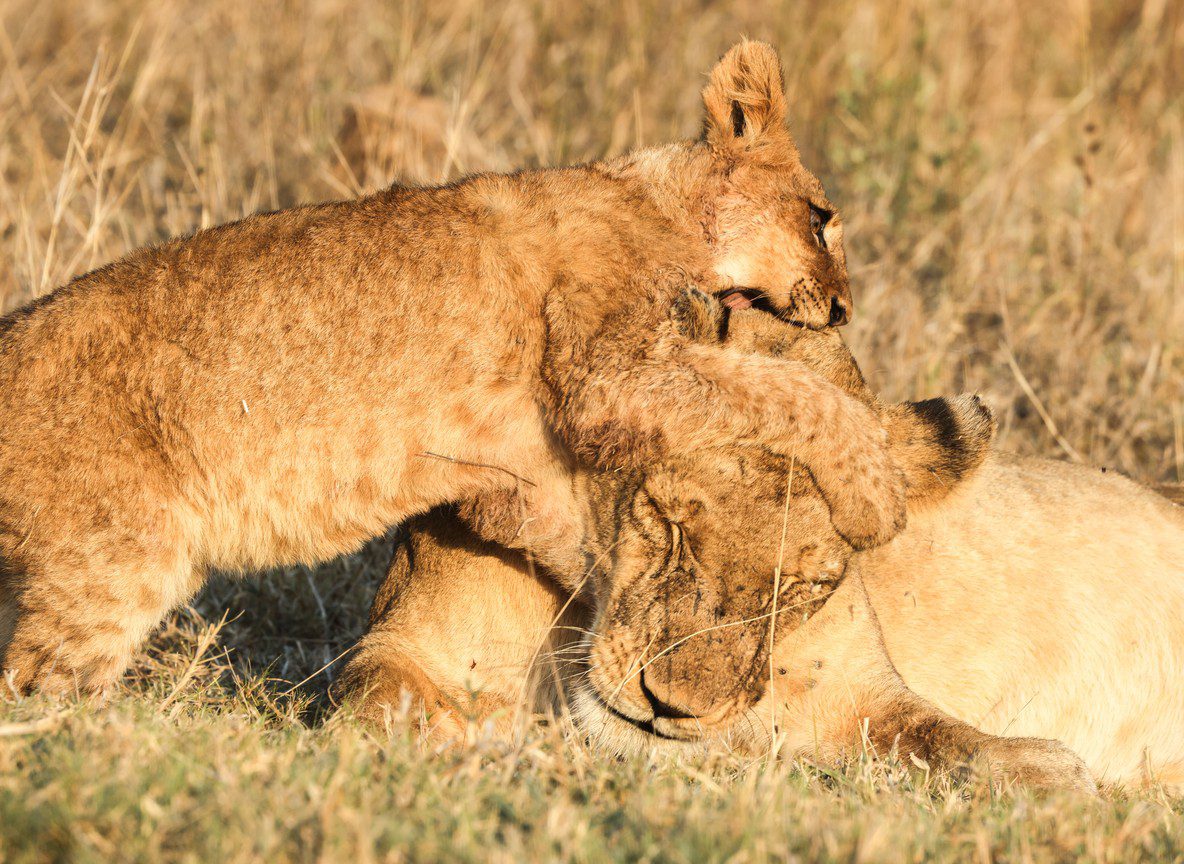
Any 11-day Kenya safari itinerary that includes the Mara is drawing on the country’s strongest shorthand for classic safari imagery: open plains, acacia shapes, big cat density, and migration-season drama when timing aligns.
The key question is not whether the Mara belongs in the itinerary. It does. The better question is how long to stay and how much space the route gives it. Two nights can work, but they need to be protected from excessive transfer fatigue on both sides. The Mara tends to feel most rewarding when readers arrive with enough time to settle into the game-drive rhythm rather than treating it as a prestigious checkpoint.
In a route this long, the Mara also acts as the interpretive center of the trip. It is the point where many readers recalibrate their wildlife expectations upward before the itinerary shifts again toward scenery and ecosystem contrast.
Amboseli: The Scenic Counterweight
Amboseli serves a different function from the Mara. If the Mara is about density and predator reputation, Amboseli is about atmosphere: broad flats, swamp-fed wildlife concentration, and the presence of Kilimanjaro beyond the park when conditions are right.
This makes Amboseli important in a Masai Mara and Amboseli safari sequence. It stops the route from becoming one-note. Readers move from the grassland drama of the Mara to a landscape where elephants, light, and mountain scale shape the experience differently. The coastward continuation from there is easier to judge after reading the Safari from Diani Beach guide.
Amboseli also changes the visual memory of the itinerary. Many trips are remembered through their strongest images, and the image of elephants moving across open ground under Kilimanjaro belongs to that category.
Tsavo West and Tsavo East: The Final Bush Chapter
A route that finishes the wildlife section through Tsavo often ends more strongly than one that jumps too quickly from the southern parks to the coast. The Tsavo ecosystem restores a sense of raw scale before the beach transition.
Tsavo West
Tsavo West tends to feel geologically dramatic. Lava fields, springs, and rougher terrain give it a different energy from Amboseli. It works well as a transition park because it starts loosening the structured rhythm of the classic southern circuit.
Tsavo East
Tsavo East often delivers the final sense of breadth the itinerary needs. The famous red-dusted elephants, the Yatta Plateau, and the open dry country create a strong last wildlife impression before the coast. For many readers, this is where the route regains a feeling of wilderness after the more famous, more interpreted iconography of the Mara.
Why the Diani Finish Works So Well
Not every safari benefits from a beach extension. Some are stronger as pure wildlife circuits. But a long multi-park route like this often does.
The Diani finish works because it does not merely add leisure. It resolves the itinerary. After days of predawn starts, transfer miles, game-drive concentration, and shifting ecosystems, the coast creates a necessary decompression point. The contrast is extreme:
- dust becomes salt air
- game tracks become white-sand shoreline
- scanning for wildlife becomes slowing down completely
That is why a bush to beach Kenya itinerary can feel narratively complete in a way that a safari ending back in transit often does not.
The Real Challenge: Pacing
The strength of a Grand Kenya safari Samburu to Diani Beach route is also its main risk. If too much time is spent on the road, the itinerary can become a sequence of arrivals rather than a sequence of experiences.
Readers evaluating a route like this should ask:
- how many one-night stops are included
- where the longest transfer days fall
- whether flights might improve weak links in the route
- whether the beach finish is long enough to feel like recovery
- whether the trip is built for coverage or coherence
A strong version of this itinerary does not try to equalize every destination. It lets some places provide contrast rather than full immersion, while protecting the parks that need more time.
Best Fit for This Kind of Itinerary
This route tends to suit:
- readers making a first major Kenya trip and wanting broad country coverage
- travelers who value contrast more than single-region depth
- people who enjoy seeing landscapes shift dramatically over one journey
- safari readers willing to accept more movement in exchange for range
It may suit less well:
- travelers who dislike transfer-heavy routes
- readers who prefer four or five nights in one ecosystem
- photographers wanting long, repeated sessions in a single wildlife area
Explorer Notes
- Samburu changes the logic of the whole itinerary by making the opening landscape feel distinctly northern and dry.
- Rift Valley stops matter structurally, not just as attractions.
- The Mara and Amboseli perform different roles and should not be treated as interchangeable headline parks.
- Tsavo is what gives the route a strong last wildlife act before the coast.
- Diani works best when it is not an afterthought but a true recovery finish.
Frequently Asked Questions
Is 11 days enough for Samburu to Diani?
It can be, but only if the route is paced carefully and not overloaded with unnecessary extras.
Is this itinerary better by road or with some flights?
A mixed format can often improve it. Some readers will value the road transitions, while others benefit from shortening the longest links.
Why start in Samburu instead of the Mara?
Starting north creates stronger ecological contrast and makes the overall journey feel broader.
Does the beach ending weaken the safari?
Usually no. On a route this long, the beach often improves the overall trip by giving it a proper landing.
Which part of the route is most demanding?
Usually the transfer structure rather than any single park. That is why pacing is the key design issue.
Conclusion
The Grand Kenya safari Samburu to Diani Beach is not the simplest Kenya route, but it may be one of the most revealing. It works when readers want to see the country through sequence and contrast rather than through one dominant park alone. Samburu supplies northern character, the Rift Valley reshapes the rhythm, the Mara and Amboseli anchor the wildlife story, Tsavo broadens the final bush chapter, and Diani gives the whole route a proper finish.
Handled well, the result is more than an itinerary with many names in it. It becomes a journey that explains why Kenya feels so geographically rich in the first place.