When travellers think of Kenya, they picture the Masai Mara’s open savannah or Amboseli‘s elephants framed against Kilimanjaro. Both are exceptional experiences. But venture north into Samburu County, and you find a wilderness that operates on entirely different terms — drier, more remote, and populated by wildlife species that exist nowhere else in Kenya.
Samburu National Reserve sits along the Ewaso Nyiro River in what was formerly known as the Northern Frontier District. The landscape is semi-arid: rust-coloured plains stretching to volcanic hills, acacia and doum palm woodland along the river, open terrain where the heat shimmer is visible by mid-morning. The wildlife has evolved to match these conditions, and that adaptation produces creatures found nowhere in Kenya’s south.
This guide covers everything relevant to planning a Samburu safari — wildlife, camps, seasons, logistics, and how this reserve compares to other destinations.
Why Samburu Is Different from Kenya’s Southern Parks
Samburu National Reserve sits in Isiolo County, approximately 350 kilometres north of Nairobi. The reserve covers about 165 square kilometres along the north bank of the Ewaso Nyiro River — the waterway that defines the entire ecosystem. The river provides permanent water in a landscape that receives less rainfall than the Masai Mara or Amboseli, and that aridity creates conditions that support species adapted to extreme environments.
The contrast with southern Kenya is significant in both visual and ecological terms:
- The vegetation is sparser, which means longer sightlines and a different visual register
- The soil is red-ochre rather than the yellowed grass of the Mara
- The bird species overlap only partially with southern parks
- The wildlife lineup includes five species not found in Kenya’s south at all
- The visitor numbers are considerably lower even in peak season
Samburu also has a cultural dimension that adds depth to the experience. The Samburu people — close relatives of the Maasai but with their own distinct traditions, beadwork, and semi-nomadic pastoralist culture — have lived in this landscape for centuries. The reserve is surrounded by traditional Samburu settlements, and genuine cultural visits arranged through reputable operators offer context that enriches the wildlife experience considerably.
The Samburu Special Five
The defining wildlife feature of Samburu is the presence of five northern species that do not occur in Kenya’s southern parks. Collectively called the “Samburu Special Five,” seeing all of them in a single game drive is a realistic target with a knowledgeable guide.
Grevy’s Zebra
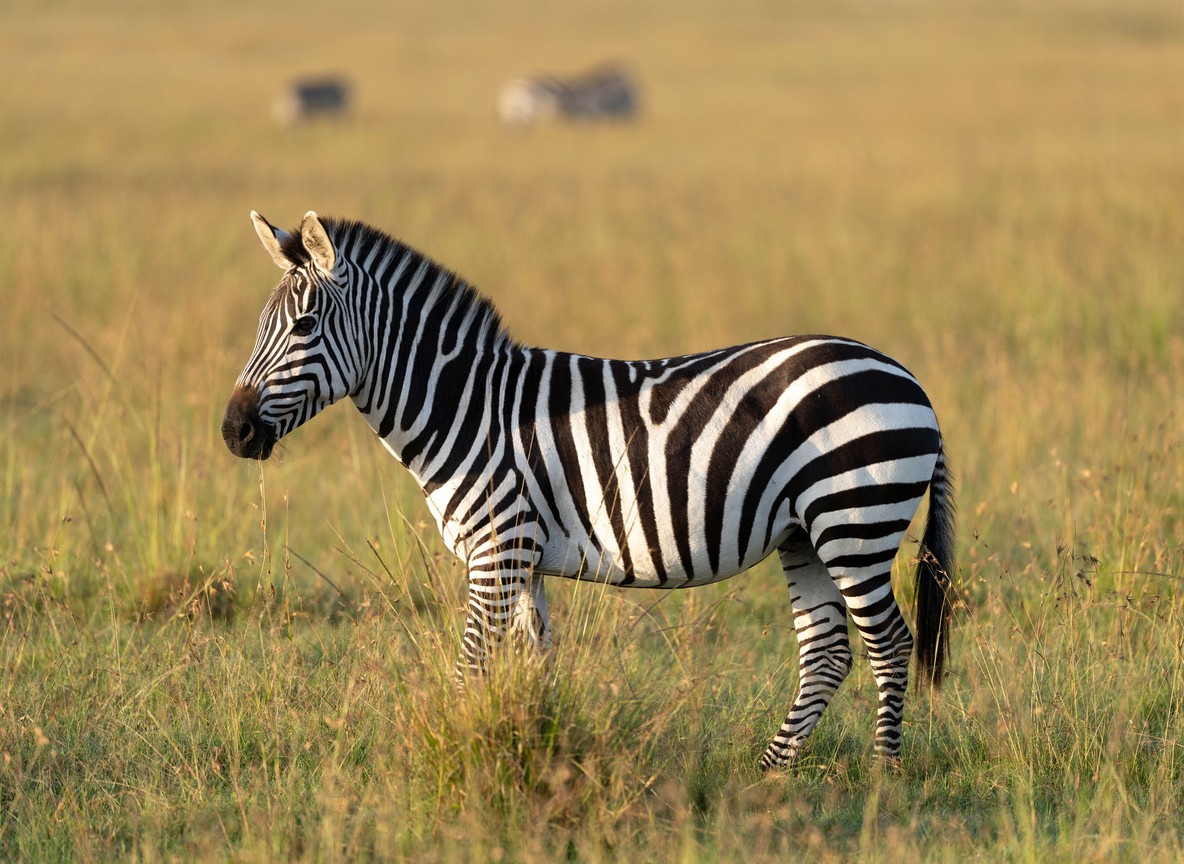
The world’s largest wild equid. Distinguished from the common plains zebra by significantly narrower stripes that do not extend to the white belly, much larger rounded ears, and a more donkey-like head profile. The global wild population is estimated at under 3,000, making this one of the most endangered large mammals on Earth. Samburu holds one of the most accessible populations. IUCN status: Endangered.
Reticulated Giraffe
The most visually striking giraffe subspecies, with a pattern of large, precisely delineated chestnut polygons separated by bright white lines. The pattern is almost geometric in its clarity. Found only in northeastern Kenya, parts of southern Ethiopia, and northern Somalia. Taller and more dramatically marked than the Maasai giraffe of the south.
Gerenuk
A long-necked antelope with extremely elongated neck and legs. The gerenuk’s distinctive behaviour — standing fully upright on its hind legs to browse acacia leaves at heights other antelopes cannot reach — is the signature sight of a Samburu safari. Its Somali name means “giraffe-necked.” Once you see a gerenuk doing this, you understand why.
Beisa Oryx
A large antelope with long, straight horns and striking grey-white-and-black facial markings. Perfectly adapted to arid conditions; can survive extended periods without water by extracting moisture from its food. Common on Samburu’s open plains and very visible during the dry season when herds gather near the river.
Somali Ostrich
Formally recognised as a distinct species from the common ostrich in 2014. The male has blue-grey skin on the neck and thighs (the common ostrich male has pink-red coloration). Occurs only in northeastern Africa, with Samburu being the most accessible location for viewing. The female is harder to distinguish from the common ostrich by appearance alone.
Wildlife Beyond the Special Five
Samburu’s broader wildlife roster is substantial:
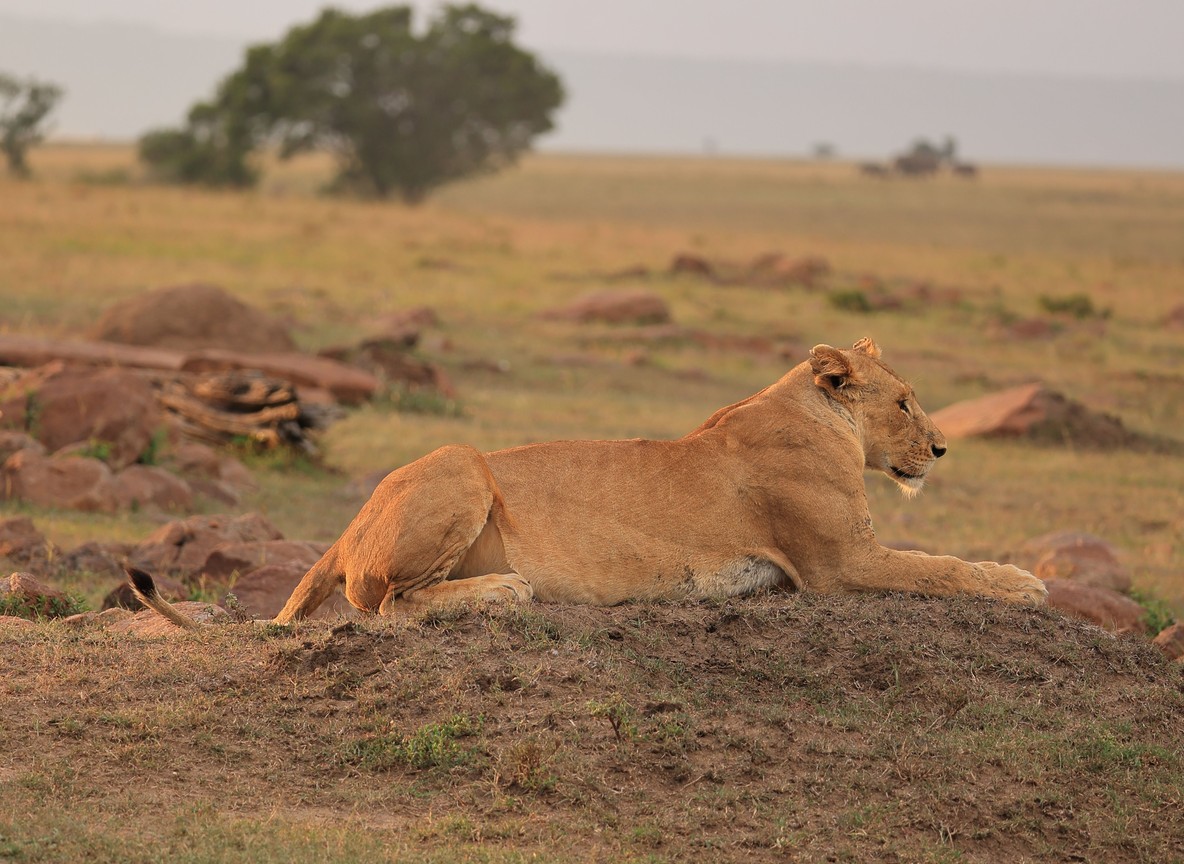
Lions: Resident and reasonably habituated. The Ewaso Lions research organisation has studied Samburu’s prides for over two decades, meaning individual animals are well-known and their territories mapped. Sightings are reliable with a guide who knows current territory use.
Leopards: One of the best leopard-per-area densities in Kenya. The doum palms and acacia trees along the river banks are favourite resting locations during the heat of the day. Most sightings come at dusk or early morning along the river.
Cheetahs: Present but less predictably visible than in the open Mara or Amboseli plains. The scrubland habitat makes spotting more challenging, but resident individuals are known.
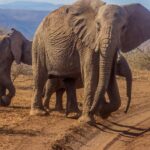
Elephants: The Save the Elephants organisation has been based in Samburu since the 1990s. Their GPS-collar research has produced the most detailed elephant movement data in Africa, tracking individuals across the northern circuit. Samburu’s dry-country bulls tend to carry impressive tusk length relative to body size. Watching elephant herds cross the Ewaso Nyiro is one of the reserve’s consistent highlights.
Birds: Over 450 species recorded. The vulturine guineafowl — arguably the most spectacular-looking gamebird in Africa — is common here. The gallery forest along the river holds martial eagles, Donaldson-Smith’s nightjar, pygmy falcons, golden pipit, and a range of hornbills and rollers. Serious birders rank Samburu among Kenya’s five best birding destinations. Migratory species arrive in numbers during the wet season months.
Best Time to Visit Samburu National Reserve
Samburu’s climate differs significantly from southern Kenya’s parks, with less rainfall overall and hotter peak-season temperatures.
Dry seasons (January to February, June to October) offer the best game viewing conditions. Wildlife concentrates around the Ewaso Nyiro River as the surrounding plains dry out. The river becomes a guaranteed daily gathering point for elephants, predators, and the Special Five. Vegetation is low, sightlines are clear, and morning temperatures are pleasant even when afternoons reach 30+ degrees Celsius.
January and February sit in a dry period that follows the short rains. This window combines excellent wildlife conditions with lower visitor numbers than the July-October peak. It is arguably the best value window in the Samburu calendar.
Wet seasons (March to May, November to December) bring a different experience. The reserve turns green, the scenery becomes dramatic, and migratory bird species arrive. Game viewing is more challenging as animals disperse across more habitats. Tracks can become difficult in heavy rainfall. Rates are lower and the reserve is quieter, which suits travellers who prioritise solitude and photographic opportunities over maximum sighting frequency.
Top Wildlife Experiences in Samburu
Morning and evening game drives. The pattern at good camps is simple: depart before 6:30am when temperatures are cool and predators are most active, return for a late breakfast, then head out again mid-afternoon for an evening drive. The golden hours are where Samburu’s wildlife activity is most concentrated.
River watching. The Ewaso Nyiro is the ecosystem’s heartbeat. Positioned at the river bank in the morning or late afternoon, you watch elephant herds cross with calves in tow, crocodiles patrol the banks, buffaloes wade across at the same crossing points they have used for decades, and birds work the waterline in extraordinary numbers.
Elephant encounters. With Save the Elephants based here, the understanding of individual animals is deeper than almost anywhere else. Some camps can arrange visits with researchers, and guides familiar with the project can identify individuals by ear markings, tusk shape, and body characteristics.
Leopard tracking. The doum palm riverine forest is excellent leopard habitat, and with patience and a guide who knows the territory, sightings are more achievable than in many parks.
Birding circuits. The combination of gallery forest, open plains, and rocky outcrops makes Samburu a genuinely varied birding destination. Early morning woodland birding produces species that are simply absent from southern Kenya.
Best Camps in Samburu
Elephant Watch Camp (Elephant Watch Portfolio): The most conservation-connected property in Samburu. Originally established by Oria Douglas-Hamilton, co-founder of Save the Elephants. The research relationship gives guests access to elephant knowledge that is unique. Small, intimate, and seriously focused on the wildlife experience.
Desert Rose (Elephant Watch Portfolio): The more luxurious property in the same portfolio. A different design and feel from Elephant Watch Camp, but sharing the same conservation ethos and proximity to the research.
Sasaab (andBeyond): A dramatic hilltop position with sweeping views over the Ewaso Nyiro. Infinity pool, individually designed rooms, and the best spa in northern Kenya. Suits travellers who want high-end comfort alongside serious wildlife access.
Larsen’s Tented Camp (Sanctuary): A classic river-bank tented camp with a long track record of quality guiding. More intimate than the lodges; good for travellers who want the traditional tented camp experience.
Joy’s Camp (Shaba National Reserve): Located in Shaba rather than Samburu, but part of the same ecosystem planning. The camp where Joy Adamson lived while working on the books that made the northern frontier famous. Remote, quiet, and dramatically sited among Shaba’s volcanic kopje landscape.
Saruni Samburu (private conservancy adjacent to reserve): In a private conservancy bordering the reserve. Walking safaris and night drives are available here that are not permitted inside the national reserve itself.
Getting to Samburu National Reserve
By air: The most practical option for most visitors. Scheduled flights from Wilson Airport in Nairobi connect to Samburu’s Oryx or Kalama airstrips in approximately one hour. Most quality operators include flights in their Samburu packages. Several airlines operate this route; check current schedules with your operator.
By road: Five to six hours from Nairobi via the Isiolo route. The main road is paved to Isiolo town, then approximately 40 kilometres of good murram road to the reserve entrance. This works well if you are combining Samburu with other northern destinations by road.
From other northern destinations: Samburu is approximately two hours by road from Laikipia, two and a half hours from Meru National Park. The northern circuit — Samburu, Laikipia, and Lake Turkana — works well as a fly-in circuit using the network of small airstrips.
Practical Notes
Minimum stay: Three nights and two days is the realistic minimum to cover the key wildlife areas and seriously pursue the Special Five. Five days allows for Shaba or a conservancy addition.
Malaria: Samburu is in a malaria transmission zone. Consult a travel health physician about appropriate prophylaxis at least four weeks before departure.
Heat: Midday temperatures in the dry season regularly exceed 30 degrees Celsius. Plan game drives for the cool hours; rest during midday. Stay hydrated. Quality camps manage the heat with shade structures, pools, and ceiling fans.
Park fees: Set by Kenya Wildlife Service and subject to change. Current rates are published at kws.go.ke. A single park entry fee covers Samburu, Buffalo Springs, and Shaba.
Samburu vs the Masai Mara: A Practical Comparison
| Factor | Samburu National Reserve | Masai Mara |
|---|---|---|
| Distance from Nairobi | ~350 km (1 hour by air) | ~260 km (5-6 hours road; 45 min air) |
| Landscape character | Semi-arid; riverine; volcanic hills | Open savannah; rolling plains |
| Signature wildlife | Special Five (exclusive to northern Kenya) | Big Five; Great Migration |
| Visitor numbers | Lower; less crowded | Higher; very busy July-October |
| Best for | Specialist wildlife; repeat visitors; unique species | First-timers; migration season; lions and predators |
| Walking safaris | Available in adjacent conservancies | Available in conservancies outside reserve |
| Night drives | Available in adjacent conservancies | Available in conservancies outside reserve |
These are different experiences rather than competing ones. Many travellers who do both comment that Samburu provides something the Mara cannot — a slower, more intimate encounter with wildlife that feels genuinely untouched — and that the Mara delivers a scale and drama that Samburu does not attempt to replicate. Combined, they make a Kenya circuit that covers remarkable range.
For more on the broader northern Kenya planning picture, the northern Kenya safari guide on this site covers Samburu alongside Laikipia, Shaba, Meru, and Lake Turkana.
If this guide has you ready to travel, a safari specialist can handle the route, camps, and logistics end to end.
Want to Book a Tour With Us?