Joy Adamson came to Shaba in 1977 to rehabilitate a leopard named Penny. She found a landscape she described as unlike anything she had experienced in fifty years of African life — volcanic, dramatic, spring-fed, and profoundly quiet. She spent the final years of her life here.
The landscape has not changed significantly since then. Shaba National Reserve remains the least visited of the three reserves that make up northern Kenya’s core safari ecosystem, and that relative obscurity is precisely what defines the experience it offers.
The Three-Reserve Complex
Northern Kenya’s primary safari zone comprises three adjacent reserves: Samburu National Reserve to the northwest, Buffalo Springs National Reserve in the centre, and Shaba National Reserve on the eastern end. The three share the same broad ecosystem, the same Ewaso Nyiro River as a spine, and the same Special Five species that define northern Kenya wildlife. What they do not share is visitor density.
Samburu receives the majority of visitors to the complex. It has been established longest, is best known internationally, and has the greatest concentration of permanent camps. Its guides and wildlife are deeply habituated to vehicles; sightings are reliable, professional, and efficient. Buffalo Springs, just across the river from Samburu, receives a secondary stream of visitors.
Shaba, covering 239 square kilometres at the eastern end of the complex, is different. It receives a fraction of Samburu’s visitor traffic. Its internal road network is less developed. It has only one permanent camp — Joy’s Camp, named for its famous historical resident. The result is a reserve where major wildlife sightings regularly happen with no other vehicles present at all.
What Makes Shaba Physically Distinctive
Shaba sits on ancient volcanic terrain unlike the sandy riverbeds and gallery forest of Samburu. Black lava flows extend across sections of the reserve, creating a stark, dramatic landscape that resembles something between the East African savannah and a lunar surface. Rocky kopjes — volcanic outcroppings that rise from the plains — dominate the skyline in several areas and provide the signature visual character of the reserve.
These kopjes are prime leopard territory. The rocky faces and crevices that lava formations create are ideal leopard den sites, and Shaba has a notably strong leopard presence relative to its visitor numbers. Klipspringer — the small, rock-adapted antelope — are frequently seen on the kopje faces. Shaba’s leopard encounter rate, corrected for the number of vehicles on any given drive, is among the highest in northern Kenya.
The springs that give the reserve its particular character rise from the volcanic aquifer beneath the reserve, creating permanent water sources that sustain wildlife through the driest months. The spring vegetation — ribbons of permanent greenery against the arid backdrop — draws animals in concentrated numbers and is the most productive observation point in the reserve at any season. These springs are what Joy Adamson based her camp near; they are what she wrote about in “Queen of Shaba.”
Joy Adamson’s Legacy
Joy Adamson is best remembered for “Born Free,” her account of raising the lioness Elsa and returning her to the wild in the 1950s in what is now Meru National Park. But her connection to Shaba is equally significant, and for travellers with any interest in the history of conservation and wildlife rehabilitation in East Africa, it adds a powerful layer to the Shaba experience.
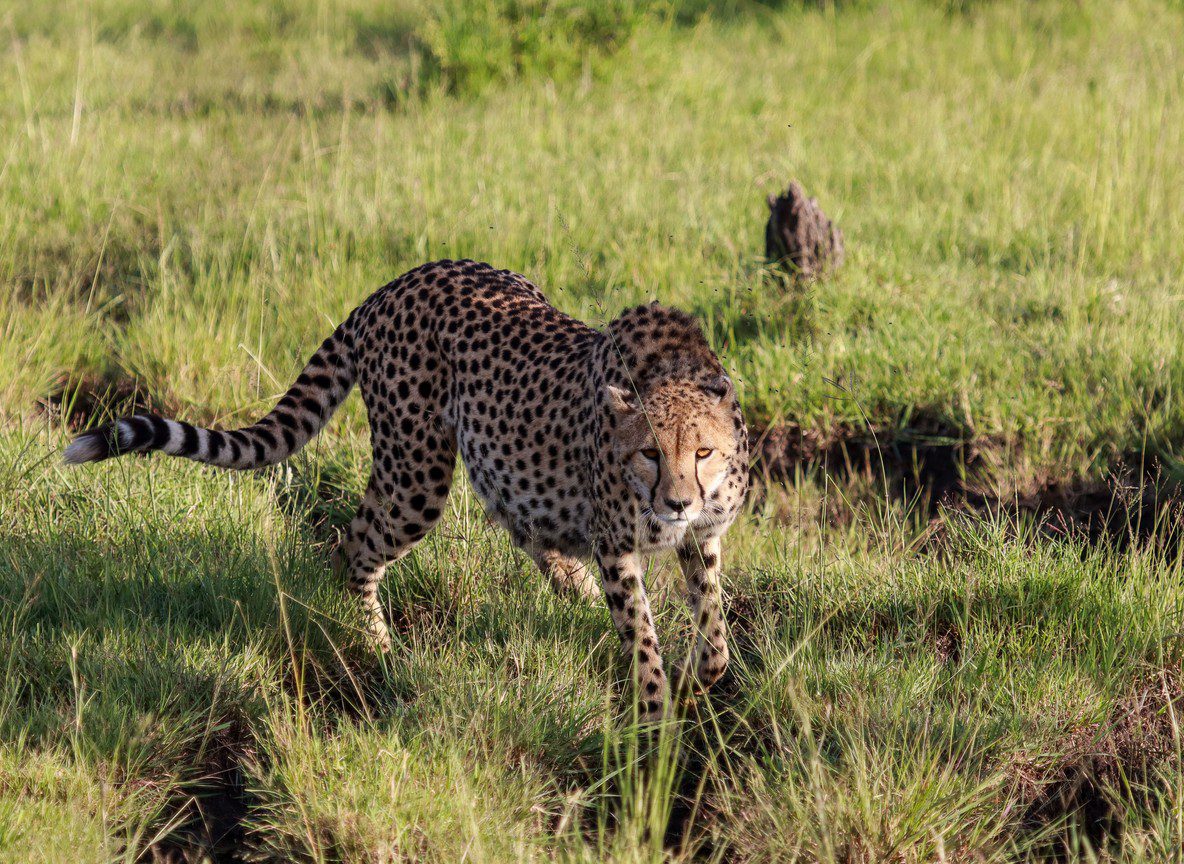
Adamson came to Shaba in 1977 with Penny the leopard, a cheetah rehabilitation project, and the intention of writing another wildlife rehabilitation book in the tradition of “Born Free.” Her camp near the springs became the setting for years of work, and “Queen of Shaba” documented her relationship with Penny and the landscape.
She was found dead near her camp on January 3, 1980. The initial investigation concluded she had been killed by a lion; subsequent evidence pointed to murder by a dismissed camp worker. The case remains officially unresolved.
Joy’s Camp, the only permanent lodge operating in Shaba today, takes its name from this heritage and sits in the general area of Adamson’s original camp. For guests interested in this history, the landscape has an unusual resonance — a sense of continuity with one of East Africa’s most significant conservation figures.
Wildlife: The Special Five and Northern Endemics
Shaba holds the same Special Five species found across the northern Kenya ecosystem:
Reticulated giraffe — the most visually distinctive subspecies, with bold, well-defined white lines between the orange-brown patches. Present throughout Shaba, and particularly photogenic against the volcanic rock backdrops.
Grevy’s zebra — the endangered giant zebra with narrower stripes and large rounded ears. Present in Shaba in smaller numbers than in Samburu; typically found in rocky terrain areas.
Beisa oryx — the desert-adapted antelope with long straight horns. Large herds on Shaba’s open plains; reliable sightings throughout the reserve.
Gerenuk — the long-necked antelope that stands bipedally to browse from tall acacia branches. Common in Shaba’s acacia-commiphora thickets.
Somali ostrich — the blue-necked ostrich subspecies. Present but in smaller numbers than in some northern areas.
The predator population in Shaba is notable for its relative freedom from habituation pressure. Lions that have experienced only a fraction of the vehicle contact of their Samburu counterparts behave differently — sometimes more cautiously, sometimes with less managed separation from vehicles. The encounters feel more genuinely wild. Leopard, as noted, are particularly well-represented in the kopje areas.
Comparing Shaba to Samburu
The most common question travellers ask is whether Shaba is worth visiting if they are already going to Samburu. The answer depends on what they value.
Samburu delivers efficiency, reliability, and consistent excellence. Its guides are among the best in northern Kenya, its wildlife is well-habituated for excellent photography, and its camps offer the full range of comfort and service levels. If you want the northern Kenya ecosystem delivered at peak performance, Samburu is the right base.
Shaba delivers something different: genuine solitude, a more dramatic landscape, and the particular quality of encounter that comes from being in a place where most sightings happen without the company of other vehicles. The wildlife is the same species, but the experience of seeing them changes when you are the only vehicle watching.
For travellers who have already done Samburu and want to go deeper into northern Kenya, Shaba is an obvious extension. For first-time northern Kenya visitors who specifically value quiet and dramatic landscapes over the efficiency of a well-managed high-traffic reserve, Shaba can be the right primary destination. It is not a compromise choice; it is a different choice.
Practical Planning for Shaba
Joy’s Camp is the only permanent accommodation inside Shaba National Reserve. Its small size — a limited number of tents and cottage-style units — is consistent with the reserve’s character. A stay of two to three nights is appropriate to explore the different sections of the reserve and to benefit from different times of day at the springs.
Access is by road from Nairobi through Isiolo — typically five to six hours, longer in wet season — or by charter flight to one of the private airstrips serving the northern Kenya circuit. Scheduled bush flights from Wilson Airport in Nairobi connect to Samburu, and road transfers from Samburu to Shaba can be arranged.
The best seasons in Shaba follow the northern Kenya calendar: January to March (dry, excellent game viewing at water sources) and July to October (dry season, cooler temperatures) are the most reliable. The long rains of April and May can make some internal tracks difficult and some camps may reduce operations.
For travellers constructing a northern Kenya circuit, combining three nights in Samburu with two to three nights in Shaba covers both the efficient, well-developed side of the northern ecosystem and its quietest, most remote corner — a contrast that makes the overall experience significantly richer than either reserve alone would provide.
Every trip described here can be tailored: dates, budget, camps, and pace built around you.
Get a Personalised Safari