The Masai Mara National Reserve has one of the best-known wildlife reputations on earth, and in July and August it earns every bit of that attention. It also earns the convoy of vehicles that follows. On the reserve’s northern boundary, sharing the same grassland, the same river system, and the same predator populations, sits the Mara North Conservancy. The wildlife picture is essentially identical. The visitor experience is not.
Mara North covers 74,000 acres of Maasai-owned land established as a community conservancy in 2009. Because the land borders the national reserve with no fence between them, its animals move freely across both jurisdictions. The wildebeest columns that define the July to September migration pass straight through. The lions are drawn from the same gene pool. The cheetah hunt the same short grass plains. What changes when you cross into the conservancy is the framework around the experience: limited camps, controlled vehicle numbers, and an activities menu that the reserve cannot offer.
How the Conservancy Model Works
Mara North operates on a lease agreement with the Maasai landowners, who receive regular payments in exchange for maintaining the land as wildlife habitat rather than converting it to agriculture or permanent settlement. A small number of exclusive camps fund these lease payments through their rates, and in return each camp has an agreement limiting how many vehicles it puts into the field.
The practical result of that arrangement:
| Feature | Masai Mara National Reserve | Mara North Conservancy |
|---|---|---|
| Vehicle access | Open to all commercial operators | Resident camp guests only |
| Game drive timing | Restricted to set hours | Night drives and off-road permitted |
| Vehicles per sighting | No limit, often 20 or more | Soft cap per camp |
| Exclusivity | Low | High |
| Entry structure | KWS gate fee | Conservancy fee via camp |
The conservancy fee is typically folded into the camp rate rather than charged at a gate. A daily contribution goes directly to the Maasai landowner programme and funds the conservancy’s own ranger patrol unit.
Night drives are the activity that changes the character of a Mara North visit most significantly. The national reserve operates strict daytime-only rules. In Mara North, your guide drives after dark with a handheld spotlight, and the lions that spend the heat of the day sleeping in the shade become something else entirely. Aardvarks cross tracks in the headlight beams. Leopards move through riverine forest. The Mara at night is a different ecosystem.
Wildlife: Why the Density Numbers Matter
Because the conservancy shares unfenced boundaries with the national reserve, it has access to the full wildlife community of the Mara ecosystem. During peak migration months, July through September, wildebeest herds move across the conservancy as part of their northward push from the Serengeti. The Mara River system within the conservancy includes secondary crossing points where herds ford the river with far fewer vehicles in attendance than the main reserve crossings attract.
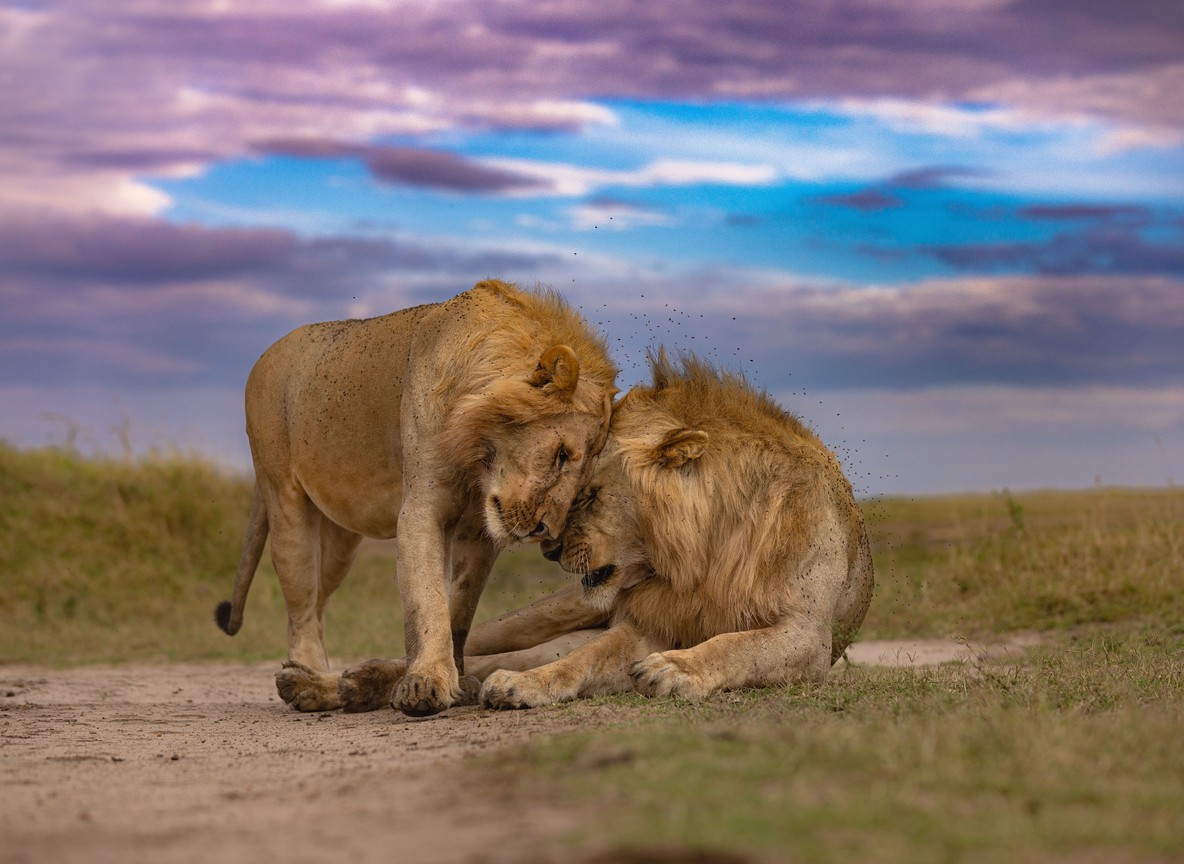
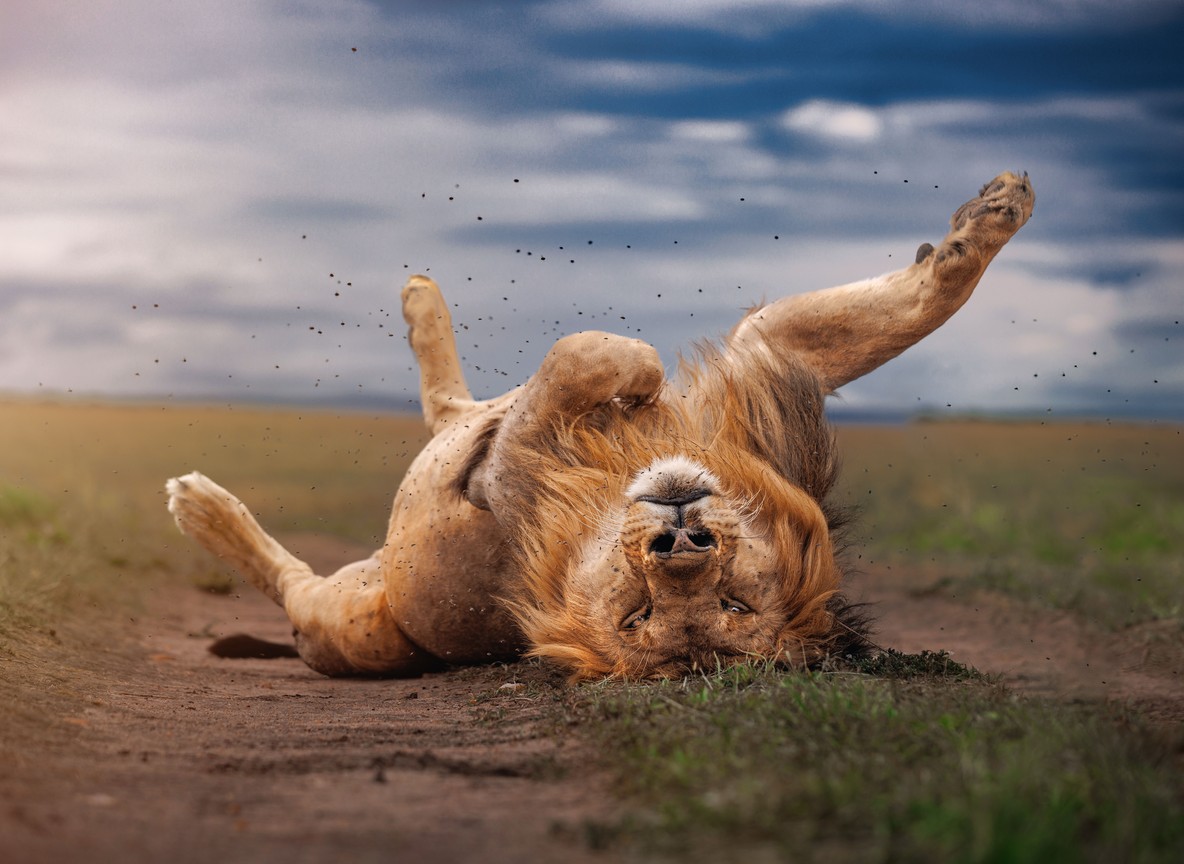
The lion situation in Mara North has drawn consistent attention from researchers. The conservancy records among the highest lion densities in the broader Mara ecosystem, with multiple pride territories overlapping in a relatively compact area. This is partly a habitat story, partly a behavioural one: lions in areas with lower vehicle pressure tend to maintain more natural patterns, resting in open ground, hunting across exposed terrain, and allowing cubs to play in the open. These conditions produce a quality of observation that the national reserve’s most popular big cat zones cannot reliably match.
Cheetah are a reliable presence in the open grassland sections, particularly the short grass plains extending south toward the reserve boundary. Leopard density in the riverine forest and rocky outcrops is strong, and the Sekenani River section produces consistent morning sightings from trees that resident cats use for resting and caching kills. With off-road capability where vegetation permits, and night drive access, big cat encounters in Mara North differ in character from anything available inside the reserve.
Camps in Mara North
The three principal camps operating in the conservancy each cover a different section of the 74,000 acres, which means camp selection determines your territory and your guide team’s accumulated knowledge of that ground.
Serian Mara North is one of the conservancy’s flagship properties, run by Alex Walker and operating two small camps at different points within the conservancy. The guiding and night drive programme are the core of the Serian experience, and the camp’s flexibility between fixed and mobile configurations is useful for longer itineraries.
Kicheche Mara Camp is owner-managed with a strong guiding reputation built over many years. A strict twelve-guest maximum keeps it among the lowest field vehicle densities in the entire Mara ecosystem, and the guide team’s knowledge of their section of the conservancy is detailed and current.
Elephant Pepper Camp, an Elewana property with a longer presence in Mara North, is well-positioned relative to migration corridor crossings and has a reliable year-round big cat record.
The camp you choose determines which section of the conservancy forms the core of your game drives. Each section has its own character: the terrain, the water sources, the pride territories, and the seasonal patterns the guide team has spent years tracking.
Migration Season in Mara North
The wildebeest migration does not follow reserve boundaries. Herds moving north from the Serengeti push broadly into the Mara ecosystem, and Mara North sits on the natural movement corridor between the reserve’s Sand River crossing sites and the open country north of the Mara River.
During peak months, July through September, guests based in Mara North can access secondary crossing points within the conservancy. These crossings see a fraction of the observer traffic that builds at the main reserve sites. The guide teams monitor herd movement daily by radio and by direct observation, which means positioning at a crossing point can happen hours before the event rather than joining a convoy that assembles reactively.
Outside migration season, the resident wildlife and the conservancy’s structural advantages remain intact. October and November offer excellent big cat sightings with noticeably fewer visitors. The green season, January through March, brings lower rates, good road conditions, and reliable predator activity without the August crowd.
When to Go: A Practical Month-by-Month View
| Month | Conditions | Wildlife Highlight |
|---|---|---|
| July | Migration arrives | Early river crossings, high lion activity |
| August | Peak migration | Maximum wildebeest density, daily crossings |
| September | Migration active | Crossings continue, cheetah cubs often visible |
| October | Migration retreats | Resident wildlife focus, less crowded |
| January to March | Dry season | Predator sightings, good roads, lower rates |
| June | Pre-migration | Resident wildlife, good conditions, pre-peak pricing |
Getting There and Planning Ahead
By air: Scheduled and charter flights serve the Mara North Conservancy airstrip from Wilson Airport (WIL) in Nairobi via Safarilink and Air Kenya. Flight time is approximately 45 minutes. Camp vehicles collect guests directly from the airstrip.
By road: The drive from Nairobi takes five to seven hours depending on the route and traffic. The road to the conservancy entrance has unpaved sections that are manageable in dry conditions but require 4WD capability in the wet months.
Booking timeline: The exclusive camps in Mara North fill quickly for peak migration season. For stays in July and August, a realistic planning horizon is eight to twelve months out for first-choice camp availability. Shoulder months and the green season are more flexible.
Photography: Low vehicle density makes Mara North a preferred destination for serious wildlife photographers who need clear sightlines and space around a sighting. Most camps accommodate tripods and window mounts as standard. Night drive photography with a handheld spotlight is a specific skill worth preparing for before arrival: manual focus, high ISO settings, and a willingness to shoot in the moment rather than waiting for perfect composition.
Combining Mara North with the Wider Mara Ecosystem
Many travellers split a Mara visit between the conservancy and the national reserve, or combine Mara North with another conservancy such as Olare Motorogi or Naboisho. A typical five-night structure might look like this:
- Nights one and two: Masai Mara National Reserve (full coverage of central Mara and the Triangle)
- Nights three through five: Mara North Conservancy (night drives, off-road game drives, migration corridor access)
This approach gives you the open vehicle access and terrain variety of the reserve alongside the exclusivity and extended activity options of the conservancy, without spending the entire budget in one location.
What to Know Before You Book
Mara North is not a destination where walking into a camp without context will produce the best experience. The conservancy model means camp selection, territorial knowledge, and seasonal timing each have a direct effect on what you encounter.
A few practical notes for planning:
- The conservancy fee is typically bundled into the camp rate. Confirm this when comparing costs, as the daily contribution (which funds both the landowner lease and the ranger programme) is a real cost that cheaper camps may not include.
- Guide team continuity matters. Ask which guides will be assigned to your stay and how long they have worked that section of the conservancy. A guide who has tracked the same prides for five seasons is not the same as a recently placed guide still learning the territory.
- If the migration is your primary reason for visiting, late July through early September is the optimal window. If you are more interested in big cats on their own terms without the seasonal visitor pressure, October, November, or the January to March dry season are all strong alternatives.
The Mara North Conservancy is one of those places that experienced safari travellers tend to discover on their third or fourth Kenya trip, then immediately wish they had found earlier. For a deeper look at balloon experiences over the Mara ecosystem, the Masai Mara hot air balloon guide covers what to expect from the aerial perspective across both the reserve and the conservancies.
Have questions about this itinerary or destination? Get answers from a safari specialist before you commit.
Inquire More