

You are watching a leopard drag an impala into an acacia at dusk. Your vehicle is the only one in sight. The silence is broken only by guinea fowl and the distant call of a hyena. That is Mara Naboisho Conservancy on a standard afternoon.
At 13,500 hectares, Naboisho is one of the largest private conservancies bordering the Masai Mara. It holds a strict cap of just 24 guests at any given time across the entire area. The result is a density of wildlife encounters that most safari travelers have heard about but rarely experience.
This guide covers what makes Naboisho work, what to expect from the wildlife, and how to plan a 2026 visit.
Why Mara Naboisho Delivers Private Mara Access Without the Top Premium
Most travelers assume a private conservancy experience costs dramatically more than the main Masai Mara National Reserve. Naboisho challenges that assumption directly.
The conservancy sits northwest of the main reserve, sharing a border with Ol Kinyei and Olare Motorogi. It is managed by the Naboisho Conservancy Trust and directly funds 500 Maasai landowners who receive a revenue share from every bed night sold inside the conservancy. That community-direct model keeps the cost structure leaner than some more corporate-managed reserves while maintaining the same strict low-density rules.
What the conservancy fee covers:
- Night drives included in most itineraries (prohibited in the main reserve)
- Walking safaris with an armed guide, offering ground-level wildlife interpretation
- Exclusive game drive circuits with no day visitors permitted
- Direct conservation payments to Maasai landowners
For photographers and serious wildlife watchers, the combination of night drives and the absence of day-visitor vehicle pressure makes Naboisho produce experiences that are structurally impossible inside the national reserve.
The Wildlife Numbers: What Makes Naboisho Game-Rich
Naboisho’s wildlife density is not accidental. It results from deliberate management: no livestock grazing inside the conservancy, reduced human disturbance, and intact corridors connecting to the wider Mara ecosystem.
Resident species present year-round:
- Lion — multiple resident prides with established territories
- Leopard — high density, particularly around the rocky outcrops in the northern sector
- Cheetah — open plains in the south produce clear sightlines and successful hunts
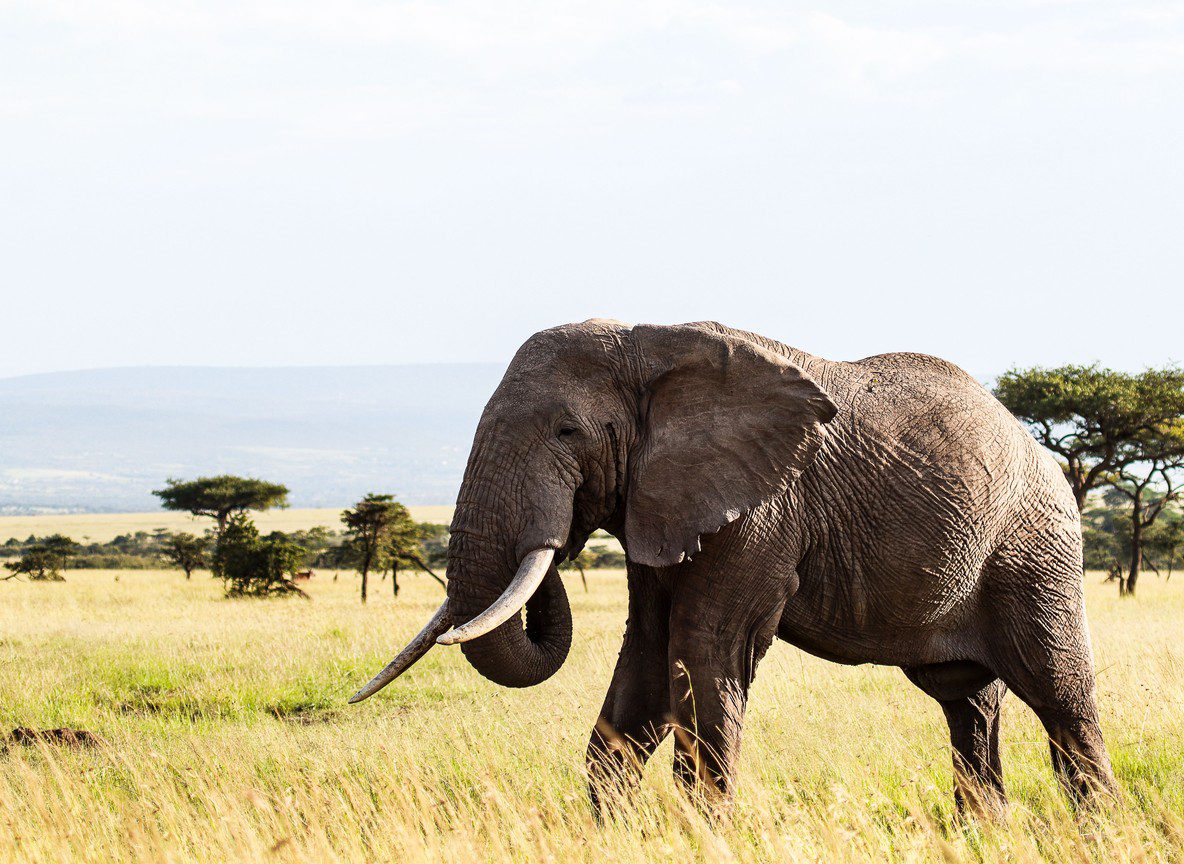
- Elephant — family herds use the conservancy as a seasonal corridor
- Buffalo — large bachelor herds as well as mixed family groups
- Giraffe, zebra, topi, impala, hartebeest — prey base that sustains predator numbers
The wildebeest migration corridor runs through Naboisho from July through October. Herds push north from the Serengeti, cross into this northwest belt of conservancies, and graze through before returning south. During peak migration, wildebeest columns often stretch across the plains while lion prides shadow the edges.
Big Cats: Lions, Leopards, and Cheetahs in Naboisho
The big cat experience is the primary reason most serious wildlife travelers choose Naboisho over the main reserve. The mechanics are straightforward: fewer vehicles means less disturbance, which means cats behave naturally rather than retreating or adjusting hunting behavior.
Lions in Naboisho have grown accustomed to vehicles at close range without developing the stress responses that come with heavy traffic. You watch coalitions patrol at dawn. You see cubs playing in long grass while mothers rest nearby. Evening drives regularly encounter lions moving just after dark, something the main reserve cannot offer.
Leopards are famously difficult to find in busier areas. With vehicle pressure removed, sightings shift from luck to probability. The rocky ridgelines in the north hold territorial females, and guides who know the conservancy know where to position before dawn.
Cheetahs benefit most visibly from the open southern plains. Without the distraction of multiple vehicles circling during a hunt, mothers can pursue prey without abandoning their cubs, and you can follow an entire sequence from stalk to kill without another vehicle cutting across the sightline. For wildlife photographers, that single fact changes the quality of a morning fundamentally.
The 24-Guest Cap: How Strict Vehicle Limits Change the Experience
Most private conservancies in the Mara region operate with some form of bed-night restriction. Naboisho’s 24-guest maximum across 13,500 hectares is among the strictest in the ecosystem.
In practice:
- A maximum of roughly six vehicles in the field at any time
- No queuing at sightings: you arrive, position, and photograph without competition
- Guides share location information openly without the competitive pressure of the main reserve
- Animals move naturally and you adapt to them, not the reverse
For photography-focused safaris, this is the material difference between a good morning and an outstanding one.
Mara Naboisho vs the Main Reserve and Other Conservancies
| Feature | Main Mara Reserve | Mara Naboisho | Olare Motorogi | Ol Kinyei |
|---|
| Size | 1,510 km2 | 135 km2 | 33,000 acres | 8,700 acres |
|---|
| Guest cap | None | 24 guests | ~20 guests | ~16 guests |
|---|
| Night drives | No | Yes | Yes | Yes |
|---|
| Walking safaris | No | Yes | Yes | Yes |
|---|
| Day visitors | Yes | No | No | No |
|---|
| Price tier | Budget to mid | Mid to premium | Premium | Mid to premium |
|---|
| Best for | Migration crossings, volume | Value plus big cats | Top-end big cat density | Exclusive, off-grid |
|---|
| Vehicle pressure | High | Very low | Very low | Minimal |
|---|
The most common comparison is Naboisho versus Olare Motorogi. Olare Motorogi holds a smaller area with a comparable guest limit and has historically commanded a higher nightly rate. Naboisho delivers equivalent or superior big cat sightings at a meaningfully lower price, making it the strongest value argument among the Mara’s private conservancies for photographers who want the private experience without the top-tier lodge cost.
When to Visit: Seasonal Highlights
Naboisho is a year-round conservancy. The resident predator population means every month produces significant wildlife, unlike destinations that lose their core value outside migration season.
July to October (Migration Season)
The wildebeest corridor is active. Lion prides follow herds into the conservancy. Predator-prey interaction peaks. Afternoon thunderstorms can produce dramatic photographic light. This is the busiest and most expensive period: book at least four months ahead for 2026 dates.
November to February (Green Season)
Short rains bring fresh grass and newborn prey. Cheetah cub sightings increase. Leopards are highly active. The landscape turns vivid green. Fewer visitors mean better pricing and even lower vehicle density than usual.
March to June (Long Rains)
Lowest prices. The conservancy thins to near-empty. Birding peaks with resident and migrant species in full breeding plumage. Serious wildlife photographers value this period for dramatic skies and intimate access. Some camps offer significant discounts.
Where to Stay: Naboisho Camp and Other Options
Accommodation options inside the conservancy are deliberately limited to protect the 24-guest cap.
Asilia Naboisho Camp is the flagship property, running 15 tents on full board with a guiding team that includes several guides with over a decade of Naboisho-specific knowledge. The camp’s position in the northern sector places it near the leopard territory and within easy reach of the migration corridor. Asilia as an operator returns a portion of revenues to the Naboisho Conservancy Trust.
Encounter Mara operates a smaller footprint with a strong photography focus, running adapted vehicles with low-slung windows and beanbag rests.
Entim Camp sits on the southern boundary, giving fast access to the open cheetah plains. Their guides are particularly strong on cheetah coalition behavior.
Access to all camps is via fly-in to Ol Kiombo airstrip from Nairobi Wilson Airport (approximately 45 minutes), then a 20-minute road transfer into the conservancy. Luggage weight restrictions for bush aircraft are strictly enforced: 15kg in a soft bag is the standard allowance.
Practical Planning Notes
If you are combining Naboisho with other Mara conservancies or parks on a longer Kenya itinerary, the natural pairings are Ol Kinyei (shares a border to the south) or Amboseli for an elephant-focused contrast. Build at least three nights inside Naboisho to properly experience the morning and evening drive rhythm that makes conservancy safaris different.
The conservancy is not accessible by private road vehicle. All guests arrive by air or are transferred from the nearest gate by camp vehicle. Self-drive is not an option inside the conservancy boundary.
Keep Exploring
For context on how Naboisho compares within the wider Mara ecosystem, the Kenya Wildlife Service Masai Mara page covers the national reserve structure and boundary. Separately, a comparison of the four main private conservancies bordering the reserve helps clarify what each one offers and who each suits best.
Dawn in Naboisho does not arrive gently. It starts with a hyena call at 4:30am, a coffee at 5:00am, and a leopard in an acacia by 5:45am. That is what you are planning for.