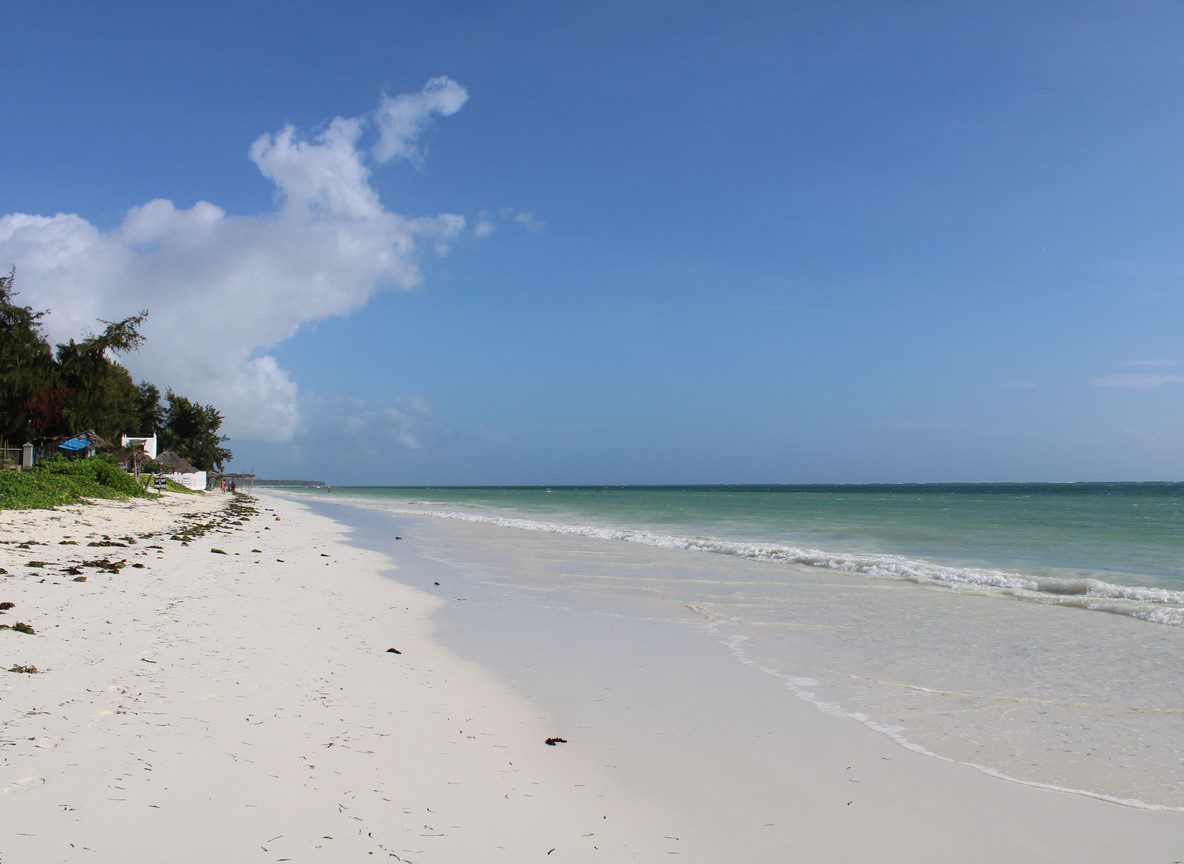
After days in the bush watching wildebeest cross the Mara River, lions hunting at dusk, and elephants moving through the savanna, many travelers want to end their East Africa trip at the Indian Ocean. The question then becomes which Indian Ocean: Zanzibar, off the coast of Tanzania, or the Kenya Coast, an hour’s flight from Nairobi.
These are not equivalent choices. They offer different cultural experiences, different diving and beach quality, and different levels of logistical complexity. This guide lays out the honest comparison so you can make the decision that fits your trip.
Quick Comparison: Zanzibar vs Kenya Coast Extension
| Factor | Zanzibar | Kenya Coast |
|---|---|---|
| Country | Tanzania (requires separate entry from Kenya safari) | Kenya (same country, no border crossing) |
| Logistics | Nairobi to Zanzibar flight; Tanzania entry required | Internal Kenya flight from Nairobi or Mara |
| Visa | Tanzania visa required for most nationalities (or EAC Tourist Visa) | No additional visa needed |
| Flight Time from Nairobi | ~2 hours | 45 to 55 minutes to Mombasa |
| Beach Quality | Exceptional: Nungwi, Kendwa, Paje are world-class | Very good: Diani Beach is among Africa’s finest |
| Cultural Experience | Highly distinctive: Swahili-Arab-Indian Stone Town; UNESCO listed | Swahili coast tradition; Mombasa Old Town; dhow culture |
| Diving and Snorkeling | Outstanding: Mnemba Atoll rates among the world’s top ten sites | Good: Diani reef and Watamu Marine National Park |
| Best For | First-time Zanzibar visitors; divers; culture travelers | Staying in-country; families; short extensions of 2 to 3 days |
Zanzibar: More Than a Beach Destination
What Makes Zanzibar Distinctive
Zanzibar is a place with its own cultural gravity. Stone Town, the old city of Zanzibar Town, holds UNESCO World Heritage status for good reason. Its narrow lanes, ornate carved wooden doorways, Arab merchant houses, Persian baths, and layers of Swahili-Arab-Indian history create an atmosphere that is genuinely unlike anywhere else in East Africa.
The beaches in northern Zanzibar, particularly Nungwi and Kendwa, are among the finest in the Indian Ocean. Fine white sand, clear turquoise water, and an uninterrupted horizon make them benchmark destinations. Paje on the east coast has become a center for kitesurfing, with consistent trade winds and a flat-water lagoon.
Zanzibar’s underwater environment is the standout feature for many travelers. Mnemba Atoll, just off the northeast coast, is consistently listed among the world’s top ten dive sites. Coral gardens, sea turtles, spinner dolphins, and dense reef fish populations make it exceptional. Diving from Zanzibar is generally stronger than comparable Kenya coast diving, particularly from November through March when conditions are calmest.
Logistics of a Zanzibar Extension
From Nairobi, direct flights to Zanzibar’s Abeid Amani Karume International Airport take roughly two hours on Kenya Airways, Precision Air, or other regional carriers. From the Masai Mara, the routing goes through Nairobi.
Tanzania requires a visa for most nationalities. The EAC Tourist Visa (valid for Kenya, Uganda, and Tanzania together, $100 USD) covers Zanzibar if you already hold it. Otherwise, Tanzania visa on arrival ($50 USD for most nationalities) is available at the airport and is straightforward.
The practical consideration is that an international border crossing adds time, cost, and a logistical step that the Kenya Coast does not require.
Kenya Coast: The Same Country, Different Character
What Diani and Watamu Offer
Diani Beach, 30 kilometers south of Mombasa, is a UNESCO-recognized coastal forest ecosystem and consistently appears on lists of Africa’s best beaches. The sand is white and soft, the Indian Ocean is warm and calm from October through March, and the beach is well set up with a range of accommodation from basic to boutique.
Watamu, 120 kilometers north of Mombasa, sits beside a marine national park with strong snorkeling and sea turtle encounters. The Gede Ruins, a medieval Swahili city abandoned in the 17th century, are a short drive from Watamu and add historical depth that surprises most visitors.
Mombasa itself has its own Swahili cultural offer: Fort Jesus (a UNESCO World Heritage Site), the Old Harbour dhow scene, and the carved wooden doorways of the old Arab quarter. It is a quieter and smaller version of the Stone Town experience, but culturally genuine.
The key practical advantage of the Kenya Coast is that it keeps you within the same country. No additional visa, no international border crossing. Internal flights from Nairobi to Mombasa take under an hour, and some routes connect directly from Masai Mara airstrips to the coast.
Beach and Diving: A Direct Comparison
| Factor | Zanzibar | Kenya Coast |
|---|---|---|
| Beach Quality | Exceptional (world-class) | Very good to excellent |
| Water Clarity | Very high | Good |
| Diving | Outstanding (Mnemba Atoll) | Good (Diani Reef, Watamu Marine Park) |
| Snorkeling | Excellent | Good |
| Sea Turtles | Yes (Mnemba) | Yes (Watamu) |
| Spinner Dolphins | Yes | Yes (Diani morning trips) |
| Kitesurfing | World-class (Paje) | Good (Diani) |
For dedicated divers and serious snorkelers, Zanzibar is the stronger destination. For travelers who primarily want a beautiful beach, warm water, and comfortable accommodation without additional travel complexity, Diani Beach is excellent.
Cultural Experience: What Each Place Delivers
| Factor | Zanzibar | Kenya Coast |
|---|---|---|
| UNESCO Heritage | Stone Town (iconic) | Fort Jesus, Mombasa (UNESCO) |
| Architecture | Zanzibar Arabic-Swahili carved doorway tradition | Mombasa Old Town Arab-Swahili buildings |
| Food Culture | Zanzibar Night Market; spice-driven cuisine | Swahili seafood; Indian Ocean coastal dishes |
| Historical Layer | Spice trade; Arabic sultanate; slave trade history | Portuguese colonial fort; Swahili trade history |
| Cultural Distinctiveness | Very high: feels like nowhere else | Strong Swahili coastal tradition, continuous with Kenya |
Zanzibar’s cultural identity is self-contained and distinctive in a way that Mombasa’s is not. The spice island history, the Stone Town architecture, and the Swahili-Arab-Indian fusion make it feel like a destination in its own right rather than an add-on. The Kenya Coast is culturally rich but feels like a continuation of the East African Swahili tradition you may already have experienced.
How to Decide: Which Extension Fits Your Trip
Choose Zanzibar If:
- You are visiting East Africa for the first time and want to see both Kenya and Tanzania in one trip
- Diving or snorkeling is a priority and Mnemba Atoll is on your list
- You want the Stone Town cultural experience as part of your trip
- You have at least 4 to 5 days for the extension, long enough to justify the logistical overhead of crossing an international border
- You are comfortable managing an additional visa and airport connection
Choose the Kenya Coast If:
- You want to stay within Kenya and avoid additional visa requirements and border crossings
- Your extension is 2 to 3 days (too short for the Zanzibar logistics overhead to be worthwhile)
- You are traveling with children or older family members for whom simpler connections matter
- You want a direct flight option from a Masai Mara airstrip to the coast without Nairobi transit
- You have already visited Zanzibar or plan a dedicated Tanzania trip separately
Explorer Notes: Planning Your Beach Extension
On timing: Both the Kenya Coast and Zanzibar are best from October through March when the Indian Ocean is calmest and water visibility peaks. The long rains (April to June) can affect both destinations, though Zanzibar’s east coast is less affected during this period.
On accommodation: Both destinations have options across a wide price range. Zanzibar has more ultra-luxury resorts concentrated in the north, particularly around Nungwi. Diani has a stronger mid-range offering. For families, Diani is generally better set up.
On flight connections: For the Kenya Coast, ask your safari operator whether a direct Masai Mara to Mombasa routing is available on your dates. This avoids a Nairobi transit entirely and can save 4 to 5 hours of travel time.
On EAC visas: If you are doing a Kenya and Tanzania safari combination (for example, Masai Mara plus Serengeti), an EAC Tourist Visa covers both countries and Zanzibar. This makes the Zanzibar extension significantly more straightforward if the visa is already sorted before you travel.
Conclusion
Zanzibar and the Kenya Coast are both excellent ways to close a safari trip. The right choice depends on how much time you have, whether you value logistical simplicity, and what you want from the beach portion of your journey.
Zanzibar offers a more distinctive experience: stronger diving, a more singular cultural identity, and beaches that rank among the Indian Ocean’s finest. The Kenya Coast offers ease, strong beaches, genuine Swahili culture, and the comfort of staying in one country.
If you have five days and want something truly memorable, Zanzibar is hard to argue against. If you have two or three days and want to end your Kenya trip without complications, Diani Beach delivers exactly what it needs to.
Related Reading
- When to visit Kenya: comparing months and seasons
- Wilson Airport vs JKIA: navigating Nairobi’s two airports
- Wildebeest migration safari Kenya: the complete planning guide
- For full itinerary planning including beach extensions, Trunktrails Safaris handles both Kenya Coast and Zanzibar connections from the Masai Mara.
Have questions about this itinerary or destination? Get answers from a safari specialist before you commit.
Inquire More