Both January and February fall within Kenya’s dry season, yet the two months feel noticeably different once you are in the field. Grass height shifts, light quality changes, crowd patterns move, and wildlife behavior responds to each week of drying heat. Choosing between them is less about one month being superior and more about matching the conditions to the experience you are after. This guide covers the Kenya safari January vs February comparison across weather, wildlife, crowds, cost, and photography so you can make a well-informed decision.
Quick Comparison: Kenya Safari January vs February
| Factor | January | February |
|---|---|---|
| Season | Dry season (post-short rains) | Peak dry season |
| Crowd Level | Low to moderate | Moderate |
| Cost | Lower (post-peak rates) | Full dry season rates |
| Weather | Warm, dry, clearing from short rains | Hot, dry, consistently clear |
| Game Viewing | Very good | Excellent |
| Wildebeest | Calving underway in Serengeti south | Calving peaks; herds begin moving |
| Mara Predators | Lions, cheetahs, leopards active | Lions, cheetahs, leopards very active |
| Vegetation | Lingering green in places | Fully golden |
| Birdlife | Good (Palearctic migrants still present) | Good to excellent |
| Photography | Excellent (clear light, mixed palette) | Excellent (classic golden dry season tones) |
Weather and Conditions
January
January is the opening month of Kenya’s dry season, arriving on the heels of the short rains that typically wind down through October and November. By early January the rain has largely cleared, and the Masai Mara and Amboseli are transitioning from their post-rain green toward the golden open savannah of full dry season.
Temperatures across the Masai Mara sit between 15 and 28 degrees Celsius. Pre-dawn game drives call for a light layer; midday heat is moderate and pleasant. Occasional light showers are possible in the first two weeks of January in areas still lagging behind the seasonal shift, but rain is unlikely after mid-month.
February
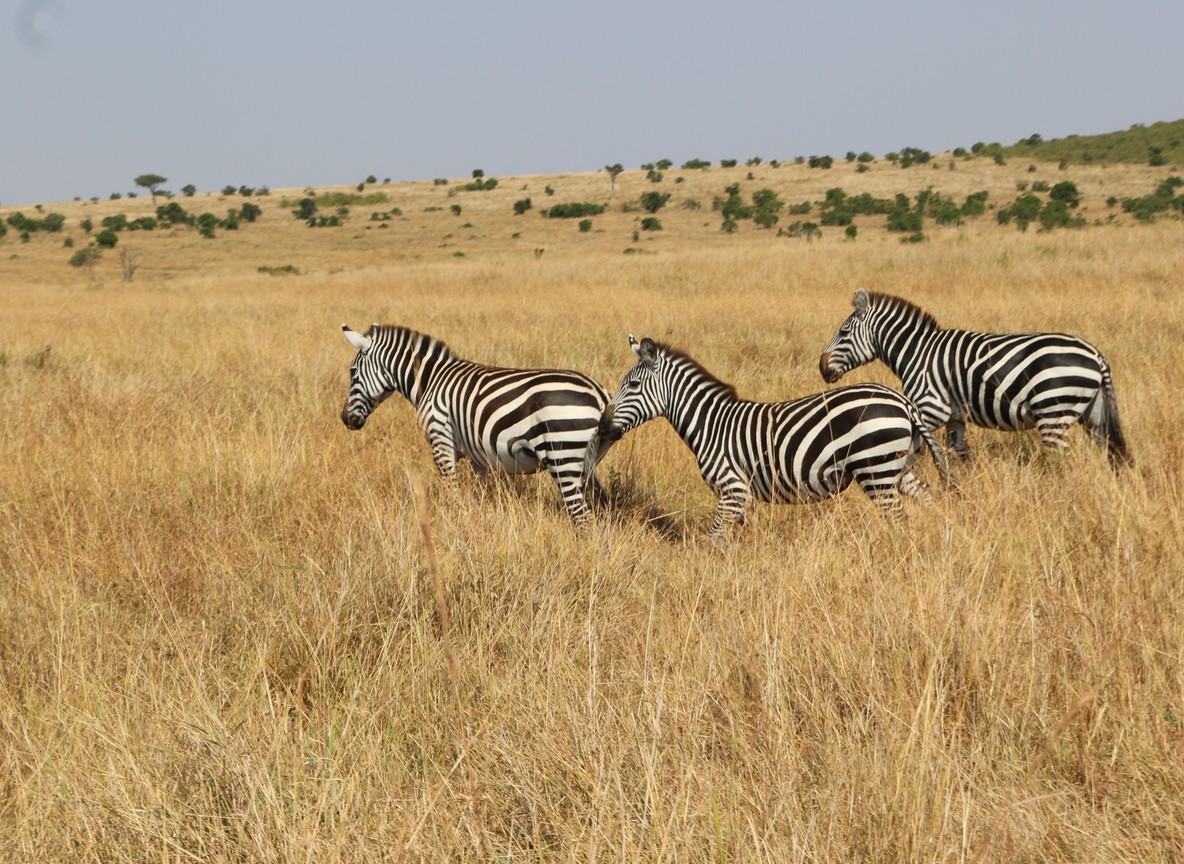
February marks the height of the dry season. Vegetation is fully golden and short, which opens long sight lines across the plains. Water sources shrink to fixed points and concentrate wildlife predictably, making game drives more focused and productive.
Temperatures climb to between 28 and 33 degrees Celsius by midday. Mornings are warm from first light and skies are reliably clear. The Masai Mara in February looks like the landscape most travelers picture when they think of East Africa: ochre grass, deep blue sky, and dramatic orange sunrises.
Wildlife in January and February
January
Predators are active and well-sighted in January. The shorter post-rain grass exposes prey animals across open terrain, and lions, cheetahs, and leopards are consistently present. Elephant herds move between diminishing water sources, and buffalo gather in large concentrations.
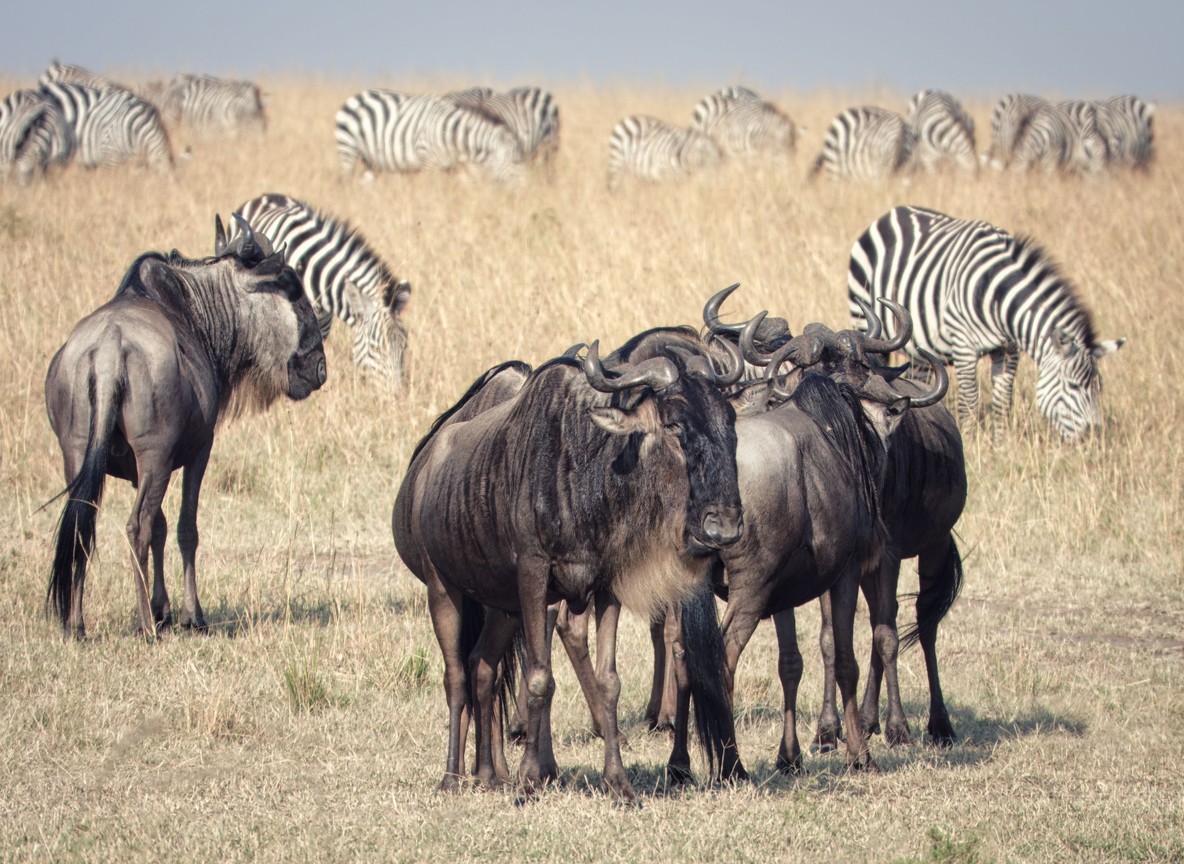
Across the Tanzania border, January is calving season on the Serengeti’s southern plains. The calving itself happens south of the Mara, but the broader ecosystem effect filters northward: resident Mara wildebeest, zebra, and gazelle are active and lion prides are hunting across accessible terrain.
Amboseli is outstanding in January. Dry conditions create clear air, and Kilimanjaro is often visible in the early morning before cloud builds around the summit. Elephant families move openly across the basin in conditions that rank among the finest of the year.
February
February is widely regarded as one of Kenya’s strongest months for game viewing. Low vegetation means long sight lines and nowhere for predators to conceal a hunt. Cheetah are especially active across the open Mara plains, using the flat terrain to sprint after Thomson’s gazelle.
In the southern Serengeti, February is peak calving season. The density of vulnerable young animals draws heavy predator pressure across the broader ecosystem, and that effect spills into the southern zones of the Masai Mara. The river crossings of July and August do not happen in February, but predator-prey interactions are among the most consistent of any month.
Ol Pejeta Conservancy in Laikipia is also worth considering in February. Rhino sightings are reliable, lions are active, and the chimpanzee sanctuary is accessible throughout the visit.
Amboseli in January and February
Amboseli responds to each month a little differently than the Mara and deserves a separate look.
| Month | Amboseli Conditions |
|---|---|
| January | Excellent elephant sightings; Kilimanjaro visible most mornings; some residual green in the basin |
| February | Outstanding game viewing; heat haze builds earlier in the day; elephants concentrate around persistent swamps |
Both months are strong. February tends to push elephant activity closer to the permanent swamps at the center of the park as surrounding areas dry completely, which concentrates viewing into a tighter area. January offers slightly softer light and a mixed green-gold landscape that gives photographers more textural variety.
Tsavo in January and February
Tsavo follows the same broad pattern as the rest of southern Kenya: January still carries some residual green from the short rains, while February dries out into the dusty red-earth landscape the parks are known for, which makes the resident elephant herds easier to spot against open ground. Tsavo East and West see far fewer visitors than the Mara or Amboseli in either month, so this is a reliable choice for travellers prioritising space over headline wildlife density.
Crowds and Cost
January
The first two weeks of January are among the quietest periods at Kenya’s parks. Christmas holiday visitors have departed and the February wave of European travelers has not yet arrived. Vehicle counts at sightings drop significantly and camp rates at many properties fall ten to twenty percent below the December peak.
Mid-January can be one of the most relaxed times to visit the Masai Mara: two to six vehicles at a typical sighting, compared with fifteen to thirty during the July and August peak. Availability at most properties is good with shorter advance booking lead times.
Note that some camps hold “high season” rates through December into January. Compare property-specific pricing rather than assuming a blanket off-peak discount.
February
February attracts European travelers on winter school breaks and is a busy month at the premium conservancies. Camps at Olare Motorogi, Naboisho, and Mara North fill several months in advance. Full dry season rates apply across most properties.
Booking windows of three to six months are standard for premium camps. Mid-range options generally require one to two months of lead time. Vehicle counts at popular sightings average four to ten, with busy spots reaching fifteen to twenty during school holiday weeks.
Photography Conditions
January offers a mixed seasonal palette. Hints of green from the October rains contrast with the golden savannah, and clear air creates atmospheric morning light. For photographers wanting textural variety in the landscape, January often produces more nuanced compositions than the uniform gold of deep dry season.
February delivers pure dry season photography. The contrast between golden grass and deep blue sky is at its most pronounced, and dawn and dusk light is reliably dramatic. Open-terrain cheetah sightings in February are a particular draw for wildlife photographers who want unobstructed action shots across the open Mara plains.
Which Month Suits Your Trip?
January works well if you:
- Want strong game viewing without peak crowd levels or peak prices
- Prefer fewer vehicles at sightings and a more relaxed pace in the field
- Have a flexible schedule and can book with shorter advance lead time
- Want Amboseli with some green still in the landscape
- Are working within a tighter budget on camp costs
February works well if you:
- Want peak dry season conditions and the classic golden East Africa aesthetic
- Are prioritizing cheetah sightings or open-terrain predator photography
- Are willing to book three to six months ahead and pay full dry season rates
- Have Ol Pejeta or other Laikipia conservancies on your itinerary
- Want one of Kenya’s most consistently productive game-viewing months
Explorer Notes
- Kilimanjaro views from Amboseli are best in the first hour after dawn in both months. Heat haze builds fast by mid-morning in February, so early starts matter more than they do in January.
- The calving season effect in the southern Serengeti peaks in February and pushes predator activity visibly into the southern Mara zones.
- Birdlife is slightly richer in January because Palearctic migrants from Europe and Central Asia are still present before their northward return, which typically begins in late February and March.
- January’s lower prices do not apply universally. Compare camp-specific rate sheets rather than assuming a blanket post-peak discount.
- For photographers, both months are technically excellent. The choice between a mixed-green palette and pure golden dry season comes down to personal style, not image quality.
Final Thoughts
The Kenya safari January vs February decision rarely produces a clear winner. January offers a quieter, more affordable version of the dry season with genuinely strong game viewing across the Mara, Amboseli, and Laikipia. February offers peak conditions and a landscape at its most photogenic, at the cost of slightly higher demand and earlier booking requirements. For most travelers, the deciding factors are flight availability, camp pricing, and personal schedule rather than wildlife quality alone. Both months deliver a compelling Kenya safari.
Every trip described here can be tailored: dates, budget, camps, and pace built around you.
Get a Personalised SafariFurther reading
More safari planning resources
- Best time to visit Kenya month-by-month map from Valley Safaris
- Amboseli destination guide on FindMySafari
- Map of Amboseli from Valley Safaris
- Compare Kenya safari packages on FindMySafari