

Tsavo East National Park covers more than 13,000 square kilometers of semi-arid plains in southeastern Kenya, making it one of the largest protected areas in the world. The terrain is predominantly flat, open, and baked by direct sun. There is very little shade beyond scattered acacia woodland and the narrow corridor of vegetation along the Galana River. This exposure is what shapes every clothing decision you will make for a visit here.
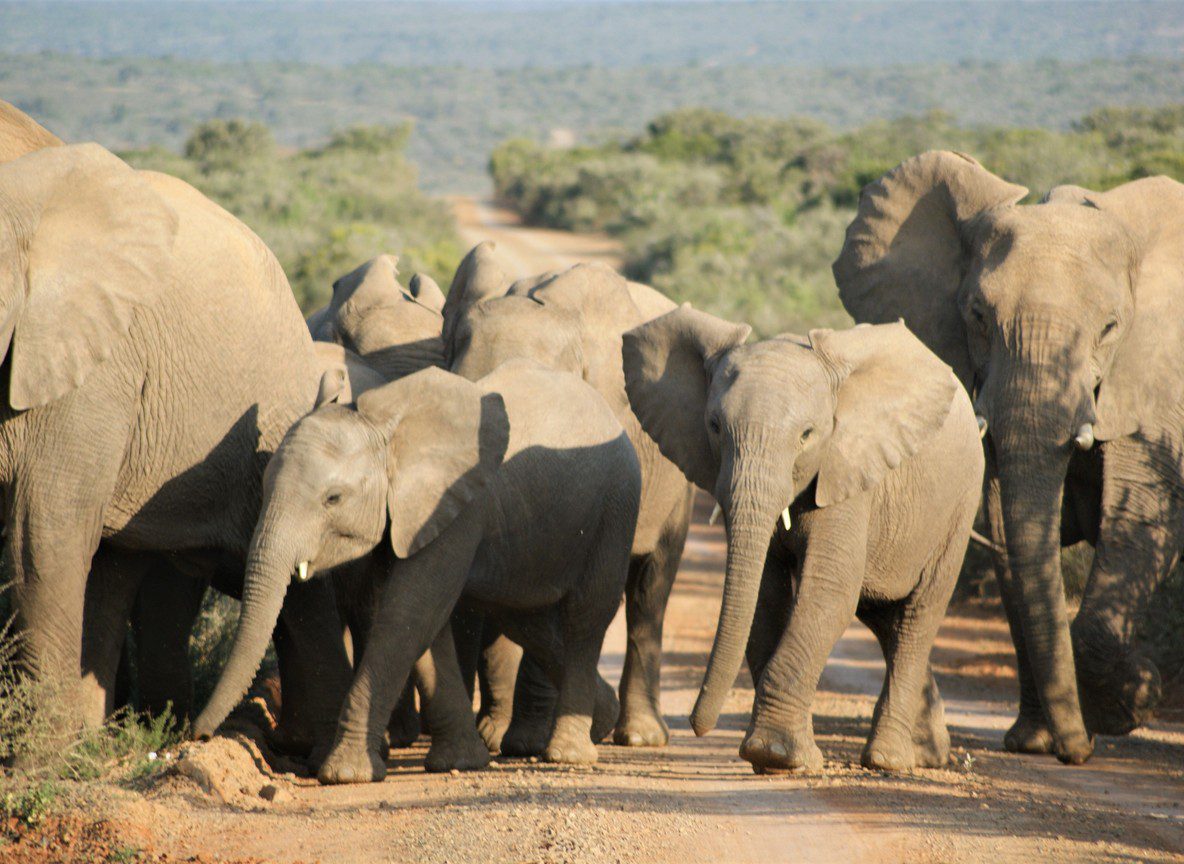
The park is also famous for its red dust. Iron-rich volcanic soil covers the roads, settles on vegetation, and stains everything in a distinctive terracotta tone, including the elephant herds that wallow and roll in it. Your clothing will accumulate this dust no matter how carefully you dress. The goal is not to avoid it but to prepare for it so it does not become the defining discomfort of your drives.
This guide covers what to wear in Tsavo East National Park across every part of the day, from the cold surprise of pre-dawn open-vehicle drives to the challenge of midday heat on the vast open plains and the quick temperature drop of evenings near the Galana.
What Makes Tsavo East’s Clothing Challenge Unique
Three conditions set Tsavo East apart from many other Kenyan destinations:
Heat: Daytime temperatures regularly reach 35-40°C in the dry season. The flat, exposed terrain offers little wind shelter and minimal canopy during active game drives. Heat is sustained and direct.
Dust: Tsavo East’s iron-rich red soil turns to fine particulate on unpaved tracks. On roads with active vehicle movement, a buff or scarf covering the nose and mouth is not optional. It is the practical difference between a comfortable three-hour drive and an uncomfortable one.
Distance: The park is enormous. Game drives here cover significant ground between wildlife sightings. Long vehicle hours mean clothing comfort across multi-hour seated stretches matters more here than it would in a smaller, more compact reserve.
Pack for all three, and you are ahead of most first-time visitors.
Which Colors Work Best in Tsavo East
The same neutral palette used across Kenyan safari destinations applies here, but Tsavo East adds a specific consideration: darker neutrals show the red dust staining less dramatically than pale ones.
Good choices for Tsavo East:
- Tan, warm khaki, and olive
- Brown and warm grey
- Dusty terracotta tones (the landscape will apply this anyway)
Colors to leave behind:
- Cream and pale khaki as your main palette (red soil stains light fabrics permanently by day two)
- Full white, which shows every dust particle
- Neon or bright shades
- Camouflage patterns
Darker neutral tones also make clothing easier to repeat across multiple days without looking heavily soiled, which is a practical consideration on longer itineraries.
Morning Game Drive Clothing for Tsavo East
Dawn in Tsavo East starts cool. Game drives begin before the sun has cleared the eastern horizon, and the flat open terrain allows overnight air to linger. In the dry season, morning temperatures around the Galana River can drop to 17-20°C before the sun builds any strength. In an open vehicle on the move, it feels colder still.
Start each morning with:
- Long trousers
- A breathable base layer against the skin
- A fleece mid-layer
- A light wind-resistant outer shell
- Closed lace-up shoes with warm socks
By 9am, the sun builds quickly across the open plains. The transition from cool to warm happens faster here than in greener or more elevated parks. Most travelers have removed the fleece and shell before 10am and moved to their midday setup.
Midday in Tsavo East: Heat and Dust Management
Midday in Tsavo East is the most challenging clothing situation on a standard Kenyan safari. The flat terrain traps heat at ground level, the red dust on active tracks is relentless, and the overhead sun offers no relief. A bush break or lunch stop provides a reset, but the afternoon drive continues in the same conditions.
The most effective midday setup:
- A lightweight long-sleeve shirt in breathable technical fabric
- Safari trousers with some ventilation
- A wide-brim hat or solid cap with a chin strap (vehicle movement and wind will dislodge a loose hat)
- Polarized UV sunglasses
- A buff pulled up over nose and mouth on dusty tracks
- Sunscreen applied to any exposed skin
This is the environment where long sleeves clearly outperform bare arms. A thin technical fabric blocks UV radiation and reduces the direct-sun sensation more effectively than any sunscreen alone, and it protects against the abrasive feel of dust particles in the wind from the vehicle.
Evening and Camp Clothing in Tsavo East
Most camps in Tsavo East sit along or near the Galana River. Evening temperatures drop noticeably once the sun sets, and after the heat of the afternoon drive the change can feel dramatic. A fleece is genuinely needed by dinner.
A practical evening set:
- A fresh pair of long trousers
- A clean long-sleeve top or light sweater
- A light fleece or knit layer
- Closed shoes for camp paths
Camps along the Galana range from tented bush properties to mid-range lodge settings, many with pools. For tented camps in particular, closed shoes are practical after dark. Sandy paths at night are uneven and often shared with other wildlife using the same routes.
Footwear Considerations for Tsavo East
Most visits to Tsavo East are vehicle-based, covering the open plains and Galana River route. Heavy trekking boots are not necessary.
For standard game-drive itineraries:
- One well-broken-in pair of trail shoes or sturdy walking shoes
- One lighter pair for relaxed camp use, such as sandals or camp shoes
The main footwear consideration specific to Tsavo East is dust accumulation inside footwear. Lace-up trail shoes keep fine red soil out better than slip-on styles. If your camp offers a ranger-guided riverside walk, which some Galana-adjacent camps do, ensure your shoes have a solid non-slip grip on sandy and rocky riverbank surfaces.
Tsavo East Safari Packing List: 7-Day Core
This covers most standard safari plans in Tsavo East:
- 3 to 4 lightweight tops (long-sleeve recommended for midday)
- 2 to 3 pairs of safari trousers
- 1 fleece or warm mid-layer
- 1 light outer shell or wind jacket
- 1 set of sleepwear
- 7 pairs of underwear
- 4 to 5 pairs of socks
- 1 wide-brim hat (chin strap recommended)
- 1 buff or dust scarf (do not underpack this item for Tsavo East)
- 1 pair of lace-up trail shoes
- 1 pair of camp shoes or sandals
Additions worth considering:
- Packable rain shell for the April-May long rains or November-December short rains
- Light gloves for particularly cold June-July dawn drives
- Swimsuit if your camp has a pool (many Galana River properties do)
Fabric Choices for Tsavo East’s Dust and Heat
Tsavo East’s sustained heat and heavy dust strongly favor technical synthetics over natural fibers.
Good choices:
- Polyester-blend or nylon-blend shirts and trousers (resist dust, dry fast, hold shape in heat)
- Merino wool base layers for early morning (temperature-regulating across the cold-to-hot daily swing, naturally odor-resistant over multiple days)
- Cotton-polyester blends for general afternoon comfort
Avoid:
- Pure heavy cotton, which holds heat and accumulates red dust visibly
- Denim for repeated game drive days
- Light-colored fabrics that will show red iron staining prominently throughout the trip
One realistic expectation to set before you arrive: accept that your clothes will pick up Tsavo’s characteristic red tone by day one. Darker neutrals show this less dramatically and maintain a cleaner appearance across a full itinerary.
Seasonal Packing Adjustments for Tsavo East
Dry season (January to March, June to October): Maximum heat and dust. This is when dust protection is most critical. Prioritize the buff, UV hat, and breathable technical fabrics. Sunscreen consumption is high in this period.
Wet season (April to May, November to December): Rain arrives in afternoon and evening, and the landscape transforms to green. Dusty tracks become muddy, so the red dust problem diminishes but mud becomes a new factor. Pack a reliable rain shell and quick-dry fabrics. Heat continues even in the wet months; humidity replaces dust as the main discomfort.
Key Accessories for Tsavo East
Items that genuinely improve daily comfort in this environment:
- Buff or dust gaiter (highest-priority accessory for Tsavo East specifically)
- Polarized sunglasses with strong UV rating
- SPF lip balm (direct equatorial sun dehydrates lips fast)
- High-factor sunscreen, applied before drives and reapplied during breaks
- Insulated water bottle (hydration in sustained 35-40°C heat is not optional)
- Headlamp for camp movement after dark
- Insect repellent for dawn and dusk near the Galana River
Common Packing Mistakes in Tsavo East
- Underpacking dust protection: one buff seems minimal until you spend three hours on a red dust track through the Yatta Plateau
- Forgetting the cold morning layer: the afternoon heat makes the morning temperature feel implausible until you experience it in an open vehicle
- Packing a pale-colored wardrobe only: red iron soil stains lighter fabrics within a single morning drive
- Using open or slip-on shoes on dusty tracks: fine soil accumulates inside footwear and becomes abrasive over long drives
- Leaving sunscreen out of the vehicle: it needs to be accessible for reapplication during drives, not packed at the bottom of a bag
Notes for Different Types of Visitors
Wildlife photographers: Tsavo East’s red-stained elephant herds and Galana River hippo pools reward patience and long waits. Dust protection that keeps eyes clear is also lens protection in spirit – the same awareness that makes you pull up a buff saves your glass from drive-by dust coating.
Families: Children in open vehicles on red-dust roads need the same protection as adults, but may be less patient with discomfort once heat builds. Dress them in the same layered approach, with extra buff or scarves in a side bag for quick deployment on dusty tracks.
First-time Kenya visitors: Tsavo East’s heat and dust can catch people off guard who have researched East Africa from a general starting point. This park runs hotter and dirtier than many destinations. Prepare specifically for it rather than defaulting to generic safari packing advice.
What to Read Next
For visitors doing a Tsavo circuit combining East and West, see the companion guide on what to wear in Tsavo West National Park, where the clothing considerations shift from dust and heat management toward elevation layering and varied terrain footwear. For broader Kenya packing context across multiple destinations, see our Kenya safari packing guide.