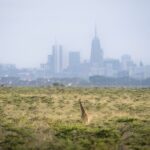
Nairobi National Park sits just seven kilometers from the city center, which makes it unlike any other wildlife reserve on the continent. You can be watching lions on open grassland while the Nairobi skyline holds its place on the horizon behind them. That proximity reshapes how seasonal planning works here, because your trip timing is governed not only by wildlife patterns and rainfall but also by the city’s own rhythms: conference calendars, international arrival peaks, and the schedules of business travelers tacking a bush morning onto a Kenya working trip.
None of that means the wildlife case is less serious. Lions, leopards, cheetahs, black rhinos, buffalos, hippos, and well over 400 bird species live within the park’s 117 square kilometers of open grassland, riverine forest, and scrub. For travelers on tight Kenya itineraries, it often provides the only viable game drive option. For those with more time in-country, it functions well as a first or final day spent in the bush without burning a full travel day.
What follows is a practical season-by-season breakdown so you can match your visit to your priorities.
The Core Seasonal Structure
Nairobi’s rainfall calendar divides the year into four recognizable phases:
- Dry season: June to October. The most popular window for game drives.
- Short dry period: January to March. Stable, warm, and good for first-time visitors.
- Long rains: April to May. Wettest months, with periodic track closures.
- Short rains: November to December. Brief showers, transitional conditions, and fewer crowds.
One feature that sets Nairobi National Park apart from remote destinations is the open southern boundary. Wildlife moves in and out across the Athi-Kapiti plains depending on rainfall and grass conditions. This means the dry-season concentration effect is particularly pronounced here: animals drawn inward by shrinking water sources outside the park tend to cluster in predictable corridors, which improves tracking efficiency.
January to March: Warm, Clear, and Well-Suited to Planning
This is a reliable window. Rainfall is minimal, skies are generally clear, and daytime temperatures sit in a comfortable range. Game drives run smoothly across most sectors of the park, and the light quality in the morning hours suits photography well.
What makes January through March work for many travelers:
- Stable conditions that require little contingency planning
- Good road surface across most of the park
- Pleasant temperatures at sunrise, warm but not excessive by midday
- Mid-range lodge and camp pricing at most city-adjacent properties
The park’s black rhino population tends to be more reliably spotted during this period, particularly in the denser bush sections near the Mbagathi River. Lion prides are active on the open plains in the early morning.
This window sits between the high-demand dry season and the heavy-rain uncertainty of April and May, which makes it a balanced choice for those who want consistency without peak-season pricing.
April to May: Long Rains, Green Scenery, and Lower Occupancy
April and May are the wettest months in Nairobi, and that affects the park more visibly than some travelers expect. Tracks in lower-lying areas can become muddy or temporarily impassable after sustained rain, and daily schedules benefit from built-in flexibility.
That said, these months are not a write-off:
- Vegetation is lush and visually dramatic, particularly around riverine zones
- Bird activity peaks during this period, with migratory species present
- Accommodation prices drop across city-linked properties
- Crowd levels thin noticeably, and game drives feel more private
The practical adjustment is timing. Early-morning drives often catch the best conditions before afternoon rain builds. Travelers who can move their park entry window around daily weather do well in this period. A lightweight rain jacket and waterproof storage for camera gear handle most of what you encounter.
One thing worth knowing: Nairobi National Park’s relatively compact size means that even in wet months, you can complete a meaningful loop and return to the gate before conditions deteriorate. That is an advantage remote parks do not offer.
June to October: The Classic Dry Window
This is when the park operates at its most efficient for wildlife tracking. Grass is short, water sources are concentrated, and animal movement follows predictable patterns toward the remaining pools and river stretches.
Key features of this period:
- Excellent visibility across open grassland zones
- Higher likelihood of multiple species sightings on a single morning drive
- Cheetah activity is often strong on the central plains
- Predictable logistics for half-day safari formats
The trade-off is demand. June through October is the busiest window, and city-adjacent properties book up quickly for specific dates. Anyone wanting preferred properties or specific time slots for game-drive permits should plan several months ahead. Pricing reflects the demand.
Morning temperatures during the dry season can be genuinely cold at park opening time. A warm layer for the first hour of the drive is practical, not optional, particularly from July through September when Nairobi nights dip notably. By midday the park is warm and comfortable.
November to December: Short Rains and a Quieter Pace
November and December bring the short rains, which are typically less sustained than the long rains and arrive in afternoon or evening bursts rather than all-day patterns. Morning game drives often proceed in excellent conditions, with fresh green scenery and active wildlife.
Why this window suits certain travelers:
- Fewer visitors than the July-to-September peak
- Accommodation rates soften compared to mid-dry-season highs
- Bird diversity is high, with resident and migratory species overlap
- Green landscape tones create a different visual character from dry-season drives
Planning note: rain patterns vary year to year. November can be drier than expected in some years, while December occasionally sees sustained showers that affect some tracks. Checking recent conditions through local contacts or camp managers before your arrival date is always worthwhile.
Wildlife Patterns by Season
The park’s open southern boundary creates a seasonal ebb and flow that differs from fully enclosed reserves. During dry months, wildlife concentrations inside the park intensify as animals from surrounding plains seek reliable water. The hippo pools along the Mbagathi River become focal points during this time, attracting not only hippos but a supporting cast of crocodiles, waterbuck, and water birds.
In green months, the same animals disperse more widely. Sightings can require more patience and longer loops, but the reward is often more naturalistic behavior: predators on the move across open ground, young animals in family groups, and vegetation that frames wildlife in richer visual contexts.
For birders, the green and transitional periods are often the most productive. The park hosts over 400 species, and migratory arrivals during the November-to-April window add significantly to encounter variety.
Planning Notes for Each Traveller Profile
Short-stay travelers and city stopovers: The park’s proximity makes it viable in almost any season. A sunrise drive that ends before 9am fits most city itineraries regardless of the month.
First-time Kenya safari visitors: January through March or June through September offer the most straightforward conditions and the clearest sense of what savanna wildlife viewing involves.
Photographers: The dry season delivers sharp morning light and clean sightlines. The green season delivers dramatic skies, vivid vegetation, and behavioral richness. Both have genuine appeal depending on your subject priorities.
Budget-conscious travelers: April, May, and November offer the most competitive pricing on city-linked properties, and the experience is genuinely worthwhile when daily timing is built around weather.
Practical Packing Notes
Nairobi National Park’s weather changes within a single day more visibly than at remote bush destinations.
For dry-season visits, pack a warm layer for the opening drive, then plan for warm midday temperatures. Dust is present on unpaved tracks in the dry months, so a buff or light scarf is useful, and camera gear benefits from a dust-resistant bag.
For green-season visits, a packable rain shell is the key addition. Quick-dry fabrics are worth the investment given the possibility of damp conditions early in a drive. Waterproof storage for electronics covers most scenarios.
What Makes the Timing Decision Here Different
Most Kenya destinations sit far from urban infrastructure, which means seasonal planning centers almost entirely on wildlife and weather. Nairobi National Park adds a third variable: the city itself. Event weeks, school holidays, and international conference schedules all affect accommodation availability and pricing for city-adjacent properties, sometimes more sharply than any wildlife calendar would predict.
The practical advice is to check both the seasonal wildlife context and the Nairobi events calendar when choosing your dates. That combination gives a clearer picture of what you will actually find, at what cost, and with how much company on the morning drive.
Explorer Notes
If you are building a longer Kenya itinerary, Nairobi National Park works particularly well as the opening day of a route that continues into the Maasai Mara or Amboseli. The drive from the park gate to Wilson Airport is short, and morning game drives typically end in time for midday flight connections to bush airstrips.
For a deeper look at how Nairobi National Park fits within a broader Kenya safari circuit, the team at Trunktrails Safaris operates Kenya-focused routes and can provide current ground-level seasonal intelligence.
You may also find it useful to read our Kenya safari planning overview and the best time to visit Kenya for context on how this park fits into a wider itinerary.
Frequently Asked Questions
What is the best month to visit Nairobi National Park? June through September offers the most consistent wildlife tracking conditions. January through March is a strong alternative with fewer crowds and moderate pricing.
Can you visit during April and May? Yes, with flexibility built into your daily schedule. Early morning drives often perform well even in wet months, and accommodation rates are more competitive.
How long does a typical game drive take? Most morning drives run three to four hours and cover the central plains loop plus the hippo pools. Half-day and full-day options exist, though the park’s size means a half-day is often sufficient for a solid first visit.
Is the park worth visiting if you have more time in Kenya? Absolutely. Combine it with Maasai Mara, Amboseli, or Tsavo for a complete Kenya circuit. See our Kenya national parks comparison for route ideas.
Turn this reading into a real itinerary with help from a Kenya-based safari team.
Start Planning Your Safari