The river is still. On the far bank, the wildebeest have been there for two hours. The column stretches back across the plain as far as you can see: hundreds of thousands of animals pressing forward and then stalling, pressing and stalling, in a rhythm that makes no apparent sense until the first animal plunges in. Then the decision is made for every animal behind it simultaneously, and the water turns to chaos.
The Mara River crossing is the defining event of the East African wildlife calendar. In terms of sheer biological scale, from the volume of animals to the predator density, the ecological significance, and the visual intensity of the event itself, nothing else quite matches it anywhere on earth. But witnessing a crossing, rather than simply hoping for one, is largely a function of knowledge: knowing when the crossings happen, where they happen, and how to read the behaviour that precedes them.
This guide covers all of that, including camp selection, photography preparation, and the honest probability of seeing a crossing with different numbers of nights in the Mara.
When Do the Wildebeest Cross the Mara River?
The crossing season runs approximately July to October. Within that window, individual crossing events cluster unpredictably. Here is the breakdown across the season:
Early season (July to mid-August): The first herds typically reach the Mara River in the third week of July, though timing varies by two to four weeks depending on the year’s rainfall pattern in the Serengeti. Early season crossings are often the most dramatic because the herds arrive large and fit, and the Nile crocodiles have been waiting since the previous season. The estimated crocodile population in the Mara River during crossing season exceeds 4,000 individuals.
Peak season (mid-August to September): The highest frequency of crossings, with multiple points in the ecosystem active simultaneously. The Mara Triangle and the main reserve both see regular activity. This is also the period with the most observer vehicles in the field.
Late season (October): The herds begin moving back south through the Mara Triangle toward the Serengeti. South-bank crossings become more frequent. River levels may be lower, which influences crossing point selection by the herds.
| Period | Herds | Crossing Frequency | Vehicle Pressure |
|---|---|---|---|
| Mid-July | First wave arriving | Low to moderate | Lower |
| August to September | Peak herds present | High | Highest |
| October | Return crossings | Moderate | Decreasing |
Where Do the Wildebeest Cross?
This is the question that separates a productive crossing safari from a frustrating one. The Mara River has approximately 8 to 12 established crossing points used repeatedly across generations of migrations. They are not random. The herds select crossing points based on bank configuration, current water level, and what appears to be accumulated memory from previous crossings. The same locations are used year after year.
Crossing 1 (Upper Mara River, north of Sekenani Gate): One of the most frequently used crossing points in the main reserve. The bank configuration creates a natural funnel that draws large herds. Vehicle access is good, and the crossing point is wide enough that crocodile activity is visible from a safe distance on the bank.
Crossing 2 (Governors’ Camp area): Adjacent to the historic Governors’ Camp on the northern bank, this has historically been one of the most reliable crossing points in the ecosystem. Guests staying at Governors’ Camp can be positioned at this crossing within ten minutes of a guide’s radio call.
Crossing 12 (Mara Triangle): The Mara Triangle sector is managed by the Mara Conservancy, which enforces strict vehicle limits. Vehicle pressure here is significantly lower than in the main reserve even during peak season. The Triangle’s crossings tend to draw smaller sub-herds that have moved north through the reserve and are heading south again.
Conservancy crossings (Olare Motorogi and Mara North): The private conservancy crossing points are accessible only to guests staying within those conservancies. Vehicle limits of three per sighting mean that when you do position at one of these crossings, the experience is qualitatively different from the main reserve. Not every guest will be at the right point at the right time, but for those who are, the intimacy of the encounter is not available at the main reserve sites.
How to Read Crossing Behaviour
Understanding what happens in the herd before a crossing begins turns a passive wait into an active observation. This is what guides trained on the Mara river watch for:
Herd pressure on the near bank. When the herd has been building for 30 to 40 minutes and the column extends back out of sight, crossing pressure is high. A trigger animal is likely within the next hour, though there are no guarantees.
The false starts. Wildebeest routinely approach the bank, one or a small group begins descending, and then the group loses nerve and retreats. This can repeat a dozen times across a two-hour wait. False starts are not failures. They are a predictable part of the sequence, and the guide who keeps you at the bank through several of them is the guide most likely to be there when the real crossing starts.
The trigger animal. A crossing begins when a single animal, often a larger bull, commits beyond the point of recovery and enters the water. At that moment, the behaviour of the herd behind it shifts from individual to collective, and the crossing begins. Once it starts, it rarely stops until the lead animals are across and the pressure on the bank dissipates.
River reading. The crossing point the herd selects is influenced by the current water level, the slope of the entry bank, and the memory effect described above. A guide who knows the river’s current level can often narrow the likely crossing point down to two or three candidates before the herd makes its decision.
Crocodile positioning. Nile crocodiles in the Mara during crossing season are not randomly distributed. Large individuals hold the deep-water sections of the most frequently used crossing points. A guide with detailed knowledge of the river’s crocodile territories can estimate likely intercept points with reasonable accuracy.
The Predator Dimension
A Mara River crossing is not a wildebeest event with crocodiles on the side. It is a full predator activation that draws the entire carnivore community of the Mara ecosystem.
Nile crocodile is the primary predator at the crossing. Individuals up to five metres are present in the Mara River. During a major crossing, crocodile hunting success rates are high: a mature crocodile can take a wildebeest or zebra in a single ambush strike from below the water surface.
Lion positions on the far bank. Prides learn the crossing schedule and move to intercept animals emerging from the water in an exhausted state. A coordinated pride can take multiple animals during a single large crossing event.
Leopard is less commonly seen at crossings than lions but is present along the gallery forest sections of the river bank, particularly in the conservancy sectors.
Spotted hyena clans follow the migration closely. Post-crossing scenes on the bank include scavenging hyenas competing for kills from natural attrition during the crossing itself. The biomass transfer during a large crossing event is one of the largest wildlife phenomena that takes place on any given day in East Africa.
Photography at the Mara River Crossing
The crossing is technically demanding. Fast movement, unpredictable action, dust, water spray, and variable light all work against a passive approach. Some preparation makes a significant difference.
| Variable | Recommendation | Reason |
|---|---|---|
| Shutter speed | 1/1000s minimum, 1/2000s for crocodile strikes | Freezing chaotic water movement |
| Aperture | f/5.6 to f/8 | Maintaining depth of field for multi-animal scenes |
| ISO | 400 to 800, adjusted for conditions | Morning crossings often in partial shade |
| Burst mode | Always on | Action sequences need every frame |
| Focal length | 300 to 500mm for compression, 70 to 200mm for context | Carry both if the vehicle allows it |
Positioning. The east bank of the main crossing points faces west, meaning morning light comes from behind a photographer looking west: ideal conditions. Afternoon light reverses this. Ask your guide to position the vehicle with the sun at your back where the terrain allows.
An ethical note. Driving into the river or onto the crossing path to get closer is prohibited and causes genuine harm by disrupting crossings that have already begun. The best images from the Mara crossings are made from established bank positions with long lenses. The photographers whose work you have likely seen from these crossings were not closer to the action than the bank positions allow.
Which Camps Give You the Best Crossing Access?
Camp position is the single most important logistical decision you make for a crossing safari.
For main reserve crossings:
- Governors’ Camp (main reserve): Classic position five minutes from Crossing 2, with an experienced guiding team and long institutional history on this section of the river
- Angama Mara (Mara Triangle): Exclusive access to Triangle crossings with strict vehicle limits; outstanding guiding standards
For conservancy crossings:
- Kicheche Mara Camp (Mara North): River access in the northern conservancy with conservancy crossing activity during migration season and strict vehicle limits
- Porini Ol Kinyei: River crossing access within the Ol Kinyei sector, with a guiding team that is among the most knowledgeable in the ecosystem
For a stay focused specifically on crossings, a conservancy camp as the primary base (three nights minimum) combined with at least one full day exploring the main reserve crossing points by long game drive is a structure that gives you both the quality of a conservancy experience and access to the highest-volume crossing locations. The Mara North Conservancy guide covers the northern conservancy camp options in detail.
For the timing specifics of when the 2026 migration is expected to reach the river, the Masai Mara migration arrival guide has the most current seasonal forecast.
Practical Planning: Building Your Crossing Safari
Minimum nights: Four nights in the Mara ecosystem during peak migration season. Crossings do not happen on demand. Four nights gives you eight morning and evening game drive windows, which produces a statistically high probability of witnessing at least one crossing.
Honest probability assessment: With four nights at a well-located camp during August or September, the probability of witnessing at least one complete crossing sits at approximately 70 to 80 percent, based on historical patterns. The main variable is whether your guide communicates actively across the ecosystem’s radio network and whether your camp’s schedule allows three or four hours at the river without a fixed return time. Camps that operate tight schedules often miss crossings that begin after the turn-around hour.
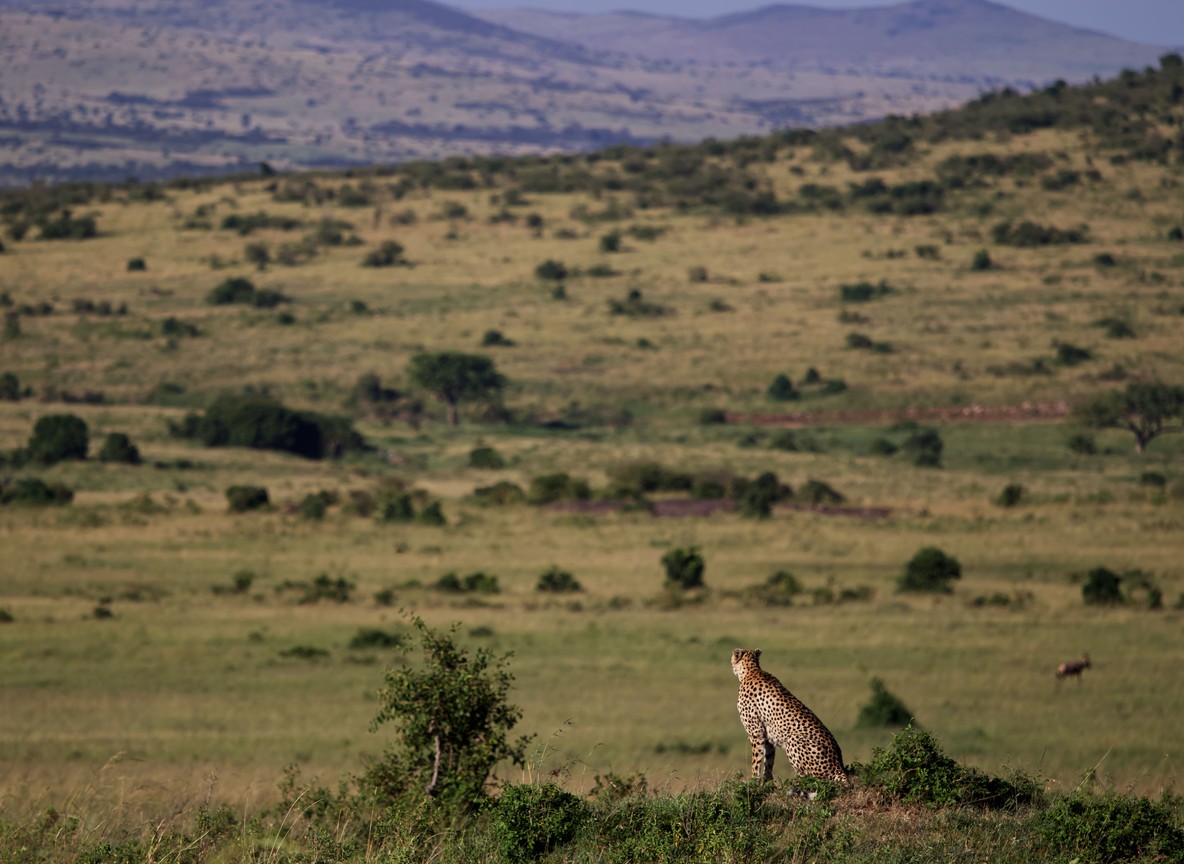
When no crossing happens: The Mara during migration season is extraordinary regardless of river crossing activity. Lion density is at its seasonal peak, cheetah are active across the open plains, and the sheer scale of the herds on the grassland is a spectacle worth seeing for its own sake. A crossing is the peak event, not the whole event.
Arriving With the Right Expectations
The crossing takes between twenty minutes and three hours. When it ends, the river bank is churned to mud, crocodiles are retreating to deeper water, and the wildebeest on the far bank are shaking water from their flanks and beginning to graze with an equanimity that feels almost out of place after what just happened. They have crossed. The migration continues. The Mara will see them again in October, heading south.
The best preparation for the crossing, beyond the practical logistics above, is patience and flexibility. The travellers who come home with the strongest memories are consistently those who were willing to sit at the bank for four hours without a guarantee. That willingness is not luck. It is a decision made before you arrive.
For a complete picture of how the migration fits into a multi-day Mara itinerary, the 5-day Masai Mara migration safari guide covers the full structure with the crossing as its centrepiece.
Turn this reading into a real itinerary with help from a Kenya-based safari team.
Start Planning Your Safari