Some properties in the Maasai Mara compete on room count and facilities. Mara Bush House competes on something more specific: the feeling of having the bush almost entirely to yourself, sitting on the boundary of one of the world’s great wildlife reserves, with the sounds and sightings that come with it.
That is a particular kind of experience. It suits a particular kind of traveller. This guide breaks down what the property actually delivers, what that border location means for your game drives, and how to think about whether it belongs in your Maasai Mara plans.
The Significance of Bordering the Reserve
The word “bordering” does real work when you are choosing where to stay in the Maasai Mara. Mara Bush House sits directly adjacent to the Masai Mara National Reserve boundary. That means a few things:
Wildlife does not clock off at the reserve fence. Animals move through and around reserve boundaries continuously. A camp positioned on the edge of the reserve will often encounter elephant, giraffe, and predators moving through the property itself, not just on formal game drives inside the reserve.
Drive access is immediate. You are not doing a 30-minute transfer to reach the reserve gate before your morning drive begins. That time difference compounds across a multi-night stay. On a four-night trip, the difference between a 20-minute drive to the gate and a five-minute one can amount to several extra hours in the field.
The landscape outside the reserve has its own character. The areas bordering the national reserve include acacia woodland, seasonal drainage lines, and transitional habitat that some species prefer. Leopard sightings, in particular, are often more frequent in these buffer areas than on the open plains.
For detailed information on the reserve’s geography and management, the Kenya Wildlife Service publishes current information at www.kws.go.ke/content/maasai-mara-national-reserve.
Accommodation and the House Experience
Mara Bush House is designed around the idea of a private house in the bush rather than a conventional tented camp. That distinction is worth understanding before you book, because it shapes the entire experience.
In a standard tented camp, guests share communal dining and lounge areas with other travellers and follow a shared schedule. A bush house model typically involves a dedicated team serving a single group of guests, meals at times that suit your party, and a flow to each day that you can adjust based on what you saw that morning or what you want to prioritize that afternoon.
What the Accommodation Delivers
The house format usually involves a small number of individually designed sleeping spaces built around a shared social area. You are not in a row of identical tents. The layout is more likely to include a sitting room that opens directly to the bush, a veranda for morning coffee while waiting for the guide to call, and a dining arrangement that works around your group rather than a fixed service schedule.
Before confirming a booking at any property like this, it is worth clarifying:
- The number of bedrooms and their configuration
- Whether all sleeping spaces are comparable in size and aspect, or whether there is a main suite and smaller rooms
- Children’s policy and any minimum age requirements
- Whether private vehicles and guides are included or charged separately
- Staffing model and how many people are allocated to your group
Why the Details Matter More at This Price Point
At the upper end of Maasai Mara accommodation, you are paying for specificity: a specific experience, a specific atmosphere, a specific level of personal attention. The gap between expectations and delivery is more costly here than at a mid-range camp. Getting clarity on those details before you travel is not being overly cautious, it is how you make sure what arrives matches what you paid for.
Wildlife Access from Mara Bush House
The Resident Wildlife Picture
The Masai Mara National Reserve is one of the most consistently productive wildlife areas in Africa. Resident populations of lion, leopard, cheetah, elephant, buffalo, hippo, crocodile, and large herds of plains game are present throughout the year. A property bordering the reserve has direct access to this without the variability of a conservancy that relies on wildlife moving through from elsewhere.
Key things to understand about the wildlife calendar:
- Year-round: Lion prides, elephant herds, and all of the big herbivores are present and consistently findable by experienced guides
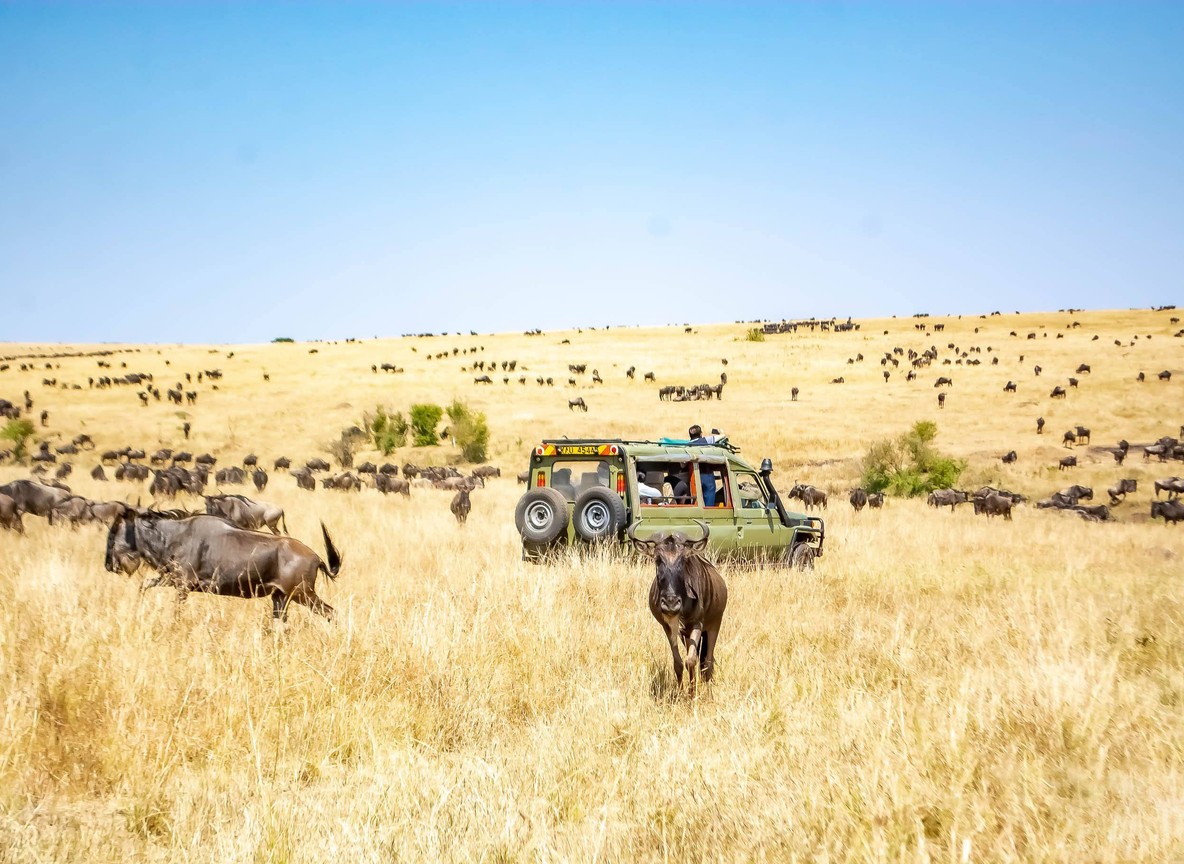
- July to October: The Great Migration brings enormous wildebeest and zebra herds up from the Serengeti. River crossings happen along the Mara River and its tributaries. This is peak season for a reason.
- November to June: Fewer tourists, lower rates, and excellent predator activity as resident wildlife is less disrupted. Calving season in January and February brings extraordinary predator-prey interaction.
Drive Planning and Guide Intelligence
The quality of your game drives at any Maasai Mara property comes down significantly to the guide. An experienced guide with years in the specific territory around Mara Bush House will know where individual lions slept last night, which drainage line the leopard has been using, and where the elephants are likely to water this afternoon.
When assessing any property at this level, it is worth asking directly: how long have the guides been working in this specific area, and are they permanent staff or brought in from a pool?
How Mara Bush House Compares to Other Maasai Mara Options
The Maasai Mara accommodation landscape splits into a few clear tiers:
| Property Type | What You Pay For | Who It Suits |
|---|---|---|
| Budget tented camps | Functional base, shared facilities, park access | First-time travellers, budget-conscious visitors |
| Mid-range camps | Better comfort, better guides, more inclusions | Most safari travellers |
| Luxury tented camps | Private game drives, premium guide quality, higher service ratios | Experienced safari travellers, honeymooners |
| Bush house / exclusive-use | Total privacy, dedicated team, personalised flow | Families, small private groups, milestone occasions |
Mara Bush House sits in the bush house / exclusive-use category. It is not competing with tented camps on value-for-money in the conventional sense. It is offering something fundamentally different: a private environment rather than a shared one.
If privacy and total flexibility are lower on your priority list than maximizing wildlife time and getting the best guide in a shared vehicle, a well-chosen luxury tented camp might actually deliver more safari satisfaction at a lower price point.
If the idea of sharing your evening around a campfire with other travellers from other countries sounds appealing rather than intrusive, a smaller communal camp has genuine social energy that a private house does not replicate.
Neither is wrong. They are just different experiences.
Explorer Notes
A few things that do not always come up in the standard property descriptions:
- The green season (November through March outside the short rains) is genuinely underrated at properties like this. Rates are lower, the bush is lush, and the predator-prey action during calving season is extraordinary. The migration is gone but the resident wildlife is still there.
- If your group includes children, confirm the minimum age policy. Many exclusive-use properties are more accommodating than standard camps for younger guests because you have the property to yourselves.
- A private house format usually means you can negotiate the day’s schedule in real time. If the guide finds a lion kill at 08:00 and the action looks like it will run for hours, you can stay. You are not watching the clock to make sure you are back for a shared lunch service.
- Night drive access depends on whether the property is within the national reserve or in a conservancy area. Confirm this specifically if night drives matter to you, since they are generally not permitted inside the reserve boundaries.
Planning Your Stay
Mara Bush House rates vary significantly by season, with peak migration months commanding substantially higher prices than shoulder and green seasons. Packages typically include accommodation, meals, game drives, and transfers from the nearest airstrip. Park fees may be additional.
For current availability and rates, and to compare Mara Bush House against other suitable options for your group, the team at trunktrailssafaris.com can advise based on your specific dates and group composition.
For broader planning guidance on Maasai Mara accommodation tiers, seasonal timing, and first-time safari structure, the destination guides at touringinsights.com are a good starting point.
Frequently Asked Questions
Is Mara Bush House exclusive use?
The property is designed for exclusive-use bookings, meaning you take the whole house rather than individual rooms. This is standard for properties in this category.
What is the minimum group size?
Exclusive-use properties typically have a minimum booking that covers a set number of rooms regardless of how many guests are using them. Confirm the current minimum occupancy requirement before pricing your trip.
Does Mara Bush House include private game drives?
Private drives are usually standard in this format, but confirm what is included in the rate and whether a dedicated vehicle and guide are provided or need to be arranged separately.
Is the location good for the Great Migration?
Being on the reserve border gives you excellent migration access. Your guide will route drives toward river crossing areas during peak migration weeks (typically August and September).
Can families with young children stay here?
Often yes, and exclusive-use properties are generally more family-friendly than shared camps for this reason. Confirm the minimum age policy with the property before booking.
Where can I find more Maasai Mara accommodation comparisons?
Detailed accommodation guides covering different sectors and price points are available at touringinsights.com.
If this guide has you ready to travel, a safari specialist can handle the route, camps, and logistics end to end.
Want to Book a Tour With Us?Further reading
More safari planning resources
- Interactive Maasai Mara map from Valley Safaris
- Masai Mara destination guide on FindMySafari
- Luxury safari collection on FindMySafari
- Big Five safari collection on FindMySafari
Related guides: Masai Mara Food: A Complete Guide to Safari Dining, Bush Meals, and Local Cuisine.