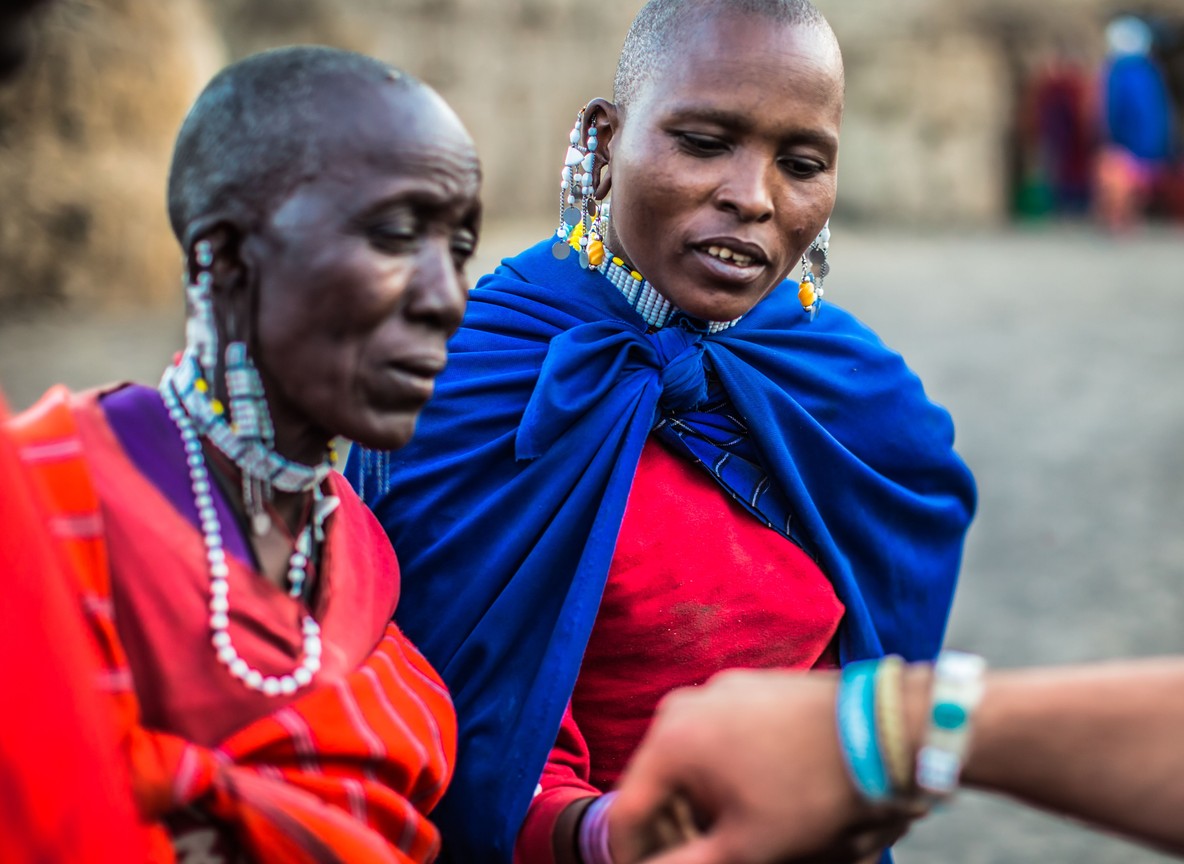
She built the house you are standing in.
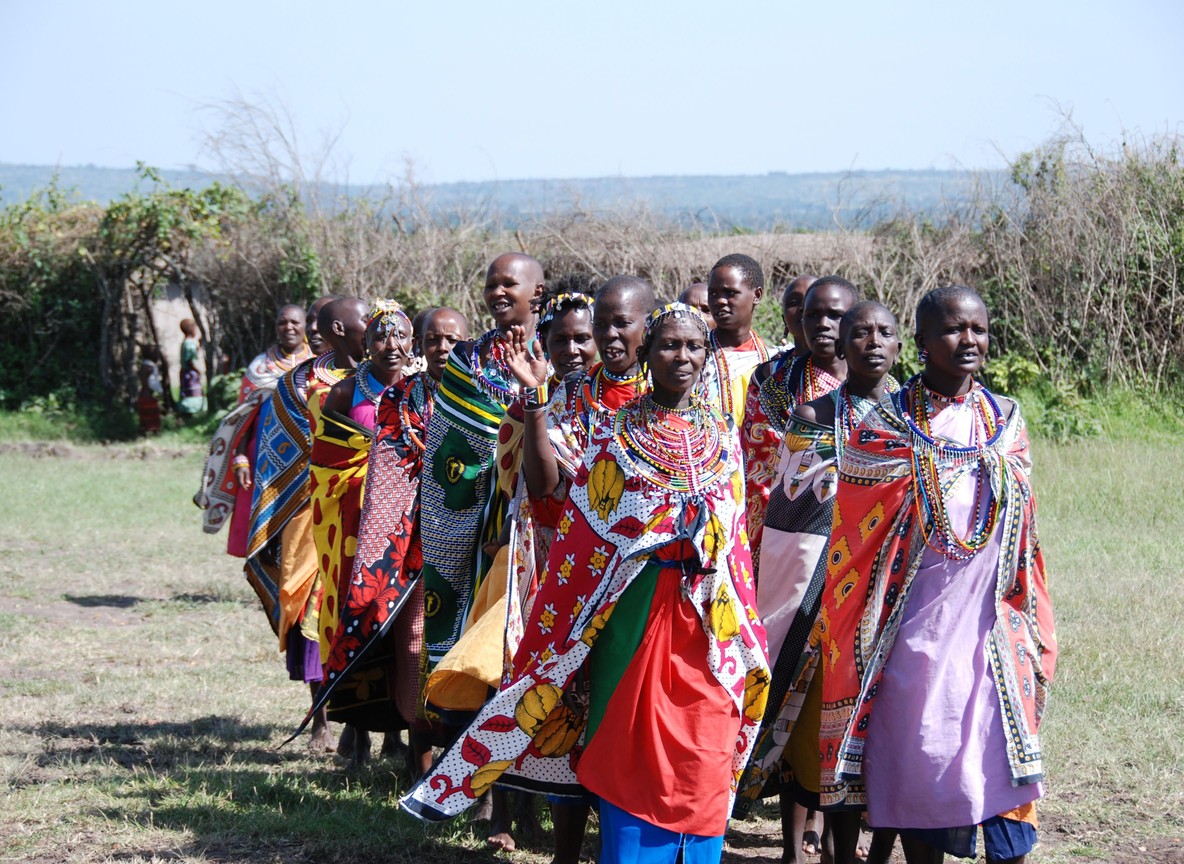
Not metaphorically. Literally. The woman with the elaborate beaded necklaces that catch every angle of the afternoon light built this structure from the ground up, with her own hands. And when it is no longer needed, she will build another one.
Maasai women hold a position in their society that is more complex, more skilled, and more economically central than any postcard suggests. They are builders, craftswomen, mothers, farmers, and — with each passing generation — entrepreneurs, educators, and advocates. Understanding Maasai women means setting aside the assumption that a traditional culture is a simple one.
The Role of Women in Maasai Society
The role of Maasai women is both deeply practical and deeply symbolic.
Building and Owning the Home
The most concrete expression of women’s status in Maasai culture is property. Maasai women build the inkajijik, the houses inside the homestead. They construct the wooden frame, plaster the walls with a mixture of mud, cattle dung, ash, and urine, and shape the internal layout from memory. The house belongs to the woman who builds it.
In a separation, the man leaves. The woman stays in her house. This is not symbolic ownership — it is binding within the community’s customary law.
Managing the Enkang
Women run the daily operations of the enkang (homestead). A typical day includes:
- Milking cattle and goats morning and evening
- Cooking all household meals
- Collecting water, often 5 to 15 kilometres away
- Caring for children and elderly family members
- Cultivating vegetable plots where land and water allow
- Managing household food stores and barter exchanges
The physical load is significant. What looks like a quiet domestic life from the outside is, on the ground, relentless skilled labour.
Maasai Women’s Roles by Life Stage
Maasai social structure shapes a woman’s responsibilities at each stage of life.
Girlhood (Ntito): Domestic apprenticeship, bead education, caring for younger siblings.
Coming of age: Rite-of-passage ceremony, accumulation of ceremonial beadwork.
Junior wife (Inkiama): Building the marital home, establishing household, bearing children.
Senior wife (Enchamuata): Household authority, management of junior wives, custodian of family knowledge.
Elder woman: Community mediation, cultural transmission, ceremonial advisory role.
Senior wife status carries real authority. A senior wife manages resources across the entire homestead, arbitrates disputes between co-wives, and controls the distribution of milk — the most important daily commodity in Maasai life.
Beadwork: Craft, Identity, and Economy
Maasai women’s beadwork is not a hobby. It is a skilled trade with genuine economic value and a sophisticated visual language.
Women spend hours each day on beadwork: necklaces, earrings, bracelets, anklets, and ceremonial collars. Each piece carries meaning. The colours communicate age, marital status, life events, and regional identity. Red stands for bravery and blood. White for purity and cattle. Blue for the sky and water. A bride’s wedding collar tells the story of every woman who helped raise her.
In communities near tourism corridors, beadwork represents a significant household income stream. The most visitor-respectful approach to buying is purchasing directly from the women who made the pieces — direct exchange with no intermediary commission.
Maasai Marriage: Structure, Ceremony, and the Olpul
Maasai marriage traditions are among the most discussed aspects of the culture, and among the most frequently misread.
Arranged Marriage and Bride Price
Traditional Maasai marriages are family-arranged. The bride’s father and the prospective husband’s family negotiate terms, including a bride price paid in cattle, goats, and sometimes honey beer. Bride price is not a purchase — it is a formal recognition that a woman of value is leaving one community to join another, creating binding obligations between both families for life.
Polygamy and the Co-Wife Structure
Maasai men may take multiple wives, each with her own house within the shared enkang. Co-wives are called enaboyok. The relationship can involve competition, particularly over resources, but it is also frequently a practical support network. Co-wives share childcare, domestic labour, and social companionship across years and decades.
The junior wife versus senior wife distinction matters. A junior wife (inkiama) enters an established household and defers to the senior wife on most household decisions. Over time, as she bears children and builds tenure, her authority grows. Eventually she becomes senior wife herself: the household’s central organising figure.
The Olpul Ceremony
The olpul is a meat-eating ceremony that sits at the heart of Maasai social life. Traditionally held by junior elders as a rite of strength and solidarity, women are excluded from the ceremony itself, but their role in preparation is central. They prepare the enkang, manage logistics, and feed the broader community during the days surrounding the feast.
The Wedding Ceremony
Maasai wedding ceremonies run for several days and include singing, dancing, feasting, and animal slaughter. The bride wears her most elaborate beadwork — pieces accumulated across her entire childhood, made by her mother, grandmothers, and aunts. She leaves her birth community wearing those pieces. It is a visual record of every relationship that shaped her.
Female Circumcision and the Shift Happening Now
Female genital cutting (FGM/C) has historically been a rite of passage marking a girl’s transition to womanhood and marriageability. Both Kenya and Tanzania have passed laws against the practice — Kenya’s Prohibition of Female Genital Mutilation Act (2011) criminalises it for anyone under 18.
The more significant change has come from inside communities. Women-led organisations run by Maasai community members have developed alternative coming-of-age ceremonies that confer the same social transition without the physical procedure. Rates have declined in many communities, particularly where girls have greater access to education.
The shift is uneven. It varies between communities, between remote and accessible areas, between traditional and education-exposed families. The critical point: this change is being driven by Maasai women themselves, not imposed from outside.
Maasai Women’s Education: Progress and Pressure
Access to education has improved significantly over two decades, but the pressures remain real.
Historically, girls were far less likely than boys to complete primary school. Early marriage, domestic workload, and cultural expectations about girls’ roles pulled them out before education could take hold. That pattern is changing, but slowly, and unevenly.
What has moved the needle most:
- Government primary school programmes that reduced direct school costs
- Scholarships and boarding school access that separate girls from early-marriage pressure
- Maasai women graduates returning to their communities as teachers and health workers — visible proof that education leads somewhere
- Mothers advocating for daughters, perhaps the most underrated driver of change
Girls who complete secondary school are significantly less likely to marry early and more likely to delay first pregnancy. Education is the single most effective lever for expanding Maasai women’s rights in practice rather than just on paper.
Visiting Maasai Communities: What to Look For
When you visit a Maasai community on safari and watch women demonstrate house construction or sit with beadwork makers, you are seeing live economic activity and active cultural practice — not a staged performance.
Signs of a genuine, community-benefiting visit:
- Beadwork is sold directly by the maker with no intermediary
- A community guide explains roles and structure without sanitising complexity
- The visit is led by community members on their own terms
- Children are in school during morning hours, not presenting to tourists
For broader context on Maasai society, the Maasai culture and people guide covers the full age grade system, cattle culture, warrior traditions, and the relationship between Maasai communities and wildlife conservation in the Masai Mara.
Conclusion
Maasai women are the builders, resource managers, cultural custodians, and economic backbone of their households and communities. The visible drama of Maasai culture — the warriors, the ceremonies, the jumping — does not happen without the invisible daily labour that women provide.
What is changing is not the values that underpin that labour, but the range of choices available to the women who perform it. Education, income from beadwork sales, and changing attitudes within communities are creating space for women to hold traditional roles and expand beyond them simultaneously. That is not cultural loss. It is cultural adaptation, on Maasai terms.
If this guide has you ready to travel, a safari specialist can handle the route, camps, and logistics end to end.
Want to Book a Tour With Us?