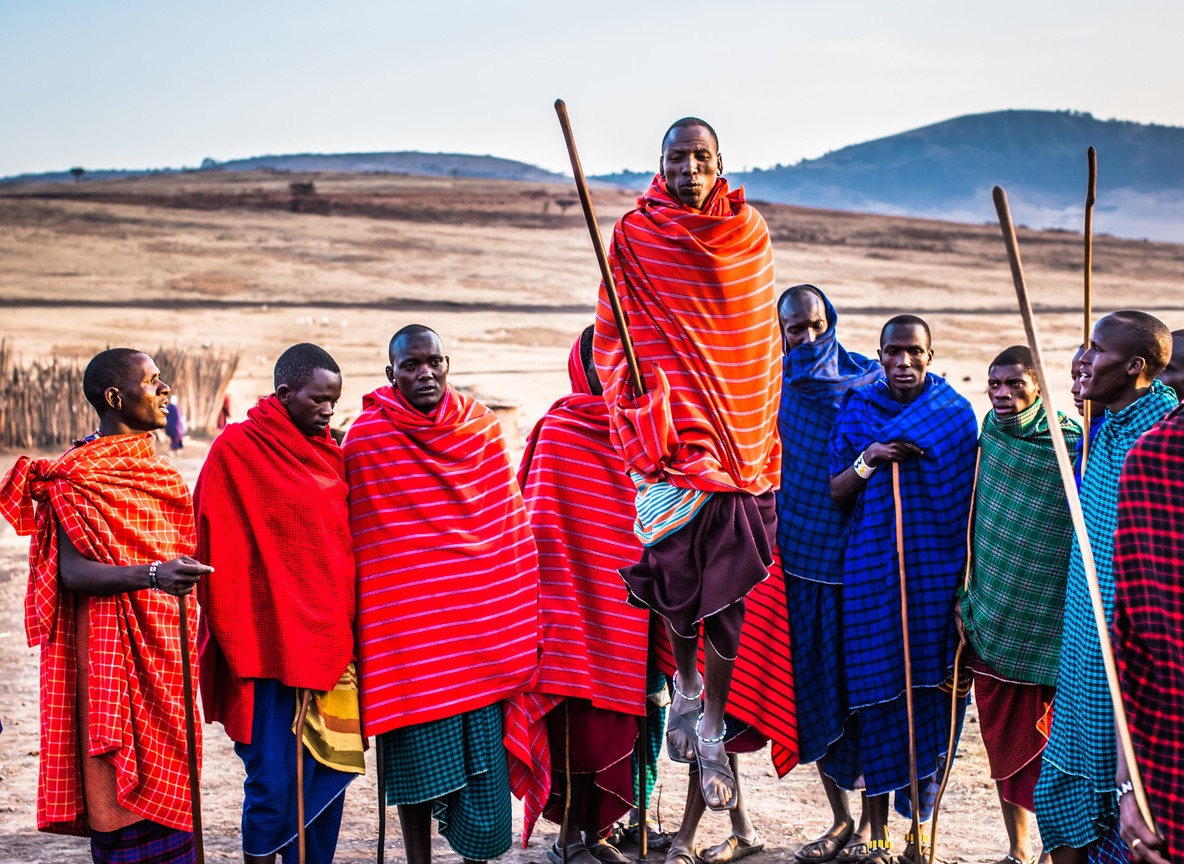
As of 2026, a traditional Maasai manyatta house, or enkaji, measures about 3 by 5 metres and is built entirely by women using a wooden frame plastered with mud, cattle dung, ash, and urine. Inside, the small, dark home is divided into sleeping and cooking areas, insulated against both midday heat and cold highland nights, and legally belongs to the woman who built it.
A thin thread of it rising above the thorn-branch fence, carrying the scent of burning acacia and dried dung. Step through the narrow entrance gap in the outer boundary and you step into a world built on entirely different principles than the one you came from.
A Maasai village, known in most contexts as a manyatta, is not simply a cluster of houses. It is a complete social and ecological system: a circular compound, a shared home, a cattle sanctuary, and a community hub built into a single integrated structure. Understanding how it works changes how you see every other element of Maasai culture.
This guide takes you through the layout, the houses, the people, the daily rhythms, and what it means that a Maasai homestead is built and owned by women.
What Is a Maasai Village?
The term manyatta is widely used but carries a specific technical meaning. Strictly, a manyatta is a temporary warrior camp established for Moran (warriors) during their warrior phase. The permanent family homestead is called an enkang or boma. In everyday usage, including across tourism contexts, people use manyatta to refer to any Maasai village or homestead.
Whatever the terminology, the structure follows a consistent design:
- A circular outer boundary of thorn branches, called the enkiama
- Individual inkajijik (houses) arranged around the inner perimeter of the fence
- A central cattle enclosure in the middle of the compound
- One or two narrow entrance gaps in the outer fence, easily blocked at night
This design is the product of generations of refinement for a specific purpose: protecting cattle from predators and families from raiders in a landscape where both threats were historically very real.
The Village Layout Explained
The Enkiama: The Thorn Fence
The outer boundary of a Maasai village is built from branches of acacia and other thorny trees, layered densely enough to discourage lions, hyenas, and leopards. The fence is low enough to see over but thick and sharp enough to be impassable for most animals.
The entrance gaps are deliberately narrow, wide enough for one person or one cow at a time, and blocked with a thorn-branch gate after dark. Historically, warriors slept near the entrance to respond quickly to any predator that attempted to breach the perimeter.
The Inkajijik: The Houses
The individual houses inside a Maasai village are called inkajijik (singular: enkaji). Each one is:
- Low and rounded, with a slightly flat roof
- Built from a wooden frame plastered with a mixture of mud, cattle dung, ash, and urine
- Dark inside, with small ventilation gaps rather than open windows
- Divided into sections: a sleeping area, a cooking area, and sometimes a small pen for sick calves or newborn goats that need overnight warmth
The houses are small by any modern standard, typically around three by five metres, but they are warm, weatherproof, and precisely adapted to the environment they sit in. The dung plaster insulates against both the midday heat and the cold of the highland nights.
Who Builds the Houses?
This is where most visitors stop short: Maasai women build the houses. From the wooden frame to the plaster to the internal layout, construction is entirely the work of women. A woman’s house is her property. When a couple separates, the man leaves. The woman stays in her house.
This is not a footnote. It is the most concrete expression of women’s agency in a culture that is often, incorrectly, summarised as simply patriarchal.
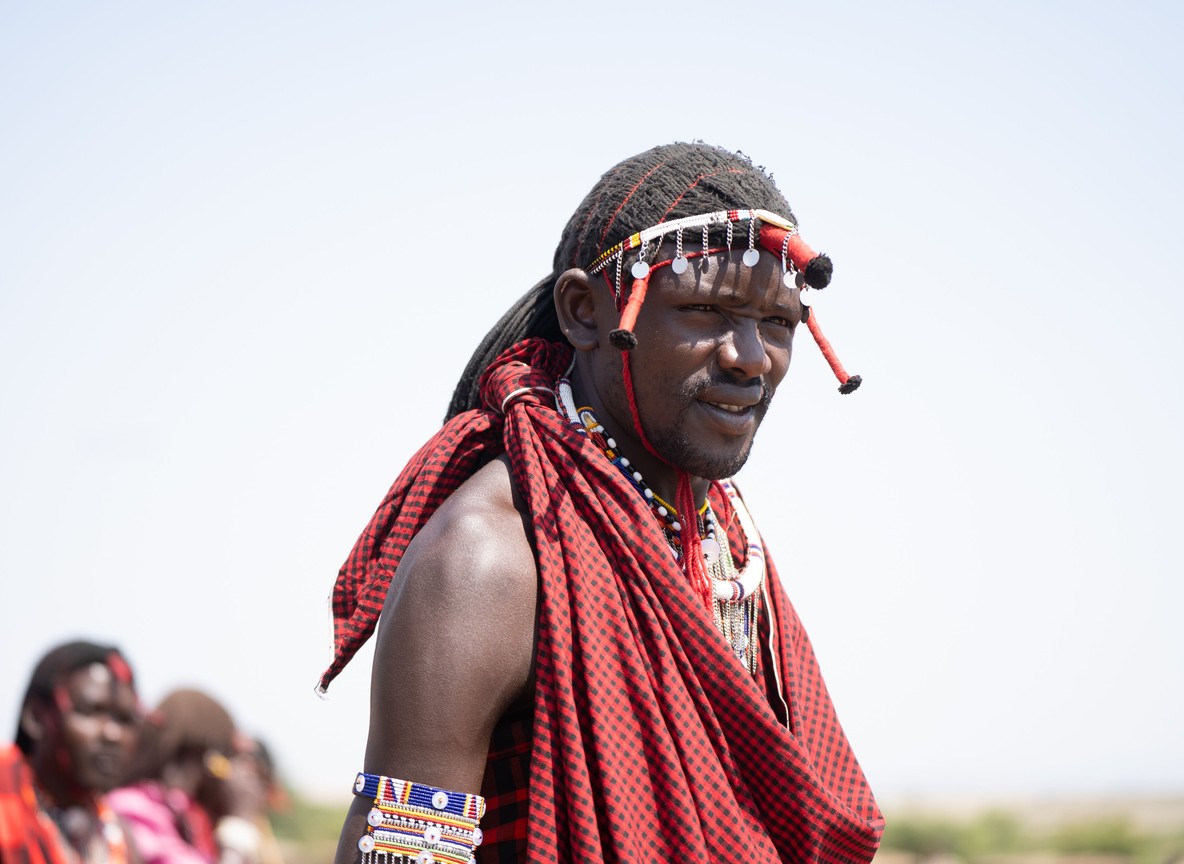
Daily Life in a Maasai Village
Maasai village life follows the rhythms of the cattle. Everything else, waking, eating, praying, working, organises itself around the herd’s needs.
Morning
Before dawn, women begin milking the cows. This milk is the first food of the day: fresh, warm, shared between households. Warriors and older boys take the cattle out of the central enclosure and begin the day’s herding route. Young children stay close to the village under the supervision of older women and grandmothers.
Mid-Morning to Afternoon
Women manage the homestead through the day: cooking, plastering any cracked wall sections, collecting water from the nearest source (sometimes several kilometres away), and working on beadwork jewellery. Elders gather in the shade to discuss community matters, settle disputes, and advise on land and cattle decisions. The village is quietest during the hottest part of the afternoon.
Evening
The cattle return. Their arrival is the most important moment of the day. Each animal is counted, checked for injury, and guided into the central enclosure. The gate is secured. Women prepare the evening meal, typically ugali, milk, or on occasions with cause to celebrate, meat. Stories are told. Songs are sung. The fire burns low.
Night
After dark the village quiets quickly. Warriors patrol the perimeter or sleep near the entrance gap. The cattle settle. The thorn fence holds the landscape at bay.
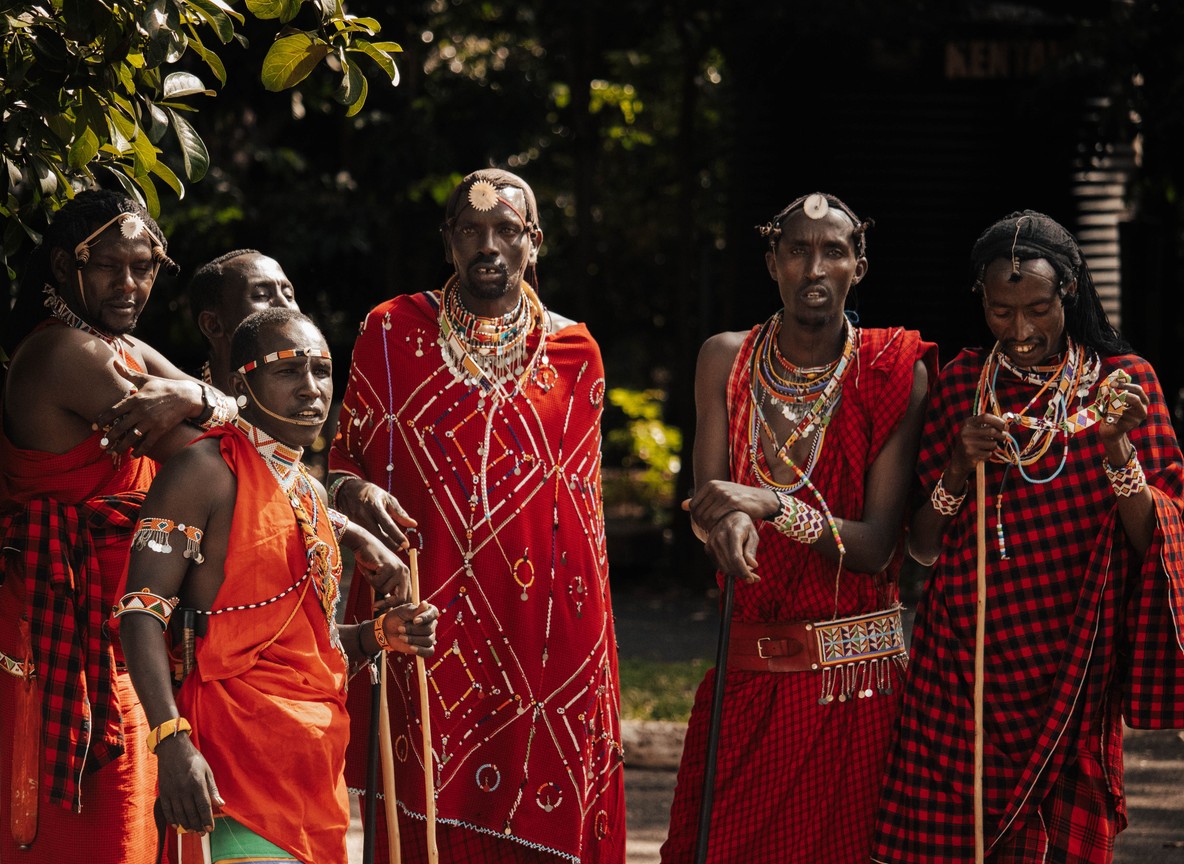
Inside a Maasai House
You enter through a low doorway that forces you to duck, a deliberate design feature that slows any intruder. Inside, your eyes take a moment to adjust to the dim light filtered through the small ventilation gaps.
The layout is typically:
- Right side: sleeping area, with a raised platform covered in cowhide
- Left side: cooking area, with a small hearth built into the floor
- Back corner: sometimes a small pen for young animals needing warmth
The smell is distinctive: smoke, milk, earth, and dried cattle dung. It is not unpleasant once your nose adjusts. It is simply the smell of a house built from, and for, the landscape it sits in.
Personal possessions are minimal. Storage is in woven baskets and calabashes, dried gourds used to store milk and water, hung on the walls or ceiling to keep them away from ground moisture and insects.
The Central Cattle Enclosure
The cattle enclosure at the heart of the compound is more than a paddock. It is the physical expression of what the Maasai value most. Cattle represent wealth, spiritual connection, social obligation, and daily sustenance. They produce milk. Their dung builds and plasters the houses. Their blood mixed with milk is consumed at ceremonies. Their hides become beds and blankets.
The position of the cattle at the literal centre of the homestead, encircled by the houses of the families who depend on them, captures the Maasai village layout in its simplest form: a community built around what it holds most precious.
What to Know Before Visiting a Maasai Village
A few things make the difference between a visit that feels meaningful and one that feels like a transaction.
Ask about the entrance fee. In well-run village visits, the fee goes directly to a community fund and covers specific uses: school maintenance, water infrastructure, healthcare access. Ask where it goes. The answer tells you a lot about how the operator manages the relationship.
Photography requires permission. Most community members are willing to be photographed and will indicate as much. Some prefer privacy. Always ask before pointing a camera at an individual. The Maa word is “suwa?” which roughly means “is it okay?” People respond warmly when you make the effort.
The craft market is real commerce. The beadwork sold at the end of a village visit is made by the women you just spent time with. The quality is genuine and the prices are fair. Buying directly from the maker is the most straightforward way to support the household economy.
Bring curiosity, not conclusions. The best conversations happen when visitors come with real questions. Ask about herding routes, about what young Maasai want for their futures, about how the village decides where to move cattle when the dry season extends. The answers are rarely what you expect.
Explorer Notes
- The circular design of the Maasai village is not aesthetic preference. Every element, the thorn perimeter, the narrow entrance, the central cattle pen, solves a specific problem that pastoralists in predator-dense landscapes face every night.
- The fact that women build and own the houses is one of the most frequently misread aspects of Maasai culture by outside observers. It sits alongside significant restrictions on women in other areas of community life. The picture is complicated, and it is worth resisting the temptation to resolve that complication too quickly in either direction.
- Manyatta used in a tourism context usually refers to a settled family homestead, not the warrior camp the word technically describes. Both exist and both can be visited, but they serve entirely different functions.
- For guidance on planning a Maasai village visit as part of a broader safari itinerary, including how to distinguish community-approved visits from commercial operations, touringinsights.com has practical guidance.
- Trunktrails Safaris (trunktrailssafaris.com) operates village visits in the Mara ecosystem with entrance fees paid directly to community funds and guides who speak Maa.
Conclusion
A Maasai village is a masterpiece of practical design, social engineering, and ecological adaptation. Every element, the circular layout, the thorn fence, the women-owned houses, the cattle at the centre, reflects values developed and refined over centuries of living in one of Africa’s most demanding landscapes.
When you step inside one, you are not visiting the past. You are meeting a present that has kept its principles intact through enormous pressure to abandon them. That is worth understanding before you arrive, and worth sitting with after you leave.
Next Steps
If you are planning a Kenya safari that includes a Maasai village visit, build enough time into the itinerary for the experience to be more than a brief stop. A 60 to 90 minute visit is the minimum for genuine engagement. A dedicated half-day allows for real conversations.
For planning advice on cultural visits in the Mara ecosystem and Amboseli region, see touringinsights.com. For village visits operated with direct community access and Maa-speaking guides, trunktrailssafaris.com covers itineraries at all budget levels.
Prefer a different route, budget, or travel style? This plan can be adapted to fit.
Customise Your Trip