Kicheche Valley Camp occupies a hillside position inside Naboisho Conservancy, a 50,000-acre private wildlife area on the northeastern edge of the Masai Mara ecosystem that holds the distinction of having the highest lion density per square kilometre of any wildlife area in Kenya. For travellers who want to understand what that means in practice, and whether Kicheche Valley Camp is the right vehicle for experiencing it, this guide covers the conservancy, the camp, the activities, and the practical planning details.
Naboisho Conservancy: The Setting
Naboisho Conservancy was established in 2010 by a consortium of landowners and camp operators. It covers 50,000 acres of rolling hills, open grassland, and seasonal wetlands in the northern section of the Mara ecosystem, bordering Olare Motorogi Conservancy to the south and Lemek Conservancy to the north.
The conservancy is run as a strict private wildlife area. A small number of camps are licensed to operate within its boundaries, fewer than ten tented camps in total, and no day visitors or self-drive vehicles are permitted. This keeps the vehicle:wildlife ratio extremely low even during peak migration season. A sighting that would have fifteen vehicles around it inside the national reserve might have one or two vehicles in Naboisho.
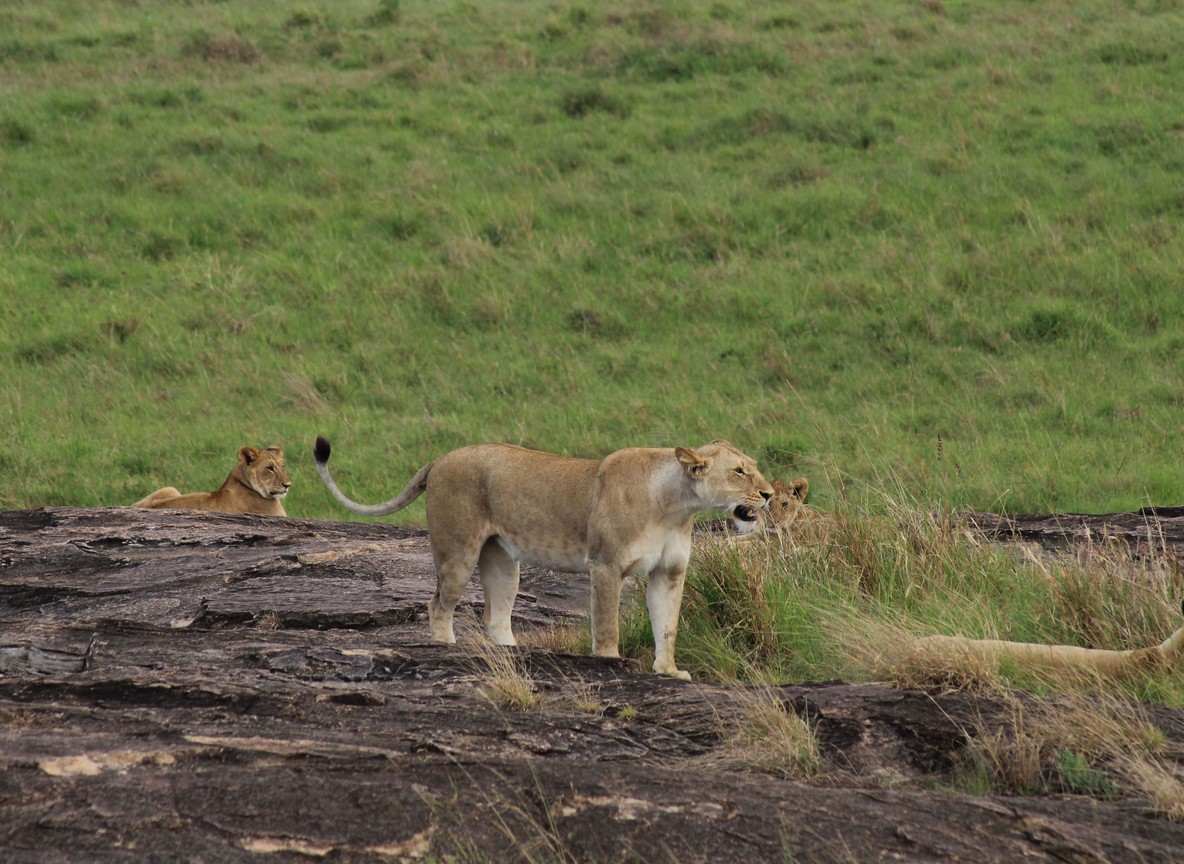
The lion density statistic that Naboisho is known for, reportedly the highest in Kenya and among the highest on the African continent, is a product of this low-disturbance environment. Lion prides in Naboisho have been continuously monitored by researchers from Lion Landscapes and Mara Predator Conservation Programme, and several prides have been tracked across multiple generations. The habitat, the prey base, and the absence of livestock conflict inside the conservancy boundaries have allowed lion populations to remain stable and well-documented.
Kicheche Valley Camp: Camp Character
Kicheche Valley Camp has eight tents arranged on a low hillside overlooking a valley plain, the topographic feature that gives the camp its name and a distinct visual advantage over flat-sited alternatives. The elevated position allows guests to watch wildlife movement across the valley floor from their tent verandas, and the sightlines are genuinely useful for spotting predator activity at dawn before the formal game drives begin.
The camp’s aesthetic follows the Kicheche model: quality materials, practical comfort, and a deliberate absence of resort-style additions that would dilute the bush atmosphere. Tents are generous canvas-and-frame structures with en-suite bathrooms, solar-powered lighting, and private verandas. The central dining and lounge area is the camp’s social hub, and the quality of the cooking is consistent across the Kicheche portfolio.
Eight tents is the sweet spot for this style of operation. It allows for two or three game drive vehicles with genuine guide attention per vehicle, and it keeps the communal atmosphere intimate rather than anonymous. Larger lodges in the Mara can accommodate eighty to a hundred guests; at Kicheche Valley Camp, the full capacity means eight guests.
Wildlife and Game Drive Access in Naboisho
Lion are the most consistently encountered large predator in Naboisho. Multiple prides with territories that overlap the conservancy’s open grassland sections are active year-round, and guides know individual animals by face markings and ear notches. The ability to predict where specific pride members are likely to be on a given morning is a product of years of monitoring by both researchers and Kicheche guides.
Leopard are well represented in Naboisho’s riverine corridors and rocky outcrops. Cheetah favour the open plains in the northern and eastern sections of the conservancy. Elephant herds cross through Naboisho seasonally, and African wild dog are occasional visitors from adjacent conservancies.
Naboisho’s bird list exceeds 400 species, making it one of the stronger birding destinations in the Mara ecosystem. The combination of open grassland, highland scrub, and seasonal wetlands creates habitat variety that the flat national reserve plains do not provide. Raptors are a particular strength, martial eagle, bateleur, and tawny eagle are frequently encountered, along with ground-nesting species that benefit from the low vehicle disturbance.
During the Great Wildebeest Migration (July through October), Naboisho receives migrating herds from the east. The conservancy does not have major river crossing points comparable to the Mara River crossings, but the spectacle of hundreds of thousands of wildebeest moving through Naboisho’s hills in search of pasture is a different kind of migration experience, more dispersed, less concentrated at single points, and often less crowded than the river crossing spectacles.
Activities at Kicheche Valley Camp
Morning and afternoon game drives form the core of the programme. Naboisho’s terrain, rolling hills, open valleys, seasonal watercourses, means drives can cover genuinely different landscape zones each day. The elevated camp position means guides can often spot wildlife movement from camp before departing, optimising drive routes based on what is already active in the valley.
Night game drives in Naboisho benefit from the conservancy’s complete absence of light pollution. Nocturnal species active in the conservancy include aardvark, porcupine, African civet, serval, small-spotted genet, and honey badger. Lion and leopard are commonly encountered on night drives moving between territories.
Guided bush walks cover terrain in the conservancy’s lower sections, away from vehicle roads. Walking safaris in Naboisho are notable for the quality of the smaller wildlife and botanical details that vehicle drives pass over, dung beetle activity, grass species identification, bird calls at walking pace, and the experience of moving through a landscape where large predators are present and nearby.
Conservation talks by Kicheche guides cover the lion monitoring work in the conservancy and the broader conservation model underpinning Naboisho. For travellers interested in the science behind lion population management, these sessions are genuinely informative.
Cultural engagement is also part of the offering. Guests can visit a nearby Maasai village to see daily life firsthand, and beading lessons with Maasai women are available as a relaxed, hands-on way into the culture rather than a passive stop. Kicheche Valley Camp carries a GOLD eco-rating from Eco-tourism Kenya, reflecting its solar power use and broader sustainability practices.
For guests who want to go beyond the standard drive-and-camp rhythm, fly-camping is available: a night spent out in the bush, typically reached by a walking safari to and from the site, for a more immersive version of the wilderness experience than a fixed-camp stay offers.
Who Kicheche Valley Camp Suits
Kicheche Valley Camp occupies the upper segment of the Mara conservancy market. All-inclusive rates typically run from $800 to $1,200 per person per night depending on season, migration season at the higher end, green season with significant reductions.
The camp works especially well for:
- Lion-focused wildlife travellers who want extended, low-vehicle sightings with specific known individuals tracked by name and history
- Wildlife photographers who value off-road access and the ability to hold positions with sightings without being displaced by arriving vehicles
- Returning safari travellers who want the conservancy’s full activity offering, night drives, walks, and multi-day lion tracking, rather than the standard reserve drive format
- Couples and small groups attracted by the eight-tent intimacy and the elevated camp position
- Birding travellers who want the Mara’s bird list in a habitat with more vertical variety than the flat reserve plains
The camp is less suited to first-time safari visitors who have not experienced Kenya before, the conservancy model rewards guests who already understand the safari rhythm and can get the most from extended sightings and field time. It is also not the most appropriate choice for families with children under seven.
Practical Planning
Getting there: The nearest airstrip is Ol Kiombo, approximately 20 to 25 minutes from camp by road through the conservancy. Scheduled bush flights from Nairobi’s Wilson Airport operate daily on Safari Link and Air Kenya. Drive from Nairobi takes 5 to 6 hours via Narok.
Best time to visit: Naboisho operates year-round and is strong across all seasons due to its resident predator population. July through October covers the migration period. January through February is excellent for big cat sightings with calving wildebeest. April through June (green season) offers the most significant rate reductions and the most vehicle-free experience.
Minimum stay: Three nights is the recommended minimum. The conservancy’s terrain means the first day is partly orientation; by the third day, guides have mapped specific animals and areas to target based on the current day’s activity patterns.
Combining with other areas: Naboisho pairs well with a Masai Mara National Reserve stay for travellers who want both the river crossing spectacle (reserve) and the lion-density conservancy experience. It also combines naturally with Amboseli or Samburu for broader Kenya multi-destination itineraries.
For context on how Naboisho and the other Mara conservancies compare to the national reserve and each other, see touringinsights.com/masai-mara-conservancy-vs-national-reserve-guide.
The Naboisho Conservation Economy
Naboisho’s establishment in 2010 was a direct response to the fragmentation of Maasai land in the northern Mara, a process that was converting former wildlife dispersal areas into smallholder farms and causing significant wildlife range contraction. By pooling land under a single conservancy lease, the landowners preserved a continuous 50,000-acre wildlife corridor that would otherwise have been subdivided.
The conservancy pays Maasai landowners per acre per year at rates that exceed comparable livestock revenue. This direct economic comparison, wildlife lease income vs. farming or grazing income, is the mechanism that makes the conservancy model financially sustainable for landowners. When wildlife is worth more than cattle on the same land, the incentive to maintain the wildlife habitat is aligned with economic self-interest.
Camp fees paid by guests contribute to the lease fund, the conservancy’s operating costs, and a community development fund managed by the landowner group. Kicheche’s position in this system, as a long-term camp operator with an established relationship with the Naboisho landowners, means the camp’s presence directly sustains the conservation area it occupies.
Travellers interested in the economics and governance of private conservancy models in Kenya will find trunktrailssafaris.com/maasai-mara-conservancy-guide a useful reference alongside this guide.
Have questions about this itinerary or destination? Get answers from a safari specialist before you commit.
Inquire MoreFurther reading
More safari planning resources
- Wildebeest migration route map from Valley Safaris
- Big Five safari collection on FindMySafari
- Great Migration safari collection on FindMySafari
- Nairobi to Maasai Mara route guide from Valley Safaris