Kenya is one of the best places on Earth to watch a cheetah hunt. The open savannas of the Rift Valley and northern semi-arid belt give this predator the long sightlines and room to accelerate that it needs, and you the unobstructed views to follow the action from stalk to sprint to recovery. The question is not whether Kenya can deliver a cheetah sighting – it is which park matches your style of travel.
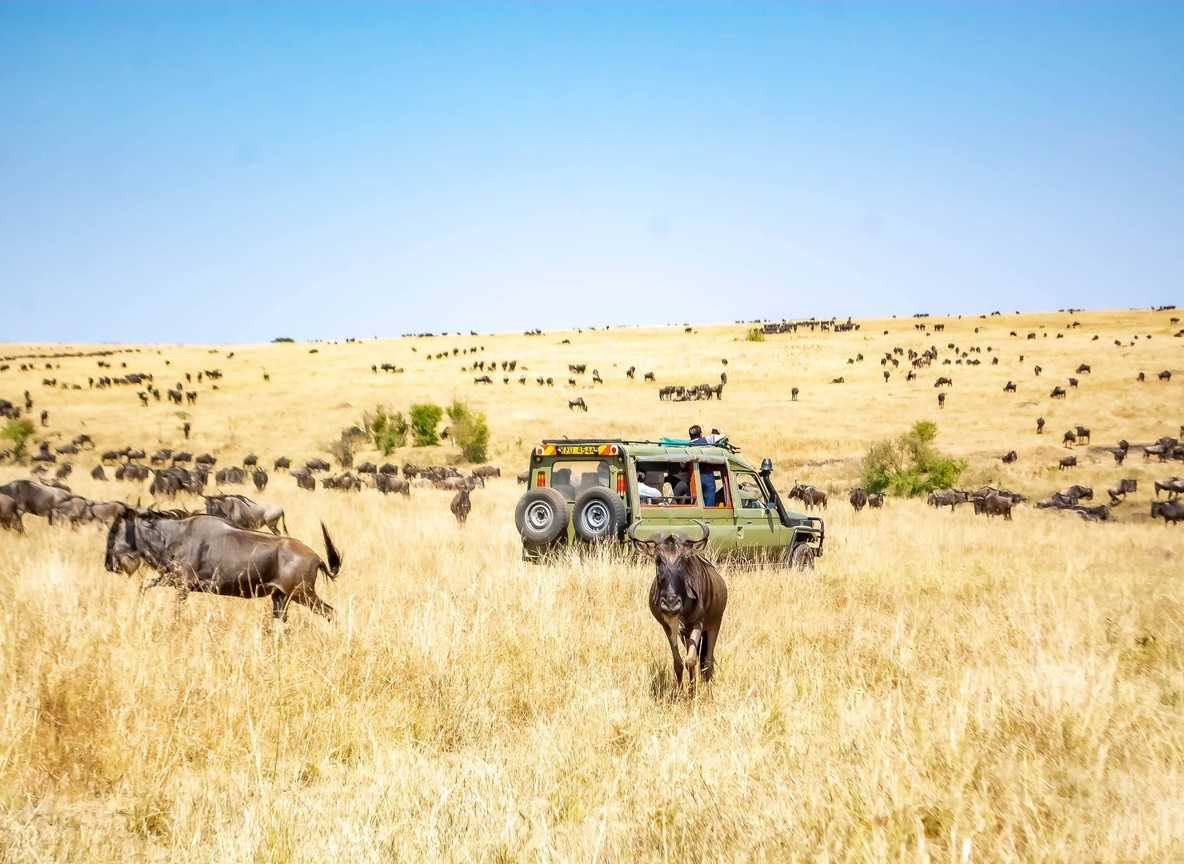
This guide covers the four main cheetah areas in Kenya: Masai Mara, Amboseli, Samburu, and the Athi-Kapiti corridor. Each offers a different experience in terms of terrain, vehicle density, sighting quality, and photographic conditions.
Why Kenya Ranks High for Cheetah Sightings
Kenya holds an estimated 700 to 900 cheetahs, one of the largest East African populations and among the highest densities outside southern Africa. The country’s mix of national parks, conservancies, and community-managed rangeland creates connected corridors that allow cheetahs to range without fence interruptions.
Cheetahs are open-country predators. They hunt by sight, use elevated spots like termite mounds to scan for prey, and need clear terrain to reach top speed. Kenya’s Rift Valley grasslands and northern thornbush systems suit this biology well, which explains consistent sighting records across multiple parks year after year.
The population is under pressure from habitat loss, livestock conflict, and illegal trade. Understanding this context helps you make ethical choices on the ground.
Masai Mara: The Best Single Location
The Masai Mara gives you the highest probability of seeing cheetahs in Kenya. The short-grass plains east of the Mara River and the conservancy corridors of Mara North and Olare Motorogi provide the open terrain cheetahs need, with enough prey density to support a large resident population. Guides can spot individuals from two kilometres away.
Coalitions and Cubs
The Mara is one of the few places in Africa where male cheetah coalitions of two to five brothers hold territory long enough to be individually studied and documented. This reflects the exceptional prey base in the ecosystem. Female cheetahs raise cubs alone, and the best window for cub sightings is January to March, when mothers are moving with young cubs old enough to follow on foot.
Sighting Numbers
Current estimates place 30 to 50 individual cheetahs across the broader Mara ecosystem. The Olare Motorogi Conservancy has the highest density and enforces vehicle caps that keep sightings calm. In the national reserve proper, a cheetah sighting can attract 15 to 20 vehicles quickly, which disrupts hunts and stresses the animal. Choosing a conservancy camp makes a practical difference to the quality of what you see.
Amboseli: Open Terrain and Kilimanjaro
Amboseli is Kenya’s second-best cheetah destination and arguably the best for photography. The ancient dried lakebed at the park’s centre is one of the flattest, most open wildlife areas in East Africa. A cheetah can be spotted from three kilometres away, and a hunt across the open pan is visible from start to finish – the stalk, the sprint, the kill, and the slow recovery.
The resident population is smaller than the Mara’s, around eight to twelve individuals depending on season, but vehicle numbers are lower for most of the year and terrain means you rarely lose sight of an animal once located.
The Kilimanjaro backdrop adds a photographic dimension found nowhere else in Kenya. A cheetah in sprint with the snow-capped summit visible behind it is one of the most sought-after wildlife images in East Africa. Position needs to be set before 6 AM to use the morning light from the right angle.
Samburu: Semi-Arid North Kenya
Samburu National Reserve in northern Kenya offers a different cheetah character. The terrain is thornbush and riverine doum palm rather than open grass, which makes sightings harder to locate but more intimate and far less vehicle-crowded.
Samburu cheetahs hunt smaller prey species: dik-dik, gerenuk, and Grant’s gazelle rather than Thomson’s gazelle and topi. This affects what you observe. Kills are faster and closer to cover. Vehicles often cannot follow through dense vegetation, so you are more likely to watch the chase than the post-kill feeding.
For travellers who want to see a cheetah without the circus of a high-traffic sighting, Samburu is worth the trade-off in sighting frequency.
Athi-Kapiti: The Underrated Corridor
The Athi-Kapiti plains southeast of Nairobi hold a significant and under-reported cheetah population. The terrain is flat open grassland immediately outside Nairobi National Park, fragmented by smallholder agriculture but still home to an estimated six to ten resident individuals. Vehicle numbers are minimal – some mornings you may be the only safari vehicle on the plain.
Infrastructure is limited compared to the main parks, so this works best as a day-trip addition from Nairobi for travellers specifically seeking this population, or as a dedicated stay for guests who want exclusivity over amenities.
Park Comparison
| Location | Estimated Cheetahs | Terrain | Peak Months | Vehicle Density | Photography |
|---|---|---|---|---|---|
| Masai Mara conservancies | 30-50 ecosystem | Short-grass open plains | Jul-Oct, Jan-Mar | Low (conservancies) | Excellent |
| Amboseli National Park | 8-12 | Open lakebed | Jun-Oct, Jan-Feb | Medium | Outstanding |
| Samburu National Reserve | 4-8 | Thornbush, riverine | Jun-Sep, Jan-Feb | Very low | Good, challenging |
| Athi-Kapiti corridor | 6-10 | Flat open grassland | Jun-Oct | Minimal | Good, isolated |
What You Will Actually Watch
Cheetahs hunt by sight, not smell, so the whole sequence is usually visible if you are positioned correctly before the chase begins.
The stalk: The cheetah locates prey from an elevated position, often a termite mound, then moves low and closes to 60 to 80 metres before committing to the chase. Experienced guides read body language early and reposition the vehicle so you have a clear sightline without cutting off the cat’s approach path.
The sprint: The chase lasts 20 to 60 seconds. At full speed, the cheetah trips the prey’s hindquarters to knock it off balance, then applies a throat hold. Suffocation is the kill method and takes three to five minutes.
The recovery: The cheetah lies flat, flanks heaving, and cannot move for five to fifteen minutes after a chase. Once recovered, it eats quickly while scanning constantly. A single hyena can displace it from a fresh kill.
Photography Notes
Golden hour runs 6:00 AM to 8:30 AM. The flat Amboseli terrain and Mara open plains give rear-light angles that define the spotted coat against dry yellow grass.
A 500mm lens is the working minimum for stationary shots. For sprint photography, 400mm with room to frame in the viewfinder gives a better keeper rate than trying to track at longer focal lengths.
Vehicle positioning matters more than equipment. The guide should be perpendicular to the direction of the hunt, never between the cheetah and its prey.
Ethical Viewing Rules
Vehicle crowding is the biggest single threat to cheetah welfare at any sighting. Research in the Mara links excessive vehicles directly to hunt abandonment and cub stress in females with young.
- Maximum five vehicles per sighting. If you arrive at a sighting already surrounded, your guide should pull away.
- Engine off when the cheetah is stationary. Running engines mask environmental sounds the animal uses to monitor threats.
- No positioning between the cheetah and its prey, or between the cheetah and available shade.
- No off-road driving to reach a sighting faster.
- Minimum 30-metre distance from a feeding animal.
These are not suggestions. Guides who ignore them compromise the sighting for every vehicle there and affect the cat’s welfare over repeated encounters.
Conservation Context
Kenya’s cheetah population has declined approximately 30% over the last decade according to Cheetah Conservation Fund assessments. Three pressures drive this decline.
Habitat fragmentation: The Athi-Kapiti corridor, once a continuous cheetah range, is now broken by smallholder agriculture. Individuals that leave protected areas face snares and retaliatory killing after livestock losses.
Illegal trade: Cubs from northern Kenya are trafficked into the Gulf states as exotic pets, removing individuals before they reach breeding age. The IUCN classifies the cheetah as Vulnerable, with East African subpopulations identified as a priority for intervention.
Livestock conflict: A single livestock kill can trigger retaliatory action across a wide area. Community conservancies adjacent to the Mara address this through compensation schemes and predator-proof boma construction funded partly through tourism revenue. The Mara Predator Conservation Programme, run by the Kenya Wildlife Trust and originally established as the Mara Cheetah Project, leads much of this work directly: researchers monitor individual cheetahs, support boma construction with local herders, and work on anti-poisoning efforts to keep livestock losses from turning into retaliation killings.
The Kenya Wildlife Service coordinates national predator monitoring. The Cheetah Conservation Fund runs the primary livestock-guarding programmes across East Africa.
Planning Your Kenya Cheetah Safari
Cheetah sighting probability peaks in the Mara conservancies from July to October and in Amboseli from June to September. These windows align with drier conditions, shorter grass, and higher prey concentration.
If cheetahs are your primary goal, book a conservancy camp in the Mara rather than a lodge in the reserve. The lower vehicle numbers translate directly to better sighting experiences and fewer disrupted hunts. Combine with Amboseli if your itinerary allows – the two parks offer enough contrast in landscape and atmosphere to justify the journey between them.
For more on what each region offers beyond cheetahs, the Tourinsights guide to Masai Mara wildlife and the Amboseli guide cover resident species, timing, and practical planning in detail.
Have questions about this itinerary or destination? Get answers from a safari specialist before you commit.
Inquire MoreFurther reading
More safari planning resources
- Map of Amboseli from Valley Safaris
- Amboseli destination guide on FindMySafari
- Map of Samburu from Valley Safaris
- Samburu destination guide on FindMySafari