The individual documented in Laikipia is a female. Subsequent sightings suggest she has cubs, which raises the possibility that the recessive gene is being passed into a local population.
One of those cubs has since become individually recognisable in her own right. First seen during Kenya’s 2022 drought near Ol Gaboli, she is now known locally as Giza, short for Giza Mrembo, Swahili for “the beautiful darkness.” Guides and researchers in the area track her separately from the original documented female, and she has developed her own hunting pattern, ranging further into open terrain than is typical for the species, likely a response to the scarce prey conditions she grew up in.
Where in Kenya Were Black Leopards Confirmed?
The confirmed sightings happened in and around Lewa Wildlife Conservancy and Ol Pejeta Conservancy in Laikipia County, central Kenya.
Laikipia is a patchwork of private conservancies and ranches sitting at 1,700 to 2,500 meters altitude on the northern slopes of Mount Kenya. The terrain is open bush, rocky escarpments, riverine woodland, and highland forest. This varied habitat supports a remarkable density of leopards year-round, and the cooler temperatures have been linked in some thermoregulation theories to why melanistic individuals may be more viable here.
Conservancies in the area where the black leopard’s territory overlaps:
| Conservancy | Size | Key habitat |
|---|---|---|
| Lewa Wildlife Conservancy | 25,000 acres | Open grassland, riverine bush |
| Ol Pejeta Conservancy | 90,000 acres | Mixed bush, rhino sanctuary |
| Borana Conservancy | 35,000 acres | Highland bush, rocky hills |
| Loisaba Conservancy | 56,000 acres | Open plains, scrub, river valleys |
Camera traps maintained by researchers and conservancy managers continue to document leopard movements across this ecosystem. No conservancy can guarantee a sighting of the black leopard specifically, but the density of standard spotted leopards across Laikipia is among the highest in Africa.
How Rare Is a Black Leopard Sighting?
Genuinely rare. This is not a wildlife encounter you schedule into a standard itinerary and tick off the list. The documented female has a large territory. She is nocturnal. She uses rocky terrain that provides cover from vehicles.
What tips the odds in your favor:
Stay in Laikipia, not the Mara. Black leopards are a Laikipia phenomenon. There is no record of melanistic leopards in the Masai Mara ecosystem or southern Kenya parks.
Spend multiple nights. A meaningful minimum is four nights in a conservancy within her documented range. Six nights significantly increases the probability.
Night drives. Leopards are most active from dusk to midnight and before dawn. A conservancy that permits night game drives with spotlights offers a far better chance than daytime-only operations.
Work with experienced local guides. Guides who know the terrain and the individual animal’s movement patterns are the difference between an educated search and random luck. Ask specifically about guides who have documented melanistic leopard encounters in recent seasons.
Camera trap access. Some conservancy research teams allow accompanied visits to active camera trap sites as part of the experience. Worth asking about when making arrangements.
What a Laikipia Safari Looks Like Beyond the Black Leopard
Even without a melanistic leopard encounter, a Laikipia safari is exceptional. This is the part that consistently surprises visitors who arrive expecting Laikipia to be a second-best alternative to the Mara.
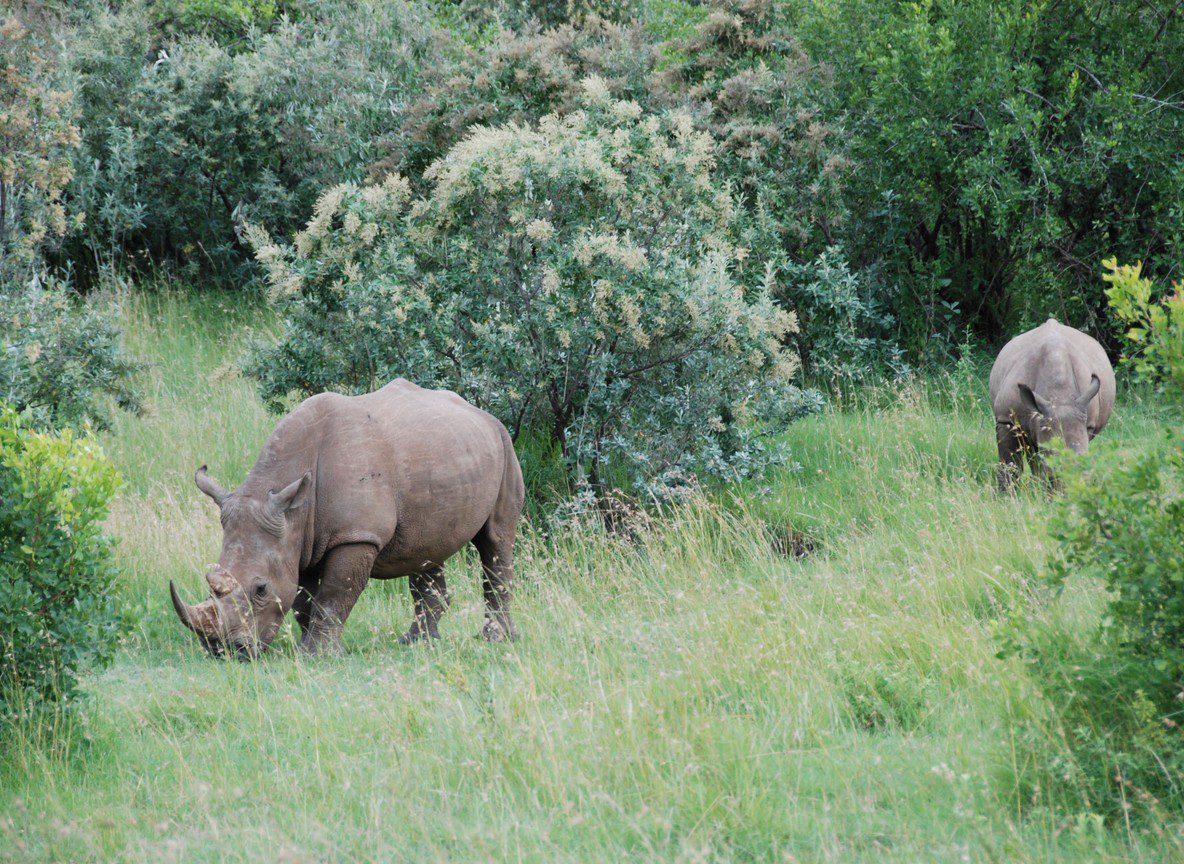
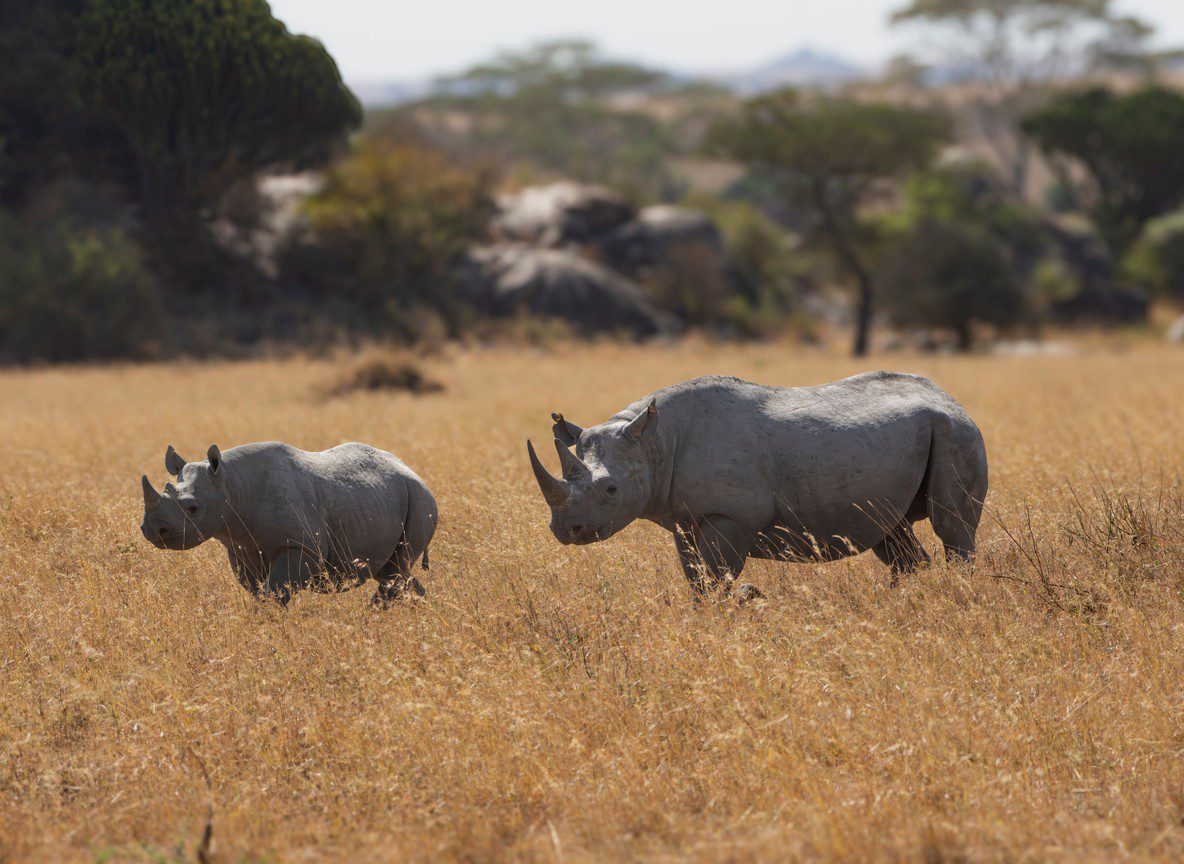
Laikipia holds Kenya’s second-largest black rhino population. At Ol Pejeta alone, you will have close vehicle encounters with both black and white rhinos. The conservancy also holds the world’s last two northern white rhinos, Najin and Fatu, at their permanent enclosure.
The predator density is high across the plateau. Lions, cheetahs, African wild dogs, hyenas, and standard spotted leopards are all resident. Grevy’s zebra, reticulated giraffe, and elephant herds are visible every day. On the plateau’s northern edge, species mix between Laikipia and Samburu ecosystems, so gerenuk and Beisa oryx appear alongside buffalo and eland.
At altitude, mornings are cool and the light at golden hour hits the rocky escarpments in a way that the Mara’s open plains do not produce. Photographers who have worked both regions often prefer Laikipia’s landscape variety for composition.
The population these leopards belong to is not without pressure. Habitat fragmentation from agricultural expansion, declining wild prey, and human-wildlife conflict, where livestock predation triggers retaliation, are the main threats across Laikipia’s conservancies. Tourism revenue is a direct counterweight: Ol Pejeta covers most of its roughly $6 million annual operating budget through safari tourism, and the Northern Rangelands Trust channels tourism and grant income across its member conservancies into anti-poaching patrols, education, and community livelihood programmes that make coexistence with predators economically viable for local communities. A booking at a conservancy in this network is, in a direct sense, part of what funds the protection.
The Science Behind the 2019 Confirmation
The paper published in the African Journal of Ecology used a series of images taken over several months across multiple camera traps. The research team confirmed individual identity using rosette pattern analysis in the visible parts of the coat, cross-referenced with known Laikipia leopard databases.
The publication noted that this was the first confirmed documentation in Africa since a 1909 specimen from Ethiopia. The paper is available in full through the African Journal of Ecology website and is worth reading before a Laikipia trip focused on this animal.
The individual’s consistent return to the same territory over multiple seasons suggests she is resident rather than transient. Her cubs, if they carry the recessive melanistic gene, may or may not express the phenotype.
Black Leopard vs Standard Leopard: What You Are Actually Seeing
This question comes up from visitors who have seen spotted leopards at the Masai Mara and want to understand what a melanistic encounter is actually different.
The animal is the same species. The melanistic variant means the visible coat pattern is almost entirely black rather than tawny-yellow with dark rosettes. In direct sunlight with a camera lens at good contrast, you can see ghost rosettes in the coat. In shade and poor light, the animal appears entirely black.
The behavior is identical. The female documented at Laikipia hunts, caches kills, and moves territory in exactly the same way as a standard spotted leopard.
What makes the sighting different is the rarity. There is only one confirmed individual in the entire African continent. The photographic record published in 2019 represents 100 years of absence from the scientific literature. When you see this animal, you are seeing something that even experienced Kenyan guides may have encountered fewer than three times in a career.
The significance is not the visual spectacle alone. It is the improbability. That is what draws serious wildlife observers to Laikipia for this purpose.
When to Go for the Best Conditions
January to March. Good conditions. Low vegetation. Animals visible. Night temperatures are cool but manageable.
June to October. Prime dry season. Dust in late September but maximum visibility. Night drives are productive as leopards are most active in cooler air.
Avoid April and May. The long rains make tracks impassable in parts of Laikipia. Camera trap maintenance drops. Not the ideal window for a leopard-focused trip.
Explorer Notes
On expectations. No honest operator promises a black leopard sighting. What a well-structured Laikipia trip promises is a safari architecture that gives the encounter a realistic probability: the right conservancy, the right camp with night drive permits, the right guide with recent knowledge of the territory. Every serious wildlife observer who has pursued rare animals understands this calculus.
On the Laikipia wildlife network. Borana, Lewa, and Loisaba are linked through a connected corridor system. Animals move freely between properties. A multi-conservancy itinerary gives you broader territory coverage and more variety in habitat and experience than staying at a single property.
On the Star Beds at Loisaba. For travelers extending a Laikipia circuit, Loisaba’s Star Beds are one of Kenya’s most distinctive accommodation experiences. The raised sleeping platforms with open sky above are a striking capstone to a leopard-focused trip.
On reading the paper. The Pilfold et al. 2019 paper is genuinely interesting and not dense with jargon. Understanding the rosette analysis methodology makes the sighting more meaningful if it happens.
Planning a Laikipia Itinerary for This Purpose
A Laikipia itinerary built around the black leopard objective typically runs five to seven nights. The logic is simple: enough nights in the right conservancy to give morning drives, evening drives, and night drives a realistic number of attempts.
A practical structure:
Nights 1 to 2 at Ol Pejeta. Black and white rhinos (including the last two northern white rhinos), lions, cheetahs. This orients you to the conservancy system and Laikipia’s landscape before the more intensive black leopard focus begins.
Nights 3 to 6 at Lewa or Borana. The area of the confirmed melanistic leopard territory. Four nights provides morning and evening drives on all four days plus two or three night drives depending on conservancy permit arrangements.
Night 7 at Loisaba (optional). The Star Beds close the trip with one of Kenya’s most distinctive experiences.
Conclusion
The black leopard of Laikipia is the rarest wildlife encounter available on the African continent right now. It is not accessible to travelers who simply pass through the region. It rewards those who stay long enough, in the right places, with the right guides, and with the patience that genuinely rare wildlife requires.
Even if the encounter does not happen, a Laikipia circuit built around this objective will produce one of the most memorable Kenya safaris available. The plateau’s wildlife density, landscape variety, and range of activities make it outstanding on every other dimension as well.
What to Read Next
- Laikipia conservancy guide: Lewa, Borana, Loisaba, and Ol Pejeta compared
- Black rhino and white rhino in Kenya: where to see them
- Night game drives in Kenya: which conservancies permit them
- Kenya leopard safari: best parks and conservancies for sightings
If this guide has you ready to travel, a safari specialist can handle the route, camps, and logistics end to end.
Want to Book a Tour With Us?Further reading
More safari planning resources
- Ol Pejeta and Sweetwaters safari package from Valley Safaris
- Big Five safari collection on FindMySafari
- Kenya tour packages from Valley Safaris
- Compare Kenya safari packages on FindMySafari
In 2019, camera traps set by Will Burrard-Lucas and researchers from the San Diego Zoo confirmed what Laikipia‘s conservancy managers had known for years: a black leopard was living in the hills of central Kenya. The photographs went global. National Geographic ran them. For the first time in nearly a century, a wild melanistic leopard had been documented in Africa with modern photographic proof.
That leopard did not disappear. Laikipia remains the only place in Africa where a sighting, given patience and the right positioning, is within reach.
What Is a Black Leopard?
A black leopard is not a separate species. It is a common leopard (Panthera pardus) expressing a genetic variant called melanism, where excess melanin causes the coat to appear nearly black. In direct sunlight, the rosette pattern is still visible. In low light, the animal looks entirely black.
Melanism occurs in roughly 11 percent of leopards globally. In Africa, melanistic leopards are extremely rare. The peer-reviewed paper published in the African Journal of Ecology (Pilfold et al., 2019) confirmed this individual as the first black leopard photographed in Africa in 100 years of scientific record.
The individual documented in Laikipia is a female. Subsequent sightings suggest she has cubs, which raises the possibility that the recessive gene is being passed into a local population.
One of those cubs has since become individually recognisable in her own right. First seen during Kenya’s 2022 drought near Ol Gaboli, she is now known locally as Giza, short for Giza Mrembo, Swahili for “the beautiful darkness.” Guides and researchers in the area track her separately from the original documented female, and she has developed her own hunting pattern, ranging further into open terrain than is typical for the species, likely a response to the scarce prey conditions she grew up in.
Where in Kenya Were Black Leopards Confirmed?
The confirmed sightings happened in and around Lewa Wildlife Conservancy and Ol Pejeta Conservancy in Laikipia County, central Kenya.
Laikipia is a patchwork of private conservancies and ranches sitting at 1,700 to 2,500 meters altitude on the northern slopes of Mount Kenya. The terrain is open bush, rocky escarpments, riverine woodland, and highland forest. This varied habitat supports a remarkable density of leopards year-round, and the cooler temperatures have been linked in some thermoregulation theories to why melanistic individuals may be more viable here.
Conservancies in the area where the black leopard’s territory overlaps:
| Conservancy | Size | Key habitat |
|---|---|---|
| Lewa Wildlife Conservancy | 25,000 acres | Open grassland, riverine bush |
| Ol Pejeta Conservancy | 90,000 acres | Mixed bush, rhino sanctuary |
| Borana Conservancy | 35,000 acres | Highland bush, rocky hills |
| Loisaba Conservancy | 56,000 acres | Open plains, scrub, river valleys |
Camera traps maintained by researchers and conservancy managers continue to document leopard movements across this ecosystem. No conservancy can guarantee a sighting of the black leopard specifically, but the density of standard spotted leopards across Laikipia is among the highest in Africa.
How Rare Is a Black Leopard Sighting?
Genuinely rare. This is not a wildlife encounter you schedule into a standard itinerary and tick off the list. The documented female has a large territory. She is nocturnal. She uses rocky terrain that provides cover from vehicles.
What tips the odds in your favor:
Stay in Laikipia, not the Mara. Black leopards are a Laikipia phenomenon. There is no record of melanistic leopards in the Masai Mara ecosystem or southern Kenya parks.
Spend multiple nights. A meaningful minimum is four nights in a conservancy within her documented range. Six nights significantly increases the probability.
Night drives. Leopards are most active from dusk to midnight and before dawn. A conservancy that permits night game drives with spotlights offers a far better chance than daytime-only operations.
Work with experienced local guides. Guides who know the terrain and the individual animal’s movement patterns are the difference between an educated search and random luck. Ask specifically about guides who have documented melanistic leopard encounters in recent seasons.
Camera trap access. Some conservancy research teams allow accompanied visits to active camera trap sites as part of the experience. Worth asking about when making arrangements.
What a Laikipia Safari Looks Like Beyond the Black Leopard
Even without a melanistic leopard encounter, a Laikipia safari is exceptional. This is the part that consistently surprises visitors who arrive expecting Laikipia to be a second-best alternative to the Mara.
Laikipia holds Kenya’s second-largest black rhino population. At Ol Pejeta alone, you will have close vehicle encounters with both black and white rhinos. The conservancy also holds the world’s last two northern white rhinos, Najin and Fatu, at their permanent enclosure.
The predator density is high across the plateau. Lions, cheetahs, African wild dogs, hyenas, and standard spotted leopards are all resident. Grevy’s zebra, reticulated giraffe, and elephant herds are visible every day. On the plateau’s northern edge, species mix between Laikipia and Samburu ecosystems, so gerenuk and Beisa oryx appear alongside buffalo and eland.
At altitude, mornings are cool and the light at golden hour hits the rocky escarpments in a way that the Mara’s open plains do not produce. Photographers who have worked both regions often prefer Laikipia’s landscape variety for composition.
The population these leopards belong to is not without pressure. Habitat fragmentation from agricultural expansion, declining wild prey, and human-wildlife conflict, where livestock predation triggers retaliation, are the main threats across Laikipia’s conservancies. Tourism revenue is a direct counterweight: Ol Pejeta covers most of its roughly $6 million annual operating budget through safari tourism, and the Northern Rangelands Trust channels tourism and grant income across its member conservancies into anti-poaching patrols, education, and community livelihood programmes that make coexistence with predators economically viable for local communities. A booking at a conservancy in this network is, in a direct sense, part of what funds the protection.
The Science Behind the 2019 Confirmation
The paper published in the African Journal of Ecology used a series of images taken over several months across multiple camera traps. The research team confirmed individual identity using rosette pattern analysis in the visible parts of the coat, cross-referenced with known Laikipia leopard databases.
The publication noted that this was the first confirmed documentation in Africa since a 1909 specimen from Ethiopia. The paper is available in full through the African Journal of Ecology website and is worth reading before a Laikipia trip focused on this animal.
The individual’s consistent return to the same territory over multiple seasons suggests she is resident rather than transient. Her cubs, if they carry the recessive melanistic gene, may or may not express the phenotype.
Black Leopard vs Standard Leopard: What You Are Actually Seeing
This question comes up from visitors who have seen spotted leopards at the Masai Mara and want to understand what a melanistic encounter is actually different.
The animal is the same species. The melanistic variant means the visible coat pattern is almost entirely black rather than tawny-yellow with dark rosettes. In direct sunlight with a camera lens at good contrast, you can see ghost rosettes in the coat. In shade and poor light, the animal appears entirely black.
The behavior is identical. The female documented at Laikipia hunts, caches kills, and moves territory in exactly the same way as a standard spotted leopard.
What makes the sighting different is the rarity. There is only one confirmed individual in the entire African continent. The photographic record published in 2019 represents 100 years of absence from the scientific literature. When you see this animal, you are seeing something that even experienced Kenyan guides may have encountered fewer than three times in a career.
The significance is not the visual spectacle alone. It is the improbability. That is what draws serious wildlife observers to Laikipia for this purpose.
When to Go for the Best Conditions
January to March. Good conditions. Low vegetation. Animals visible. Night temperatures are cool but manageable.
June to October. Prime dry season. Dust in late September but maximum visibility. Night drives are productive as leopards are most active in cooler air.
Avoid April and May. The long rains make tracks impassable in parts of Laikipia. Camera trap maintenance drops. Not the ideal window for a leopard-focused trip.
Explorer Notes
On expectations. No honest operator promises a black leopard sighting. What a well-structured Laikipia trip promises is a safari architecture that gives the encounter a realistic probability: the right conservancy, the right camp with night drive permits, the right guide with recent knowledge of the territory. Every serious wildlife observer who has pursued rare animals understands this calculus.
On the Laikipia wildlife network. Borana, Lewa, and Loisaba are linked through a connected corridor system. Animals move freely between properties. A multi-conservancy itinerary gives you broader territory coverage and more variety in habitat and experience than staying at a single property.
On the Star Beds at Loisaba. For travelers extending a Laikipia circuit, Loisaba’s Star Beds are one of Kenya’s most distinctive accommodation experiences. The raised sleeping platforms with open sky above are a striking capstone to a leopard-focused trip.
On reading the paper. The Pilfold et al. 2019 paper is genuinely interesting and not dense with jargon. Understanding the rosette analysis methodology makes the sighting more meaningful if it happens.
Planning a Laikipia Itinerary for This Purpose
A Laikipia itinerary built around the black leopard objective typically runs five to seven nights. The logic is simple: enough nights in the right conservancy to give morning drives, evening drives, and night drives a realistic number of attempts.
A practical structure:
Nights 1 to 2 at Ol Pejeta. Black and white rhinos (including the last two northern white rhinos), lions, cheetahs. This orients you to the conservancy system and Laikipia’s landscape before the more intensive black leopard focus begins.
Nights 3 to 6 at Lewa or Borana. The area of the confirmed melanistic leopard territory. Four nights provides morning and evening drives on all four days plus two or three night drives depending on conservancy permit arrangements.
Night 7 at Loisaba (optional). The Star Beds close the trip with one of Kenya’s most distinctive experiences.
Conclusion
The black leopard of Laikipia is the rarest wildlife encounter available on the African continent right now. It is not accessible to travelers who simply pass through the region. It rewards those who stay long enough, in the right places, with the right guides, and with the patience that genuinely rare wildlife requires.
Even if the encounter does not happen, a Laikipia circuit built around this objective will produce one of the most memorable Kenya safaris available. The plateau’s wildlife density, landscape variety, and range of activities make it outstanding on every other dimension as well.
What to Read Next
- Laikipia conservancy guide: Lewa, Borana, Loisaba, and Ol Pejeta compared
- Black rhino and white rhino in Kenya: where to see them
- Night game drives in Kenya: which conservancies permit them
- Kenya leopard safari: best parks and conservancies for sightings
If this guide has you ready to travel, a safari specialist can handle the route, camps, and logistics end to end.
Want to Book a Tour With Us?Further reading
More safari planning resources
- Ol Pejeta and Sweetwaters safari package from Valley Safaris
- Big Five safari collection on FindMySafari
- Kenya tour packages from Valley Safaris
- Compare Kenya safari packages on FindMySafari