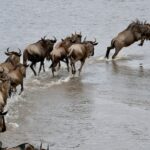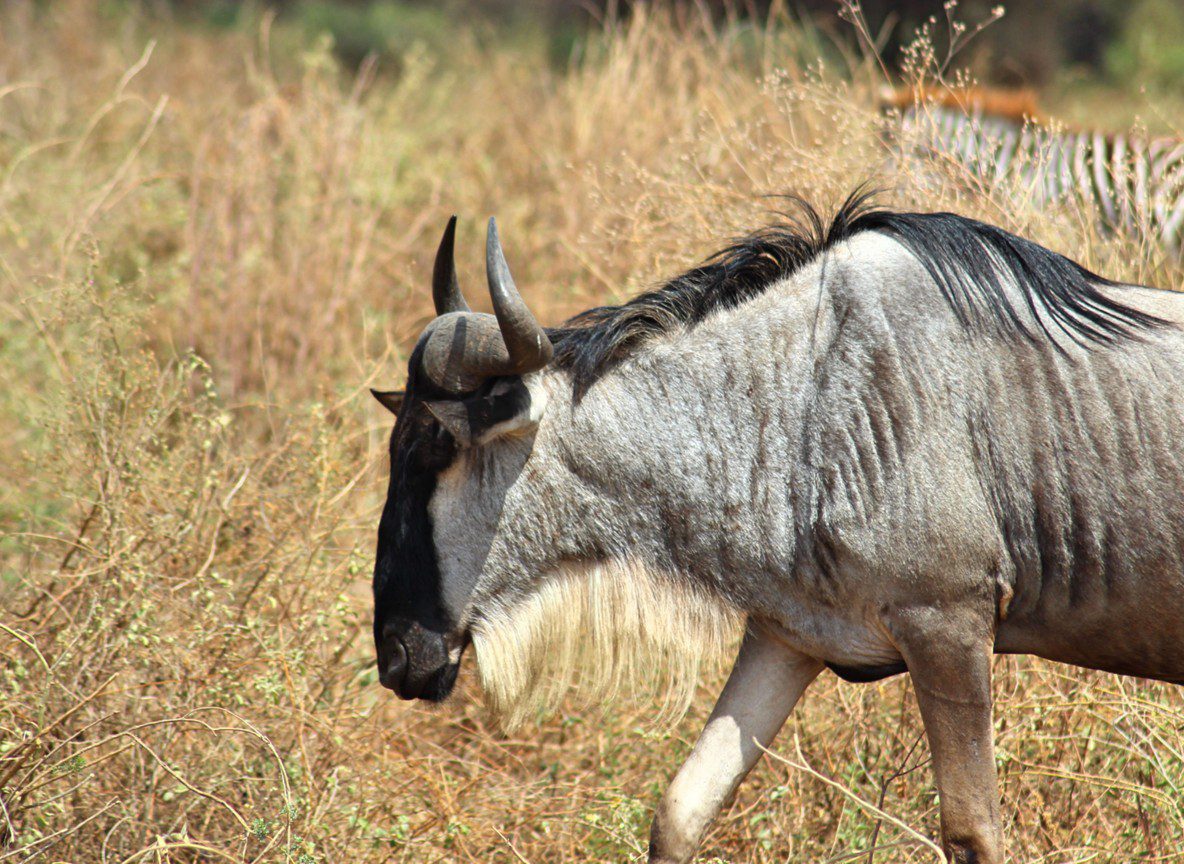
The numbers alone are staggering. Around 1.5 million wildebeest, 200,000 zebras, and half a million gazelles complete a circular, year-round journey of roughly 1,800 kilometres between Tanzania’s Serengeti and Kenya’s Masai Mara. For anyone planning a wildebeest migration safari in 2026, the key decisions come down to three things: which month suits your goals, where in the Mara ecosystem you position yourself, and how long to stay.
This guide walks through the full 2026 migration calendar, the best areas for crossing access, and the practical decisions that determine whether you witness the spectacle or just miss it.
The 2026 Migration Calendar: Month by Month
The Great Migration runs year-round, but what you see depends entirely on which month you visit and which part of the ecosystem you are in. The herds follow a clockwise circuit driven by rainfall and grass availability, and the Mara’s most dramatic moments cluster between July and October.
For an in-depth look at the ecology behind the crossing events, see our Mara River wildebeest crossing guide.
January to March: Calving Season in the Serengeti
From late January through March, more than 500,000 wildebeest calves are born on Tanzania’s southern Serengeti plains and in Ndutu. This compressed calving window is extraordinary wildlife viewing in its own right. Predator activity is intense, and the sheer density of young animals on the plains draws lions, hyenas, and cheetahs in high numbers.
This window is not Kenya. If your goal is the Mara River crossings, use this period for planning rather than travel. Camps and flights for the July to August peak window often sell out six to twelve months in advance, so early in the year is the right time to confirm your itinerary, not to visit.
April to June: The Herds Move North
By April, the massive herds begin drifting north through the central Serengeti, pulled by depleting grass and seasonal instinct. The Western Corridor and the Grumeti River in Tanzania see some river crossings during this period, but the Masai Mara remains quiet. By June, the leading edge of the migration is approaching the Kenya border, and camps on the Mara side are moving into their final available slots for peak season.
If you have not confirmed your 2026 dates by May, the best tented camps in the Mara Triangle and private conservancies may already be committed.
July to August: Peak Mara River Crossings
This is the window most people plan around. From late June through August, the leading wildebeest herds arrive in the Masai Mara ecosystem and the Mara River crossings begin in earnest.
The 2026 peak window for major crossings runs from mid-July through late August. Nobody can predict exact crossing dates. The herds read water levels, grass density on the opposite bank, and their own collective mood. A single afternoon drive might bring you to a crossing of 10,000 animals, or the herds might mill at the bank for days before committing.
Stay length matters significantly. One night at the Mara gives you roughly a 30 to 40 percent chance of witnessing a major crossing. Five to seven nights pushes that probability to around 85 to 90 percent, based on field records from camps operating along the main crossing corridors.
September to October: Secondary Crossings and Dispersal
By September the main herds spread across the Mara ecosystem. Some groups push south again as early rains reach the Serengeti’s northern edge, but significant crossing activity continues along the Mara River through October. This window is regularly underrated. Visitor numbers drop from the July and August peak, the light for photography turns excellent in the lower-sun months, and crossing events continue with enough regularity to reward a well-timed visit.
If your priority camps are sold out for July and August, September is not a compromise. It is a genuinely strong alternative with better availability and equivalent crossing potential in many years.
November to December: The Return South
By late October and November, the bulk of the herds are moving south through the Loita Plains toward Tanzania. River crossing events become rare. December sees most of the migration back in the Serengeti. Year-round resident wildlife in the Masai Mara remains excellent, but if the crossing is your primary goal, the window has closed.
Where to Position Yourself in the Masai Mara
Your camp location determines your crossing experience more than almost any other variable. The Masai Mara ecosystem covers roughly 1,500 square kilometres, and adjacent conservancies extend that considerably further. Not every corner of the ecosystem offers the same proximity to active crossing sites.
Musiara Marsh and the Northern Reserve
Musiara Marsh, in the northern section of the Masai Mara National Reserve, sits adjacent to the Mara River’s most consistently active crossing corridors. The Bila Shaka area near the marsh is arguably the most used crossing site in the world during peak migration season.
Camps positioned in the northern reserve give the fastest response time when crossing activity begins. The trade-off is vehicle density. During peak July and August, a single crossing event can draw 40 to 60 vehicles. The spectacle itself is undiminished, but the intimacy is different from what you find in areas with controlled vehicle access.
For a broader guide to the Masai Mara ecosystem and what it offers year-round, see our Masai Mara national reserve planning guide.
The Mara Triangle
The Mara Triangle occupies the western bank of the Mara River and is managed separately by the Mara Conservancy. The same river crossings are accessible from the western bank, but vehicle numbers in this zone are controlled at a lower ceiling than the main reserve.
For 2026, the Mara Triangle offers the best combination of crossing access and overall game drive quality. The landscape feels less trafficked, wildlife concentrations remain strong, and the driving experience between events is significantly more spacious.
Private Conservancies
Conservancies bordering the reserve, including Olare Motorogi, Naboisho, and Ol Kinyei, push the experience further still. Only vehicles from camps operating within each conservancy are permitted, so game drives are shared with a handful of vehicles at most. Walking safaris are possible in selected conservancies, adding a ground-level dimension that no vehicle-based experience can replicate.
These areas do not sit directly on the main crossing sites, so you trade some crossing immediacy for a substantially higher quality of daily game viewing. For travellers visiting Kenya for the second or third time, this trade is often worth it.
Safari Experience Tiers for 2026
Migration safari options across the Masai Mara range broadly in price, access, and experience depth. Understanding what each tier actually delivers helps you make a cleaner decision.
Budget: Shared game drive vehicle, public campsite or basic permanent camp, group dining, and structured departure times. The river bank is the same for every budget. The crossing itself does not cost more to witness from a basic vehicle than from a luxury one. What changes is schedule flexibility: shared vehicles leave and return at fixed times, which limits how long you can wait at the bank once a crossing begins building.
Mid-range: Semi-private or private tented camp, two game drives per day with a dedicated guide, and full board. Guides can extend time at the river if a crossing is developing. Five to seven nights in a mid-range camp is the most popular format for first-time migration travellers and consistently delivers results across the peak window.
Luxury and conservancy tier: Private conservancy camp, private vehicle and guide, optional balloon safari at dawn, and access to walking safari elements where permitted. Walking during migration season is rare because most operators restrict movement to vehicles inside the reserve. Conservancy camps that offer walking add a sensory layer that changes the experience. Tracking lion spoor along a dry lugga, reading the grass with a guide who has spent decades in this landscape, hearing distant herds from the ground: these belong to a different category than vehicle-based viewing.
All tiers include access to the river crossing experience. The variable is depth, flexibility, and the hours you can invest at the bank.
Practical Planning: Explorer Notes
Book early for July and August. Premium camps in the Mara Triangle and private conservancies operate with 8 to 16 guests at maximum. They fill six to twelve months in advance for peak migration season. If you are planning a July or August 2026 visit and reading this in spring, enquire immediately. Late cancellations do occur but cannot be counted on.
September has strong availability. Across all tiers, September has better availability than July or August and costs less at most camps. Crossing activity remains strong in most years through mid-October.
Fly in for peak season. A 45-minute flight from Nairobi replaces a five to six hour road transfer in each direction. For peak season visits where every day counts, flying in adds two full game drive days to a standard seven-night itinerary. For September onwards, a road transfer through the Rift Valley is good value and offers scenic and wildlife stops along the way.
Stay a minimum of five nights. Three nights is the floor for a meaningful migration experience. Five nights is where crossing probability becomes genuinely reliable. Seven nights during peak season gives multiple crossing attempts, strong Big Five sightings between events, and room to absorb the landscape at a pace that is not driven by anxiety about missing something.
Set realistic expectations. No one can tell you exactly when a crossing will happen. This is not a fixed event: it is animal behaviour responding to conditions on the ground. Arriving with that understanding in place means every morning at the river bank is possibility rather than disappointment.
What to Read Next
For Kenya-specific safari planning beyond the migration, explore our Kenya safari planning guide. For current operator information and trip planning support, Trunktrails Safaris offers tailor-made Kenya migration itineraries across all budget levels, from shared vehicle camps to private conservancy stays.
Turn this reading into a real itinerary with help from a Kenya-based safari team.
Start Planning Your SafariFurther reading
- WWF wildlife conservation
- Maasai Mara Wildlife Conservancies Association
- Magical Kenya (Kenya Tourism Board)