You have watched wildebeest boil into the Mara River before. You have felt the ground vibrate underfoot, smelled dust and water together, watched crocodiles hold position in the shallows while the animals committed to the far bank. You have seen the great migration, ticked it off, and still felt something unfinished.
That feeling has a specific address.
The Sand River runs along the southeastern edge of the Masai Mara ecosystem, tracing the Kenya-Tanzania border before joining the main Mara River. While most operators point cameras north toward the famous crossings near Governors’ Camp and the Musiara Marsh, the Sand River quietly stages the first act of the entire drama. The herds that slip across here in late June and early July have not yet been photographed by a thousand other vehicles. Most lodge brochures barely mention the place.
This guide explains what the Sand River is, why it matters, and why experienced Mara visitors increasingly seek it out over the headline crossings.
What the Sand River Actually Is
The Sand River is not simply a smaller version of the Mara River. It occupies a different role in the migration’s logic.
Running roughly east to west before joining the Mara River near the Tanzanian border, the Sand River marks the boundary between the Serengeti ecosystem to the south and the Masai Mara National Reserve to the north. During the dry season, the riverbed shows its name: exposed sandbars, shallow braids of water, and in drier years stretches of soft sand barely concealing the seasonal flow beneath.
This geology matters. The crossings here are lower-risk for the wildebeest. The banks are less vertical, the water less deep, and the crocodile pressure less concentrated than at the main Mara crossing points. Guides and ecologists read this as the migration’s opening move. The probing herds test the Sand River first before the main columns push northwest toward the deeper, higher-banked drama of the central Mara.
For a safari traveller who has already seen the famous crossings, that distinction is important. At the Sand River, you are watching the decision, not the stampede that follows.
Why the Sand River Gets Skipped
The honest answer is logistics and commercial incentive.
Most lodges and camps in the Masai Mara cluster in the central and northern areas of the reserve: around the Musiara Marsh, the Mara Triangle, and the Talek River zone. Game drive circuits naturally radiate from camp, and the Sand River corridor requires a longer drive south, often 45 to 75 minutes from the main lodge belt, across open grassland.
For a first-time visitor who wants wildebeest density and comfortable viewing at established crossing points, the northern camps make sense. The crossings near the Serena bridge area and Crossing Point One have developed vehicle positions and reliable timing.
But established vehicle positions are exactly what an experienced repeat visitor wants to avoid.
The Sand River gets skipped for several reasons:
- It sits close to the Tanzania border and requires clear game-drive routing that some operators prefer not to manage
- Crossing timing is less predictable: herds gather and disperse without a fixed schedule
- Fewer permanent camps are positioned to run it as a regular circuit
- No major crossing-watch tourism infrastructure has developed around it
This is the opportunity. The Sand River zone is an active ecological corridor during the transition period from Serengeti to Mara: a documented entry point for the vanguard herds weeks before the main columns arrive.
The Crossing Behaviour You Will Not Read in a Brochure
Wildebeest crossings at the Sand River operate on a different social architecture than the famous Mara crossings. Understanding this difference is part of what makes the experience resonate for a traveller who has already seen the standard spectacle.
At the main Mara crossings, you often witness a pressure-cooker dynamic: tens of thousands of animals massed on the southern bank, a single nervous individual triggering the run, then chaos. Extraordinary, and to a point, predictable.
At the Sand River, you see what guides call scout behaviour. Smaller sub-herds, often 200 to 800 animals rather than tens of thousands, approach the banks, spread along the water’s edge, and read the river. They test entry points, back off, try again further downstream. This process can last hours.
What you are watching is collective intelligence in real time. The animals are computing risk: crocodile presence, bank angle, water flow, the number of animals already committed on the far side. For a traveller who understands what they are looking at, this is a more intellectually rich observation than the main crossing spectacle.
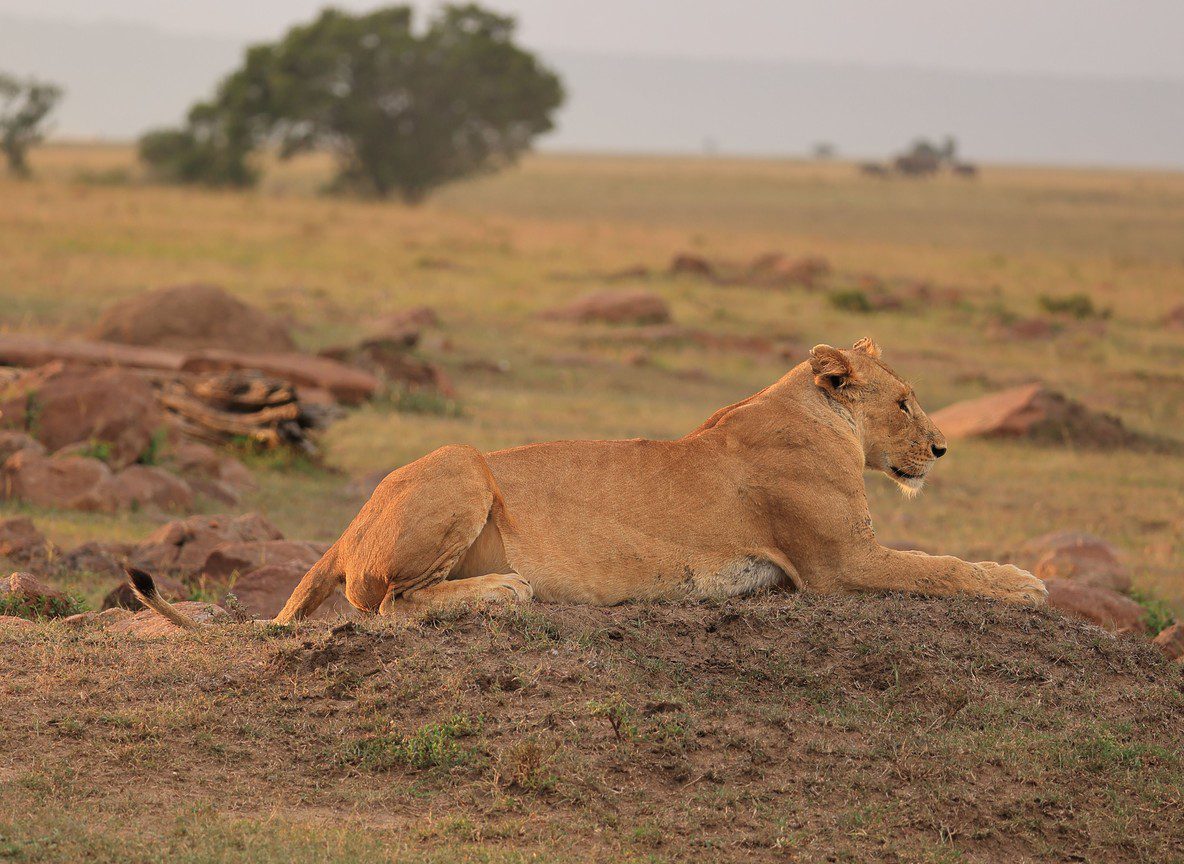
Predator behaviour adds another layer. Big cats follow the vanguard herds. A crossing that draws 400 wildebeest across the Sand River will position lions on both banks within hours. Cheetahs work the open grassland approaches. Because fewer vehicles are present, animal behaviour is less disturbed. You are more likely to observe a complete hunting sequence rather than a vehicle-disrupted approach.
When to Position at the Sand River
The window that matters most is late June through the first three weeks of July.
The main Mara crossings, those appearing in every migration calendar, peak from mid-July through September. Sand River activity precedes this by three to six weeks. The vanguard herds push across the Tanzania-Kenya border here before the main columns have built sufficient density to attempt the bigger northern crossings.
| Period | Sand River Activity | Main Mara Crossings |
|---|---|---|
| Late June | Vanguard herds arriving; scout crossings frequent | Minimal: herds still south |
| Early July | Peak Sand River crossing window; predator density high | Building; first small crossings begin |
| Mid-July | Activity dispersing northward | Building to peak |
| August | Most herds have moved north | Peak crossing period |
| September | Quiet | Tail end of peak |
For a repeat visitor whose previous safari happened in August or September, this table makes the case for a June departure. You trade volume for intimacy. You trade the spectacle for the intelligence behind it.
A June itinerary also offers:
- Short rains ending, leaving vivid green grassland that photographs well
- Lower camp rates at most lodges (shoulder season pricing)
- Fewer vehicles on game drives across the Mara ecosystem
- The Mara Triangle at its greenest, before high season dust settles in
Where to Base for Sand River Access
The southeastern Mara ecosystem has a smaller selection of camps than the busy northern zone. The key area to target is conservancy land bordering the southern reserve, between the Talek Gate and the Sand River boundary.
Private conservancies along the southeastern corridor, including parts of Olare Motorogi Conservancy and Mara Naboisho Conservancy, offer game-drive access that extends toward the Sand River zone without the vehicle-density constraints of the national reserve.
The practical advantages of a conservancy base for this trip:
- Game drives unrestricted by national reserve vehicle limits (off-road driving permitted in conservancies)
- Night drives possible (not permitted inside the reserve)
- Fewer vehicles at any given sighting
- Closer proximity to the Sand River corridor reduces transit time per drive
What No One Tells You About the Sand River Sighting
The detail that guides share only when guests ask the right questions:
In dry conditions, the Sand River carries a sandbar system that creates islands mid-crossing. Wildebeest that enter the water do not always cross straight. They navigate the bars, sometimes circling on a mid-river island before committing to the far bank.
This is where photography opens up in a way the main Mara crossings rarely allow. Movement is slower, light holds longer on the subjects, and the distance from the bank to the mid-river islands is often shorter than the deep-channel crossings at the central Mara. For a traveller with a camera, the Sand River mid-crossing island position is one of the least photographed and most technically accessible wildlife photography scenarios in the Mara ecosystem.
The other detail: silence. The Mara during peak migration season carries a background roar of vehicle engines, radios, and wildlife commentary. The Sand River in late June carries the sound of water, grass, and wildebeest. Nothing else.
Sand River vs. Main Mara Crossings: A Comparison
| Factor | Sand River | Main Mara Crossings |
|---|---|---|
| Peak window | Late June to early July | Mid-July to September |
| Herd size at crossing | 200 to 2,000 per event | 5,000 to 80,000+ per event |
| Vehicle count at sighting | Typically fewer than 10 | Often 50 to 150+ |
| Crossing frequency | Multiple smaller events per day | Major events less frequent |
| Bank profile | Lower gradient, sandbar system | High vertical banks, deeper water |
| Predator behaviour | High leopard and cheetah activity | High crocodile and lion activity |
| Photography accessibility | Closer sightlines, slower movement | More dramatic but more distant |
| Best for | Repeat visitors, behaviour observation | First-time migration visitors |
Explorer Notes: Planning a Sand River Safari
The best window for the Sand River corridor opens in the final week of June and runs through the first three weeks of July. Conservancy camps along the southeastern Mara have limited capacity, and this is a shoulder-season window that fills with repeat visitors who have done their research.
A few practical points before you book:
- Plan a minimum of two nights in a conservancy with access to the southeastern corridor. A single night rarely gives you enough drives to catch the crossing timing.
- Request early morning game drives specifically for Sand River positioning. Herds approach the water after overnight grazing, with activity concentrated in the first two hours after sunrise.
- Confirm with your camp that guides run the Sand River route regularly. Not all Mara guides work this corridor as a primary circuit.
- Factor in the 45 to 75-minute transit from northern camps. If the Sand River is your priority, a southeastern base is worth the trade-off on amenity range.
For more on how the Mara ecosystem works across the full annual calendar, the Tourinsights Masai Mara guide covers the zone breakdown and seasonal planning in detail.
Conclusion: Why the Sand River Changes the Migration Experience
The Sand River is the migration before it becomes a spectacle. The animals at this crossing are not performing for an audience of vehicles. They are making decisions in real time, and the few visitors positioned to watch them are seeing something the peak-season brochure cannot describe.
If you have already seen the famous crossings and felt something unfinished, this is where that feeling resolves.
Reader Next Steps
The Tourinsights guide to the Masai Mara ecosystem covers the full seasonal and zone breakdown for planning a Mara visit. For itinerary-level help with Sand River access and conservancy camp selection in the southeastern corridor, Trunktrails Safaris runs this route as a primary circuit, not an occasional detour.
Prefer a different route, budget, or travel style? This plan can be adapted to fit.
Customise Your TripFurther reading
- WWF wildlife conservation
- Maasai Mara Wildlife Conservancies Association
- Magical Kenya (Kenya Tourism Board)