The gerenuk stands on its hind legs to reach the acacia branch. No other antelope does this. In the Masai Mara you would never see it. In Amboseli you would never see it. But here, in the heat shimmer of northern Kenya’s Samburu, the gerenuk’s performance is entirely routine — just another morning in the only part of Kenya where the “Special Five” northern species all overlap in one reserve cluster.
Samburu is where the Kenya safari experience shifts register. The air is drier, the light harder, the wildlife different in ways that surprise even experienced travellers. And the terminology that surrounds it — “game reserve,” “national reserve,” “Buffalo Springs,” “Shaba” — creates genuine confusion that affects which camps you can access and what wildlife experiences are available.
This guide resolves the naming, explains the Special Five, covers the best camps, and tells you how to plan a Samburu visit that delivers.
Samburu National Reserve vs Samburu Game Reserve: The Key Distinction
This is the confusion that catches almost every first-time visitor. The two names sound interchangeable but they describe different things.
Samburu National Reserve is the Kenya Wildlife Service-managed protected area on the north bank of the Ewaso Nyiro River. It covers approximately 165 square kilometres, was gazetted in 1985, and is what most people mean when they say “Samburu.” The main tourist camps sit within or immediately adjacent to this reserve.
Samburu Game Reserve is an informal term used to describe either the broader Samburu district or the combination of the three reserves — Samburu, Buffalo Springs, and Shaba — that together form what is properly called the Samburu-Buffalo Springs-Shaba ecosystem. It is not a separately gazetted protected area.
When operators or travel writers use “Samburu game reserve,” they typically mean either the national reserve specifically or the broader tri-reserve complex.
The practical implication: The question is not “national reserve vs game reserve” — it is whether a camp has access to one reserve, two, or all three.
| Reserve | Bank | Size | Character |
|---|---|---|---|
| Samburu National Reserve | North bank Ewaso Nyiro | ~165 km2 | Primary tourist area; best-developed tracks |
| Buffalo Springs NR | South bank Ewaso Nyiro | ~131 km2 | Less visited; good lion country; permanent springs |
| Shaba National Reserve | Southeast | ~239 km2 | Most remote; volcanic kopjes; very few vehicles |
A single park entry fee covers access to all three areas, and wildlife moves freely between them across the river and surrounding terrain.
The Samburu Special Five: What You Cannot See Elsewhere
The most compelling reason to visit Samburu is the collection of northern species that occur here but not in Kenya’s southern parks. These five — collectively called the Samburu Special Five — are what make northern Kenya distinct for wildlife travellers.
1. Grevy’s Zebra (Equus grevyi)
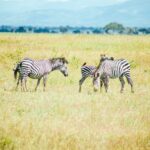
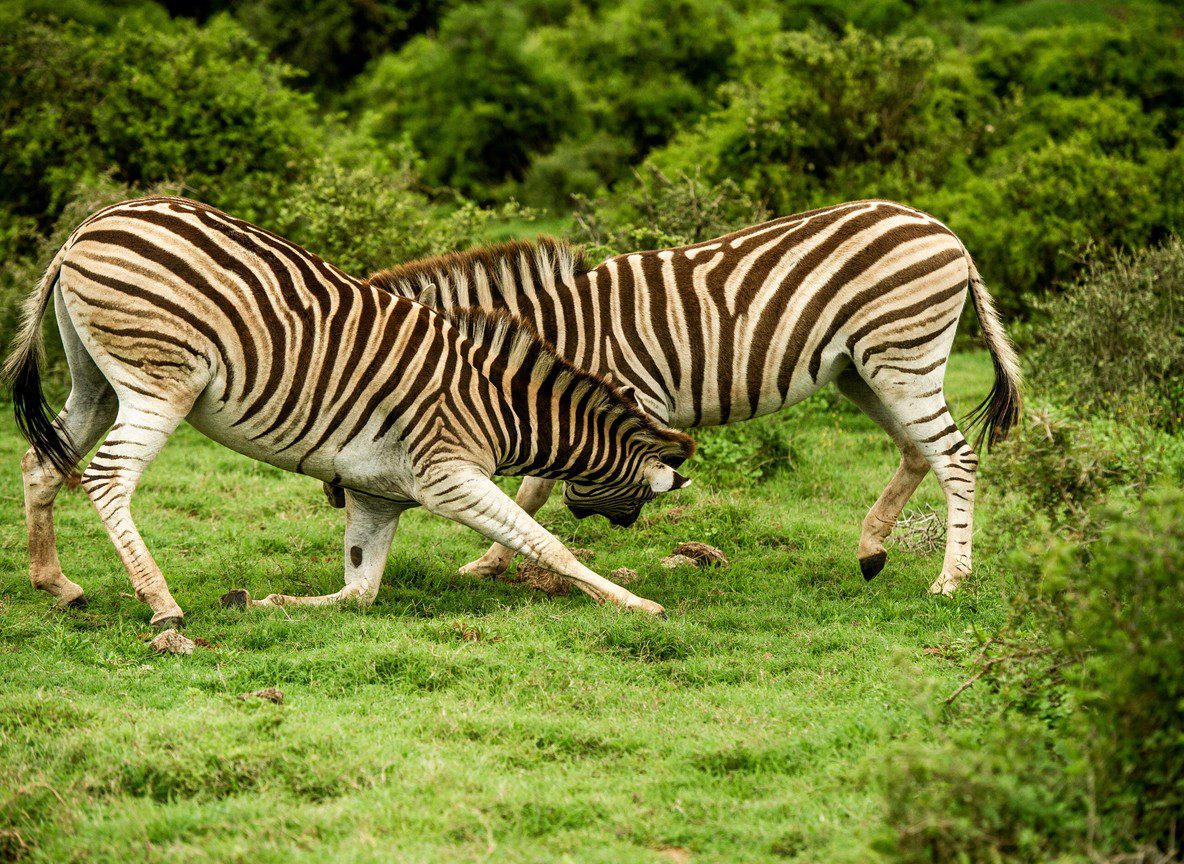
The world’s largest wild equid and one of its most endangered, with a global population estimated at fewer than 3,000. Grevy’s zebras are immediately distinguishable from plains zebras by their narrower stripes, much larger ears, and rounded, donkey-like head. The stripes do not extend to the white belly. In the Samburu ecosystem they are most visible in dry, open areas north of the river. The IUCN lists the species as Endangered.
2. Reticulated Giraffe (Giraffa camelopardalis reticulata)
The most visually distinctive giraffe subspecies, with a large, precisely delineated geometric polygon pattern and a rich chestnut-brown ground colour. Found only in northeastern Kenya, southern Ethiopia, and northern Somalia. Samburu holds one of the most accessible populations for viewing.
3. Gerenuk (Litocranius walleri)
The long-necked antelope whose Somali name means “giraffe-necked.” The gerenuk browses acacia and commiphora at heights other antelopes cannot reach by standing on its hind legs — a behaviour so distinctive it has become the defining image of a Samburu safari. No other antelope species does this. Once seen, it is impossible to forget.
4. Beisa Oryx (Oryx beisa)
The northern oryx, with long straight horns and striking grey-white-and-black colouration. Adapted to arid conditions, oryx can go for extended periods without water. Common on Samburu’s open plains; particularly visible in the dry season near the Ewaso Nyiro.
5. Somali Ostrich (Struthio molybdophanes)
Only recently recognised as a distinct species from the common ostrich (split formally in 2014). The male has blue-grey skin on the neck and thighs compared to the common ostrich male’s pink-red skin. Found only in northeastern Africa; Samburu is the most accessible viewing location.
Seeing all five in a single day is a realistic target with a competent guide who knows current animal locations.
Wildlife Beyond the Special Five
The Special Five receive the most attention, but Samburu’s wildlife picture is considerably broader.
Lions: Resident and relatively habituated. The Ewaso Lions research organisation has maintained a long-term scientific presence in the ecosystem, studying the prides in detail. Lion sightings are consistent and the well-studied individuals can often be identified by name.
Leopards: Present but secretive. Most sightings come at dusk or during nocturnal activity along the doum palm-lined river banks. Samburu has a reputation for good leopard density.
Cheetahs: Present but harder to find than in the open savannah of the Mara. The scrubland habitat makes sightings less predictable.
Elephants: Samburu’s population is smaller than Amboseli‘s, but the dry-country bulls here carry impressive tusk length relative to body size. The Save the Elephants organisation has been based in Samburu for decades; their GPS-collar research has produced some of the most detailed elephant movement data in Africa.
Birds: The Ewaso Nyiro’s gallery forest hosts extraordinary birdlife, including the vulturine guineafowl — arguably the most visually spectacular bird in Africa — Donaldson-Smith’s nightjar, golden pipit, and a range of hornbills. Over 450 species have been recorded across the ecosystem. Serious birders rate Samburu among Kenya’s top five birding destinations.
Best Time to Visit Samburu
| Month | Conditions | Notes |
|---|---|---|
| January to February | Hot, dry | Best wildlife concentrations at river; clear skies |
| March to April | Long rains; some tracks impassable | Quieter; green landscape; lower rates |
| May | Cooling; some rain | Low season; good vegetation; fewer vehicles |
| June to August | Dry, warm | Excellent visibility; peak season |
| September to October | Dry, increasingly hot | Very good; fewer visitors than August peak |
| November to December | Short rains possible | Good wildlife; fewer visitors than peak months |
The best windows are January to February and June to August. The dry season concentrates wildlife at the Ewaso Nyiro River, producing consistent sighting opportunities. January and February offer equivalent wildlife quality to the June-August peak with fewer visitors and lower rates.
Camps Worth Knowing
Elephant Watch Camp and Desert Rose (Elephant Watch Portfolio): The most conservation-credentialed camps in Samburu. Oria Douglas-Hamilton, co-founder of Save the Elephants, established Elephant Watch Camp. The connection to fifty-plus years of elephant research gives guests access to context and insight that is genuinely rare anywhere in Africa.
Sasaab (andBeyond): A dramatic hill position above the Ewaso Nyiro with views down to the river and plains. Infinity pool, individually designed rooms, and the strongest spa offering in northern Kenya. Suits travellers who want high comfort alongside wildlife quality.
Larsen’s Tented Camp (Sanctuary): Classic river-bank tented camp with a long history of quality guiding. Smaller and more intimate than the larger lodges.
Joy’s Camp (Shaba): A heritage property in Shaba National Reserve — the camp where Joy Adamson lived while writing. The Shaba location gives it significant remoteness and far fewer vehicles than the main Samburu reserve.
For a full comparison of northern Kenya camps and conservancy options across budget tiers, the northern Kenya safari guide covers the full range.
Combining Samburu with the Broader Northern Circuit
Samburu works best as part of a broader northern Kenya itinerary rather than a standalone destination. The most logical combinations:
Samburu plus Laikipia: Fly from Nairobi to Samburu (45 minutes), three nights, then drive or fly southwest to Laikipia’s private conservancies (Lewa, Ol Pejeta, Loisaba, Ol Jogi). This covers the northern circuit efficiently in five to six days total.
Samburu plus Shaba: Even two nights in Shaba, with its volcanic kopjes and dramatic topography, provides a completely different visual register from the Samburu reserve. Joy’s Camp makes this accessible without lengthy road transfers.
Samburu plus Lake Turkana: The full northern frontier experience. Samburu as the foundation, then fly north to the Jade Sea. This requires more days and logistical planning but represents one of the most distinctive journeys available in Kenya. The 7-day northern Kenya itinerary on this site covers this route in detail.
Samburu plus Masai Mara: The classic northern-and-southern contrast. Different species, different landscapes, both exceptional. Most travellers who combine the two do Samburu first and the Mara second, since the Mara’s density tends to feel like a satisfying conclusion.
Practical Planning Notes
Getting there: Scheduled flights from Wilson Airport in Nairobi reach Samburu’s Oryx or Kalama airstrips in approximately one hour. Road transfer takes five to six hours via Isiolo. Most multi-day packages include flights to maximise time in the reserve.
Length of stay: Three nights minimum. This gives you five to six drives and enough time to seriously pursue the Special Five and explore different areas of the reserve.
What to pack: Samburu is hot and dry. Lightweight, breathable clothing in neutral colours. Hat, high-SPF sunscreen, quality sunglasses. Good binoculars are more useful here than in busier parks — the animals are often spread across open terrain rather than concentrated in viewable clusters. Camera with a long zoom (200mm minimum; 400mm+ for serious photography work).
Health: Samburu is in a malaria zone. Consult a travel health physician about prophylaxis at least four weeks before departure. Hydration matters in the dry heat; lodges and camps provide bottled water throughout.
Park fees: KWS manages the reserves. International visitor day fees apply and are updated periodically. Check current rates at kws.go.ke before finalising your budget.
For more on the three-reserve ecosystem — Samburu, Buffalo Springs, and Shaba compared in detail — see the Samburu, Buffalo Springs and Shaba complete guide on this site.
Turn this reading into a real itinerary with help from a Kenya-based safari team.
Start Planning Your Safari