

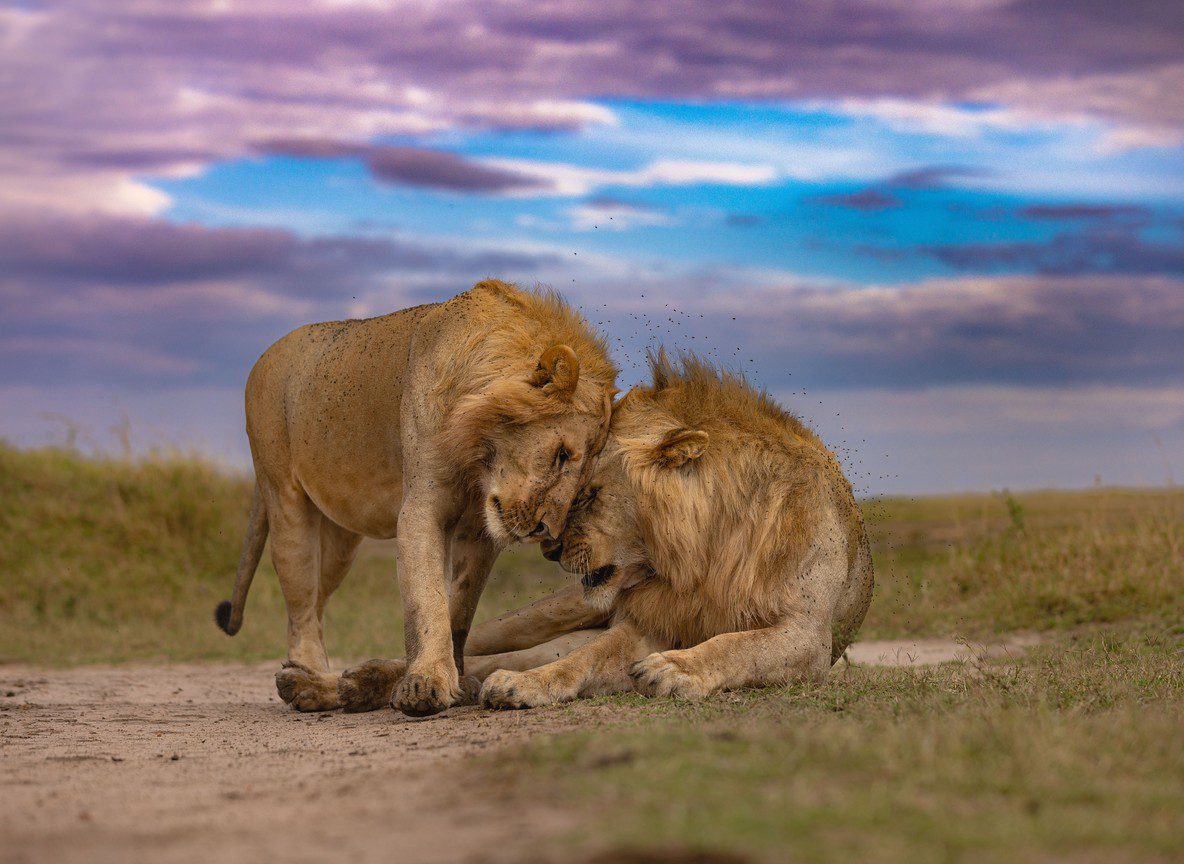
The core question with private vs shared game drives in the Masai Mara is about control: how much do you want over your experience, and what are you prepared to pay for it?
Both options deliver a genuine Masai Mara game drive. Both can produce extraordinary wildlife sightings. But the experience in the vehicle, including the flexibility, the pace, the positioning, and the level of personal attention, differs in ways that matter to different types of traveler. This comparison covers what each option actually delivers so you can match the right format to your trip.
What Is a Private Game Drive?
A private game drive in the Masai Mara means the vehicle, typically a modified 4WD Land Cruiser or Land Rover with a pop-top roof, is exclusively yours. You and your travel group are the only guests in it. The guide answers to you alone. The driver positions the vehicle based on your preferences. The schedule, including when you leave, how long you stay at any sighting, and when you return, is entirely under your control.
Private game drives in the Masai Mara typically accommodate two to six guests in a single vehicle.
What Is a Shared Game Drive?
A shared game drive places you in a vehicle with other guests who are not part of your travel group. Vehicles typically carry up to six to eight guests total, often from different countries and with different photography goals or wildlife priorities.
Shared game drives operate on set schedules. The guide follows fixed departure and return times to manage the full group. Stops, stay duration, and sighting decisions are made collectively or by the guide balancing multiple competing preferences.
Many Masai Mara camps, particularly budget and mid-range properties, offer shared game drives as the default included option. Private drives are often available as an add-on or upgrade.
Private vs Shared Game Drive: Key Differences
| Factor | Private Game Drive | Shared Game Drive |
|---|---|---|
| Who is in the vehicle | Your group only | Mixed guests |
| Schedule flexibility | Fully flexible | Fixed departure and return |
| Time at each sighting | As long as you choose | Guide decision, group balance |
| Off-road driving (conservancy) | Your call | Guide decision |
| Photography positioning | Optimized for your equipment | Balanced for all guests |
| Wildlife wait time | Can stay 2+ hours at one sighting | Usually moves on sooner |
| Pace of the drive | Slow, focused, or broad as you prefer | Typically broader coverage |
| Guide attention | Fully focused on your group | Split across all guests |
| Cost | Higher | Lower |
The Case for a Private Game Drive
Positioning Control
The most underrated benefit of a private game drive is vehicle positioning. In a private vehicle, the guide can swing around to place the best morning light on a leopard, position you at the upstream side of a Mara River crossing, or back away from a lion pride to give you a wider photographic composition. In a shared vehicle, every positioning decision is a compromise between multiple guests with different angles, lenses, and priorities.
Time at Sightings
One of the most common frustrations on shared game drives is leaving a strong sighting too early because other guests are restless or the guide is managing group timing. A private game drive gives you the freedom to stay at a cheetah with cubs for 90 minutes, watch a lion hunt develop slowly over an extended period, or simply sit with a family of elephants until the light reaches the right angle.
Customized Focus
A private game drive adapts to your specific interests. Serious birders can ask the guide to slow down for every species along the track. Photographers working with long telephoto lenses can request specific positions and longer waits. Families with young children can take breaks when needed and set the pace around attention spans. Couples wanting silence and space can have it. The guide learns what matters to your group and shapes the entire drive around those priorities.
Silence
This sounds minor but it is meaningful. A private vehicle is quiet. No other guests talking over a tense predator stalk. No split commentary about what someone else wants to see. No compromise on staying still and silent during a critical behavioral moment. Wildlife viewing at its finest is a quiet, observational experience, and a private vehicle makes that consistently possible.
The Case for a Shared Game Drive
Cost
The most straightforward benefit of a shared game drive is the price. Shared drives typically cost 30 to 60 percent less than equivalent private drives. For travelers allocating budget to a longer stay, a better camp location, or a balloon safari, this saving is meaningful and real.
Social Experience
For solo travelers or couples who enjoy meeting other visitors on safari, the shared format often creates genuinely memorable connections. You share the excitement of major sightings with strangers who quickly become temporary travel companions. Some travelers find this unexpectedly enjoyable.
Built-in Structure
Shared drives follow practised routes and structured timing that the guide has refined over many seasons. For travelers who prefer a structured experience without having to make decisions about where to go or how long to stay, the shared format removes that cognitive load and delivers a reliable, well-paced drive.
Private Game Drive Cost in the Masai Mara
Costs vary by operator, season, and drive duration:
- Half-day private game drive (3 to 4 hours): $120 to $200 per vehicle
- Full-day private game drive with bush lunch: $250 to $400 per vehicle
- At most Masai Mara conservancy camps: private game drives are included in the all-inclusive rate
Shared game drives at budget camps are often included in the camp rate. At mid-range camps, shared drives typically cost $40 to $80 per person per drive.
When traveling as a couple, the per-person cost of a private game drive can approach or slightly exceed a shared drive at premium camps, making the upgrade more accessible than many travelers expect.
Is a Private Game Drive Worth It?
For certain types of traveler, the answer is clearly yes:
- Photographers: Positioning control, extended time at sightings, and the ability to stay silent during key behavioral moments are all significantly better in a private vehicle
- Honeymoon and romance trips: Intimacy and uninterrupted moments in the bush are impossible to replicate in a vehicle shared with strangers
- Wildlife enthusiasts: If you want to commit to a specific animal or behavior, including a kill, a courtship display, or cubs learning to hunt, only a private vehicle lets you stay as long as needed
- Families with children: A private vehicle allows child-paced breaks, age-appropriate explanations, and flexibility that a mixed-group vehicle simply cannot accommodate
For budget-conscious travelers who are flexible, social, and not focused on photography, a shared game drive is a practical and enjoyable way to experience the Masai Mara without the additional cost.
Explorer Notes: Practical Planning Points
- Most private conservancy camps (Olare Motorogi, Naboisho, Mara North) include private game drives in the all-inclusive rate, making the private option effectively standard at those properties
- If booking a shared drive at a mid-range camp, ask how many guests are typically in each vehicle: some camps run vehicles with only 3 to 4 guests, which narrows the experience gap considerably
- For photographers, a private vehicle is not an optional upgrade: it is a practical requirement for consistent results
- Off-road driving in private conservancies is permitted and significantly expands where the vehicle can go: this benefit is most fully used in a private vehicle where you control how much time to spend exploring off-track
Conclusion
The private vs shared game drive decision in the Masai Mara comes down to how much the flexibility, silence, and positioning control of a private vehicle is worth to your specific group. For photographers, romantics, families, and wildlife enthusiasts who want extended time at specific sightings, the private vehicle delivers experiences the shared format cannot match. For budget travelers and those who enjoy the social dimension of a group drive, the shared option remains a genuinely good way to see the Masai Mara.
What to Read Next
If you are still deciding on the broader shape of your Masai Mara trip, the guide on morning vs afternoon game drives covers how time of day affects what you are likely to see. For camp selection that affects whether private drives are included, the conservancy vs national reserve camp guide explains the key differences. For operator and trip planning resources, trunktrailssafaris.com covers the Masai Mara ecosystem in depth.