The Nairobi Animal Orphanage is a Kenya Wildlife Service wildlife rescue and rehabilitation centre at the main gate of Nairobi National Park in Langata, 7 kilometres south of the city centre. Founded in 1963, it is Kenya’s oldest wildlife rescue operation, and it continues to function primarily as a facility for animals that cannot be returned to the wild — confiscated from traders, injured in human-wildlife conflict, orphaned by poaching, or rescued from snares.
Every animal on view has arrived for a conservation reason. That context changes how a visit feels compared to a conventional zoo.
What the Nairobi Animal Orphanage Is and What It Is Not
The orphanage does not breed animals for display. Residents arrived because they could not survive in the wild. Animals that recover sufficiently are released back into protected areas. Those with permanent injuries or those too habituated to humans for safe release stay permanently.
In June 2026, Kenya Wildlife Service announced plans to expand the orphanage into a new 89-acre facility adjacent to Nairobi National Park. The project is designed to provide larger, more naturalistic enclosures, particularly for big cats. Current enclosures, built in the 1960s and 1970s, have been widely criticised for their scale. The expansion is being built in phases; the current facility remains fully operational throughout construction.
Animals You Will See
The resident population shifts as animals are admitted and rehabilitated, but the orphanage consistently holds:
Lions: Two to four resident lions, mostly sub-adults confiscated from conflict zones in Kajiado and Laikipia. The enclosures allow visitors to stand close to the fence — close enough to understand the scale of these animals in a way a long-range savannah sighting does not convey.
Cheetahs: Usually confiscated from the illegal pet trade. Cheetah are among Africa’s most trafficked big cats, and seeing one in the context of its confiscation story is a different experience from a game drive sighting.
Spotted hyenas: Rescued from peri-urban areas around Nairobi. Their intelligence, visible in how they move and observe visitors, is something that surprises most people encountering them up close.
Serval cats: Frequently confiscated as illegal pets. Sleek, large-eared, and spotted — striking subjects for close-up photography.
African wild dogs: One of Africa’s most endangered carnivores and rarely seen even on multi-day safaris. The orphanage’s small resident pack is one of the most reliable opportunities to observe this species closely in Kenya.
Baboons, vervet monkeys, pythons, and crowned cranes fill out the lower enclosures, along with various smaller rescues.
| Animal | Typical Number | Primary Rescue Reason |
|---|---|---|
| Lions | 2-4 | Human-wildlife conflict, orphaned |
| Cheetahs | 2-5 | Illegal pet trade confiscation |
| Spotted hyenas | 2-3 | Urban conflict rescue |
| Serval cats | 3-6 | Illegal pet trade confiscation |
| African wild dogs | 4-8 | Snare rescue, orphaned |
| Baboons | Variable | Urban conflict, farm rescue |
| Pythons | 2-4 | Confiscation |
Entry Fees and Opening Hours
Opening hours: Daily from 8:00 AM to 5:30 PM, including Sundays and public holidays. Last entry at 5:00 PM.
Entry fees (2026):
| Visitor Category | Fee |
|---|---|
| Non-resident adults | USD 15 (approx KES 1,950) |
| Non-resident children (3-17) | USD 8 (approx KES 1,040) |
| East African residents (adults) | KES 300 |
| East African residents (children) | KES 150 |
| Kenyan citizens (adults) | KES 200 |
| Kenyan citizens (children) | KES 100 |
These fees are for the orphanage only. They do NOT include entry to Nairobi National Park, which requires separate payment at the main gate.
Payments are accepted in cash, M-Pesa, and card at the gate.
Getting There
The orphanage is at the Nairobi National Park main gate on Langata Road.
By ride-share or taxi: Bolt or inDrive from the Nairobi CBD costs KES 500-800. Journey time 20-35 minutes depending on traffic.
By matatu: Routes 125 and 126 run from Kencom bus stage along Langata Road. Journey time 40-60 minutes.
Self-drive: South on Uhuru Highway, turn onto Langata Road, follow the signs for Nairobi National Park main gate. Parking is available at KES 200 per vehicle.
The KWS Expansion: What It Means for Visitors
The 89-acre expansion announced in June 2026 targets larger, more naturalistic enclosures for animals with permanent injuries. Current enclosures, particularly for lions, are significantly smaller than modern wildlife facility standards.
Some wildlife NGOs have raised questions about the relocation timeline and the effect on animals already habituated to their current spaces. KWS has committed to a phased construction approach to reduce disruption. When complete, the new site will offer longer walking paths, improved viewing platforms, and proper habitat sections.
For visitors in late 2026, some perimeter construction may be visible. The current facility stays fully operational throughout.
Combining With Nairobi National Park: A Full Day
The most productive use of a day at this end of Nairobi is combining an early-morning game drive in Nairobi National Park with an afternoon orphanage visit.
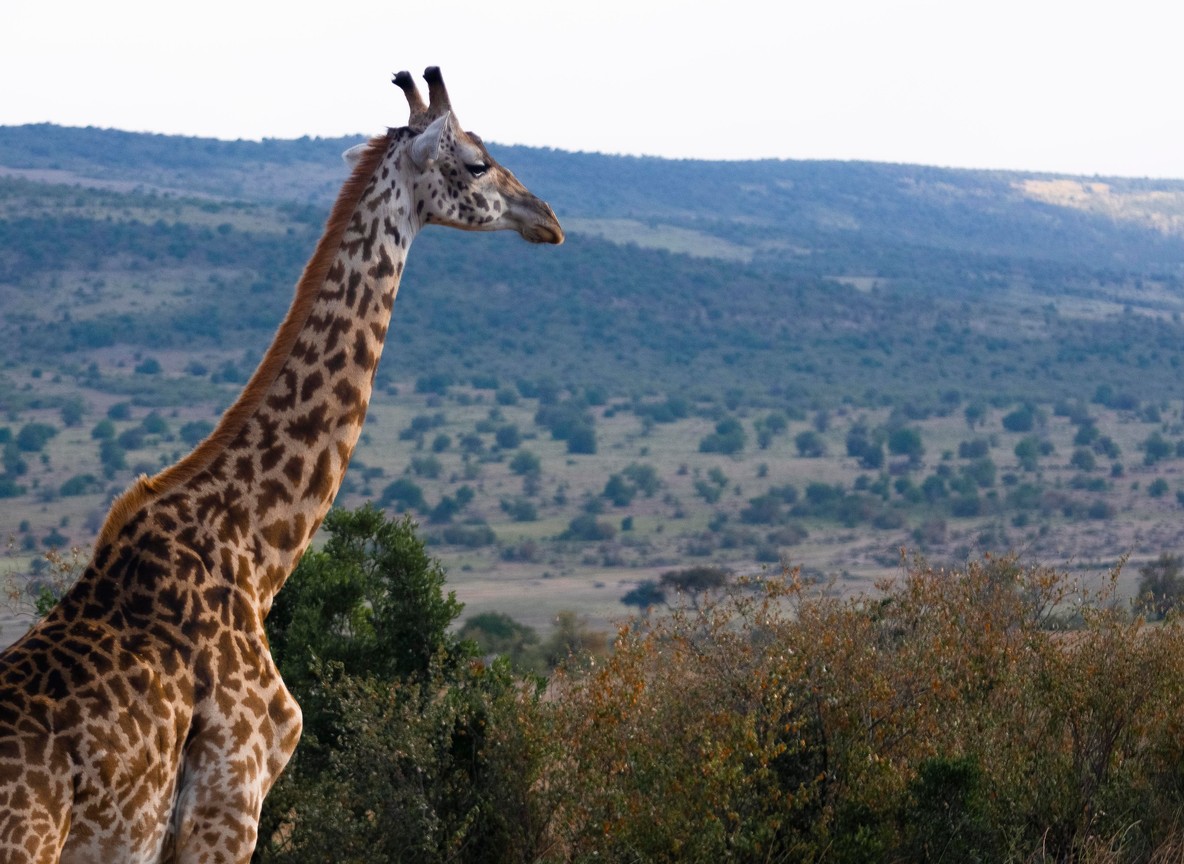
Nairobi National Park opens at 6:00 AM. A 7:00-11:00 AM game drive provides wild, open-vehicle wildlife sightings — lion near Hyena Dam, zebra, giraffe, buffalo, and hippo — with the Nairobi skyline visible on the northern horizon. It is one of the few places on Earth where you can photograph a lion with city skyscrapers in the background.
After the game drive, lunch at the Safari Walk Cafe near the main gate, then 12:30-3:30 PM at the orphanage. The adjacent KWS Safari Walk boardwalk (separate entry fee) adds another 45 minutes if energy and time allow.
All-day cost approximate: USD 60-80 per person including park entry and orphanage fees — one of Nairobi’s best-value full wildlife days.
Practical Tips for Visiting
- Camera: A 70-200mm lens is ideal for portraits of big cats through the fencing. Smartphones work well in the serval and wild dog enclosures.
- Sun protection: Limited shade in the predator enclosure areas.
- Footwear: Comfortable walking shoes. Expect approximately 2 kilometres of paved and gravel paths.
- Time allocation: Two to three hours covers the full orphanage. Budget 30 minutes at the lion and cheetah enclosures specifically.
- Stroller access: The facility is paved and accessible throughout.
The Conservation Context
The orphanage tells a specific story about Kenya’s human-wildlife conflict pressures. Every resident is a case study in a broader problem: the illegal pet trade that intercepts cheetah kittens, the community-conflict rescues that remove problem lions before they are killed, the snare rescues that pull wild dogs from wire before the injuries become fatal.
Visiting with that context in mind shifts the experience from looking at animals in enclosures to understanding the pressures on Kenya’s wildlife populations. For travellers who then continue to the Masai Mara or Amboseli, the orphanage visit creates a useful frame for interpreting what they see in the field — the scale of the conservation challenge and the organisations working within it.
The KWS expansion signals that the government views this facility as worth significant investment. The 89-acre site, when complete, will represent a meaningful upgrade in the conditions for Kenya’s rescued wildlife.
If this guide has you ready to travel, a safari specialist can handle the route, camps, and logistics end to end.
Want to Book a Tour With Us?