The thirty-minute village stop has become the default version of Maasai culture on safari. You watch a welcome dance, buy a bracelet, take a photograph, and drive back to camp with a vague sense that something was missing. That instinct is correct.
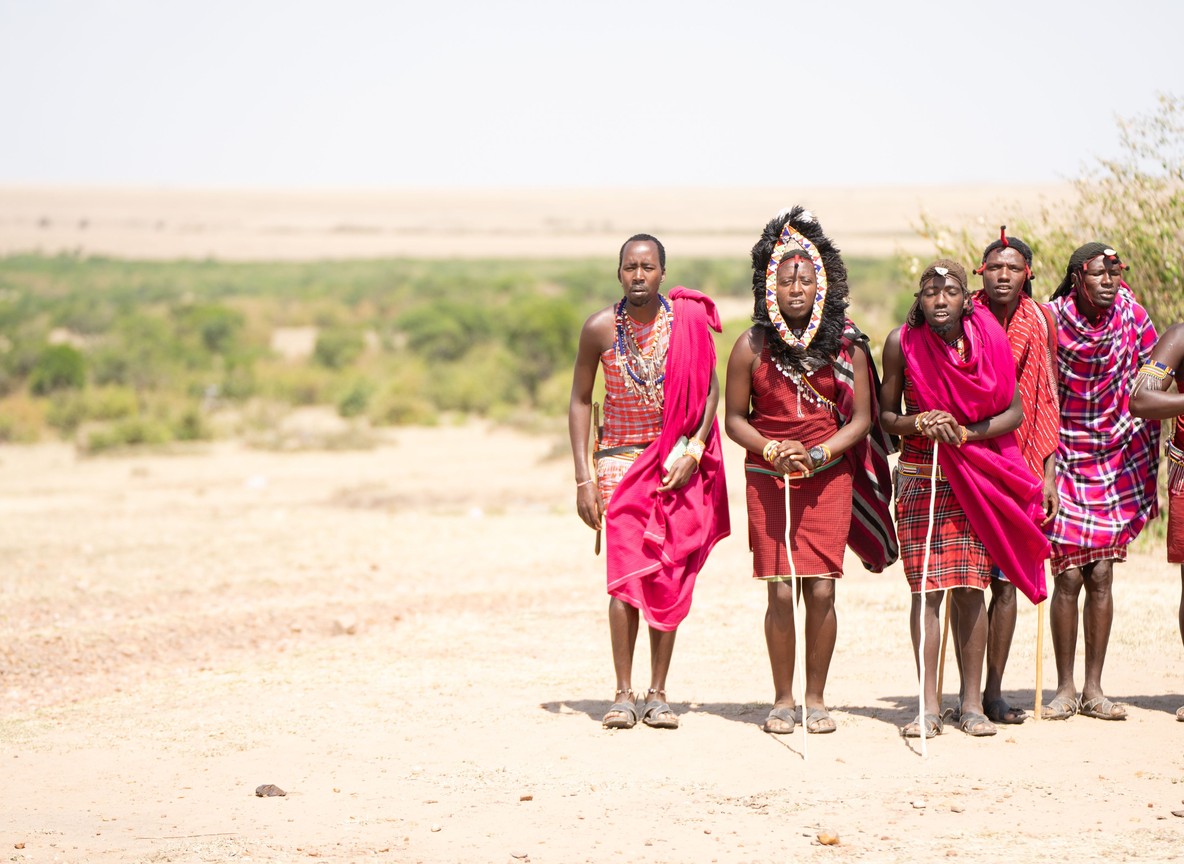
The Maasai are one of the most resilient pastoral cultures on earth, with a worldview, social architecture, and ecological philosophy built over centuries of coexistence with the same wildlife you came to see. The version available in most fifteen-dollar village demonstrations scratches none of that surface. Genuine Maasai cultural access on safari requires time, intention, and a guide or operator who has built real community relationships.
This guide covers what Maasai culture on safari looks like when it is done properly, what to look for, what to avoid, and the specific experiences worth seeking out.
What the Standard Village Visit Gets Wrong
Most village visits are not dishonest. The Maasai who lead them are genuinely Maasai. But the format was compressed for the widest possible tourist appetite, which means it has been reduced to a series of set pieces: a dance, a fire-lighting demonstration, a walk through one house, a craft sale.
What gets left out is the substance. You do not hear about the age-set system that governs every Maasai man’s social role from circumcision to elderhood. You do not learn what the beadwork colors actually communicate, or why cattle function simultaneously as currency, social bond, and spiritual offering. You do not sit long enough with anyone to have a conversation that moves past the performance script.
The culture in Maasai Mara National Reserve Kenya and across the wider Mara ecosystem is embedded in decisions about land, water, livestock routes, and wildlife corridors, and none of that shows up in a thirty-minute stop.
The Age-Set System: The Architecture of Maasai Society
Understanding Maasai tribe culture and the Maasai people of Kenya begins with the age-set, called the ilkiama. Every Maasai man moves through defined life stages, each carrying specific responsibilities, rights, and prohibitions.
Junior warriors, the ilkipiron, live in separate manyattas and are responsible for cattle protection and community security. Senior warriors carry more decision-making authority. Elders, the ilkiama, hold judicial power and cultural memory. These are not ceremonial roles. They are functional governance.
For a traveler, this means the young warrior who leads the welcome ceremony and the elder who makes land-use decisions with the conservancy board occupy entirely different social positions, operating under entirely different rules. A genuine cultural engagement lets you sit with both and understand what connects them.
Women have a parallel system, centered on marriage age-grade, beadwork responsibility, and household management of the enkiama, the homestead economy. The elaborate beadwork collars worn by married women are not decorative in a Western sense: each color communicates status, marital state, and family affiliation.
Beadwork as Language
Maasai beadwork is one of the most information-dense visual systems in East African culture. The primary colors carry specific meanings that vary slightly by region and community, but the core grammar is consistent across Kenya.
Red signals courage, blood, and the warrior stage. Blue represents sky and water, associated with God (Enkai) and prosperity. White stands for purity, peace, and cattle milk. Green signals the land and health. Orange and yellow mark celebration and fertility.
A married woman’s collar tells anyone in the community exactly who she is and where she stands socially. A warrior’s ornaments track his progression through the age-set system. These are not accessories. They are a written record worn on the body.
The bead market at any safari camp sells attractive jewelry. A genuine cultural engagement shows you the system behind it, sits you with a senior woman artisan who explains not just technique but meaning, and ensures any purchase supports the maker directly.
The Maasai Cattle Economy and Safari Land
Here is the fact that most village visits skip entirely: without the Maasai decision to allow wildlife on their land, the Masai Mara ecosystem as most travelers know it would not exist.
The Mara reserve covers roughly 1,500 square kilometres. The private conservancies that buffer it, including Olare Motorogi, Mara North, Naboisho, Ol Kinyei, and Lemek, cover another 1,200 square kilometres of Maasai group ranch land. Wildlife moves through this private land freely because Maasai landowners are compensated for the wildlife they protect rather than the cattle those animals compete with.
This is not charity. It is a negotiated land-use arrangement that the Maasai entered because the economics made sense. When those economics stop making sense, the cattle return, the fences go up, and the wildlife corridor closes.
Understanding Maasai culture in Kenya in the context of safari means understanding that every game drive through a private conservancy is a vote for the viability of that economic arrangement. The best guides explain this explicitly and can tell you how conservancy fees reach the specific community council that owns the land.
| Conservancy | Maasai Group Ranch | Wildlife Corridor Role | Community Benefit Model |
|---|---|---|---|
| Olare Motorogi | Olare Motorogi Group Ranch | Northern Mara buffer | Land lease fees per hectare per year |
| Mara North | Lemek Group Ranch | Northwest migration corridor | Per-bed levy plus community fund |
| Naboisho | Olkinyei Group Ranch | Central conservancy, anti-poaching buffer | Conservation easement plus levy |
| Ol Kinyei | Ol Kinyei Group Ranch | Eastern wildlife corridor | Shared enterprise model |
| Lemek | Lemek Group Ranch | Central connectivity | Lease payments direct to ranch members |
Warrior Training and the Adamu
The adamu jumping ceremony is the most photographed element of Maasai culture. Warriors compete in sustained vertical jumping, supported by a resonant chant that rises and falls with the effort. It is genuinely impressive, and it is a real practice, not something invented for tourists.
But the adamu is one visible piece of warrior culture. The tracking knowledge behind it, the cattle-raiding history now redirected into conservation anti-poaching work, the rules governing warrior behavior in the community: these are the substance that context makes visible.
Some conservancies in the Mara ecosystem offer warrior bush-walks led by active ilkipiron, where the conversation covers tracking methodology, medicinal plant identification, and the practical knowledge that comes from living in the bush full-time. These walks are structured as knowledge exchanges, not demonstrations. The warriors speak because they know something the visitor does not, and the walk ends when the conversation is finished, not when the clock says so.
This version of Maasai culture on safari leaves a different kind of impression.
The Question of Cultural Appropriation
The concern around Maasai of Kenya cultural appropriation is a legitimate one and worth addressing directly.
The appropriation concern applies most clearly to the mass-produced souvenir market, where Maasai aesthetics are replicated without community benefit or cultural accuracy. It also applies to operators who use Maasai imagery in marketing without corresponding community compensation in their operations.
It does not apply in the same way to a structured cultural engagement where the community has designed the experience, controls the access, and receives the majority of the fee. The distinction is who holds the economic and interpretive authority.
A useful test for evaluating any Maasai culture on safari experience: if the Maasai people running it are the ones deciding what gets shown, what gets explained, and what gets charged, you are in the right territory. If the operator has assembled a Maasai-aesthetic experience without that community authority present, you are in a different category. Good operators coordinate exclusively with community-authorized cultural programs, working with specific manyatta communities at rates set by the community council, with itinerary elements designed by Maasai cultural practitioners.
Cultural Experiences Worth Seeking Out
Not all Maasai cultural programs are structured the same way. Here are the specific experiences worth looking for:
Warrior bush walk with ilkipiron: A two-hour walk with active junior warriors covering tracking methodology, medicinal plant identification, and the knowledge system that governs movement through the ecosystem. No scripted route. Conversation-driven.
Beadwork session with senior women’s cooperative: A two-hour working session with women artisans from a specific manyatta, learning the color grammar, attempting the technique, and purchasing directly from the maker with full understanding of what the proceeds support.
Elder council conversation: An arranged morning with a community elder on land use, wildlife coexistence, and the economic logic behind the conservancy model. Not a speech. A conversation guided by your questions.
Boma overnight stay: An optional overnight in a traditional Maasai homestead, structured as a guest of the community. This is available through specific partner communities only, with full informed consent protocols and community-set pricing.
| Experience | Best Months | Location | Duration | Advance Notice |
|---|---|---|---|---|
| Warrior bush walk | Year-round | Any Mara conservancy | 2 hours | 48 hours |
| Beadwork session | Year-round | Specific manyatta | 2 hours | 48 hours |
| Elder council conversation | January-February, June-October | Mara conservancy | 1.5 hours | 1 week |
| Boma overnight | Dry season only | Partner community | 18 hours | 3 weeks |
| Adamu ceremony | Year-round | Most conservancies | 45 minutes | 24 hours |
When and Where to Go
Maasai cultural access is most practical in the Masai Mara ecosystem, where the density of community conservancies makes structured visits straightforward. The dry season months, June through October, coincide with the Great Migration and represent the peak period for cultural visits, so advance coordination is mandatory.
The short dry season, January and February, is quieter and often underrated for cultural engagement precisely because communities are less visited and more available for genuine conversation. Some experienced travelers prefer this window specifically for cultural programs. Our Masai Mara planning guide covers the broader timing considerations for visiting the ecosystem.
Cultural experiences work best when they are built into the itinerary as primary events, not optional extras squeezed between game drives. If cultural engagement is important to you, establish that at the planning stage, not the morning of.
A Note on Photography
The Maasai have every right to decline being photographed, and many do. The ethical protocol is straightforward: ask before you point. For sessions arranged through a reputable guide program, this protocol should be briefed before arrival. Photography within agreed sessions is appropriate with a tip paid directly to individuals who consent. Do not photograph ceremonies or private moments without explicit invitation.
The photographs that come out of a genuine cultural engagement are different from those taken at a drive-by village stop. They are portraits of people, not images of a spectacle.
Planning Your Maasai Cultural Safari
Cultural access in the Mara requires community coordination, and the best experiences are arranged weeks in advance. A visit arranged the morning of, through an impromptu village stop, produces a very different experience than one that was planned with the community in mind.
When evaluating operators, ask specifically which communities they work with, how the community fee is structured, and whether the itinerary elements were designed with Maasai cultural practitioners or assembled by the operator alone. Those questions will tell you a lot about what to expect.
For specialist Kenya cultural safari planning, Trunktrails Safaris works exclusively with community-authorized programs in the Mara ecosystem and can build Maasai cultural visits into a broader Kenya safari itinerary.
Prefer a different route, budget, or travel style? This plan can be adapted to fit.
Customise Your Trip