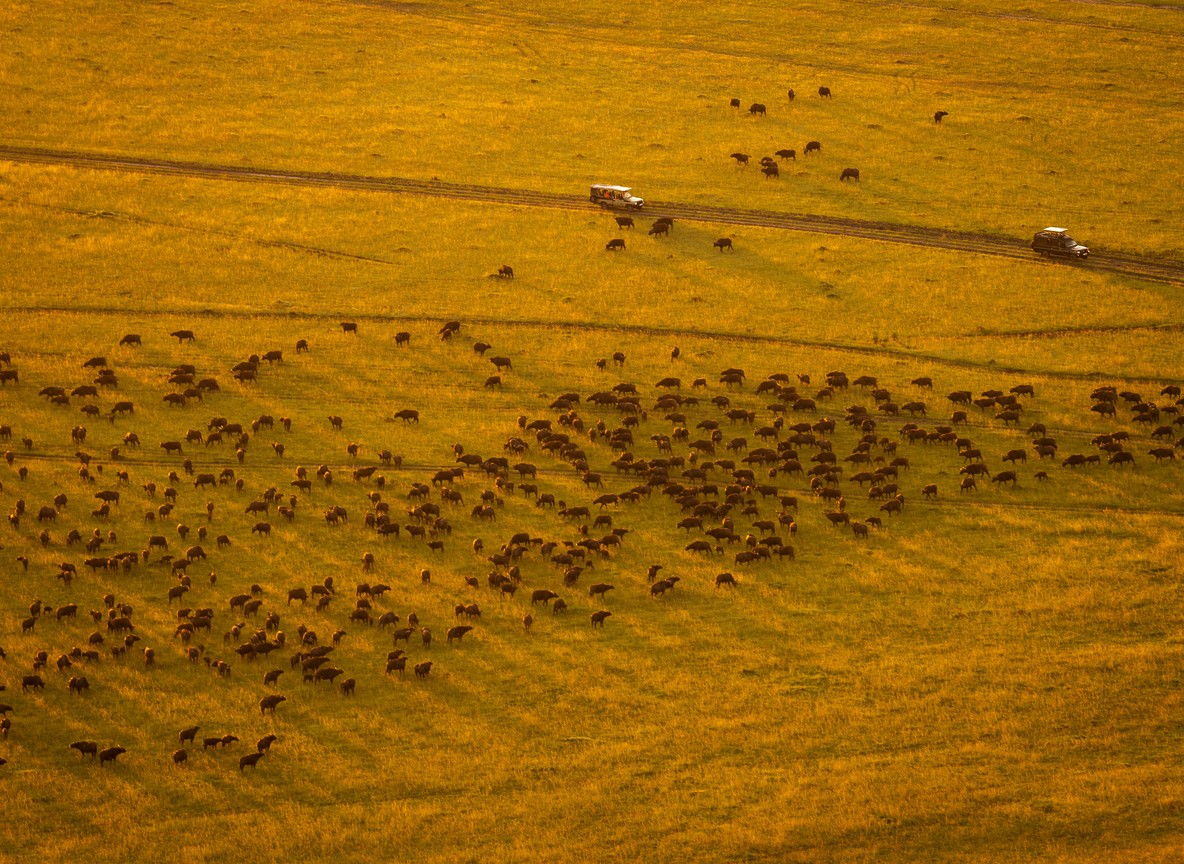
Fuel prices in Kenya do not stay still for long. The Energy and Petroleum Regulatory Authority (EPRA) publishes pump price adjustments every 15 days, and since 2022, the cost of diesel in Nairobi has risen more than 70 percent. For industries where fuel is a marginal expense, that kind of movement is inconvenient. For Kenya’s safari industry, where diesel powers every game drive vehicle, lodge generator, supply truck, and charter aircraft, the pressure is structural.

This piece looks at how that pressure is being absorbed at three levels: government policy, lodge operations, and the tour operator community. Understanding what has changed gives travelers better tools to evaluate quotes, ask the right questions, and choose operators whose businesses are built to hold value across every cost cycle.
Why Fuel Sits at the Core of Kenya’s Safari Economy
Tourism contributes roughly 10 percent of Kenya’s GDP and employs more than 600,000 people directly. The multiplier extends into agriculture, crafts, community conservancy leases, and ranger employment. When fuel costs push operators below viable margins, the effect moves through the whole chain: conservancy landowners earn less, camp staff face reduced hours, and anti-poaching funding compresses alongside everything else.
In operational terms, the exposure is significant. A mid-range safari lodge running diesel generators 18 hours per day can see its monthly energy bill rise by 20 to 35 percent during a price spike. A tour operator running six Land Cruisers between Nairobi and the Masai Mara faces fuel costs during a price peak that can absorb a full week of client revenue. The operators who remained viable through the 2022 to 2026 cycle are the ones who made structural changes. Those who could not adapt have largely left the market, a pattern that matters when you are comparing options and trying to assess which businesses are genuinely well-run.
What EPRA and Government Policy Have Done
Kenya’s primary regulatory tool for fuel pricing is the EPRA monthly price ceiling, which sets maximum pump prices for petrol, diesel, and kerosene. EPRA’s formula tracks global crude benchmarks, Mombasa port freight costs, and refinery margins. The mechanism does not stop prices from rising, but it slows the rate of change. That gives tour operators enough lead time to adjust package pricing before the next booking cycle closes, which is a meaningful operational benefit even if it feels abstract from the outside.
During 2022 to 2024, the government introduced two rounds of temporary fuel subsidies during peak inflationary periods. These were short-term interventions, not structural fixes. More durable responses have come through the Kenya Tourism Board (KTB) and the Kenya Tourism Fund, both of which directed resources toward international destination marketing. The logic: higher visitor volumes spread cost pressure across a larger client base and reduce per-operator exposure to any single price cycle.
At the national park level, Kenya Wildlife Service prices international visitor entry fees in US dollars. This provides a natural hedge for the park revenue component of any safari package. When the Kenyan shilling weakens, KWS dollar fee income holds in real terms. For travelers, it means one cost line in your safari quote stays relatively stable regardless of currency movements, which makes park fees one of the more predictable elements of any itinerary budget.
Infrastructure investment adds a longer-horizon dimension to the government response. The Madaraka Express railway between Nairobi and Mombasa, the Naivasha inland container depot, and ongoing rural road upgrades in key tourism corridors all reduce fuel dependency for parts of the tourist journey. None of these cuts pump prices directly, but each contributes to structural efficiency over time and reduces logistics costs for operators serving those corridors.
How Lodges Are Cutting Fuel Dependency
The lodge sector has moved faster than the operator community in adapting to fuel price volatility. This makes sense: lodges carry more fixed infrastructure and cannot reprice accommodation as quickly as tour packages can be restructured.
The most significant change is the shift from diesel generators to solar-plus-storage energy systems. Lodges that previously ran diesel around the clock are replacing that dependency with solar panels, battery banks, and diesel backup for cloudy periods only. The payback period on a well-sized solar installation at a 20-room lodge runs between 4 and 7 years. Beyond that point, the lodge’s largest variable cost becomes effectively fixed, which dramatically reduces its exposure to future fuel cycles.
By 2025, the majority of premium safari camps in Kenya drew less than 20 percent of their power from diesel generators. In 2019, diesel was the primary power source for most off-grid properties. That shift happened because fuel prices made it financially unavoidable, not out of preference alone. The side effect for guests is a quieter camp experience and a smaller environmental footprint.
Supply chain restructuring has followed a similar cost logic. Remote lodges in northern Kenya, Laikipia, and the Tsavo wilderness have moved from weekly to fortnightly supply runs with larger consolidated loads. Some camps have invested in on-site vegetable gardens and partnerships with local smallholders within 50 kilometers of camp, replacing refrigerated Nairobi supply trucks with smaller, more frequent local pickups. The outcomes stack: less fuel burned per kilogram of food delivered, fresher produce, and a stronger local economic relationship with communities near the camp.
Gravity water systems, composting facilities, and solar water heating reduce daily generator requirements further. The practical result for guests is the absence of generator noise, which older safari guests often cite as one of the most noticeable improvements at camps that have made this transition.
How Tour Operators Have Restructured Their Approach
On the operator side, the fuel cycle has driven three main adaptations: routing efficiency, transparent pricing, and stronger lodge partnerships.
Routing efficiency. Operators who held through the 2022 to 2026 cycle redesigned their circuits to maximize game viewing quality per liter of diesel. In the Masai Mara, this means pre-mapped game drive loops that avoid the most fuel-intensive route crossings without reducing wildlife encounter opportunities. In northern Kenya, fly-in access to Samburu replaces the 480-kilometer Nairobi-to-Samburu road leg with a 45-minute flight. The vehicle fuel equation changes entirely, and the client experience improves alongside the economics.
Transparent pricing. The standard that has solidified through Kenya’s tourism industry bodies requires clear fuel surcharge disclosure. Operators who embed fuel costs inside opaque package rates, or who apply surcharges at the final invoice stage without prior warning, are operating outside the recommended conduct framework for registered operators. The traveler test is simple: ask your operator to show you the fuel component of your quote. A credible operator answers that question directly. One who cannot, or will not, is either hiding margin or genuinely unable to model their own costs accurately.
Lodge partnerships. Operators with direct relationships at major conservancies can pre-negotiate supply terms and access to camps that have already completed their solar transition. When your accommodation runs on solar rather than diesel generators, the lodge’s cost structure carries less fuel exposure, which means more stable pricing across booking cycles.
What Transparent Pricing Actually Looks Like in Practice
Knowing what to look for in a safari quote protects you from the pricing practices that fuel volatility has made more common.
A transparent quote separates accommodation costs, park fees, vehicle and guide costs, and any fuel surcharge into visible line items. If a quote presents a single per-person figure and will not break it down on request, that is worth examining. The fuel component in a Kenya safari is significant; an operator who will not name it is either concealing margin or cannot account for it themselves.
A price-lock clause is the second signal worth checking. Credible operators offer quotes valid for 60 to 90 days, with a defined mechanism for what happens if fuel prices change materially between booking and travel date. Operators who cannot commit to any price-lock window are often managing cost uncertainty week to week rather than planning around it, which creates booking risk for clients.
Explorer Notes: Five Questions to Ask Before Booking
These questions help assess any Kenya safari operator’s transparency and resilience before you commit:
- Can you show me the fuel cost component of this quote, separate from accommodation and park fees?
- Which camps on this itinerary have completed solar energy transitions?
- How are game drive routes designed: around wildlife density and encounter quality, or around vehicle logistics?
- Does this quote include a price-lock period, and what triggers a surcharge adjustment during that window?
- Are you booking these lodges directly, or through a third-party agent who adds margin?
An operator who answers all five without hesitation has built their business around cost transparency. One who struggles with any of them may be operating in ways that create risk for your itinerary.
The State of the Industry in 2026
Kenya’s wildlife is unchanged by the oil price. The predator prides in the Masai Mara, the elephant breeding herds in Amboseli, the specialist northern species in Samburu: all of it remains intact and accessible. What the fuel cycle has changed is the operator landscape. The businesses still standing in 2026 are, on balance, more professionally structured, more transparent in their pricing, and more efficiently routed than the market that existed before the 2022 cost pressure hit. That is a meaningful improvement for anyone booking a Kenya safari today.
The lodge sector’s solar transition is an ongoing dividend. When you book a camp that has made this investment, you are staying at a property with more stable operational costs, a quieter guest experience, and a smaller environmental footprint than its diesel-dependent equivalent.
For 2026 planning, asking questions about pricing transparency and lodge energy sourcing is not pedantic. It is the practical difference between a safari built on solid operational foundations and one that is still managing fuel exposure week to week.
Reader Next Steps
For a full breakdown of what Kenya safaris cost across budget tiers and destinations, see our Kenya safari cost guide for 2026. If you are weighing timing options and want to understand how migration season affects both pricing and crowd levels, our Masai Mara seasonal planning guide covers the trade-offs in practical detail.
For itinerary examples and pricing structures from a Kenya-based operator, trunktrailssafaris.com offers transparent breakdowns across all budget tiers.
Prefer a different route, budget, or travel style? This plan can be adapted to fit.
Customise Your Trip