August is not simply a good month for a kenya safari. It sits at the climax of the long dry season and catches the Masai Mara wildebeest migration at its most dramatic. The river crossings are happening. The skies are clear and intensely blue. Every major park is operating at the height of its annual wildlife cycle. If you have one month to give Kenya, August makes a strong argument for itself.
This guide covers what actually happens during a kenya safari august trip across the main parks, how to position yourself for the migration crossings, and what the planning timeline looks like for 2026.
Why August Stands Apart from Other Months
Kenya has two dry seasons — January to March and June to October — and August sits at the peak of the longer one. Vegetation is short, water sources are concentrated, and animals cluster around the remaining rivers and waterholes in densities that are harder to find the rest of the year.
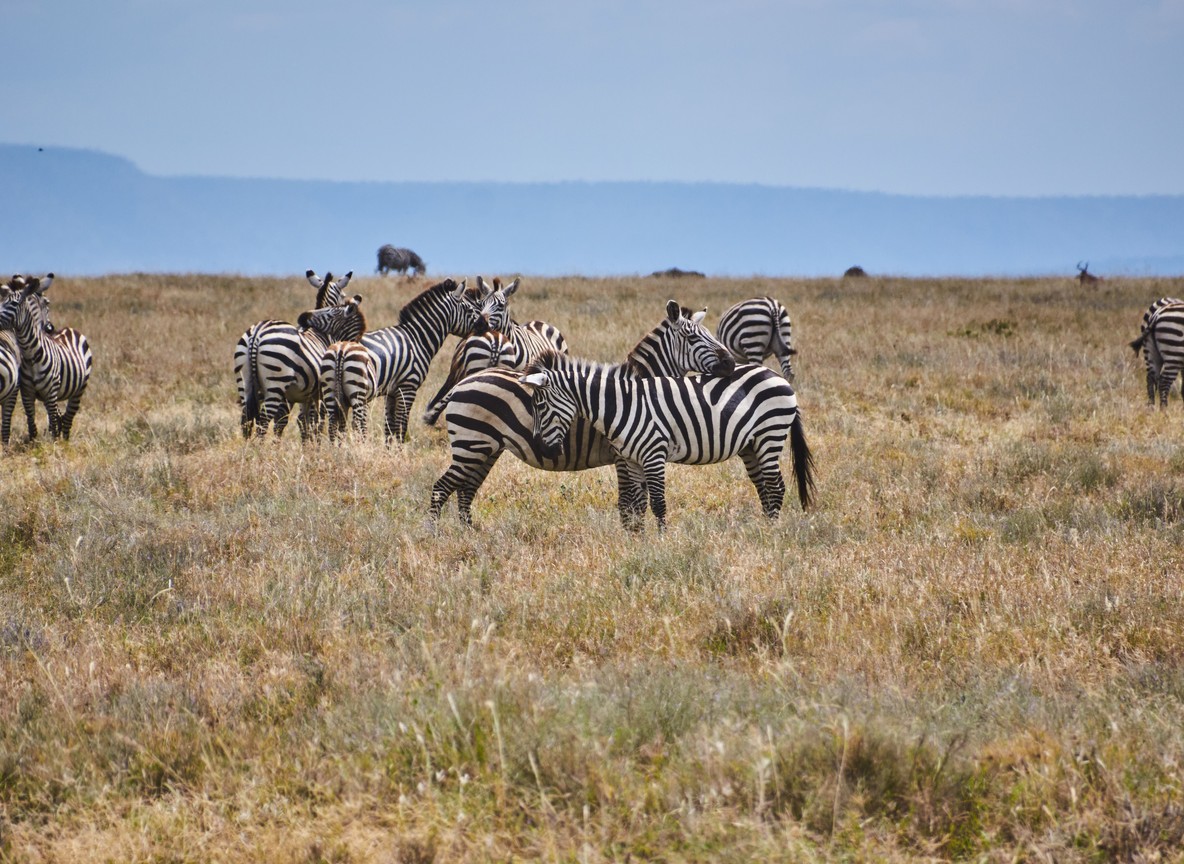
The larger story is the wildebeest migration. By August, the column of roughly 1.5 million wildebeest, zebra, and Thomson’s gazelle that spent July pressing north from Tanzania has reached the Masai Mara. The Mara River crossings — where animals plunge across in panicked stampedes while Nile crocodiles hold position in the shallows — happen repeatedly through August. Some days produce three crossings. Other days you wait most of the morning for one crossing that lasts 40 minutes and involves ten thousand animals. There is nothing comparable anywhere on earth.
What the Kenya Wildebeest Migration Looks Like in August
The migration does not follow a timetable. It follows rain and grass. In August, the pattern is broadly predictable: herds occupy the northern Mara ecosystem, moving between the reserve, the private conservancies, and the border region with Tanzania. The Mara River crossings happen at established points — Lookout Hill, Crossing 12, the Sand River — though herd movements shift daily.
Experienced guides read the signs: herds building at the bank, crocodiles surfacing and repositioning, nervous milling that can continue for hours before the first animal commits.
| Crossing Point | Best Time of Day | Crowd Level | Access Type |
|---|---|---|---|
| Lookout Hill / Crossing 12 | Morning | High (reserve) | Open to all vehicles |
| Sand River | Morning or afternoon | Medium | Reserve south section |
| Ol Kiombo area | Variable | Low | Conservancy guests only |
| Mara Triangle (west bank) | Afternoon | Low | MWCT conservancy |
The difference between crossing points is significant. The most famous spots inside the national reserve can have 40 to 60 vehicles positioned around a single crossing. Private conservancy access — Mara North, Naboisho, the Mara Triangle on the west bank — limits vehicles to single digits. The crossing is the same crossing; the experience is not.
The Masai Mara in August: A Day-by-Day Reality
Mornings in the Mara in August start cold — 14 to 17 degrees Celsius at sunrise. By 9am it is warm. By noon it is genuinely hot. Brief afternoon rain is possible once every few weeks; it clears quickly and the air afterward is clear and extraordinary.
Game drives in August start before first light. The Mara at dawn in August, fog lifting off the river and a line of wildebeest silhouetted against orange sky, is one of those images that stays. Afternoon drives run from 4pm to around 7pm. Between drives, most camps serve lunch and guests rest.
In private conservancies, bush walks with armed rangers are available on request — something not permitted inside the national reserve. Walking the same landscape you drove through in the morning at full vehicle speed is a completely different way of understanding scale and detail.
Kenya Safari August: Beyond the Mara
August is outstanding across Kenya, not only in the Mara ecosystem.
Amboseli National Park — Months of dry weather mean the grass is short and elephant herds are unusually visible against the dusty plain, with Kilimanjaro rising behind them. August mornings are often clear. The mountain hides behind cloud by late morning, which makes pre-dawn departures from camp particularly worthwhile. Amboseli’s elephant population is one of the best-studied in Africa; encounters with named, multigenerational families tracked by researchers for decades are common.
Tsavo East and West — Tsavo East’s open thornbush turns golden in August. The red elephants — coated in iron-rich red laterite dust — move between the Galana River and the lugga networks in the northern sections. Tsavo draws far fewer visitors than the Mara in August, which means your morning drive frequently involves no other vehicle within sight.
Samburu National Reserve — The Ewaso Nyiro River holds water through August and the trees on its banks stay green against the surrounding dry scrubland. Samburu’s five endemic species — Grevy’s zebra, reticulated giraffe, Beisa oryx, gerenuk, and Somali ostrich — are resident year-round, and August is a reliable month to find all five in a single game drive.
Lake Nakuru — Flamingo numbers in August can reach hundreds of thousands, turning the shallow lake edges pink from a distance. The rhino population inside the fenced park includes over 25 black rhinos and 70+ white rhinos. A two-hour drive from Nairobi makes Nakuru a practical add-on to a Mara or Laikipia circuit.
Comparing the Top Parks for a Kenya Safari August Trip
| Park | Migration | Big Five | Crowds | Camp Style | Best For |
|---|---|---|---|---|---|
| Masai Mara (reserve) | Yes | Yes | High | Fixed camps | Crossing spectacle |
| Mara conservancies | Yes | Yes | Low | Intimate camps | Bush walks + crossings |
| Amboseli | No | 4 of 5 | Medium | Mid and luxury | Elephants + Kilimanjaro |
| Tsavo East | No | Yes | Low | Remote camps | Space + solitude |
| Samburu | No | 3 of 5 + specials | Low | Riverside camps | Unique species |
| Lake Nakuru | No | Rhino focus | Medium | Midrange | Rhino + flamingo |
What to Book Now for August 2026
August is peak month in Kenya and the planning timeline is real. Accommodation in the conservancies around the Mara — Olare Motorogi, Mara North, Naboisho, Ol Kinyei, the Mara Triangle — fills by January or February for the following August. If you are reading this in early 2026, some options remain, but the best camps and room categories fill week by week from this point.
The standard advice to “book early” is effectively a hard deadline in August. Camps release held rooms in May and June, and the scramble after that is for second choices.
For trip length: a genuine Mara migration experience needs a minimum of three nights in the Mara system. Five nights gives you buffer for the unpredictable nature of crossing timing. A 7-day structure pairing two nights in Amboseli with four nights in the Mara and one night in Nairobi is a widely used and practical August itinerary.
Kenya Safari August 2026: Practical Planning Notes
Packing: Layers are essential. 14 degrees at 5:30am and 30 degrees at noon means the same morning produces two entirely different clothing needs. Bring a fleece or light down jacket for pre-dawn drives. Neutral clothing only in the Mara — the ecosystem is sensitive near crossing points, and bright colours draw attention. August is dusty; a buff or light scarf for the face on long drives is practical rather than optional.
Health: Yellow fever documentation is required if arriving from a yellow fever country. Malaria prophylaxis is recommended for all park zones. Consult a travel clinic before departure.
Visas and entry: Kenya operates an electronic Travel Authorization (eTA) system. Applications open at the official Kenya eTA portal and typically process within 24 to 72 hours. Confirm current requirements for your nationality well in advance.
International flights: August is peak for arrivals into Jomo Kenyatta International Airport (NBO). Book flights six months out at minimum. Connections to the Mara via Wilson Airport (WIL) run on multiple daily schedules via domestic operators.
Explorer Notes
A few things worth knowing before your August safari:
- The crossing window on any given day is unpredictable. Herds can build at the bank for three hours and then turn back. They can also cross at 6am before most vehicles have left camp. Guide communication networks and radio contacts between drivers are the best early warning system available.
- September is genuinely underrated as an alternative to August. Herd numbers remain strong, charter prices ease, and the school-holiday crowd has thinned. For photographers particularly, September mornings produce exceptional light without August’s vehicle density at crossing points.
- The Mara at dawn on a cold August morning is one of those experiences that makes people understand why East Africa holds its reputation. The fog on the river, the first light hitting the long grass, the sound of wildebeest moving somewhere nearby — this is what the photographs are trying to capture and mostly cannot.
- Book any bush breakfast or special experience (balloon flight, conservancy walking) before you arrive. They fill quickly in August and camps cannot always accommodate same-day requests during peak season.
Conclusion
A kenya safari august trip delivers something specific: the annual peak of East Africa’s most famous wildlife spectacle, in one of the continent’s most productive ecosystems, in conditions that favour every type of wildlife photography and game viewing. The trade-off is straightforward — you pay more, you share the landscape with more vehicles, and you need to book earlier.
The way to make August work well is to position inside a conservancy rather than only in the national reserve, to have at least four nights, and to go with a guide who has genuine Mara experience rather than a generic driver covering the crossing route for the first time.
Next Steps
For cost planning across budget, mid-range, and luxury tiers for an August migration safari, see our Kenya migration safari cost guide at touringinsights.com. For a comparison of the Mara conservancies and which field positions matter most during crossing season, our Masai Mara planning resources cover this in detail.
For Kenya entry requirements, flight options, and domestic charter connections, Kenya Wildlife Service and Kenya Civil Aviation Authority are the authoritative sources. General safari planning research is also well covered at trunktrailssafaris.com for those building a broader Kenya itinerary.
Turn this reading into a real itinerary with help from a Kenya-based safari team.
Start Planning Your SafariFurther reading
More safari planning resources
- Wildebeest migration route map from Valley Safaris
- Great Migration safari collection on FindMySafari
- Best time to visit Kenya month-by-month map from Valley Safaris
- Kenya tour packages from Valley Safaris
Related guides: Amboseli in April: What to Expect During the Long Rains, Amboseli in August: What to Expect in the Heart of Dry Season, Amboseli in December: What to Expect During the Festive Month.