Watching your eight-year-old go completely quiet as an elephant walks thirty metres from the vehicle is the kind of moment that parents talk about for years. A herd crossing the road at dusk. A lion visible in the grass long before the guide speaks. The sound of a hippo grunting from the river after dark. These are experiences that photographs do not fully capture. You have to be there, in the vehicle, to feel them.
Kenya family safari holidays take more planning than a couple’s trip or solo adventure. Age requirements vary by park and camp. Vehicle sizing matters. Camp policies around children differ significantly. And keeping kids comfortable, fed, and engaged across long game drives is its own kind of logistics challenge. This guide covers the key decisions.
Age Requirements: What Parks and Camps Actually Allow
Age is the first planning question for any family considering a safari with young children. Policies vary by property and experience type:
| Experience | Minimum Age |
|---|
| Game drive, Masai Mara National Reserve | No minimum; at camp and operator discretion |
|---|
| Game drive, private conservancy | Most conservancies: 5 to 7 years |
|---|
| Night drive | Most properties: 7 to 10 years |
|---|
| Bush walk | Most operators: 12 to 14 years |
|---|
| Balloon safari | Most operators: 7 years |
|---|
| White-water rafting | 12 years and above |
|---|
Family-specific camps often apply their own policies that differ from park rules. Always confirm with the camp before booking.
Children aged 6 and above generally handle full game drive schedules well if they are prepared for early starts and time in the vehicle. Children aged 3 to 5 can enjoy shorter half-day drives but may find the 6 a.m. departure and extended vehicle time difficult.
Best Parks for a Kenya Family Safari
Not every Kenyan park suits families equally. The right choice depends on wildlife density, road quality, camp family facilities, and the variety of activities on offer beyond game drives.
Masai Mara
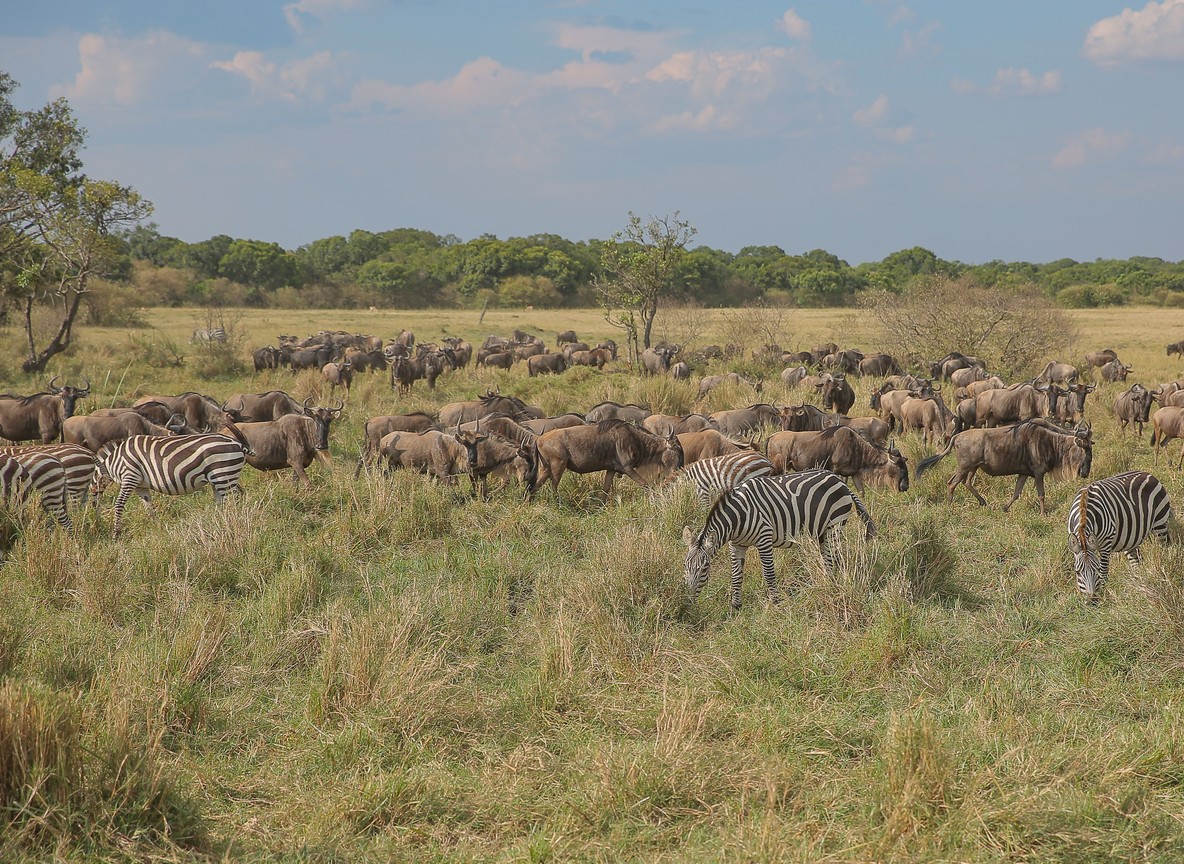
The Masai Mara is the most popular choice for first-time family visitors. Dense wildlife, experienced guides, and a good range of family-friendly camps make it the most accessible option. The open grassland habitat means animals are visible from a distance and sightings last long enough for children to study and ask questions. Unlike forest parks where encounters can be brief, the Mara rewards patience with long, close sightings.
Families travelling July to October get the wildebeest migration as an additional dimension. It is genuinely difficult to explain in advance what it feels like to watch hundreds of thousands of animals moving across the plains.
Amboseli
Amboseli is the best park in Kenya for close elephant encounters. Large herds cross the park daily, sometimes moving past vehicles at very close range. The backdrop of Kilimanjaro on clear mornings makes it one of the most photogenic parks in Africa. Amboseli is also smaller and more contained than the Mara, which makes it easier to plan a productive two-night family stay without covering large distances each day.
Nairobi as a Starting Point
Families arriving into Nairobi have several options before heading to the main parks. Nairobi National Park sits 45 minutes from the city centre and holds lion, rhino, giraffe, buffalo, and zebra against an urban skyline backdrop. The David Sheldrick Elephant Orphanage runs baby elephant mud-bathing sessions at 11 a.m. and needs advance booking. The Giraffe Centre lets visitors hand-feed Rothschild’s giraffe and is popular with children of all ages.
A two-night Nairobi introduction before the main circuit gives children time to acclimatise and builds excitement before the longer drives begin.
What to Look For in Family Safari Camps
The best family safari camps share specific features beyond general quality markers.
Private family tents or rooms: Interconnected rooms or family-sized tents that let parents monitor young children at night are essential. Single-room tents where children are separated are not suitable for families with children under 8.
Meal flexibility: Young children do not eat on safari dining-room schedules. The best family camps adjust meal timing, offer children’s menus, and can provide packed lunch boxes for full-day drives.
Dedicated family guides: Some camps assign guides with specific experience working with children. These are people who engage kids at their level, have age-appropriate animal facts ready, and know how to hold a child’s attention across a two-hour drive.
Swimming pool: Not essential for every family, but it significantly improves midday rest periods for younger children who cannot sustain a full-day drive schedule.
Safe perimeter: Understand the specific safety protocol for children at any unfenced camp before confirming. Children should be supervised at all times outside of rooms in areas where wildlife moves through camp. For multigenerational trips, prioritize camps offering multiple family suites or interconnected tents close together rather than one large room, so grandparents and parents can each have their own space while staying steps from the kids. Laikipia is worth considering alongside the Mara and Amboseli for these trips: conservancies there run family-friendly horse riding and walking safaris that give older children and teenagers a more active alternative to game drives. Beyond the vehicle, the best family camps run their own kids’ programme: junior ranger sessions covering tracking and bush skills, beading or craft time with camp staff, and cookie-baking or storytelling around the fire in the evening, all designed to give children something to do during the hot midday break between drives.
Budget: What Kenya Family Safari Holidays Cost
A budget for a family of four varies considerably by tier and season:
| Tier | Per Person Per Day | 5-Night Total (Family of 4, est.) |
|---|
| Budget | $150 to $250 | $3,000 to $5,000 |
|---|
| Mid-range | $300 to $500 | $6,000 to $10,000 |
|---|
| Luxury | $600 to $1,000+ | $12,000 to $20,000+ |
|---|
These estimates cover accommodation, park fees, and ground transfer. International flights and travel insurance are not included.
Budget family safari options using shared National Reserve camps with a private vehicle are available at the lower end of this range and can deliver a genuinely strong first family experience.
Key cost note: most camps charge full adult rates for children over 12 and reduced rates (typically 50 to 75 percent of adult rate) for children aged 2 to 11. Under-2s are typically free. Confirm the camp’s children’s policy before booking.
Explorer Notes: Packing for Children
Pack these items specifically for the kids:
- Child-safe insect repellent (confirm DEET suitability with a paediatrician for young children)
- Neutral-coloured clothing in layers: cool mornings, hot afternoons
- Sun hat with a chin strap (wind through an open vehicle will take a hat without one)
- Sunglasses with UV protection
- Personal binoculars sized for children (available from $30 to $50; they transform the game drive experience)
- Small journal or sketchbook for wildlife sightings
- Oral rehydration salts for dehydration
- Antihistamine cream for insect reactions
- Children’s paracetamol and antihistamine tablets
Malaria prophylaxis for children is strongly recommended for the Masai Mara and most Kenyan parks. Consult a travel medicine specialist at least six weeks before departure for age-appropriate options.
Keeping Kids Engaged on Long Drives
The most common practical challenge on a family safari is maintaining a child’s engagement across a three to four hour morning drive. These approaches work well:
Wildlife spotting game: Assign each family member one animal to look for and keep a tally. Works from age 5 upward and keeps children actively scanning rather than passively sitting. For teenagers and older children who find the game-drive format repetitive, a guided walking safari or a junior-ranger-style briefing with the camp’s naturalist tends to land better than another vehicle-based activity.
Field guide involvement: Bring a children’s field guide and let kids confirm identifications themselves after the guide announces the animal.
Photography responsibility: Giving a child their own camera or the family phone creates engagement and ownership of each sighting.
Strategic stops: The best family drives build in a mid-drive stop for stretching, a snack, and a comfort break. Guides who work with families regularly know the right spots for this.
Honest preparation: Talk to children before each drive about what game drives involve, including the gaps between sightings. Families who understand the rhythm of safari do far better than those who expect constant action.
Conclusion
Kenya family safari holidays reward careful planning. The combination of accessible wildlife, experienced guides, and a range of camps across all price points makes Kenya one of the most practical family safari destinations in Africa. The right park, the right camp, and an honest conversation with your kids about what to expect are the three things that separate a great family safari from a frustrating one.
Next Steps
Start by confirming the ages of your children and checking camp policies for those age groups. The Kenya Wildlife Service publishes park entry information and regulations. For internal travel logistics and camp comparisons, touringinsights.com has detailed guides covering the Masai Mara, Amboseli, and private conservancy options. For operator-side planning and Kenya-specific itineraries built around different age ranges, trunktrailssafaris.com is a useful reference.
Have questions about this itinerary or destination? Get answers from a safari specialist before you commit.
Inquire MoreFurther reading
More safari planning resources
- Nairobi to Maasai Mara route guide from Valley Safaris
- Family safari collection on FindMySafari
- Big Five safari collection on FindMySafari
- Interactive Maasai Mara map from Valley Safaris