Craig’s death does not diminish Amboseli as a destination. It sharpens the conservation argument for visiting. The protection of this ecosystem depends partly on the revenue that ethical tourism generates. That is a practical reality, not a marketing line.
The threats behind that reality are specific. Corridor fragmentation, from fences, roads, and expanding farmland outside the park, is cutting off the migration routes elephants have used for generations. Human-wildlife conflict follows, as elephants with less room to roam raid crops on community land. Many of Amboseli’s largest bulls, including super tuskers, range beyond the park into Tanzania’s Enduimet Wildlife Management Area, where anti-poaching enforcement is thinner than inside Amboseli itself. Big Life Foundation rangers and KWS work alongside Maasai communities, many of them former hunters turned wildlife guardians, to patrol this wider ecosystem and report poaching activity before it reaches the herds.
Understanding the Elephant Herds
The Amboseli Elephant Research Project, founded by Dr Cynthia Moss in 1972, is the world’s longest-running elephant study. More than 1,600 individual elephants are catalogued by name, family group, and life history. The documentation includes cause of death, calf survival rates, musth cycles in bulls, and how families split or merge across generations.
Each of the park’s main elephant families is lettered and named. Family A produced the famous matriarch Echo, whose life formed the basis of a BBC documentary series. Families B through Z and beyond have been tracked through decades of births, deaths, drought, and recovery.
That decades-long record has produced one of the project’s most cited findings: families led by older matriarchs, typically 60 years and above, survive drought at meaningfully higher rates than families led by younger females. A matriarch who has lived through previous droughts carries a working memory of which swamps hold water when the rains fail and which routes avoid danger, knowledge no younger elephant has had time to accumulate. When poaching or culling removes those older females from a population, researchers have documented lasting damage to the surviving family’s decision-making and social cohesion, a cost that outlives the individual animal by decades.
For a wildlife photographer or a serious wildlife traveller, knowing which family uses which swamp at which time of day changes what you can do in the park. It is the difference between a passive sighting and an intentional encounter.
Elephant behaviour patterns to plan around:
| Time of day | Typical behaviour | Best location |
|---|---|---|
| 06:00 to 08:00 | Families moving from night browse to water | Swamp approaches |
| 08:00 to 10:30 | Active at water’s edge, calves playing | Enkongo Narok swamp edge |
| 10:30 to 14:00 | Resting in shade, bulls often isolated | Woodland margins |
| 14:30 to 17:30 | Return movement, dust-bathing | Open plains near swamp |
| 17:30 to 18:30 | Golden hour, herds near water | Southern plains circuits |
Kilimanjaro: When to Shoot and Where to Stand
Kilimanjaro is cloud-free on roughly 60 to 70 percent of mornings during the main dry season, June to October and January to February. During the long rains in April and May, cloud obscures the summit most days. The short rains in November are variable: some excellent clear mornings occur, particularly after an overnight shower clears the atmosphere.
The reliable photography window is 06:00 to 09:00. Convective heating builds cumulus cloud at altitude through the morning, and by 10:00 on most days the classic cloud cap has formed over the summit. You have roughly three hours after sunrise when conditions are at their best.
Positioning for the elephant-and-Kilimanjaro composition:
Observation Hill: The only elevated viewpoint inside the core park. A short walk gives you a sweeping view south across the plains toward Tanzania. Best before 07:00 before other visitors arrive.
Enkongo Narok swamp, southern edge: Ground-level position with Kilimanjaro framing behind the swamp treeline. Elephant families are often at the water in the first two hours after sunrise. This is the composition that appears in most professional Amboseli portfolios.
Kimana Gate corridor: Less visited than the main park circuits. The corridor road runs northeast to southwest with east-facing morning light and the mountain framing from the right.
For telephoto users, 400mm and longer lenses pull Kilimanjaro closer into the frame and make elephant-mountain compositions easier to achieve from greater distances. The compression effect is significant. A 500mm lens on a full-frame body effectively halves the visual distance to the mountain.
Best Time to Visit
Amboseli is one of Kenya’s most year-round consistent parks because its elephant population is resident rather than migratory. Timing still matters for specific experiences.
| Season | Kilimanjaro visibility | Elephant activity | Photography conditions |
|---|---|---|---|
| Peak dry (June to October) | 65 to 70% clear mornings | Very high, herds at swamps | Outstanding |
| Short dry (January to February) | 70 to 75% clear mornings | High | Excellent, green backdrop after rains |
| Long rains (March to May) | 20 to 30% | Moderate, more dispersed | Green but misty |
| Short rains (November to December) | Variable | High, calving season | Atmospheric, dramatic light |
For wildlife photography, January to February and late June to July are the two strongest windows. January and February give the best combined mountain visibility and green-season colour without the peak crowd levels of July and August. Late June offers the start of dry-season conditions with slightly fewer vehicles than the high season.
Photography Setup
Amboseli rewards specific preparation.
Lens choices: A 400mm or longer telephoto handles elephant family portraits and bull close-ups. A 500mm with the compression effect works particularly well for pulling Kilimanjaro into compositions. A 24 to 70mm covers landscape dawn shots from Observation Hill and environmental context.
Vehicle setup: Open-roof vehicles are standard in Amboseli. A beanbag on the door sill provides stable support for long lens work. Ask your driver to position vehicle side-on to the light rather than into it.
Dust management: Amboseli generates significant fine white dust from the lake bed. Seal camera bags when not shooting. Carry a cleaning kit and check sensor condition daily in dry-season months.
Light timing: The Amboseli light has a distinctive quality in the first and last hour of the day. Alkaline dust particles in the lower atmosphere create a warm diffuse character that is unusually photogenic. Plan to be in position 20 minutes before sunrise, every morning.
Wildlife Beyond Elephants
Amboseli is not a reliable big five destination in the way the Masai Mara is. Lions exist in the park in small numbers and sightings are possible but not frequent. Buffalo are a regular presence, particularly around the swamps. Leopards are rare. Rhino are not present in the core park.
What the park does exceptionally well beyond elephants:
- Maasai giraffe: Healthy populations in woodland and transition zones
- Zebra and wildebeest: Resident rather than migratory, good year-round
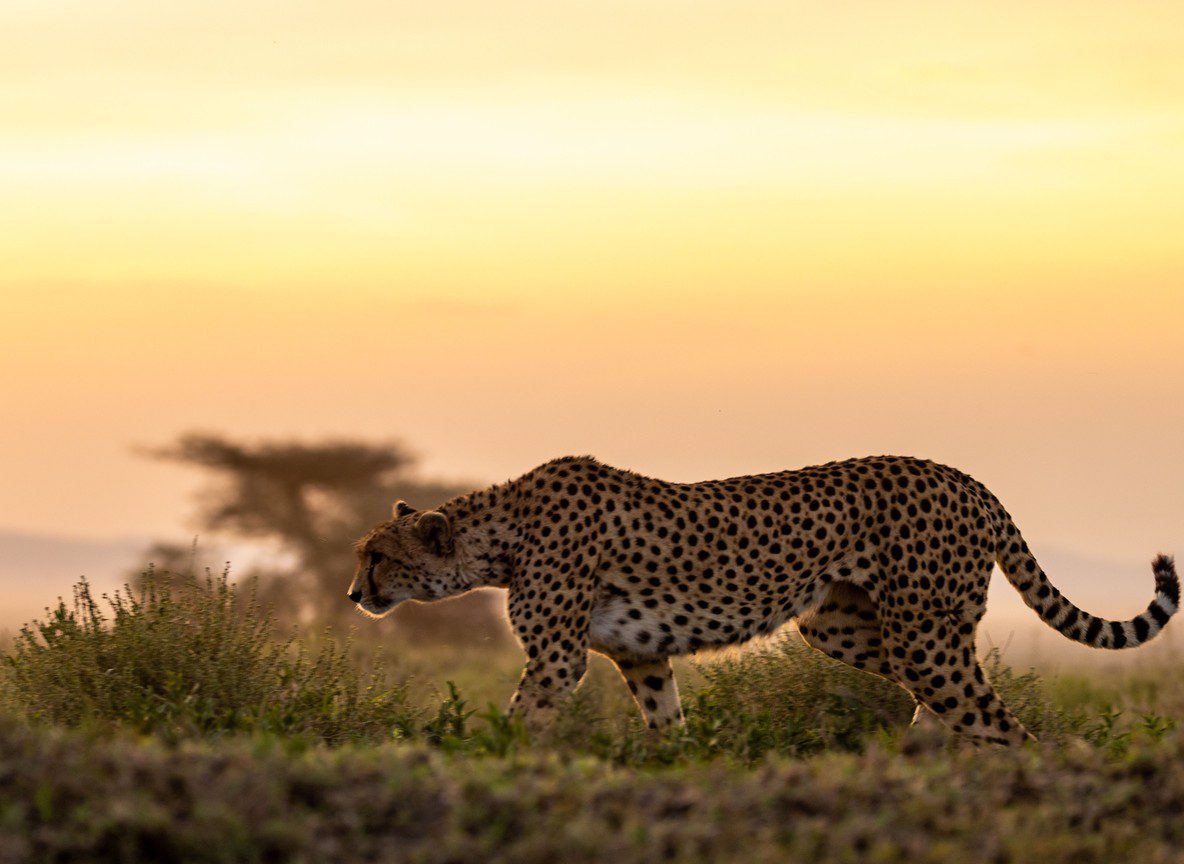
- Cheetah: Small population with improving sightings, particularly on open grassland
- Birds: Over 400 recorded species including saddle-billed stork, African fish eagle, and wetland concentrations in the swamp areas
For a comparison of Amboseli against the Masai Mara for predator versus elephant specialist safaris, see trunktrailssafaris.com which covers both parks in detail.
Choosing Where to Stay
Camp placement matters in Amboseli because the park is compact enough that most properties are within 15 to 20 minutes of the main swamp circuits, but their positioning relative to the Kilimanjaro view axis and swamp access varies.
For photography-focused visitors, properties positioned south of Enkongo Narok offer the best pre-dawn positioning. Starting a game drive from a camp that overlooks the swamp approach means you can be at the water’s edge by first light without a long vehicle transfer. That early window, before cloud builds and while elephant families are moving, is the hardest to replicate from a property positioned further away.
Mid-range properties in the central park zone are 10 to 20 minutes from the main circuits and work well for most visitors. Budget camps near Kimana gate are slightly further from the main swamp concentration but offer good value for travellers spending more time on the plains circuits.
Practical Planning Notes
- Park fees (2026): USD $70 per non-resident adult per 24-hour period. USD $35 for children 3 to 17 and students.
- Gate hours: 06:00 to 19:00 daily. No exceptions.
- No fuel inside the park. Refuel at Namanga, Emali, or Loitokitok before entry.
- No night game drives inside the core park. Evening activities take place at camp.
- No self-drive on unmarked routes. Guides are required for off-circuit areas.
- Minimum nights: Three nights allows six game drives across varied times of day and absorbs at least one poor mountain morning. Two nights is possible but produces a tighter experience.
What to Read Next
- Amboseli wildlife photography guide for detailed gear, habitat, and timing advice
- Amboseli swamp vs open plains wildlife for understanding where to find different species and when
- Amboseli weather month by month to match your visit to the conditions you want
- Amboseli vs Tsavo if you are deciding which southern Kenya park to include in a longer itinerary
Prefer a different route, budget, or travel style? This plan can be adapted to fit.
Customise Your TripFurther reading
More safari planning resources
- Map of Amboseli from Valley Safaris
- Amboseli destination guide on FindMySafari
- Big Five safari collection on FindMySafari
- Best time to visit Kenya month-by-month map from Valley Safaris
Craig died in January 2026. He was one of Africa’s last confirmed super tuskers, a bull elephant whose tusks swept so low they carved furrows in the Amboseli dust when he walked. He was 51 years old. The Amboseli Elephant Research Project had followed him for decades. His death made global conservation headlines and put Amboseli back at the centre of every serious wildlife traveller’s planning conversation.
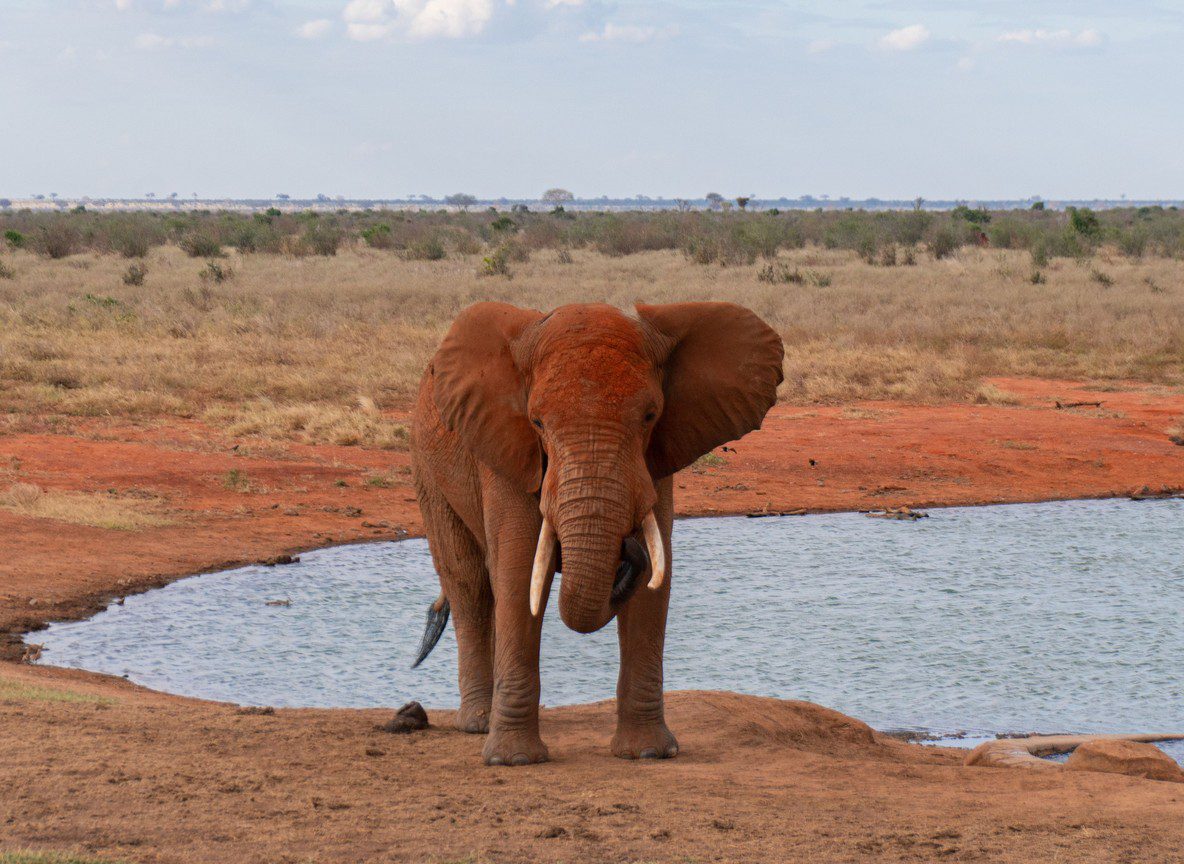
If you are the kind of person who researches elephant family dynamics before booking a flight, who wants to understand what you are watching rather than simply photograph it, Amboseli is not just another Kenya destination. It is the most data-rich wild elephant landscape on the planet. More than 1,600 individually identified elephants move through the ecosystem, documented across more than 50 years of continuous field research. Add the most photographable Kilimanjaro backdrop in East Africa and you have a combination that nothing else in Kenya, or Africa, can replicate.
What Makes Amboseli Different
The short answer is scale of elephant access combined with Kilimanjaro. But the detail matters.
Most Kenya parks give you elephant sightings. Amboseli gives you elephant families you can actually identify, because researchers have named and documented every individual in the main population. When you know which family group you are watching and who the matriarch is, a game drive becomes an encounter with narrative weight rather than a generic wildlife sighting.
The park covers 392 square kilometres of core protected area, but the wider Amboseli ecosystem, including surrounding community conservancies, stretches to roughly 8,000 square kilometres. The landscape is defined by five distinct habitats: open plains, woodlands, swamps fed by underground Kilimanjaro snowmelt, dry lake beds, and rocky hillsides. Each habitat draws different species at different times of day, which means the game-drive structure matters as much as the park itself.
Kilimanjaro sits 35 kilometres south across the Tanzanian border. On clear mornings, before convective cloud builds at altitude, the mountain fills the southern horizon with a presence that stops even experienced photographers mid-sentence. Getting the classic shot requires understanding exactly when and where to position yourself. That is what the photography section below covers.
Super Tuskers After Craig
A super tusker is a bull elephant whose tusks each weigh more than 45 kilograms. These animals represent a genotype that became extraordinarily rare because the ivory trade through the twentieth century targeted the largest-tusked individuals specifically. Less than 20 super tuskers are believed to survive in Africa today.
Craig, known to researchers as C-Craig, had tusks estimated at over 50 kilograms each by the time of his death at 51. His passing in January 2026 was documented by the Amboseli Trust for Elephants and reported internationally. He leaves behind offspring whose tusk size suggests the genetic line continues.
What does this mean for a visit?
Amboseli still holds large-tusked bulls whose genetics trace back through the super tusker lineages. Sightings of bulls with exceptionally long tusks remain possible, particularly around Enkongo Narok swamp and the Kimana corridor. The research database also means these animals are not anonymous. When guides encounter large-tusked bulls, there is often documentation to place that individual in context.
Craig’s death does not diminish Amboseli as a destination. It sharpens the conservation argument for visiting. The protection of this ecosystem depends partly on the revenue that ethical tourism generates. That is a practical reality, not a marketing line.
The threats behind that reality are specific. Corridor fragmentation, from fences, roads, and expanding farmland outside the park, is cutting off the migration routes elephants have used for generations. Human-wildlife conflict follows, as elephants with less room to roam raid crops on community land. Many of Amboseli’s largest bulls, including super tuskers, range beyond the park into Tanzania’s Enduimet Wildlife Management Area, where anti-poaching enforcement is thinner than inside Amboseli itself. Big Life Foundation rangers and KWS work alongside Maasai communities, many of them former hunters turned wildlife guardians, to patrol this wider ecosystem and report poaching activity before it reaches the herds.
Understanding the Elephant Herds
The Amboseli Elephant Research Project, founded by Dr Cynthia Moss in 1972, is the world’s longest-running elephant study. More than 1,600 individual elephants are catalogued by name, family group, and life history. The documentation includes cause of death, calf survival rates, musth cycles in bulls, and how families split or merge across generations.
Each of the park’s main elephant families is lettered and named. Family A produced the famous matriarch Echo, whose life formed the basis of a BBC documentary series. Families B through Z and beyond have been tracked through decades of births, deaths, drought, and recovery.
That decades-long record has produced one of the project’s most cited findings: families led by older matriarchs, typically 60 years and above, survive drought at meaningfully higher rates than families led by younger females. A matriarch who has lived through previous droughts carries a working memory of which swamps hold water when the rains fail and which routes avoid danger, knowledge no younger elephant has had time to accumulate. When poaching or culling removes those older females from a population, researchers have documented lasting damage to the surviving family’s decision-making and social cohesion, a cost that outlives the individual animal by decades.
For a wildlife photographer or a serious wildlife traveller, knowing which family uses which swamp at which time of day changes what you can do in the park. It is the difference between a passive sighting and an intentional encounter.
Elephant behaviour patterns to plan around:
| Time of day | Typical behaviour | Best location |
|---|---|---|
| 06:00 to 08:00 | Families moving from night browse to water | Swamp approaches |
| 08:00 to 10:30 | Active at water’s edge, calves playing | Enkongo Narok swamp edge |
| 10:30 to 14:00 | Resting in shade, bulls often isolated | Woodland margins |
| 14:30 to 17:30 | Return movement, dust-bathing | Open plains near swamp |
| 17:30 to 18:30 | Golden hour, herds near water | Southern plains circuits |
Kilimanjaro: When to Shoot and Where to Stand
Kilimanjaro is cloud-free on roughly 60 to 70 percent of mornings during the main dry season, June to October and January to February. During the long rains in April and May, cloud obscures the summit most days. The short rains in November are variable: some excellent clear mornings occur, particularly after an overnight shower clears the atmosphere.
The reliable photography window is 06:00 to 09:00. Convective heating builds cumulus cloud at altitude through the morning, and by 10:00 on most days the classic cloud cap has formed over the summit. You have roughly three hours after sunrise when conditions are at their best.
Positioning for the elephant-and-Kilimanjaro composition:
Observation Hill: The only elevated viewpoint inside the core park. A short walk gives you a sweeping view south across the plains toward Tanzania. Best before 07:00 before other visitors arrive.
Enkongo Narok swamp, southern edge: Ground-level position with Kilimanjaro framing behind the swamp treeline. Elephant families are often at the water in the first two hours after sunrise. This is the composition that appears in most professional Amboseli portfolios.
Kimana Gate corridor: Less visited than the main park circuits. The corridor road runs northeast to southwest with east-facing morning light and the mountain framing from the right.
For telephoto users, 400mm and longer lenses pull Kilimanjaro closer into the frame and make elephant-mountain compositions easier to achieve from greater distances. The compression effect is significant. A 500mm lens on a full-frame body effectively halves the visual distance to the mountain.
Best Time to Visit
Amboseli is one of Kenya’s most year-round consistent parks because its elephant population is resident rather than migratory. Timing still matters for specific experiences.
| Season | Kilimanjaro visibility | Elephant activity | Photography conditions |
|---|---|---|---|
| Peak dry (June to October) | 65 to 70% clear mornings | Very high, herds at swamps | Outstanding |
| Short dry (January to February) | 70 to 75% clear mornings | High | Excellent, green backdrop after rains |
| Long rains (March to May) | 20 to 30% | Moderate, more dispersed | Green but misty |
| Short rains (November to December) | Variable | High, calving season | Atmospheric, dramatic light |
For wildlife photography, January to February and late June to July are the two strongest windows. January and February give the best combined mountain visibility and green-season colour without the peak crowd levels of July and August. Late June offers the start of dry-season conditions with slightly fewer vehicles than the high season.
Photography Setup
Amboseli rewards specific preparation.
Lens choices: A 400mm or longer telephoto handles elephant family portraits and bull close-ups. A 500mm with the compression effect works particularly well for pulling Kilimanjaro into compositions. A 24 to 70mm covers landscape dawn shots from Observation Hill and environmental context.
Vehicle setup: Open-roof vehicles are standard in Amboseli. A beanbag on the door sill provides stable support for long lens work. Ask your driver to position vehicle side-on to the light rather than into it.
Dust management: Amboseli generates significant fine white dust from the lake bed. Seal camera bags when not shooting. Carry a cleaning kit and check sensor condition daily in dry-season months.
Light timing: The Amboseli light has a distinctive quality in the first and last hour of the day. Alkaline dust particles in the lower atmosphere create a warm diffuse character that is unusually photogenic. Plan to be in position 20 minutes before sunrise, every morning.
Wildlife Beyond Elephants
Amboseli is not a reliable big five destination in the way the Masai Mara is. Lions exist in the park in small numbers and sightings are possible but not frequent. Buffalo are a regular presence, particularly around the swamps. Leopards are rare. Rhino are not present in the core park.
What the park does exceptionally well beyond elephants:
- Maasai giraffe: Healthy populations in woodland and transition zones
- Zebra and wildebeest: Resident rather than migratory, good year-round
- Cheetah: Small population with improving sightings, particularly on open grassland
- Birds: Over 400 recorded species including saddle-billed stork, African fish eagle, and wetland concentrations in the swamp areas
For a comparison of Amboseli against the Masai Mara for predator versus elephant specialist safaris, see trunktrailssafaris.com which covers both parks in detail.
Choosing Where to Stay
Camp placement matters in Amboseli because the park is compact enough that most properties are within 15 to 20 minutes of the main swamp circuits, but their positioning relative to the Kilimanjaro view axis and swamp access varies.
For photography-focused visitors, properties positioned south of Enkongo Narok offer the best pre-dawn positioning. Starting a game drive from a camp that overlooks the swamp approach means you can be at the water’s edge by first light without a long vehicle transfer. That early window, before cloud builds and while elephant families are moving, is the hardest to replicate from a property positioned further away.
Mid-range properties in the central park zone are 10 to 20 minutes from the main circuits and work well for most visitors. Budget camps near Kimana gate are slightly further from the main swamp concentration but offer good value for travellers spending more time on the plains circuits.
Practical Planning Notes
- Park fees (2026): USD $70 per non-resident adult per 24-hour period. USD $35 for children 3 to 17 and students.
- Gate hours: 06:00 to 19:00 daily. No exceptions.
- No fuel inside the park. Refuel at Namanga, Emali, or Loitokitok before entry.
- No night game drives inside the core park. Evening activities take place at camp.
- No self-drive on unmarked routes. Guides are required for off-circuit areas.
- Minimum nights: Three nights allows six game drives across varied times of day and absorbs at least one poor mountain morning. Two nights is possible but produces a tighter experience.
What to Read Next
- Amboseli wildlife photography guide for detailed gear, habitat, and timing advice
- Amboseli swamp vs open plains wildlife for understanding where to find different species and when
- Amboseli weather month by month to match your visit to the conditions you want
- Amboseli vs Tsavo if you are deciding which southern Kenya park to include in a longer itinerary
Prefer a different route, budget, or travel style? This plan can be adapted to fit.
Customise Your TripFurther reading
More safari planning resources
- Map of Amboseli from Valley Safaris
- Amboseli destination guide on FindMySafari
- Big Five safari collection on FindMySafari
- Best time to visit Kenya month-by-month map from Valley Safaris