

When you watch elephants in Amboseli, you are observing one of the most scientifically documented wildlife populations anywhere on earth. The Amboseli Elephant Research Project — known as AERP — has been tracking the same families, individuals, and calves continuously since 1972. That makes it the world’s longest continuously running study of wild elephants, and the knowledge it has generated has fundamentally changed how scientists, conservationists, and the public understand elephant behaviour and society.
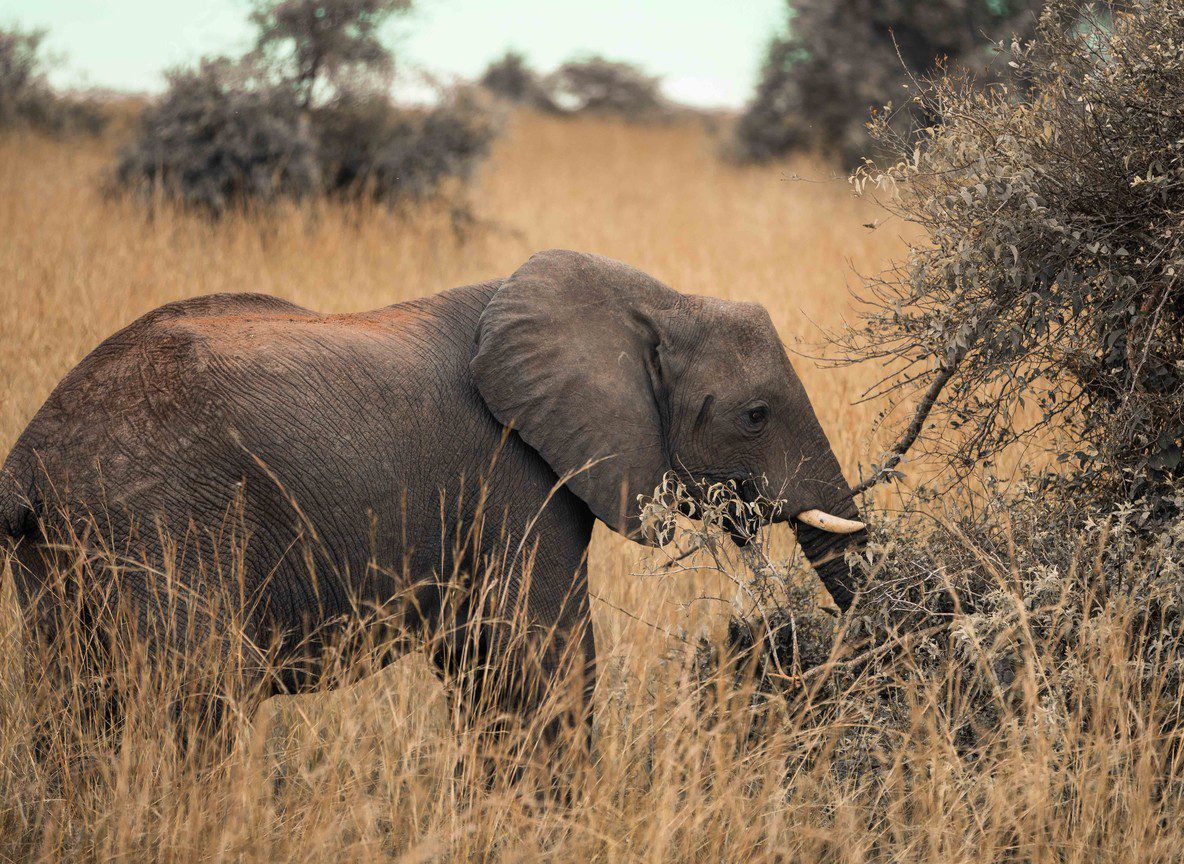
For safari visitors, this adds a dimension to the Amboseli experience that most other parks cannot offer. The elephants here are not anonymous. They have names, documented family histories, known matriarchs, and life stories that span multiple human generations.
How the Project Started
The Amboseli Elephant Research Project was founded in 1972 by Dr. Cynthia Moss, an American wildlife researcher who arrived in East Africa in the 1960s and made Amboseli her scientific home. The project was established under the auspices of the African Wildlife Foundation and later developed close ties with the Amboseli Trust for Elephants (ATE), which now helps oversee the research alongside other institutional partners.
The choice of Amboseli was practical: the park’s open terrain, permanent swamps, and relatively high elephant density created ideal conditions for long-term observation without invasive tracking methods. Researchers could identify individual elephants by the shape and tear patterns of their ears, the size and angle of their tusks, and distinctive body characteristics — a method still used today.
By maintaining continuous records across five decades, the project has built something unique: multi-generational data on a wild animal population that includes births, deaths, family splits, reproductive success, social bonds, and responses to environmental stress.
What the Research Has Documented
Over more than 50 years, AERP has:
Identified more than 3,000 individual elephants across multiple generations, with broader ecosystem monitoring bringing the total closer to 3,900.
Followed more than 60 matriarchal family units from their founding females through to current generations. These family groups carry letter designations — the AB family, the EB family, the GB family — and their individual members have names derived from a systematic naming scheme.
Documented elephant social structure in unprecedented detail. Elephants live in complex, fluid societies led by older females called matriarchs. AERP research showed that matriarchs carry and transmit crucial ecological knowledge — knowing where to find water in drought years, recognising and responding to threats, guiding family groups through migration. When older matriarchs are lost to poaching or drought, this knowledge is lost with them, with measurable negative effects on family survival.
Recorded emotional and cognitive complexity. AERP contributed substantially to scientific understanding of elephant mourning behaviours, long-term memory, mirror self-recognition, and the ability to distinguish human languages (Amboseli data was used in a landmark study showing elephants can differentiate between Maasai and Kamba voices and associate specific human groups with threat levels).
Tracked the effects of drought, poaching, and land-use change. The long-term dataset has allowed researchers to measure how environmental and human pressures affect elephant populations across generations, providing some of the most robust data available for conservation policy.
The Amboseli Trust for Elephants
The Amboseli Trust for Elephants was formally established as a non-profit organisation to support and continue AERP’s work beyond the initial research framework. ATE focuses on research, conservation advocacy, community engagement, and education. It maintains the long-term databases, publishes scientific findings, and works with local Maasai communities to address human-elephant conflict and secure corridor land that elephants use beyond the national park boundary.
ATE is one of the organisations whose presence makes Amboseli a more complex and meaningful conservation destination than its size alone would suggest. The park covers 392 square kilometres — relatively modest by Kenyan national park standards — but the ecosystem it anchors extends into community and private lands covering thousands of square kilometres, and the research and advocacy work of ATE is central to maintaining that broader landscape.
Why This Matters to Safari Visitors
Understanding the research background does not require reading scientific papers or memorising elephant family trees. But knowing that this knowledge exists changes the quality of what you observe.
When you watch a matriarch lead her family group across the swamp margins, you are watching an individual who may be known to researchers by name, whose biography spans decades, whose calves and grandcalves are documented, and whose leadership decisions have been observed and analysed for years. When you see a young bull testing his confidence at the edge of a family group before dispersing, you are watching a process that the research has tracked across hundreds of individuals.
The elephants of Amboseli are knowable in a way that wild animals in most other parks are not. That is what the research project has created over 50 years.
Corridors and Conservation Beyond the Park
One of AERP’s significant practical contributions has been demonstrating that Amboseli’s elephants cannot be protected within the park boundary alone. The research documented elephant movement across a much larger landscape — through community lands, across the border into Tanzania, into the Chyulu Hills, and toward Tsavo. These corridors are essential for population mixing, seasonal movement, and long-term genetic health.
This knowledge has underpinned conservation advocacy for protecting and maintaining the land connections between Amboseli and the surrounding ecosystem. Community conservancies and wildlife corridors that now exist in the Amboseli ecosystem were partly created because the research demonstrated their biological necessity.
How Research Awareness Changes a Safari
A guide with solid knowledge of the AERP context can transform what might otherwise be a standard elephant sighting into something more layered. Knowing that a particular matriarch may be in her 50s, that she has led her family through multiple drought periods, that her eldest daughter is beginning to take over leadership responsibilities — this kind of context makes observation more meaningful.
Not all guides at all Amboseli camps have deep familiarity with the research legacy. Travellers with a specific interest in the scientific and conservation story should ask about guide expertise when booking, or consider programmes that include conservation briefings or guided visits to areas historically associated with research activity.
Key Facts Summary
| Topic | Detail |
|---|---|
| Founded | 1972 |
| Founded by | Dr. Cynthia Moss |
| Supporting organisation | Amboseli Trust for Elephants |
| Elephants individually identified | 3,000+ (broader ecosystem: 3,900+) |
| Families followed | 60+ matriarchal family units |
| Research scope | Behaviour, reproduction, cognition, corridors, conservation |
| Significance | World’s longest continuous wild elephant study |
Where to Learn More
The Amboseli Trust for Elephants (amboseli-elephants.org) maintains accessible information about the research project, current elephant families, and conservation news from the Amboseli ecosystem. Cynthia Moss’s book “Elephant Memories” remains one of the most readable accounts of long-term elephant research and gives a vivid picture of individual animals and families documented in the early decades of the project.
For more on Amboseli’s elephants and how to plan a visit that does them justice, see the Amboseli elephants guide and the best time to visit Amboseli for elephants on Touring Insights.