Observation Hill is one of Amboseli National Park‘s defining landscape features. The volcanic hill rises from the flat basin of the park and provides one of the best elevated vantage points in the ecosystem — from the top, the full extent of the swamps, the open plains, the distant lakebed, and Kilimanjaro are all visible simultaneously. For travellers choosing where to stay in Amboseli, a camp positioned with views of or near Observation Hill offers a specific set of advantages that are worth understanding before booking.
What Observation Hill Is and Why It Matters
Observation Hill (sometimes written as Normatior Hill in older sources) sits in the central-northern area of Amboseli National Park, near the main Enkongo Narok swamp. It is one of the few elevated positions in an otherwise flat basin park, and the panoramic view from its summit has made it a standard feature of most Amboseli game drives.
The hill is accessible by vehicle to its base, and some guests walk to the summit under guide supervision — one of the few places in the park where visitors can leave vehicles. From the top, you can observe elephant herds moving through the swamps below, watch buffalo and zebra on the open plains, and scan for predators across the entire central park area.
A camp positioned with Observation Hill in its view or immediate vicinity offers:
- A recognizable landscape anchor that gives your accommodation a stronger sense of place
- Proximity to the swamp system and the central park wildlife areas
- Visual orientation — guests understand where they are in the park in relation to the hill
What “Views of Observation Hill” Actually Means
Few camps advertise Observation Hill views explicitly, because proximity to the hill implies proximity to the central park area, which is itself a selling point. However, camps positioned in the central park zone — near the Ol Tukai area, along the Enkongo Narok swamp margins, and in the woodland between the swamps — will typically have Observation Hill as part of the wider landscape visible from their decks or dining areas.
The view is not typically close-in or dramatic in the way a mountain backdrop is. Observation Hill is roughly 50 metres above the basin floor and visible as a clear feature from several kilometres. It anchors the landscape and helps guests orient themselves, but it does not dominate a camp’s view the way Kilimanjaro does at its best.
Observation Hill View vs Kilimanjaro View
This is the most useful distinction for accommodation planning in Amboseli.
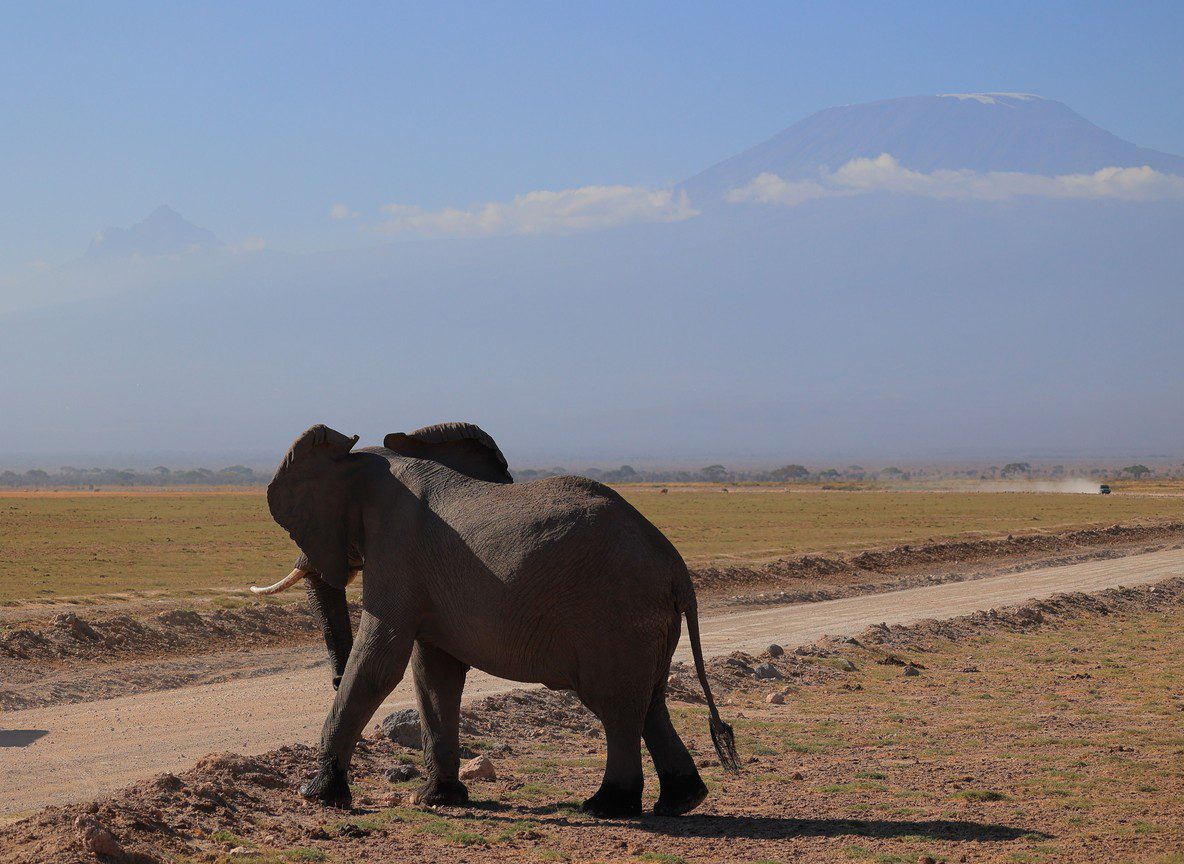
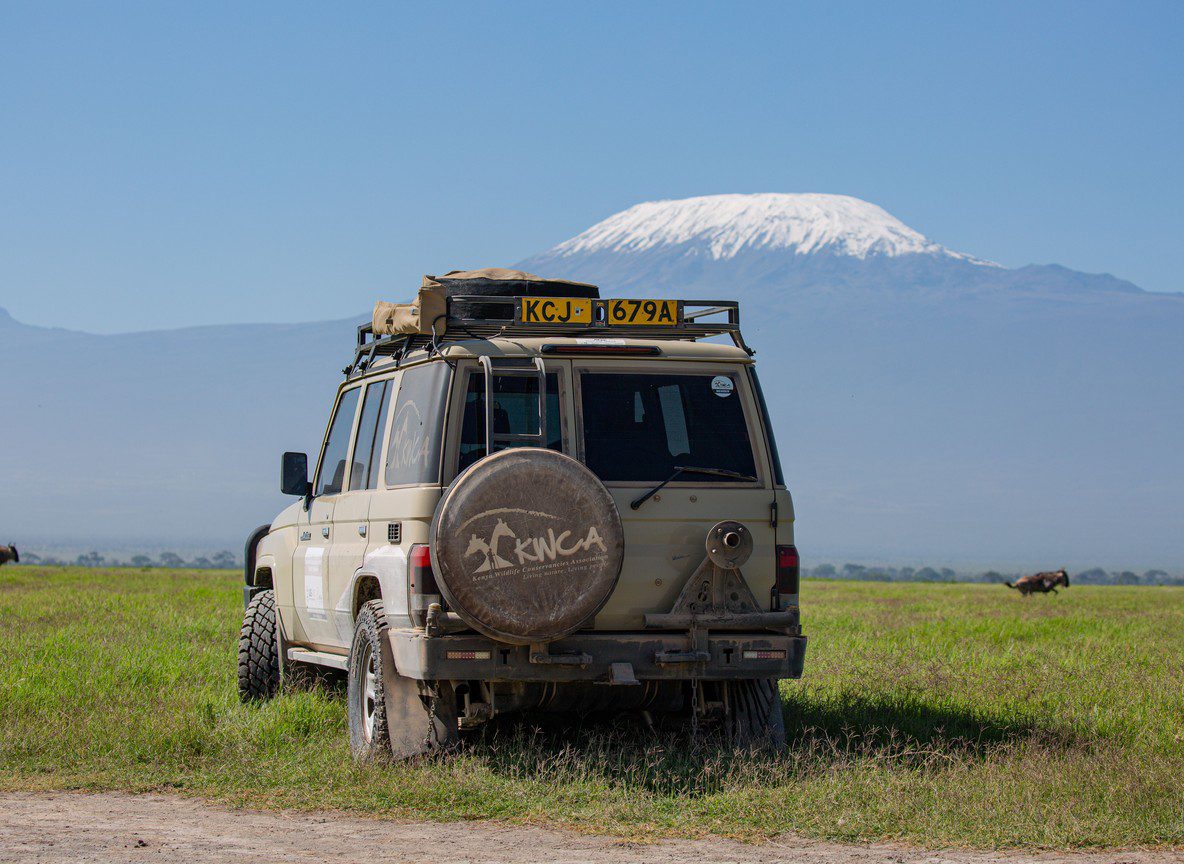
Kilimanjaro-facing camps are oriented to the south and southwest, where Kilimanjaro is most clearly visible on the Tanzanian border. The mountain appears across the flat plains as a massive white-topped presence on clear mornings. Camps in this orientation — typically along the southwestern edge of the park — are positioned for the iconic Amboseli image: elephants in the foreground, Kilimanjaro in the background.
Camps near Observation Hill sit in the central park zone and face a different landscape context. The swamps are immediately adjacent, the hill provides topographic structure, and the orientation is more internal to the park rather than south toward the border. Kilimanjaro may be visible in the distance on clear days but is typically further away and less dominant in the composition.
The choice between the two is largely about which visual story you want the camp to tell:
- Kilimanjaro-focused: the iconic, mountain-and-elephants image
- Observation Hill area: the swamp, the plains, and the park as a self-contained ecosystem
Neither is superior. They suit different preferences and different visit intentions.
Location Advantages of the Observation Hill Area
Swamp proximity. Camps near Observation Hill are typically adjacent to the Enkongo Narok swamp — the largest of Amboseli’s two permanent swamps and the core of the elephant population’s daily movement. Morning drives from a central-park camp can reach the swamp system within minutes, maximising productive drive time.
Central park access. From a centrally located camp, drives in any direction reach wildlife areas quickly. You are not committing the first 20 to 30 minutes of every drive to approaching the park from its periphery.
Birding access. The swamp margins adjacent to the Observation Hill area are among the richest birding zones in the park. Herons, storks, egrets, jacanas, and fish eagles are all reliably close.
All-weather utility. On days when Kilimanjaro is cloud-covered, the Observation Hill and swamp landscape still provides a visually interesting camp setting. The external view is not entirely dependent on mountain visibility.
Accommodation Types in This Zone
The central park area near Observation Hill includes some of Amboseli’s best-known lodges — Ol Tukai Lodge and Amboseli Serena Safari Lodge are both positioned in this zone and represent the park’s mid-range to upper-mid-range tier. These are established, full-service properties with pool facilities, consistent wildlife access from camp grounds, and the infrastructure for family and group travel.
Smaller tented camps also operate in and near this central zone, typically at lower price points and with more intimate atmosphere than the larger lodges. Some of these are positioned more carefully relative to swamp views and wildlife access.
Who the Observation Hill Area Suits Best
Wildlife-focused travellers who want maximum time in productive areas. The central park zone consistently produces the most reliable wildlife density because of swamp proximity. If every minute of game drive time matters to you, being close to the swamps is a genuine advantage.
Repeat visitors. Travellers who have already done the classic Kilimanjaro-view experience at other camps sometimes choose the central zone as a deliberate alternative, for the different landscape character and the more internal park identity.
Families and larger groups. The bigger lodges in this zone tend to have better facilities for families — more room types, pools, organised activities, and the infrastructure to handle group logistics.
Birders and photographers interested in wetland scenes. Immediate swamp access from camp makes early-morning swamp photography more practical than from peripheral lodges.
What to Check Before Booking
When evaluating camps marketed with Observation Hill proximity or central-park positioning:
- How close is the camp to the nearest swamp margin? Proximity matters for game drive efficiency.
- Does the camp have views across open ground, or is it enclosed in acacia woodland? Woodland camps can feel intimate but limit the sense of being in the landscape.
- Are drives conducted inside the national park, or within a surrounding conservancy or buffer zone? The difference affects which wildlife areas you access.
- What is the vehicle policy — shared or private game drive vehicles?
Quick Comparison: Central-Park vs Perimeter Camps
| Factor | Observation Hill / Central Zone | Perimeter / Boundary Camps |
|---|---|---|
| Swamp access | Immediate | 20-40 min drive |
| Kilimanjaro view drama | Moderate | Often stronger (south-facing) |
| Wildlife density near camp | High | Variable |
| Accommodation tier | Mid-range to luxury | Budget to mid-range |
| Best for quick wildlife access | Excellent | Less efficient |
| Best for landscape icon photography | Moderate | Stronger for mountain backdrop |
For a broader look at how Amboseli’s different accommodation zones compare, see the Amboseli hotels, camps, and lodges comparison on Touring Insights.
If this guide has you ready to travel, a safari specialist can handle the route, camps, and logistics end to end.
Want to Book a Tour With Us?