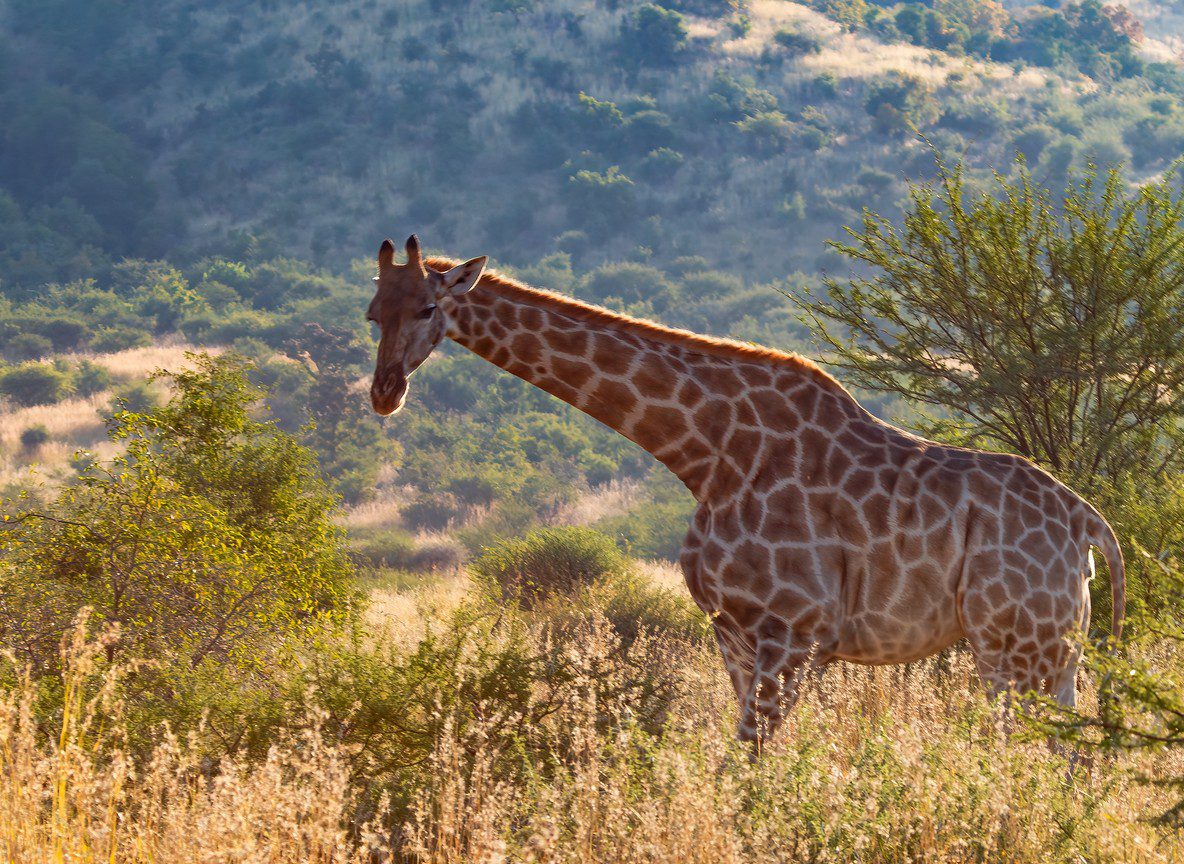
On 21 June 2026, the Giraffe Conservation Foundation marks World Giraffe Day. The date is deliberate: the longest day of the year in the northern hemisphere, chosen to mark the tallest animal on earth. The occasion is as much a warning as a celebration. Giraffes have lost more than 40% of their global population in the past 30 years, with some regional populations down by over 95% from historical levels.
Kenya is home to two of Africa’s most distinctive and most threatened giraffe subspecies: the reticulated giraffe and the Rothschild’s, also called the Nubian giraffe. Both live in landscapes accessible to safari travelers, and understanding their situation adds a layer of meaning to any sighting that a standard wildlife checklist cannot provide.
The Two Kenyan Subspecies You Should Know
Reticulated Giraffe
The reticulated giraffe is Kenya’s most numerous subspecies, found primarily in Samburu, Laikipia, and Meru. Its coat is immediately distinctive: large, cleanly defined polygons separated by narrow white lines, like a cracked-earth pattern. The edges are crisp in a way that distinguishes it easily from the Masai giraffe’s irregular, jagged-edged markings.
Current population estimates put the reticulated giraffe at roughly 15,000 to 16,000 individuals across Kenya, Ethiopia, and Somalia combined — down more than 50% from 20th century figures.
Where to see reticulated giraffe in Kenya: Samburu National Reserve, Laikipia (Ol Pejeta, Lewa), and Meru National Park.
Rothschild’s (Nubian) Giraffe
The Rothschild’s giraffe is one of the most endangered large mammals in Africa. Globally, the population is estimated at fewer than 1,700 individuals. In Kenya, the primary managed population exists through the Giraffe Centre in Nairobi, which runs a breeding programme, with conservation releases to Lake Nakuru National Park and several Laikipia conservancies.
The coat pattern is paler and less defined than the reticulated, and the Rothschild’s has a specific identification feature that no other subspecies shares: no markings below the knee. The legs are clean from mid-joint down, giving the animal an impression of wearing pale stockings.
| Subspecies | Kenya Population | Global Status | Best Viewing |
|---|---|---|---|
| Reticulated | 12,000-15,000 | Vulnerable | Samburu, Laikipia, Meru |
| Rothschild’s (Nubian) | 300-400 | Endangered | Nakuru, Giraffe Centre, Laikipia |
| Masai giraffe | Common | Vulnerable | Masai Mara, Amboseli, Tsavo |
Why Giraffe Populations Are in Decline
The Giraffe Conservation Foundation identifies four main drivers behind what researchers have called the “silent extinction” of giraffes — a crisis that received far less international attention than the declines of elephants and rhinos over the same period.
Habitat loss: Agricultural expansion into giraffe range, particularly in northern Kenya, has fragmented populations and reduced the woodland and savannah habitat they depend on for browse.
Human-wildlife conflict: Giraffe browse on the same vegetation communities use for livestock feed. In drought conditions, competition intensifies and tolerance decreases.
Poaching: Giraffe are hunted for bushmeat across parts of their range. The scale of this pressure was largely invisible to international conservation attention for decades.
Civil instability: Significant portions of the reticulated giraffe’s range cross into areas of northern Kenya and southern Somalia with persistent insecurity. Conservation monitoring and protection in these areas is extremely difficult.
Where to See Giraffes in Kenya: A Practical Overview
Samburu National Reserve delivers the most concentrated reticulated giraffe experience of any park in Kenya. The sparse, open vegetation of Samburu makes giraffes visible at distance and at close range, particularly as they move through the doum palm groves along the Ewaso Ng’iro River. A morning game drive in Samburu can easily produce a dozen reticulated giraffe sightings within a few hours.
Laikipia is Kenya’s most diverse giraffe region. Both reticulated and Rothschild’s subspecies are present, and conservancies like Lewa and Ol Pejeta have active monitoring programmes. Walking safaris in Laikipia, where they are permitted, allow giraffe encounters at ground level — a genuinely different experience from vehicle viewing.
The Giraffe Centre, Nairobi is a Rothschild’s giraffe conservation and breeding facility located within the Nairobi suburbs. Visitors can feed the animals by hand and learn about the subspecies’ history and the breeding programme’s role in maintaining its Kenya population. It is not a wilderness experience, but it offers the most intimate Rothschild’s giraffe encounter available and funds conservation directly.
Meru National Park is undervisited relative to its wildlife quality and holds significant reticulated giraffe populations. It is one of the best places in Kenya to see them without the vehicle volume that affects Samburu during peak season.
What a Giraffe-Focused Safari Itinerary Looks Like
A northern Kenya circuit centered on Samburu and Laikipia makes a natural base for giraffe-focused travel. The two regions are within a day’s drive of each other and together cover both main subspecies.
A typical giraffe-focused northern circuit: four nights in Samburu (reticulated giraffe, plus elephant, Grevy’s zebra, Beisa oryx — all Samburu specials), followed by three to four nights in Laikipia (reticulated and Rothschild’s, walking safari options, rhino). For travelers combining this with a Masai Mara leg, the Masai giraffe brings the third subspecies into the itinerary without any additional routing.
Staying in camps and conservancies that direct lodge fees toward community benefit is directly relevant for giraffe conservation. The communities that live alongside giraffe habitat are the most effective long-term protection mechanism available. A conservancy model puts money into landowner hands in exchange for wildlife coexistence on their land.
Planning a Trip Around World Giraffe Day
The date itself — 21 June — falls in the transition to Kenya’s long dry season, which is one of the better periods for northern Kenya travel. Vegetation thins out in Samburu from June onward, improving visibility and concentrating wildlife around the Ewaso Ng’iro River.
For the Laikipia leg, June to September is the peak season for many conservancies. Booking four to six months ahead is advisable for the better-known properties.
For further context on the Giraffe Conservation Foundation’s research and the global population data behind these figures, visit giraffeconservation.org. For Kenya-specific wildlife viewing guidance, trunktrailssafaris.com covers Samburu and Laikipia itineraries in detail.
Related Reading
The Tourinsights guide to Samburu National Reserve covers the full northern special species list, and the Laikipia walking safari guide covers on-foot options in the plateau conservancies.
The Significance of Knowing the Difference
Most safari travelers see a giraffe and note it as one of Africa’s signature images. The reality is more complicated and more urgent. There are nine recognised subspecies of giraffe in Africa, several of which face serious population declines. Knowing that the tall, clean-legged animal you are watching in Nakuru is one of fewer than 1,700 Rothschild’s giraffes left on earth changes what the sighting means.
World Giraffe Day on 21 June is a useful reminder that the most recognisable animals in Africa are not necessarily the most secure. Giraffe conservation requires the same attention, resources, and public awareness that elephant and rhino conservation receives. Kenya is the right place to develop that awareness firsthand.
Every trip described here can be tailored: dates, budget, camps, and pace built around you.
Get a Personalised Safari