A vehicle puts you close to wildlife efficiently. It also places a layer of steel and glass between you and the landscape – and everything that layer filters out is part of the actual experience.
On foot in the Masai Mara ecosystem, the sensory field shifts entirely. The grass sounds different underfoot. The wind carries scent. You track a leopard through compressed earth and broken stems rather than watching it from a seat. A walking safari in Kenya is not a supplement to the vehicle experience. For many travelers, it becomes the part of a Kenya trip they carry longest.
This guide covers which conservancies offer walking safaris, what each one brings, and what to expect from your first time on foot in big-wildlife country.
Why Walking Safaris Are Tied to Conservancies
Kenya’s national parks – the Masai Mara National Reserve, Tsavo, Amboseli – prohibit walking for general visitors under Kenya Wildlife Service regulations. Permits for walking in parks are almost never granted to tourists. Walking safaris are a conservancy product.
Private and community conservancies operate under different frameworks from national parks. They can permit walking, night drives, cultural visits, and off-road driving that national parks cannot. The conservancies bordering the Masai Mara – Olare Motorogi, Mara North, Naboisho, Ol Kinyei, and others – share the same wildlife as the reserve. Lions and elephants cross reserve and conservancy boundaries without any awareness of the distinction.
This creates a meaningful choice for travelers: staying in a conservancy camp typically costs somewhat more than the main reserve, but it opens access to a wider range of activities and, critically, fewer vehicles per sighting. Walking is the clearest expression of what that difference actually means.
The Best Kenya Walking Safari Conservancies
Olare Motorogi Conservancy
Olare Motorogi covers 33,000 acres on the northeastern edge of the Masai Mara ecosystem. The conservancy enforces strict vehicle limits per predator sighting and keeps total visitor numbers low. Walking routes here move through open savannah, along luggas (seasonal drainage channels) that are consistently productive for leopard sign, and through woodland margins where buffalo concentrate.
Walks are led by a Kenya Professional Safari Guides (KPSG)-certified guide alongside an armed Kenya Wildlife Service ranger. Groups are typically two to six guests. Duration ranges from two hours to a full morning, ending at a bush breakfast position.
Good months for walking: June to October and January to February.
Naboisho Conservancy
Naboisho is 50,000 acres bordering Olare Motorogi to the south. It carries one of the highest lion densities on the continent, alongside resident cheetah, elephant, and significant leopard numbers. Walking here means moving through land that is genuinely active with large predators.
The conservancy model in Naboisho is directly tied to Maasai community income: landowners lease plots to the conservancy and receive per-acre payments. When you walk in Naboisho, you are walking through a working conservation-community partnership, which adds context that pure wildlife observation does not provide.
Notable property: Mahali Mzuri (Virgin Limited Edition) is located in Naboisho. Several other camps at mid-range and luxury price points also offer walking programmes.
Mara North Conservancy
Mara North is 74,000 acres on the northern edge of the Mara ecosystem, bounded by the Mara River. Vehicle density here is lower per acre than most Mara conservancies, which gives walking an authentically remote quality even though camps are a reasonable drive from the reserve gate.
Terrain in Mara North includes river forest along the Mara and its tributaries, open savannah, and rocky hillsides with good viewpoints. Walking routes tend to follow the river edge, where hippo, crocodile, and elephant are predictably present. In the dry season, large buffalo herds move through the conservancy.
Laikipia Plateau
Laikipia is the most serious walking safari destination in Kenya for travelers who want genuine distances and the option of multi-day routes. The plateau north of Mount Kenya holds Lewa, Ol Pejeta, Borana, Il Ngwesi, and several other conservancies that permit extended on-foot exploration.
Lewa Wildlife Conservancy allows guided walking through open moorland and savannah within one of Kenya’s most effective rhino protection programmes. Encounters with both white and black rhino on foot at thirty metres are not unusual. The guides working this land have done so for years and know the animals individually.
Ol Pejeta offers walking with its rhino ranger patrols, which combines wildlife encounter with direct conservation participation.
For travelers who find the Mara’s mainstream circuit too familiar, a Laikipia walking safari offers something the southern parks simply cannot replicate.
Chyulu Hills
Chyulu Hills sits between Tsavo West and Amboseli, rising to 2,200 metres along a narrow volcanic ridge. The vegetation is distinctly different from anywhere else in Kenya: dense, green montane hills running above dry thornbush savannah. Walking here goes through upland grassland with views across to Kilimanjaro.
Wildlife includes elephant (moving through this corridor between Tsavo and Amboseli), buffalo, and excellent birdlife. There are fewer than ten permanent camps in the entire Chyulu Hills area, which keeps the walking experience exceptionally quiet.
What Actually Happens on a Guided Bush Walk
Understanding the structure of a morning walk helps you get the most out of it.
Pre-walk briefing (roughly 20 minutes): Your guide covers the route, recent wildlife signs from the previous evening, and the basic protocols. Single file behind the guide. No talking above a whisper. If the guide raises a fist, stop immediately and crouch. No running unless the guide specifically instructs it.
The walk (2 to 4 hours): Distance varies from 4km to 12km depending on terrain and what you encounter. Your guide reads the landscape continuously: soil compression, broken vegetation, fresh dung, the direction of scent on the wind. Within an hour of starting, most walkers begin to see the ground differently.
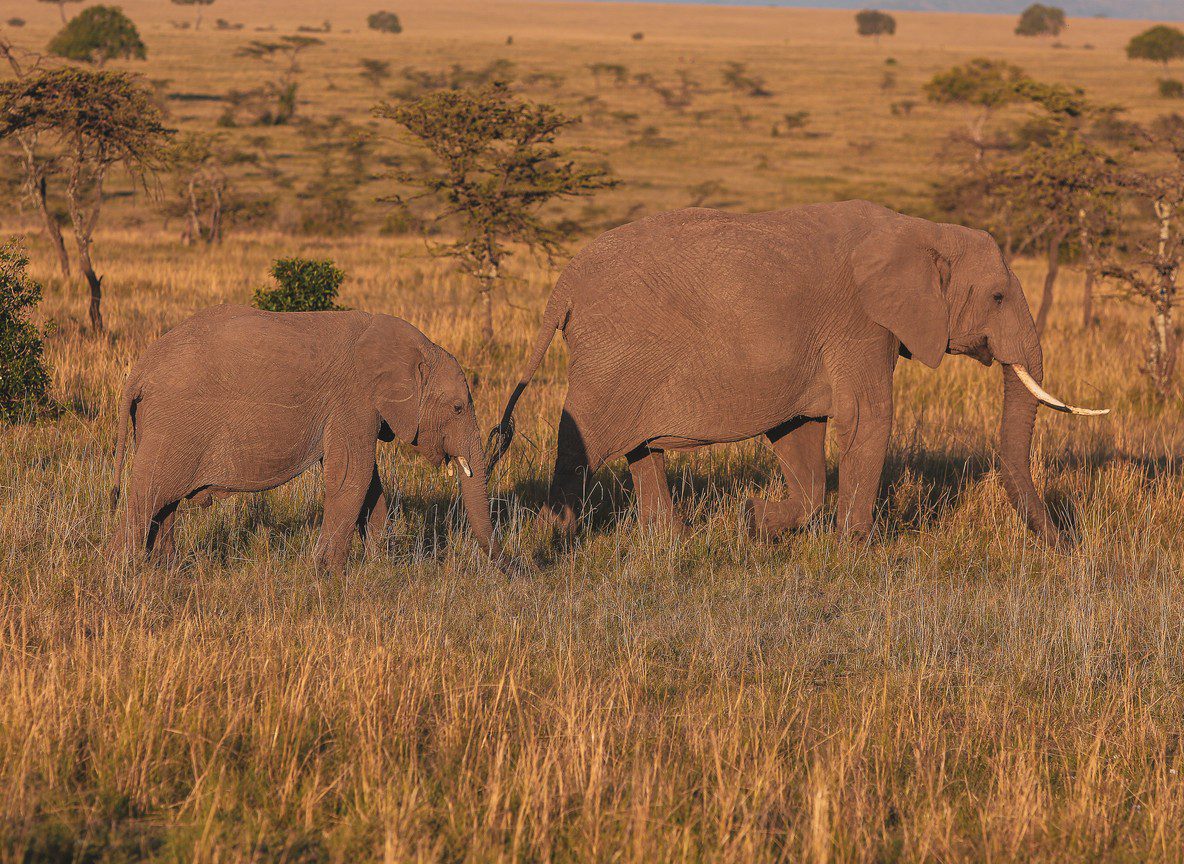
Wildlife encounters on foot: Any wildlife encounter changes character at walking distance. An elephant at forty metres on foot is a categorically different experience from the same animal viewed from a vehicle seat. Buffalo are given more space and approached more cautiously. Predators are approached downwind, carefully, and rarely closely.
Bush breakfast: Most walking safaris end at a pre-positioned breakfast site – a lugga bank, a river bend, a hillside. Coffee brewed over a camp stove, fresh fruit, eggs. The combination of physical movement, wildlife in open country, and breakfast at an outdoor site consistently rates among the highest points in any Kenya itinerary.
Comparing the Main Walking Safari Conservancies
| Conservancy | Walking Type | Terrain | Wildlife Highlight | Best Months |
|---|---|---|---|---|
| Olare Motorogi | Morning walk, bush breakfast | Open savannah, luggas | Cheetah, big cat tracking | Jun-Oct |
| Naboisho | Morning walk | Mixed woodland, savannah | High lion density | Jun-Oct |
| Mara North | River-edge walks | River forest, open Mara | Buffalo, hippo | Jun-Oct |
| Lewa (Laikipia) | Full-morning and multi-day | Moorland, savannah | Rhino at close range | Jan-Mar, Jun-Aug |
| Chyulu Hills | Day walks | Volcanic ridge, montane | Elephant, Kilimanjaro views | Jun-Oct |
Planning Notes for a Walking-Focused Kenya Trip
A few practical considerations worth knowing before you book:
Minimum time: Three nights in a single conservancy is the minimum to get meaningful walking time – ideally two or three separate walk mornings, with enough familiarity with the terrain to track changes between days.
Fitness level: Walking safaris are accessible to travelers with reasonable fitness. The terrain is rarely steep. The pace is moderate. The guides calibrate distance to the group. If you have specific physical considerations, communicate them at the planning stage so the conservancy and route can be matched accordingly.
Minimum age: Most Mara conservancies set a minimum age of 16 for guided bush walks, and some operators run a slightly lower bar of 14 depending on the group and guide. Younger children generally join the vehicle-based game drives instead while the rest of the party walks.
Guide quality matters: Not all camps in a conservancy have equal walking access or equal guide quality for on-foot work. The difference between a KPSG-certified walking guide and a vehicle-trained guide who occasionally leads walks is significant. Ask specifically which guides lead the walking programme at any camp you are considering.
Pairing itineraries: Combining a Mara conservancy stay with a Laikipia walking focus gives the widest range of walking terrain in a single Kenya trip: open savannah predator country in the south, moorland and rhino territory in the north.
What to bring: Neutral-coloured, layered clothing. Boots with ankle support. A wide-brimmed hat. Sunscreen. A small backpack for water. Binoculars. Leave anything that rattles, crunches, or catches bright light.
If this guide has you ready to travel, a safari specialist can handle the route, camps, and logistics end to end.
Want to Book a Tour With Us?Further Reading
For more on the conservancies covered here, see the Tourinsights guides to Olare Motorogi and Laikipia walking safaris. Background on the Kenya Wildlife Service and conservancy frameworks is covered at trunktrailssafaris.com.
How to Choose the Right Walking Safari
The right conservancy for your walking safari depends on three things: what terrain interests you most, how seriously you want to pursue specific species on foot, and how much walking experience you already have.
First-time walkers in a Mara conservancy with an experienced guide get a genuinely excellent introduction to on-foot wildlife. Seasoned hikers doing a multi-day traverse in Laikipia get something closer to a wilderness expedition. Both are excellent. Neither is a compromise.
Ask the camp directly: Who leads the walks? What is their certification and training? What routes are available and what condition are they in at the time of your visit? The answers tell you more than any marketing material.
A walking safari in Kenya is one of the most direct ways to understand what the African bush actually is: a functioning ecosystem, not a viewing platform. Everything you see, hear, and smell on foot is the same information that lions and elephants use to navigate the same land. Getting down to that level changes what you see.
More safari planning resources
- Ol Pejeta and Sweetwaters safari package from Valley Safaris
- Big Five safari collection on FindMySafari
- Interactive Maasai Mara map from Valley Safaris
- Kenya tour packages from Valley Safaris