Kenya is one of the few destinations where the combination of a wildlife safari and a beach holiday is genuinely seamless rather than a logistical compromise.
The Masai Mara sits in the southwest of the country. Diani Beach is on the Indian Ocean coast south of Mombasa. The journey between them by light aircraft takes roughly 90 minutes, with a connection through Nairobi. By road, the journey is longer but manageable with the right routing. The weather patterns of the two destinations align, their best seasons overlap, and the cultural contrast between Mara highlands and the Swahili coast makes each experience sharper for having the other as context.
This guide covers how to structure the combination, how many days to allocate to each leg, which coastal destination suits which type of traveler, and when to go.
Why This Combination Works Better Than It Might Sound
The case for staying in Kenya for both legs, rather than pairing a Kenya safari with Maldives or Bali, comes down to something harder to quantify than flight times or logistics.
In Kenya, neither experience feels like a detour from the other. The safari and the Swahili coast are both authentically African in a way that a regional crossover cannot replicate. The Maasai highlands and the Arab-influenced coastal towns are entirely different Kenyas, but they share a context — history, landscape, culture — that makes the contrast meaningful rather than jarring.
Practical factors reinforce this: domestic airlines connect Mara airstrips to the coast with short hops, the best Mara season and the best coastal weather overlap significantly, and the same trip can cover both legs without changing country.
How Many Days to Allocate
This is the question that most frequently shapes how bush-and-beach itineraries are structured, and the answer depends partly on how much time you have and partly on what pace you want.
| Trip Length | A Workable Allocation |
|---|---|
| 7 nights | 4 nights Mara, 3 nights coast — tight but functional |
| 9 nights | 5 nights Mara, 4 nights coast — comfortable |
| 10-12 nights | 5-6 nights Mara, 5-6 nights coast — ideal |
| 14+ nights | Add a second park (Amboseli, Samburu, or Tsavo) before the coast |
Three nights in the Masai Mara should be considered a minimum. Below that, the park can feel rushed — the slower rhythms of watching a lion pride all morning, or waiting for a cheetah to complete a hunt, need time that two nights does not provide. Three nights gives four game drive windows. Five gives enough flexibility to absorb a weather disruption without losing the experience.
The coast portion needs at least three nights to actually transition from the safari pace. The first night on the beach is often spent still running on early-morning wake-up times. By night two, the rhythm shifts. By night three, the coast is its own experience rather than a decompression from the bush.
For couples on a honeymoon itinerary, five nights in the Mara and five nights at the coast tends to be the ratio that lets both experiences breathe without feeling rushed at either end.
Which Coast Destination: Diani, Lamu, or Watamu?
Kenya’s coastal options are meaningfully different from each other. Choosing between them is a question of travel style rather than a quality ranking.
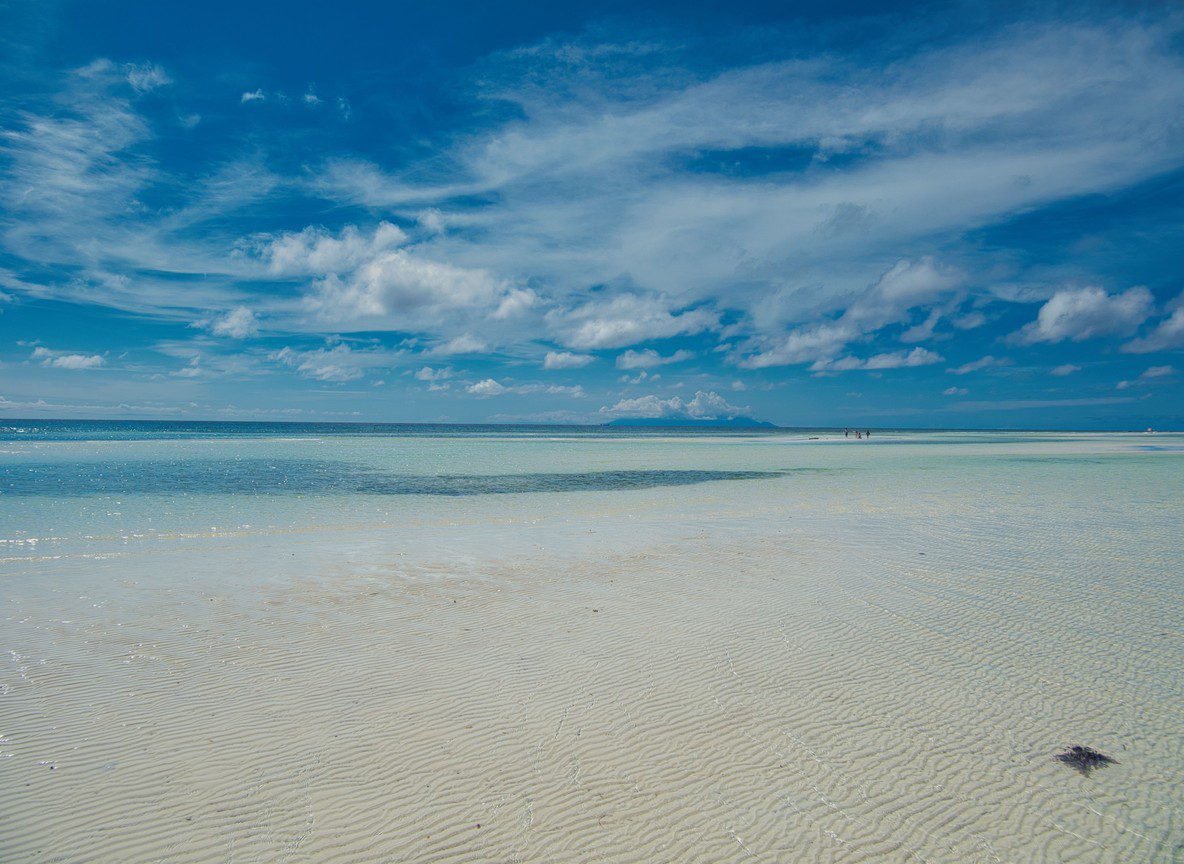
Diani is Kenya’s most established beach destination: a long arc of white sand backed by coral cliffs and casuarina trees, with the Indian Ocean running warm and calm inside the reef. The water is safe for swimming year-round. Accommodation ranges from boutique hotels to mid-range beach resorts. There is good reef snorkeling, kitesurfing for those who want it, and a relaxed evening scene on the main beach road.
The travel connection from the Mara is the most direct coastal option: fly from a Mara airstrip to Wilson Airport Nairobi, then connect to Ukunda airstrip for Diani. Door to door from the Mara camp, roughly three hours.
For travelers who want the smoothest transition from bush to beach, Diani is the easiest choice. For the full Diani picture, see the trunktrailssafaris.com Diani Beach guide.
Lamu Island
Lamu is a UNESCO World Heritage Site: a medieval Swahili town on an island with no cars, centuries-old coral-stone architecture, dhow harbours, and a pace of life that is genuinely unlike anywhere else in East Africa. Beaches on nearby Shela and Manda islands are largely deserted, particularly outside peak December-January.
Lamu suits travelers who want to read, wander, and absorb rather than those primarily seeking watersports or evening bars. It is slower and more cultural than Diani. The journey requires a flight from Nairobi to Lamu Manda Airport (one hour), then a short boat transfer. The additional connection is worth it for the right traveler.
For a full introduction to the Swahili coast at Lamu, see the trunktrailssafaris.com Lamu Kenya guide.
Watamu sits between Diani and Lamu in character: a small beach town with some of East Africa’s best snorkeling, an active sea turtle nesting beach, and a whale shark aggregation from October to February. It is quieter than Diani with more character and is particularly well-suited to travelers who want the coastal element of their Kenya trip to carry wildlife interest as well as beach relaxation. The Watamu Marine National Park has been protected since 1968.
For a detailed guide, see the Tourinsights Watamu snorkeling guide.
Mombasa
Mombasa is primarily a transit city. Fort Jesus, the Old Town, and the harbour are worth a half-day visit. For the beach experience itself, base at Diani to the south or Watamu to the north rather than in Mombasa.
The Two Main Routing Patterns
There are two practical ways to structure a Kenya safari and beach combination.
Route A: Nairobi Gateway
Fly into Nairobi. Begin with the safari (Mara, Amboseli, Samburu, or a combination). Fly back to Nairobi. Connect to the coast by air. Fly home from Mombasa or back through Nairobi.
This is the most flexible pattern and accommodates any park combination. It works well for travelers with international flights routed through Nairobi.
Route B: Mombasa Gateway
Fly into Mombasa. Spend one or two nights on the coast at the start. Transfer to Nairobi by air. Begin safari. Fly out from Nairobi.
This pattern works for travelers with international connections through Mombasa, or those who want to decompress from a long-haul flight before entering the bush. Some travelers prefer starting with the beach and building toward the safari intensity; others find the reverse — arriving at camp and heading straight into a game drive — is a better rhythm. There is no correct answer. It depends on how you personally want the trip to arc.
Seasonal Timing
Kenya’s safari peak season and its coastal best-weather window are closely aligned, which is one reason the combination works as well as it does.
| Month | Masai Mara | Diani Beach |
|---|---|---|
| January-February | Excellent (calving in Serengeti, strong predators) | Good, some northeast wind |
| March-May | Long rains, quieter, greener | Unreliable; sea can be rough |
| June | Migration building; excellent | Good, ocean cooling |
| July-October | Peak season, migration crossings | Excellent; calm Indian Ocean |
| November | Short rains; still good resident wildlife | Generally fine |
| December | Drier; migration gone, good resident wildlife | Good; festive season demand |
The strongest window for a combined safari and beach Kenya holiday is July to October. Migration river crossings are at peak probability in July through September. The Indian Ocean coast is at its most reliable and calm during the same months.
October deserves particular attention as an under-the-radar window. The Mara still has good game viewing and the migration’s final phase, while Diani and Watamu are in excellent condition. Camp availability in the Mara is slightly better than August and coastal prices are lower than December.
Practical Points for Honeymooners
A Kenya honeymoon combining the Mara with the coast is one of the most consistently successful trip types in East Africa. The emotional arc works well: the Mara delivers an intensity and wildness that is hard to prepare for. Morning game drives at 6am, the smell of the grass, a lion with cubs twenty metres from the vehicle. The transition to the coast — white sand, warm ocean, late mornings, long lunches — makes both experiences more vivid for the contrast.
When choosing properties for a honeymoon combination, look for: Mara camps with private tents and en-suite bathing rather than shared facilities; a transition between bush and coast that does not require a night in a Nairobi transit hotel; a coastal property with direct beach access and the option for private experiences such as sunset dhow cruises or a private beach dinner.
Related Reading
The Tourinsights wildebeest migration route guide covers when the migration is in Kenya and which months produce river crossings. The Tourinsights Watamu snorkeling guide covers Watamu as a coastal option in depth. For detailed Masai Mara camp recommendations, see trunktrailssafaris.com.
The Honest Case for the Kenya Combination
A Kenya safari followed by Kenya coast is not two separate trips stitched together. It is one trip with two distinct chapters, both of which gain from being part of the same itinerary. The country is set up for this combination in a way that few destinations in the world can match — the routes exist, the weather cooperates, and the contrast between the two environments adds depth to both.
The primary planning decisions are how many nights to allocate to each leg, which coastal destination fits your style, and which direction the routing flows. Get those three things right and the combination almost always exceeds expectations.
Prefer a different route, budget, or travel style? This plan can be adapted to fit.
Customise Your TripFurther reading
More safari planning resources
- Best time to visit Kenya month-by-month map from Valley Safaris
- Diani Beach guide on FindMySafari
- Wildebeest migration route map from Valley Safaris
- Great Migration safari collection on FindMySafari
Related guides: Shared Shuttle vs Private Vehicle to the Masai Mara: Which Transfer Fits Your Trip?.