As of 2026, there are exactly two northern white rhinos left on earth. Both are female. Both live at Ol Pejeta Conservancy in central Kenya. Neither can reproduce without scientific intervention, and a team of international researchers is working around the clock to prevent this subspecies from disappearing entirely.
Visiting Ol Pejeta is not just a game drive. It is a chance to stand close to the last two members of a subspecies, to see what conservation science looks like under genuine pressure, and to understand why Kenya’s record on wildlife protection carries global significance right now. This guide covers what you will see, why the BioRescue program matters, how to plan your visit, and how Ol Pejeta fits into a broader Kenya rhino conservation itinerary.
How Many Northern White Rhinos Are Left?
Two. The only surviving northern white rhinos are Najin, born in 1989, and Fatu, born in 2000. They are mother and daughter. They live inside a fenced sanctuary within Ol Pejeta Conservancy, under 24-hour armed guard from a dedicated anti-poaching team.
The last male northern white rhino, a bull named Sudan, died at Ol Pejeta in March 2018 at the age of 45. His death ended any possibility of natural reproduction and shifted the entire survival strategy to assisted reproductive technology. What was already a conservation crisis became a scientific race against time.
Najin and Fatu were not born at Ol Pejeta. Both were born in captivity at Dvur Kralove Zoo in the Czech Republic, Najin in 1989 and Fatu in 2000. On 20 December 2009, the zoo sent them to Ol Pejeta along with two other northern white rhinos, Sudan and a female named Suni, betting that Kenya’s open grassland and natural climate might succeed where European captive breeding had failed. Suni died in 2013 and Sudan in 2018, leaving only Najin and Fatu.
This is not a story of extinction already completed. It is a story of a narrow window still open, and Kenya is where that window exists.
Where Ol Pejeta Is and How to Get There
Ol Pejeta Conservancy sits on the Laikipia Plateau in central Kenya, approximately 240 kilometres north of Nairobi. It borders the town of Nanyuki at the foot of Mount Kenya, and from Nanyuki’s Ol Pejeta gate most camps are 15 to 30 minutes by road.
Getting there from Nairobi takes three to four hours by road on the A2 highway via Nyeri, or around 45 minutes by charter flight from Wilson Airport to Nanyuki Airstrip. The conservancy covers 90,000 acres of open savannah, acacia woodland, and riverine forest along the Ewaso Ng’iro River. It is the largest black rhino sanctuary in East Africa and one of the most consequential wildlife destinations anywhere in northern Kenya.
The BioRescue Program: What Survival Actually Looks Like
The northern white rhino cannot reproduce naturally. Najin has physical hip limitations that prevent her from carrying a calf safely. Fatu has uterine lesions that rule out natural conception entirely.
In 2019, the BioRescue consortium, led by the Leibniz Institute for Zoo and Wildlife Research and working with Ol Pejeta and the Kenya Wildlife Service, successfully harvested oocytes from both rhinos and fertilised them using frozen sperm from deceased northern white rhino bulls. As of 2026, multiple viable embryos are stored in cryogenic conditions. They represent the entire genetic future of the subspecies.
Oocyte collection from Najin was stopped in 2021 after an ethical risk assessment concluded her age made further procedures too risky relative to the conservation benefit. Every embryo now in storage comes from Fatu alone. BioRescue has since attempted actual embryo transfers into surrogate southern white rhino females in July 2024, December 2024, and May 2025, none of which produced a lasting pregnancy, though the December 2024 attempt did show early signs of uterine response. Two additional proven surrogate females have since joined the program, and the team continues attempting transfers.
The plan is to transfer these embryos into surrogate southern white rhino females resident at Ol Pejeta. Rhino embryo transfer at this scale had never been attempted before BioRescue began. The program has reached milestones that the international wildlife science community is tracking closely.
What this means practically for a visitor: conservancy fees fund the ranger team that guards Najin and Fatu around the clock, the veterinary infrastructure that keeps them healthy, and operating costs that no single grant can cover indefinitely. The fee paid at the gate keeps this science moving.
What the Sanctuary Visit Is Like
The northern white rhino sanctuary is a designated fenced area within Ol Pejeta. Guided visits operate at scheduled times, typically in the morning and late afternoon, managed by conservancy guides and rangers. Visitors approach on foot in a group of no more than six people. This is one of the very few wildlife encounters in Kenya where supervised foot proximity to megafauna is permitted.
Najin and Fatu are fully habituated to human presence after decades of close contact with their care team. They graze calmly, allow approach to within ten metres, and carry themselves with the settled confidence of animals that have never been hunted. Standing at that distance while a guide explains the embryo harvesting timeline is one of the most affecting wildlife encounters available anywhere on the continent.
Photography conditions are excellent. The terrain is open, sightlines are clear, and guides position small groups without disturbing the animals. Morning light from the east is clean and warm. Afternoon visits produce softer golden-hour conditions suited to wider landscape shots. The visit typically runs 45 to 60 minutes.
Ol Pejeta’s Wider Wildlife: A Full Safari Conservancy
The northern white rhino visit is the focal experience, but Ol Pejeta is a functioning Big Five conservancy across 90,000 acres. Visitors combining the sanctuary visit with full game drives find one of Kenya’s most complete wildlife destinations.
Black rhino are present in numbers that exceed any other single reserve in East Africa, with over 130 individuals according to recent census data. Tracking black rhino on foot with an armed ranger is a separate program available through the conservancy, worth adding to any dedicated rhino itinerary.
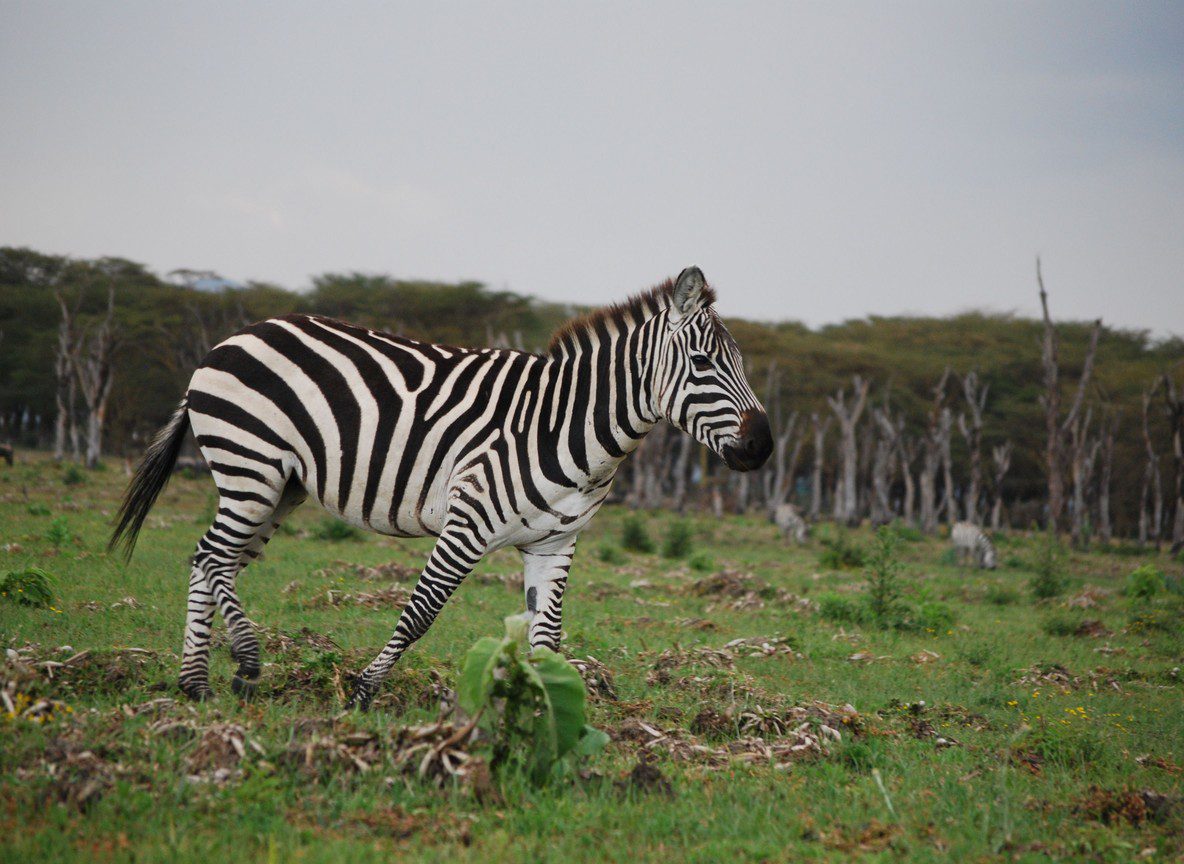
Lion, leopard, elephant, buffalo, cheetah, and Grevy’s zebra all range across the conservancy. The Ewaso Ng’iro River corridor generates the highest game density, and early morning drives along the river produce frequent leopard sightings. Cheetah are reliably visible in the open savannah sections because the terrain lacks the dense cover that reduces sighting rates elsewhere. The Laikipia cheetah population is one of the healthiest in Kenya.
The Sweetwaters Chimpanzee Sanctuary within Ol Pejeta is unique in East Africa, housing rescued chimpanzees in a large semi-wild enclosure. The visit is included in the standard conservancy day fee.
| Wildlife | Status at Ol Pejeta | Best Viewing Time |
|---|---|---|
| Northern white rhino (Najin and Fatu) | 2 individuals, fenced sanctuary | Guided foot visit, morning or afternoon |
| Black rhino | 130+ individuals, largest in East Africa | Foot tracking with ranger |
| Lion | Resident prides | Early morning, river corridor |
| Cheetah | Resident, reliably visible | Open savannah, midday |
| Leopard | Resident | Dawn and dusk, riverine forest |
| Elephant | Large herds | River corridor, throughout |
| Chimpanzee | Sweetwaters Sanctuary | Afternoon enclosure visit |
For broader planning in the region, our Laikipia Plateau safari guide covers circuit options across the northern Kenya highlands, including how Ol Pejeta connects with Lewa Wildlife Conservancy and Sosian Ranch.
Conservancy Fees and Practical Planning
The standard non-resident adult conservancy fee is approximately $90 per person per day, covering general access and all game drives. The northern white rhino sanctuary visit carries an additional $60 per person fee, allocated directly to rhino care. Total cost for conservancy entry, sanctuary visit, and a full game drive day runs $150 to $200 per person before accommodation.
The conservancy is open year-round. The dry seasons, January to March and June to October, give the best game viewing and road conditions. The long rains in April and May can close some low-lying tracks but leave rhino visits and river corridor drives fully operational. The Laikipia altitude of approximately 2,000 metres keeps temperatures cool year-round, which is a welcome contrast to the heat of the coast or the Samburu lowlands.
A minimum two-night stay is the practical standard. A single day trip from Nairobi leaves too little time to cover the sanctuary, a full game drive circuit, and the chimpanzee sanctuary in any depth.
For planning beyond Ol Pejeta, our Kenya rhino sanctuaries overview covers the full network of protected rhino habitats across the country.
Where to Stay
Accommodation inside Ol Pejeta ranges from mid-range tented camps to self-catering cottages.
Sweetwaters Serena Camp is the flagship property, with permanent tented rooms along a floodlit waterhole that attracts game through the night. Black rhino visit regularly after dark. The camp suits both wildlife photographers and general conservation travelers. Rates run $250 to $400 per room per night depending on season.
Ol Pejeta Safari Cottages offer self-contained accommodation for families or groups wanting kitchen access and separate living spaces. The cottages have direct conservancy access and private gardens, and work well for guests combining conservation tourism with a longer stay.
For guests building a broader Laikipia circuit, Ol Pejeta connects naturally with Lewa Wildlife Conservancy and Sosian Ranch in a single loop covering three distinct habitats across four to five nights. Our Ol Pejeta vs Lewa comparison breaks down the differences for first-time visitors to Laikipia.
Explorer Notes
A few practical points worth knowing before you arrive.
Brief yourself on the BioRescue science before the sanctuary visit. Understanding what the program is trying to achieve, what the stored embryos represent, and what the next phase requires gives the encounter a different weight. The conservancy publishes regular program updates, and reading the background before you go means you can ask your guide better questions on the ground.
Arrive for the morning sanctuary session rather than the afternoon one if you have a choice. The rhinos are more active in cooler temperatures, and morning light is better for photography.
Peak season sanctuary slots fill months in advance, particularly June through September. If your Laikipia visit falls in those months, confirm sanctuary availability early, before finalising other bookings.
Why the Timing Matters
Najin and Fatu will not live forever. The window to see the last two northern white rhinos, in the country fighting hardest to bring their subspecies back from the edge, is finite. What is available right now at Ol Pejeta is genuinely irreplaceable.
Kenya’s rhino conservation record is one of the strongest in Africa. The national black rhino population has grown from fewer than 400 individuals in the late 1980s to over 1,000 today, largely through the network of sanctuaries anchored by Ol Pejeta. The northern white rhino story is the hardest test that model has ever faced.
If you are planning a Kenya safari that includes Laikipia, build Ol Pejeta into the itinerary as a primary destination, not a day trip. For specialist itinerary planning, Trunktrails Safaris carries detailed Laikipia circuit options for visitors combining the conservancy with Samburu or the Masai Mara.
If this guide has you ready to travel, a safari specialist can handle the route, camps, and logistics end to end.
Want to Book a Tour With Us?Further reading
More safari planning resources
- Ol Pejeta and Sweetwaters safari package from Valley Safaris
- Big Five safari collection on FindMySafari
- Nairobi to Maasai Mara route guide from Valley Safaris
- Kenya tour packages from Valley Safaris
Related guides: Why Ol Pejeta Has Gone 9 Years Without a Rhino Poaching Incident, What to Wear in Ol Pejeta Conservancy: A Safari Packing Guide.