A Kenya safari quote that keeps creeping upward is not an accident. Fuel, park fees, accommodation, and vehicle costs all move together, and the gap between what you expected to spend and what you are being quoted can feel significant.
The good news: the same economics that inflate safari quotes also create clear windows where budget travelers can get equal or better experiences for considerably less. You need to know when to book, how to structure your vehicle, which parks to choose, and how to squeeze maximum wildlife time out of every day. This guide gives you the practical playbook.
Why a Kenya Safari Costs What It Costs
A budget safari in Kenya is not about cutting corners. It is about understanding which cost variables you can actually influence.
The three main cost drivers are:
- Ground transfers: Distance from Nairobi to your park multiplied by diesel price per kilometre. Nairobi to Amboseli is roughly 240 km. Nairobi to Tsavo East is around 220 km. Nairobi to the Masai Mara is close to 280 km. Each run burns diesel.
- Game drive circuits: Vehicle operating cost per hour, especially on long full-day routes.
- Remote lodge access: Lodges deep in the park require longer internal drives, which adds cost per guest night.
Understanding these levers means you can make choices that reduce them without reducing the experience itself.
The Best Seasons to Book a Budget Safari in Kenya
Timing is the single highest-impact lever for an affordable Kenya safari. Park fees, lodge rates, and operator pricing swing dramatically between peak and shoulder season.
Peak season (July to October, December to January): Migration traffic drives prices up. Beds sell fast. A budget tented camp in the Mara can cost 40 to 60 percent more in August than in May.
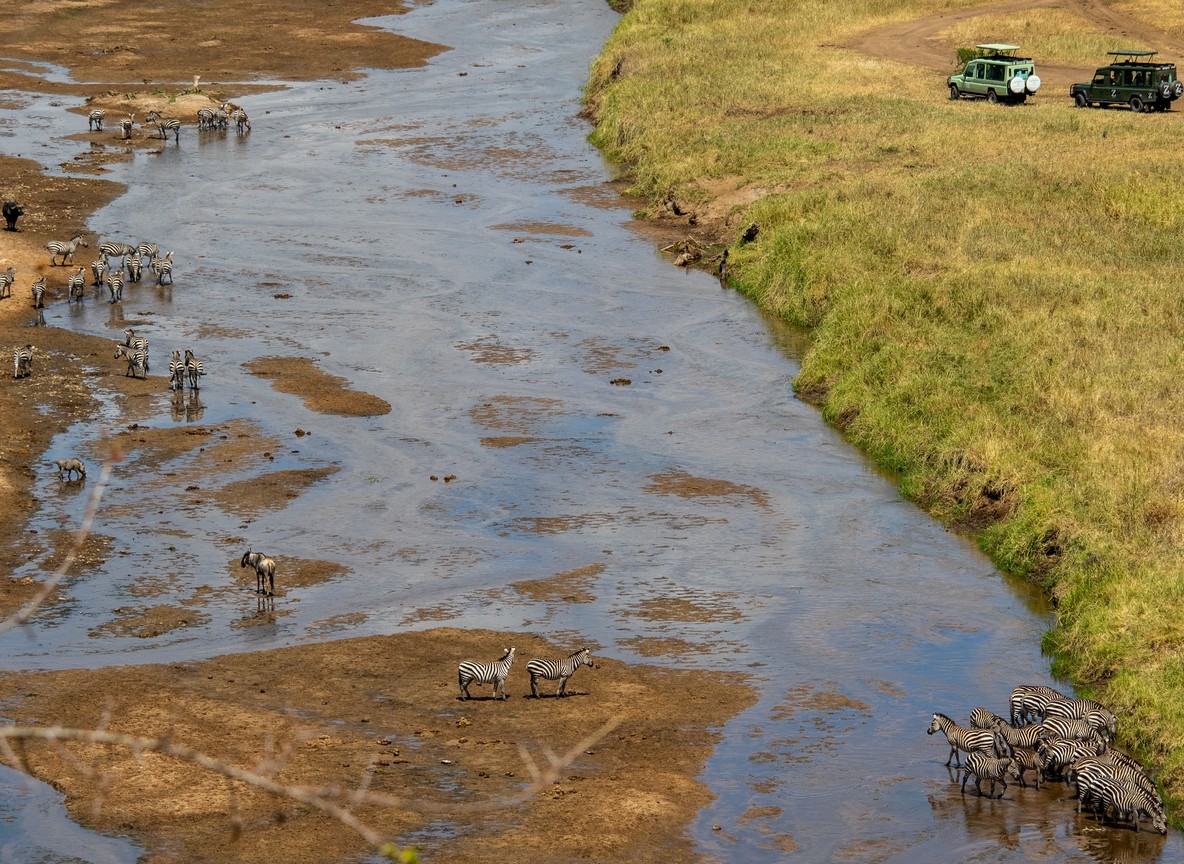
Shoulder season (April to June, November): This is the sweet spot for budget Kenya safari travel. Fewer visitors, lower rates, and, contrary to what many expect, excellent game viewing. Wildlife concentrates around water sources. Your vehicle is often the only one at a sighting.
Green season advantages:
- Lodge and camp rates drop 30 to 50 percent versus peak season
- Fewer vehicles means better sightings
- Newborn wildlife peaks in January to March in some parks
- Lush landscapes after rain make for outstanding photography
A late-June booking captures the tail of shoulder season rates while the migration starts building. That window is consistently one of the best values in Kenya safari travel.
Group Safari vs Solo Safari: Which Saves More Money?
Shared group safaris (6 to 8 passengers) distribute vehicle, fuel, and guide costs across more people. A full Land Cruiser covering 200 km costs the same whether it carries two people or seven. Per-person cost goes down as headcount goes up.
Private vehicle safaris (your group only) give you full schedule flexibility. You set your own timing, stay at sightings as long as you want, and choose the route. For families with young children, this is a logistics necessity rather than a luxury.
| Option | Per-Person Cost | Flexibility | Best For |
|---|---|---|---|
| Shared group (6 to 8 pax) | Lowest | Fixed schedule | Solo travelers, couples |
| Small group (4 pax) | Medium | Some flexibility | Couples, small families |
| Private vehicle (2 to 4 pax) | Higher per person | Full control | Families with young kids |
| Private vehicle (4 to 6 pax) | Comparable to shared | Full control | Friend groups, larger families |
When a family of four books a private vehicle, the per-person cost is often comparable to shared-group alternatives because you are not paying for empty seats.
Road Transfers vs Fly-In: The Cost and Value Breakdown
Fly-in safaris are not only for luxury travelers. Knowing when road versus air makes financial sense is useful for any budget.
Overland road transfers cost less upfront but consume more of your actual wildlife hours. A Nairobi-to-Mara road transfer takes five to six hours each way: ten to twelve hours of your safari on tarmac and murram roads.
Fly-in transfers from Wilson Airport take 40 to 60 minutes each way. The flight adds cash cost but returns time: two extra game drives per park at minimum. On a five to seven day safari, those drives represent 30 to 40 percent more wildlife time.
| Transfer Type | Time (Nairobi to Mara) | Wildlife Hours Lost | Estimated Cost |
|---|---|---|---|
| Road (round trip) | 10 to 12 hours | 2 to 3 drives | KSh 8,000 to 14,000 |
| Fly-in (round trip) | 1.5 to 2 hours | None | KSh 25,000 to 40,000 pp |
| Best value threshold | 4+ nights: fly-in often wins |
For budget safari planning: if you are spending four or more nights in a single park, run the numbers on fly-in. The extra cost is often offset by the game drives you gain.
Which Kenya Parks Give You the Most Wildlife Per Shilling?
Not all parks perform equally on a budget. Here is how the major Kenya destinations compare when fuel cost is factored in.
Nairobi National Park is the highest value-per-shilling option in Kenya. At 7 km from the CBD, transfer fuel cost is near zero. Lion, rhino, buffalo, leopard, cheetah, giraffe, and hippo are all visible. A half-day game drive here at the start or end of a safari adds real wildlife time at minimal cost.
Tsavo East National Park is the best full-park budget destination. It sits 220 km from Nairobi, closer than the Mara. The red elephants, dusted in laterite soil, are among Kenya’s most iconic sights. Game density is high. Vehicle density is low. Accommodation runs from KWS public campsites to budget tented camps.
Amboseli National Park adds the Kilimanjaro photography window (06:00 to 09:00) and the world’s most-studied elephant population. Combined with Tsavo East on one overland route, it is a strong budget multi-park strategy.
Masai Mara National Reserve has the highest accommodation costs and vehicle density at peak season. For a budget safari, book the Mara in shoulder season only, or pair a short two-night stay at the end of a cheaper parks itinerary.
| Park | Distance from Nairobi | Budget Lodges | Peak Wildlife | Fuel Cost Impact |
|---|---|---|---|---|
| Nairobi NP | 7 km | Half-day only | Big Five, Cheetah | Minimal |
| Tsavo East | 220 km | Strong | Elephants, Lion | Moderate |
| Amboseli | 240 km | Moderate | Elephants, Kilimanjaro | Moderate |
| Lake Nakuru | 160 km | Good | Rhino, Flamingos, Lion | Low to moderate |
| Masai Mara | 280 km | Limited | Big Five, Migration | Highest |
How to Get Maximum Game Time on a Budget Safari
Three habits separate budget travelers who leave satisfied from those who feel shortchanged.
Protect morning drives. Dawn to mid-morning (06:00 to 10:00) is when predator activity peaks and light is best for photography. Operators who cut morning drives to save fuel are cutting your best hours. Confirm morning drives are included before you sign any package.
Use linear routing. Nairobi in, Tsavo East (two nights), Amboseli (two nights), Nairobi out burns less fuel than a loop route that doubles back. Ask your operator whether routes are built around fuel efficiency or convenience.
Pack a cooler. Stopping at a town restaurant for lunch pulls you out of the park for 60 to 90 minutes during peak morning activity. A cooler keeps your vehicle on the game drive circuit.
Explorer Notes: What Budget Actually Buys in Kenya
Budget safari in Kenya does not mean low quality wildlife. Tsavo East has better lion sightings per vehicle than the Mara at peak migration season, simply because there are far fewer vehicles competing for the same sightings. The experience is quieter, more personal, and often more memorable precisely because it is less crowded.
The things budget travel does cut are comfort and convenience: camp facilities are simpler, guides may be less experienced, and included extras (bush breakfasts, walking safaris, night drives) are typically fewer. Know what you are trading before you book.
A practical cost breakdown for 2026 shoulder season planning:
| Budget Range | What It Typically Covers |
|---|---|
| USD 150-250/person/day | Basic camp, shared vehicle, park fees |
| USD 250-400/person/day | Good tented camp, private vehicle option, park fees |
| USD 400-600/person/day | Quality mid-range camp, private vehicle, guide, some extras |
Conclusion
A Kenya budget safari done well is not a compromise. It is a planning exercise. The parks and wildlife are identical whether you are paying USD 150 or USD 800 per day. What changes is the comfort level of your tent and the seniority of your guide.
Book shoulder season. Choose parks close to Nairobi. Structure your vehicle cost across your group. Get onto wildlife by 06:00. Those four decisions will shape the value of your trip more than any other factor.
Next Steps
- Check Kenya Wildlife Service for current non-resident park fees before budgeting
- Use EPRA’s monthly fuel price releases at epra.go.ke to understand current ground transfer cost inputs
- For a full park-by-park budget itinerary builder, touringinsights.com covers Kenya budget safari planning in detail
- Trunktrails Safaris offers transparent itemised quotes including fuel and park fee breakdowns, with budget-tier safari packages available across the major Kenya parks
If this guide has you ready to travel, a safari specialist can handle the route, camps, and logistics end to end.
Want to Book a Tour With Us?