As of 2026, jet fuel price per litre in Kenya runs KES 145 to 165 at Nairobi’s Wilson Airport, and 20 to 35 percent higher at remote Masai Mara bush strips like Musiara and Ol Kiombo, since Jet A-1 must be trucked in. A Cessna Caravan burns roughly 250 to 310 litres per flight hour, so a 45 to 55 minute Nairobi-Mara sector can consume around 225 litres, making fuel the largest single cost in any Kenya charter quote.
Here is the full picture. Aviation fuel is the single biggest cost in any Kenya flying safari, and it has risen sharply over the past four years. Understanding how that works gives you a clearer lens on what you are paying for and whether flying to your destination genuinely serves your specific itinerary.
What Is Jet A-1 and Why Does It Power Kenya’s Charter Fleet?
Every light charter aircraft operating in Kenya, the Cessna Caravans, Grand Caravans, and Pilatus PC-12s that connect Wilson Airport to bush strips across the country, burns Jet A-1 fuel. This is a kerosene-based aviation fuel refined to tighter specifications than road diesel. It cannot be substituted with car fuel or transport diesel.
Kenya sources Jet A-1 primarily through the Kenya Pipeline Company (KPC) infrastructure, with supply entering through Mombasa port before moving inland via pipeline to Nairobi. From there it reaches remote bush airstrips by road tanker. Every link in that chain adds cost, and the last-mile truck runs to remote airstrips add the most.
As of early 2026, Jet A-1 at Wilson Airport sits between KES 145 and KES 165 per litre depending on the supplier and whether the aircraft operator holds a bulk fuel agreement. At remote bush strips like Musiara, Kichwa Tembo, or Ol Kiombo in the Masai Mara, the price runs 20 to 35 percent higher because it has to be trucked in from the nearest supply point. That difference matters significantly when a Cessna Caravan burns roughly 250 to 310 litres per flight hour.
The Five Cost Layers Behind Any Charter Quote
Most travellers researching a fly-in safari Kenya package see a flat per-seat quote and look no further. Charter operators build that number from five real cost layers, and understanding them helps you read any quote accurately.
Fuel cost per sector. A Nairobi to Masai Mara flight takes roughly 45 to 55 minutes in a Cessna Caravan. At 300 litres per hour, that is approximately 225 litres per sector. At KES 155 per litre, fuel alone costs around KES 34,875 per sector before the aircraft leaves the apron.
Aircraft maintenance levy. Every flight hour accumulates maintenance obligations. For a Cessna 208B Grand Caravan operating under Kenya Civil Aviation Authority (KCAA) requirements, operators typically budget USD 120 to USD 180 per flight hour for scheduled maintenance, parts, and airworthiness compliance.
Landing fees at bush strips. Airstrips inside conservancies charge landing fees that vary by conservancy agreement. At Musiara Airstrip inside the Masai Mara National Reserve, park authority landing fees apply on top of conservancy levies. Combined costs typically run USD 30 to USD 80 per landing per aircraft.
Crew costs. A commercial charter in Kenya requires a licensed pilot with current medical certification, and often a co-pilot depending on aircraft type and passenger count. Crew costs include training obligations, standby time, and positioning flights when the aircraft flies empty to collect passengers.
Insurance and operator margin. Aviation insurance premiums for passenger-carrying charter aircraft in Kenya are substantial. Operators also account for aircraft positioning: flying empty to pick up a group still burns fuel at the full Jet A-1 rate.
Adding these five layers together, a single seat on a shared Nairobi to Masai Mara charter typically costs USD 150 to USD 250 one way in 2026. For a private charter booked for a group, expect USD 700 to USD 1,400 per sector depending on aircraft size.
How Fuel Prices Have Changed Charter Costs Since 2022
| Year | Jet A-1 at Wilson (KES/litre) | Avg Shared Seat NBO-Mara | Change vs 2022 |
|---|---|---|---|
| 2022 | 85 to 95 | USD 110 to 140 | Baseline |
| 2023 | 110 to 125 | USD 130 to 165 | +18% |
| 2024 | 130 to 145 | USD 145 to 200 | +32% |
| 2025 | 140 to 160 | USD 150 to 230 | +41% |
| 2026 | 145 to 165 | USD 150 to 250 | +43 to 50% |
Global crude oil pricing, Kenya’s fuel import levies, the absence of road fuel subsidies in aviation, and the logistics cost of trucking Jet A-1 to remote airstrips have combined to push aviation fuel costs up by roughly 70 to 90 percent in four years. Charter pricing has followed that curve directly. This is input cost reality, not operator price setting.
Kenya Flying Safari vs Overland: The Real Trade-Off
The practical question for most travellers considering a fly-in safari Kenya trip is not purely about price. It is about what you lose and gain across different itinerary lengths and physical needs.
| Factor | Kenya Flying Safari | Overland Road Safari |
|---|---|---|
| Travel time (Nairobi to Mara) | 45 to 55 minutes | 5 to 7 hours |
| Cost per person one way | USD 150 to 250 shared | USD 0 to 30 included in package |
| Comfort | High, no rough road fatigue | Variable on corrugated tracks |
| Flexibility | Fixed schedules, weather-dependent | Fully flexible, stops possible |
| Best for | Short trips, travellers with mobility concerns | Multi-park itineraries, families with gear |
| Wildlife en route | Aerial views of Great Rift Valley | Roadside wildlife through Rift Valley |
| Carbon footprint | Higher | Lower |
For a three-day fly-in safari Kenya trip focused on a single destination, the time maths often make the flight the right call. You recover 10 to 14 hours of travel time, which is nearly half the total trip. For travellers with joint pain or mobility concerns, the road to the Masai Mara on corrugated murram tracks over six hours can be genuinely uncomfortable.
For a seven-day itinerary moving through multiple parks, Amboseli into Tsavo then Naivasha and the Mara, the road is part of the experience itself. Landscape transitions, roadside wildlife, and viewpoints along the Rift Valley escarpment add something no flight can offer.
Which Bush Strips Carry the Highest Fuel Surcharges?
Not all fly-in safari Kenya routes are priced equally. The bush strip you land at directly affects your flight cost because remote locations require specific fuel logistics that add to the total sector price.
Higher fuel surcharge locations:
- Lewa Downs in Lewa Conservancy, north of Nanyuki, where truck-in fuel costs apply
- Ol Seki in Mara North Conservancy, where fuel is trucked from Narok
- Kalacha Airstrip in the Chalbi Desert, where fuel must be flown or trucked more than 200 kilometres
Lower fuel surcharge locations:
- Wilson Airport to Masai Mara (Keekorok or Ol Kiombo), the highest-frequency domestic charter route in Kenya, where economies of scale keep per-seat costs down
- Wilson Airport to Amboseli Airstrip, a well-served corridor with regular scheduled departures
- Wilson Airport to Samburu Airstrip, which sees regular service and lower per-seat costs accordingly
When planning a fly-in route, ask your operator for sector-by-sector fuel cost breakdowns rather than accepting a flat aviation cost figure. An honest quote accounts for what the specific strip actually charges, not an averaged number that smooths over wide regional variation.
What the Fuel Surcharge Line Item Actually Means
Many travellers see “fuel surcharge” on a charter quote and are not sure whether to accept it, negotiate it, or treat it as a red flag. A few things worth knowing:
The charge reflects real costs. Aviation fuel is priced globally in US dollars. When the dollar strengthens against the Kenya shilling or crude oil prices rise, operators pass a proportion of that increase through as a surcharge. This practice is consistent across all commercial aviation worldwide.
The surcharge can change between your deposit and your travel date. Most reputable charter operators in Kenya lock the fuel surcharge at time of final payment rather than at deposit. Ask explicitly when the fuel cost is fixed in your booking.
Many advertised per-seat prices do not include the fuel surcharge. That USD 150 seat listed on a website may add USD 20 to USD 50 per sector at final invoice depending on the booking date and current oil prices. Always ask for an all-in price before comparing quotes across operators.
A Planning Framework: When to Fly and When to Drive
Consider flying if:
- Your trip is three days or fewer to a single destination
- Joint, back, or mobility concerns make long drives a real discomfort
- You are travelling with guests over 60 for whom time is the scarcest resource
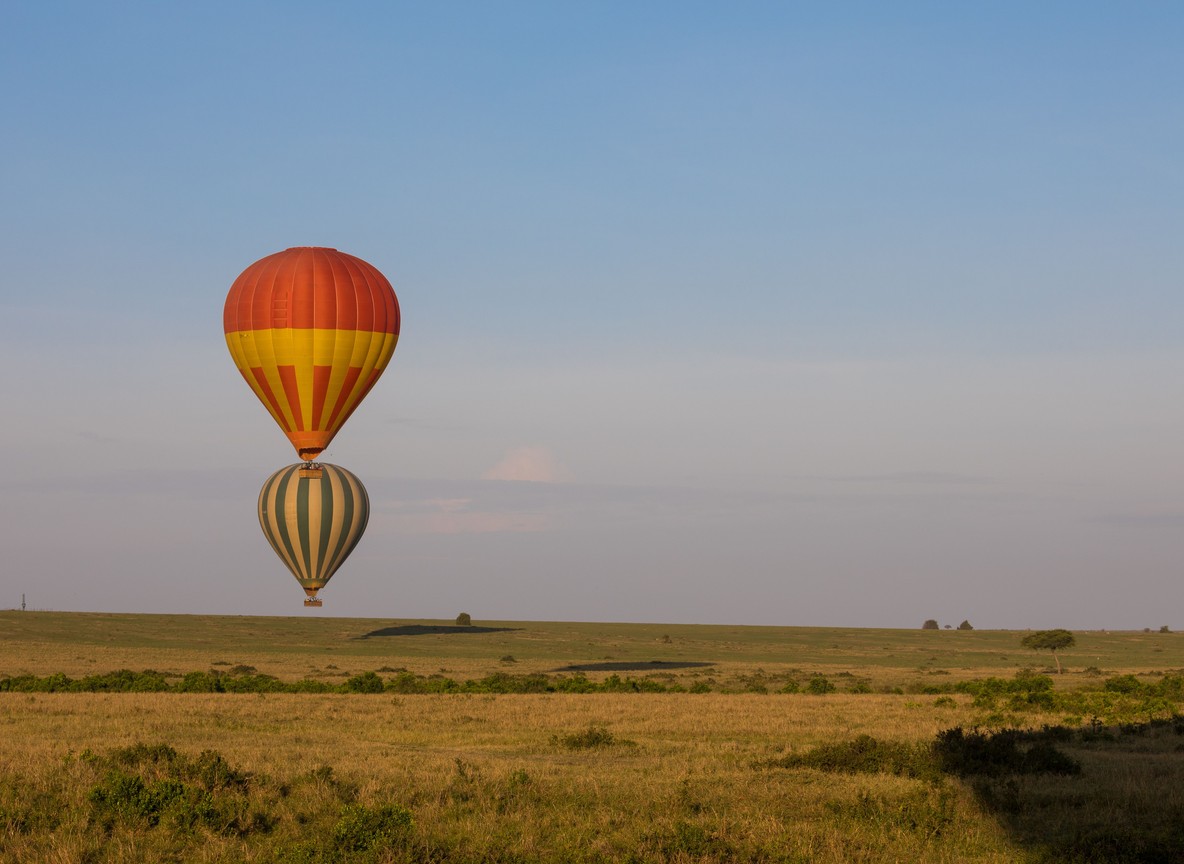
- You want the aerial view of the Great Rift Valley and the Mara landscape on approach
- Budget is not the primary constraint on this trip
Consider the road if:
- Your itinerary covers multiple parks across different regions
- You have six or more days and want to absorb the full landscape transition
- Your group has luggage or equipment beyond the standard 15 kg charter baggage limit per person
- You want to stop at communities, viewpoints, or cultural sites along the route
- Budget is a meaningful consideration and you want more of it allocated to time on the ground
Explorer Notes: Questions to Ask Before You Book
Before committing to any fly-in safari Kenya experience, ask these five questions directly of your operator and ask for written answers:
- Is the fuel surcharge already inside the quoted price, or will it be added at final invoice?
- When exactly is the fuel cost locked, at deposit or at final payment?
- What is the aircraft type, and what is the per-person baggage limit?
- If the flight is cancelled due to weather or a mechanical issue, is a road transfer backup arranged?
- Are landing fees and conservancy aviation levies included in the total?
Any charter-linked safari operator worth working with will answer all five clearly. If they cannot, that is worth noting before you transfer a deposit.
Planning Your Fly-In Safari Kenya Trip
The gap between what a fly-in safari Kenya costs on paper and what it costs in practice is mostly explained by Jet A-1 fuel, landing fees, and whether the operator quotes all-in or builds toward surprises at final invoice. Once you understand those components, comparing quotes becomes a much more precise exercise.
For broader context on how fuel pricing affects Kenya safari costs across vehicle types and trip formats, see the related safari planning articles on Tourinsights. For specific fly-in safari packages covering Wilson Airport to the Masai Mara, Samburu, Lewa, and beyond, Trunktrails Safaris publishes route and aircraft details alongside all-inclusive pricing.
Turn this reading into a real itinerary with help from a Kenya-based safari team.
Start Planning Your SafariFurther reading
- Magical Kenya (Kenya Tourism Board)
- Maasai Mara Wildlife Conservancies Association
- African Wildlife Foundation