The lions do not check your accommodation tier before crossing the road. The elephants moving through Tsavo at dusk have no interest in the thread count of your camp bedding. A budget Kenya safari puts you in front of the same wildlife, the same ancient landscapes, and the same extraordinary game drives as any higher-cost trip. What it asks of you is honest planning and a clear-eyed understanding of where your money actually goes.
This guide walks through a realistic 7-day budget Kenya safari day by day, explains what “budget” means in the Kenyan context, and gives you a framework for making smart choices without shrinking the experience. Whether you are planning your first East Africa trip or looking to stretch a fixed travel budget as far as it will go, the route and logic here apply.
What “Budget” Actually Means on a Kenya Safari
Safari pricing has a language of its own, and “budget” covers a wide range. In Kenya, the term generally means prioritizing wildlife access and guide quality over accommodation comfort. The game drives, the parks, the animals, the expert knowledge of a good guide: these stay constant. What changes is the setting around them.
Lodge vs. Camping: The Real Cost Difference
A budget lodge inside or near a national park gives you a private room, a bed, and usually three meals per day. Facilities are functional rather than luxurious. You are there to be in the bush at first light, not to linger by a pool.
Budget camping safaris in Kenya go a step further toward the wild. Kenya Wildlife Service (KWS) public campsites sit inside park boundaries. You fall asleep hearing hyenas and wake up with impala grazing thirty metres away. The trade-off is basic infrastructure: cold shower blocks, long-drop toilets, and your own tent. For travellers comfortable with that setup, the wildlife immersion is unmatched and the cost per night is the lowest available.
Semi-permanent tented camps sit between the two. Canvas walls, camp beds, shared bathrooms, and genuine bush atmosphere without full DIY camping. For most travellers planning a budget Kenya safari, a tented camp or a simple budget lodge is the practical sweet spot.
Shared vs. Private Vehicles
On group joining safaris, you share a 4×4 with other travellers. This is the standard formula at the budget tier and it reduces the per-person vehicle cost significantly. It works best when group sizes are small (four to six passengers) and the guide is genuinely skilled.
On private itineraries, your vehicle and guide belong entirely to your group. Game drive timing is flexible, you can stay as long as you like at any sighting, and the guide’s focus is undivided. Private vehicles at budget pricing are available when you book directly with a Kenya-based operator rather than through an international aggregator adding margin at every step.
Game Drives and Meal Inclusions
Most budget Kenya safari packages include two drives per day: an early morning drive (the most productive for predator activity) and an afternoon or evening drive. Full-day drives are usually an optional add-on.
Meal inclusions vary by camp. Many budget properties include breakfast and dinner and charge separately for lunch. Carrying your own packed snacks for in-vehicle lunch breaks saves cost without cutting a single hour of game time.
A 7-Day Budget Kenya Safari: The Itinerary
This route runs Nairobi to Tsavo East to Amboseli, with an optional extension to the Masai Mara. It is designed for strong wildlife across multiple ecosystems, manageable driving distances, and consistently good sightings across all seven days.
Day 1: Nairobi Arrival
Settle into Nairobi, review your kit, and get an early night. If you arrive with afternoon hours to spare, a morning visit to Nairobi National Park on the following day is one of the best pre-safari warm-ups you can do: lions, cheetahs, rhinos, and giraffes against a city skyline backdrop, all within twenty minutes of the city centre.
Days 2 and 3: Tsavo East
The drive from Nairobi to Tsavo East is under four hours on a well-maintained tarmac road. Tsavo East is Kenya’s largest national park, and it is one of the best-value destinations in the country for a budget safari. Visitor numbers are lower than the Masai Mara, which means you regularly have sightings to yourself.
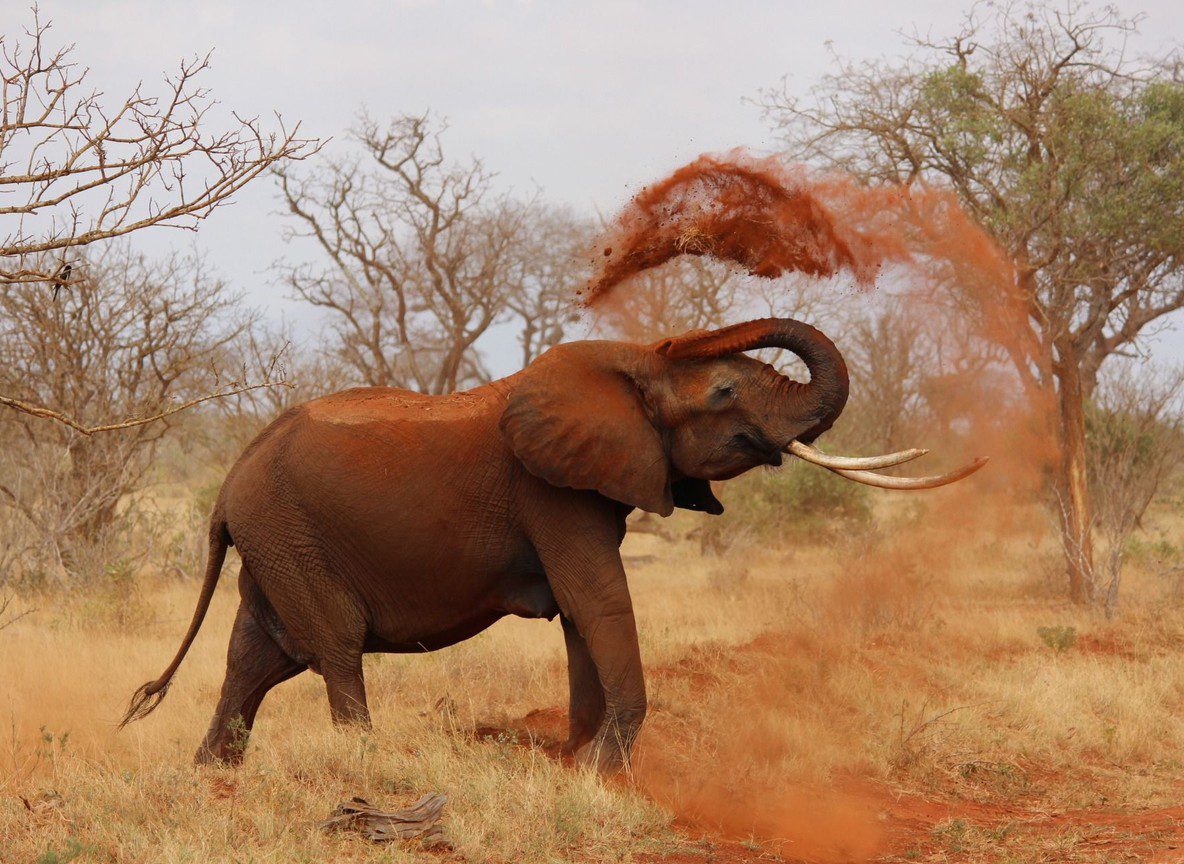
The park’s most distinctive feature is its elephants. The iron-rich laterite soil stains their skin and tusks a deep rust-red, unlike anything you will see elsewhere in Africa. Herds of forty to fifty animals congregate around the Galana River, particularly in the dry season. Lions, cheetahs, large buffalo herds, and enormous numbers of zebra complete the picture. Birding around Aruba Dam is excellent.
Two nights at a budget tented camp or KWS banda accommodation near Voi or Sala Gate gives you one full day of game drives. Read more about the park’s wildlife zones in our Tsavo National Park guide.
Days 4 and 5: Amboseli
The transfer from Tsavo East to Amboseli takes three to four hours through acacia scrubland and Maasai pastoral land. Amboseli is compact, which makes it efficient: almost everything you want to see is reachable on a half-day circuit.
Amboseli‘s signature is its elephant herds viewed against the snow-capped summit of Kilimanjaro. On clear mornings, especially after rain, the combination is extraordinary. The park also delivers reliable sightings of lions, cheetahs, hyenas, Cape buffalo, and excellent wetland birdlife around the Enkongo Narok swamp. The swamp feeds a permanent water source that keeps animals here year-round, regardless of rainfall.
Budget accommodation ranges from KWS public campsites to small lodges positioned on the park boundary. Two nights gives you a full day of drives plus the option of an afternoon Maasai village visit, arranged through the camp or directly with a community guide.
Days 6 and 7: Masai Mara Extension or Nairobi Return
For travellers wanting to add the Masai Mara, Days 6 and 7 can include an overland transfer or a short charter flight. If your trip falls between July and October, the Great Migration river crossings at the Mara are worth the additional cost. Wildebeest and zebra cross the crocodile-filled Mara River in columns of thousands, sometimes for hours at a stretch. Our Masai Mara guide covers the timing, locations, and logistics in detail.
For travellers keeping to a stricter budget, the return from Amboseli to Nairobi takes three to four hours and leaves a comfortable Day 6 afternoon for the Nairobi Giraffe Centre or the David Sheldrick Elephant Orphanage before a Day 7 departure.
Budget Accommodation Tiers: A Practical Breakdown
Knowing your options before you book means you choose based on comfort preference rather than guesswork.
KWS Public Campsites sit inside park boundaries and deliver the most direct wildlife immersion available. Facilities are basic: shared ablution blocks, fire areas, occasionally a camp kitchen. Wildlife moves through freely at night. The cost is the lowest of any accommodation tier, and the experience of sleeping with nothing between you and the bush is genuinely hard to replicate at any price point.
Semi-Permanent Tented Camps use canvas structures with camp beds and mesh walls. Shared bathroom blocks are standard, though some camps offer en-suite bucket shower arrangements. Meals are usually included. These camps typically sit just outside park gates and offer a comfortable middle ground between full camping and lodge accommodation. For most budget safari travellers, this is the practical choice.
Budget Lodges are permanent structures with private rooms, hot water (usually), and a restaurant. The quality of your guide and the condition of your game drive vehicle matter far more than the decor here. A basic room at a well-positioned budget lodge with an excellent guide will outperform a mid-range lodge every time.
How to Get More from a Budget Safari
A few practical habits make a real difference when you are watching your spend.
Travel in shoulder season. April to June and November are Kenya’s quietest tourism months. Park entry fees stay constant, but accommodation rates drop noticeably and availability is much better. The long rains in April and May are usually intermittent, and the bush turns lush and green. Wildlife remains abundant in the wet season. It moves differently, which makes tracking more interesting rather than less.
Use overland transfers. Flying between parks costs far more than driving. The Nairobi to Tsavo East drive is under four hours on tarmac. Tsavo to Amboseli is another three hours. For small groups and families, staying on the road keeps costs low, adds scenery, and gives you the experience of crossing Kenya’s landscapes at ground level.
Pre-stock your snacks in Nairobi. Lodge shops and camp stores charge significant markups on water and food. Picking up supplies before departure is straightforward and saves a meaningful amount over a week.
Protect your morning drives. The first two hours after sunrise are consistently the most productive for predators. If you ever need to trim your drive schedule, sacrifice evening drives before mornings.
Budget vs. Mid-Range: What Actually Changes
This is one of the most common questions around planning a budget Kenya safari, and the honest answer is nuanced. At mid-range, you gain private en-suite bathrooms, higher-quality food, smaller camp capacities with more personal service, and camps that are often better positioned within wildlife corridors.
What stays the same: the national parks, the animals, the game drives, and the fundamentals of the experience. Sitting in silence ten metres from a lion is available at any budget tier if you have a skilled guide and a well-maintained vehicle. That combination is the non-negotiable minimum, not the number of stars above the camp entrance.
Explorer Notes: Practical Details for the Road
A few specifics worth keeping in your planning notes:
The Galana River in Tsavo East is the best single spot in the park for large elephant gatherings, especially between June and October when water elsewhere is scarce. Ask your guide to build time there into the morning drive.
Amboseli is most photogenic in the early morning before the heat haze builds over the lakebed. The Kilimanjaro view typically clears after the early morning cloud lifts, roughly between 7:00 and 9:00 am.
KWS campsites require advance booking, particularly during peak season. Bookings are made through the KWS online portal. Confirm your dates early, especially for Amboseli and Tsavo East sites near the main gate areas.
A packable down jacket or fleece is worth its weight on early morning game drives throughout the year. Even in warm months, open vehicles at dawn drop the perceived temperature significantly.
Reader Next Steps
A well-planned budget Kenya safari is not a stripped-back version of the real thing. It is a deliberate choice to put your money where it matters most: wildlife time and guide expertise. The route above from Tsavo East to Amboseli is one of the most rewarding combinations in East Africa, accessible at almost any budget tier with the right planning.
For route-specific wildlife information, our Tsavo National Park guide and Masai Mara guide cover seasonal timing, wildlife highlights, and practical logistics in detail. For operator-level planning support, Trunktrails Safaris is a Kenya-based operator with expertise across all budget tiers.
Have questions about this itinerary or destination? Get answers from a safari specialist before you commit.
Inquire More