For travelers based on the south coast, five days is often the point where a safari stops feeling like a side trip and starts feeling like a full inland journey. It creates enough time to move beyond a single park, settle into the rhythm of early starts and afternoon light, and experience real ecological contrast instead of a single wildlife vignette. That is what makes a 5 day safari from Diani Beach so compelling.
One of the strongest versions of that route links Tsavo West, Amboseli, and Tsavo East. The sequence works because each park contributes something different. Tsavo West brings volcanic terrain, springs, and denser landscapes. Amboseli brings elephants, open plains, and Kilimanjaro views. Tsavo East brings red dust, broader horizons, and the park identity many readers imagine when they think of Tsavo. This guide explains how the route works, why five days is such an effective length, and what travelers should realistically expect from each stage. Readers who want the wider coast-to-bush overview first can begin with the main Diani safari planning guide.
Why Five Days Works So Well From Diani
Shorter itineraries from the coast can be rewarding, but they usually force a choice between depth and variety. A five-day format is different. It leaves enough room to cross multiple ecosystems without reducing the whole experience to road transfers and check-ins. Readers comparing this against shorter coast departures can use the 2-day Tsavo East guide as a reference point.
That matters especially on a complete Kenya safari from coast route. Diani sits far enough from the parks that movement must be planned carefully, but close enough that a multi-park road safari is still practical. With five days, the route can form a loop instead of a rush. Readers who want the ecological frame for the Tsavo sections can pair this with the broader Tsavo guide.
The real advantage is pacing. One or two nights in each inland section gives readers time to notice how wildlife behavior, vegetation, temperature, visibility, and even silence shift from park to park. The trip stops being about “seeing animals somewhere inland” and becomes about understanding why these landscapes feel so different from one another.
The Route in Broad Terms
A typical Diani Beach Amboseli Tsavo safari sequence starts inland toward Tsavo West, then moves south-west toward Amboseli, and finishes by returning through Tsavo East before heading back to the coast.
In practical terms, the route usually works like this:
- Day 1 and part of Day 2 in Tsavo West
- Day 3 around Amboseli
- Day 4 and part of Day 5 in Tsavo East
- Return to Diani on the final day
What makes the route strong is that it avoids repetition. The parks are connected geographically, but they do not feel alike in the field.
Days 1 and 2: Tsavo West
Tsavo West is often the quietest surprise on this route. Readers familiar only with Kenya’s better-known open-plains imagery sometimes expect Tsavo to be uniformly dry and flat. Tsavo West breaks that assumption quickly.
The terrain here is more varied, with volcanic features, broken ridges, thicker vegetation in sections, and one of the most unusual water sites in the region. The atmosphere is less about one sweeping iconic scene and more about layered terrain. A Tsavo West Amboseli Tsavo East safari starts well here because Tsavo West immediately sets up the idea that this journey is about contrast.
Mzima Springs
Mzima Springs is one of the defining stops in Tsavo West. Clear water emerges from underground volcanic filtration and creates a spring environment that feels almost improbable in the middle of dry-country safari terrain. Hippos, crocodiles, fish, and water birds gather here, while the surrounding vegetation gives the area a greener character than many parts of the broader Tsavo system.
The appeal of Mzima is not just visual. It changes the emotional texture of the safari. For travelers who have just left the coast and entered inland dry country, this spring system complicates the landscape in the best possible way.
What Tsavo West Adds
Tsavo West contributes:
- more varied terrain
- springs and water-based viewing
- volcanic context
- a slower, more textured landscape experience
It is often the park that gives the route depth rather than immediate spectacle.
Day 3: Amboseli
Amboseli often provides the most instantly legible safari imagery on the route. The park is smaller, more concentrated, and visually anchored by Kilimanjaro when conditions are clear. That alone changes the tone.
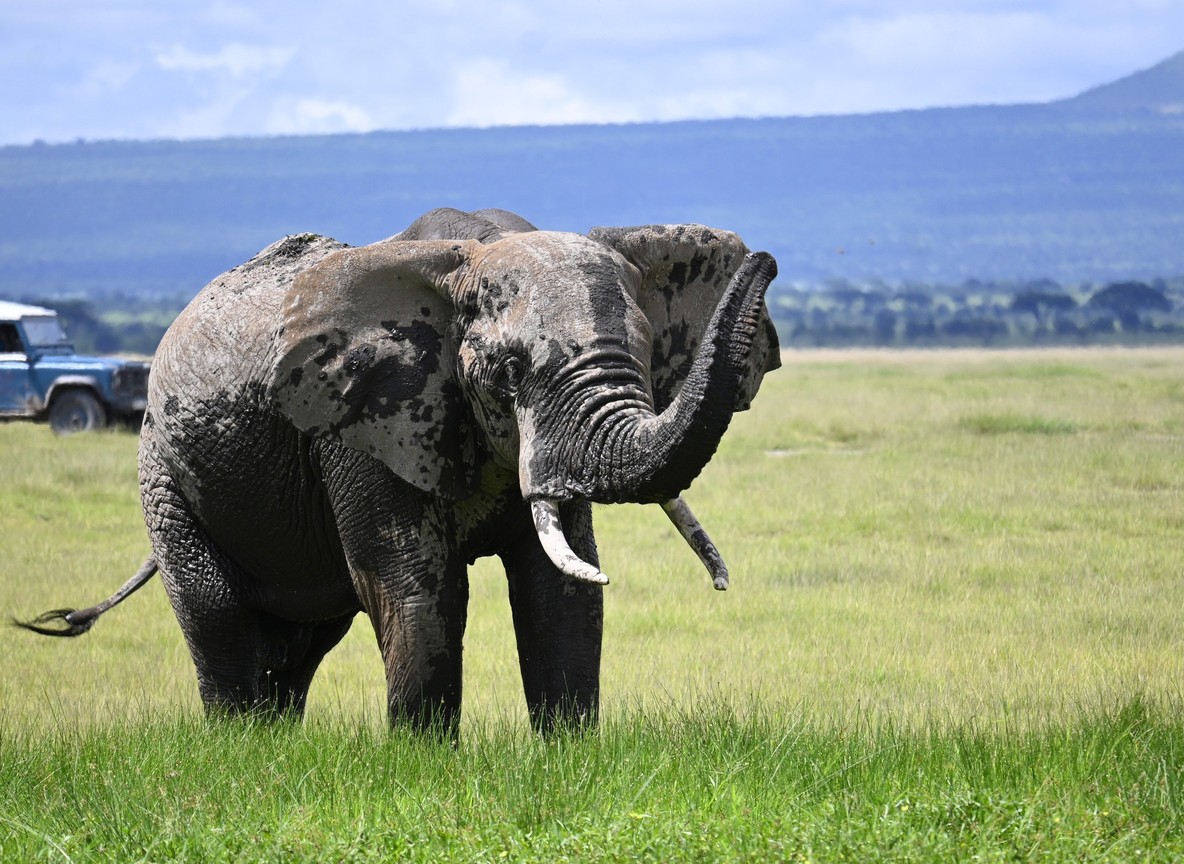
An Amboseli safari from Diani Beach can feel unusually productive because the wildlife experience often becomes readable quickly. Elephant families move across open plains, swamps pull animals into visible zones, and the visual relationship between large mammals and open space is easier for first-time visitors to interpret.
This is also the part of the route where many travelers feel the most iconic version of safari expectation line up with reality. If Tsavo West is layered and atmospheric, Amboseli is direct.
Why Amboseli Feels Different
Amboseli’s water system shapes everything. Swamps fed by underground flow support wildlife during dry periods and create reliable focal points for game viewing. Elephants are the species most strongly associated with the park, but the real value is not just that they are present. It is that they can often be watched in open, photogenic settings that reveal behavior clearly.
For travelers trying to understand a 5 day Kenya safari itinerary, Amboseli is often the clean midpoint because it gives the route an iconic high point between two more expansive Tsavo chapters.
Walking as an Optional Layer
Some itineraries in the greater Amboseli area include guided walking on appropriate conservancy or adjoining land where that activity is permitted and properly led. For readers who want more than vehicle-based viewing, this can add a different scale to the trip. It turns the safari from a sequence of sightings into a more grounded landscape experience.
Days 4 and 5: Tsavo East
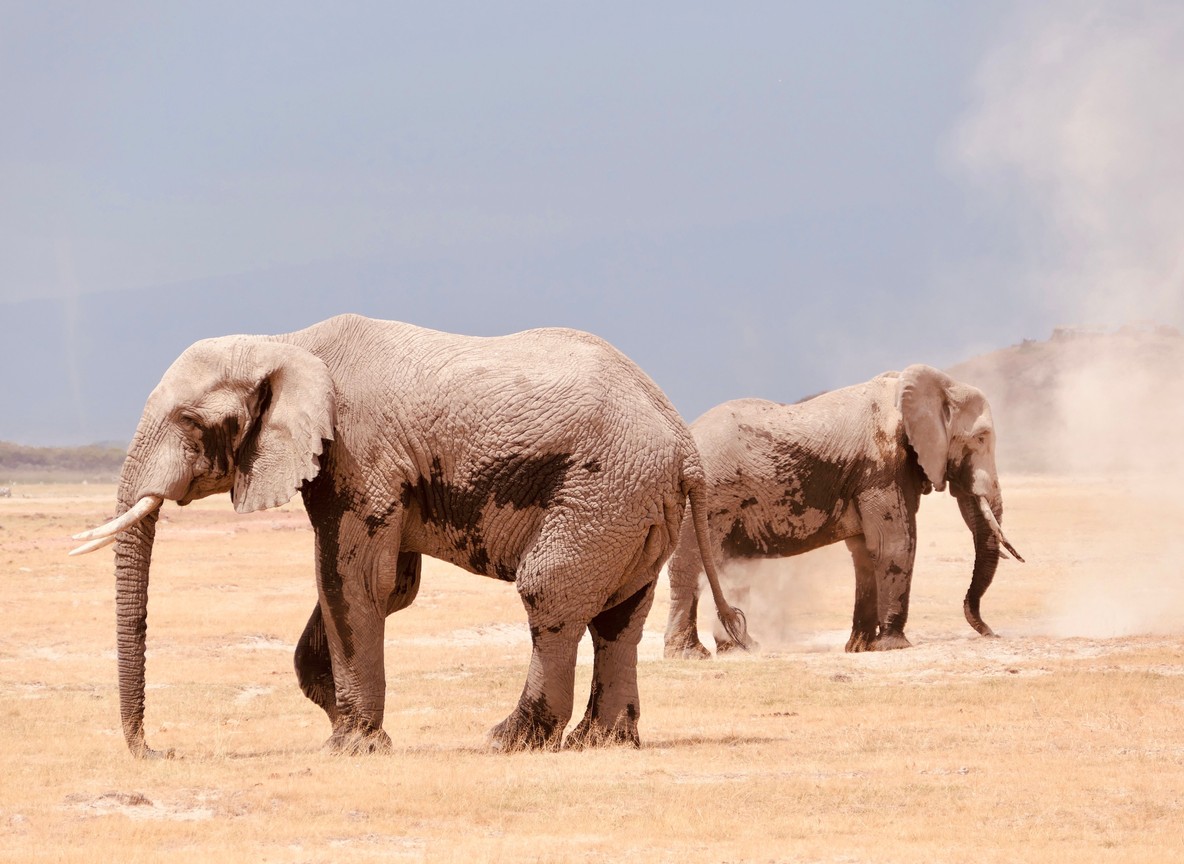
Tsavo East completes the route by returning to a more open, dust-marked, elemental landscape. This is the Tsavo many people picture before they arrive: red soil, wide plains, elephants coated in laterite dust, and a drier visual world shaped heavily by the Galana River system.
As the final inland section of a Kenya safari coast to parks route, Tsavo East works well because it brings visual boldness back into the story. After the more varied topography of Tsavo West and the clear composition of Amboseli, Tsavo East feels broad, exposed, and distinctly eastern Kenyan.
The Red Elephants
The famous red appearance comes from dust-bathing, not from a separate species or subspecies. The local soil is rich in iron and coats the animals as they throw dust over themselves. The effect is striking enough that it becomes one of the route’s defining images.
What matters for readers is that Tsavo East does not just add another elephant park to the itinerary. It adds a different elephant landscape, visually and ecologically.
Why Tsavo East Works as the Final Chapter
Tsavo East often leaves a strong closing impression because it feels expansive and archetypal. It is the kind of place where the visual memory of dust, riverbanks, acacias, and heat haze remains long after specific sightings blur together.
That is why this 5 day safari from Diani Beach route often works better than a single-park alternative. The final section does not feel like more of the same. It feels like a different ending.
What This Route Is Best For
This itinerary tends to suit travelers who:
- want more than a quick overnight safari
- are staying on the coast but want a real inland wildlife chapter
- care about differences between parks, not just wildlife counts
- enjoy both landscape and animal observation
- want a route that feels complete without stretching into a week or more
It may be less ideal for travelers who want minimal road time or who prefer to stay focused on a single ecosystem.
Explorer Notes
- Five days is often the shortest format that makes a three-park route feel coherent.
- Tsavo West adds variation and hydrological interest through places like Mzima Springs.
- Amboseli adds immediate readability, especially for elephant-focused viewing.
- Tsavo East adds visual identity and a strong final landscape memory.
- If walking matters, ask where it happens and under what conditions.
Frequently Asked Questions
Is five days too long to leave Diani Beach?
For travelers who want safari to feel substantial rather than incidental, five days is often the right balance.
Why combine Tsavo West, Amboseli, and Tsavo East instead of choosing one park?
Because each one contributes a different landscape and viewing style, making the route feel broader and more varied.
Is this route mostly about elephants?
Elephants are a major thread, especially in Amboseli and Tsavo East, but the route is really about ecosystem contrast.
Does the route involve a lot of driving?
There is meaningful road movement, but the sequence is geographically logical enough that the trip still works well.
Is this a good first safari from the coast?
Yes, especially for travelers who want more than a brief introduction and are comfortable with a multi-park road itinerary. Readers who want the shorter multi-day version rather than the full five-day loop can compare it with the 3-day Tsavo East and West itinerary.
Conclusion
A 5 day safari from Diani Beach works best when travelers want the inland portion of their Kenya trip to feel like a real journey rather than a fast wildlife detour. Tsavo West, Amboseli, and Tsavo East each bring a distinct landscape language to the route, and that contrast is the whole point.
For readers weighing options from the coast, this itinerary stands out because it delivers progression. Springs, swamps, mountains, red dust, open plains, and river systems all arrive in sequence. That layered movement is what gives the route its staying power.
Have questions about this itinerary or destination? Get answers from a safari specialist before you commit.
Inquire More