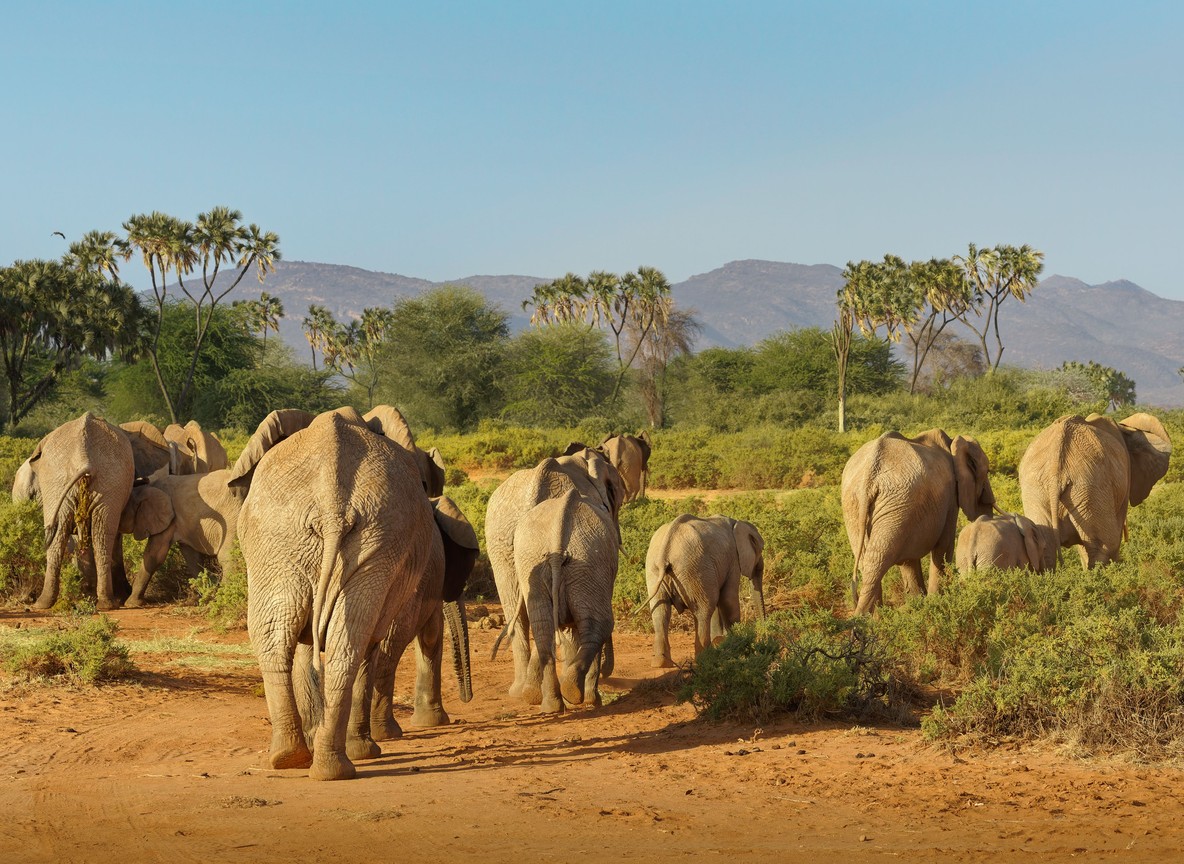
Few travel combinations in Kenya feel as dramatic as leaving the coast in the morning and reaching the red interior by midday. One moment the setting is palm shade, warm sea air, and white sand. A few hours later it is dry country, baobabs, volcanic terrain, and elephants moving through dust-colored plains. That is the appeal of a 3 day safari Diani Beach Tsavo itinerary.
For travelers based on the south coast, this format works because it turns a beach holiday into something broader without demanding a full inland expedition. It is still compact, but not so short that the experience collapses into pure transit. This guide explains why the route works, how Tsavo East and Tsavo West differ, what the red elephant story actually means, why Mzima Springs is so memorable, and how to think about the trip if you are deciding between staying coastal and heading inland. The wider planning context sits in the main Diani Beach safari guide.
Why This Route Makes Sense From Diani
The strongest argument for a Diani Beach to Tsavo safari is logistics. Tsavo is close enough to the coast to make a three-day road safari realistic, especially compared with itineraries that require flights back through Nairobi. That matters more than many readers expect. A short safari succeeds when movement is manageable enough that the trip still feels like time in the bush rather than time spent getting there. Readers comparing shorter and longer Tsavo variants can place this beside the 2-day Tsavo East safari guide.
The second reason is variety. Tsavo East and Tsavo West do not deliver the same experience, and that is exactly why pairing them can work so well. One is flatter, drier, and more defined by open plains and the Galana River. The other is greener in parts, more geologically dramatic, and shaped by springs, lava, and broken terrain. A beach to safari Kenya 3 days route that crosses both sections can feel much bigger than the calendar suggests. Readers who want the park-wide frame rather than just the itinerary can keep the park-wide Tsavo guide open alongside this article.
It also helps that Tsavo does not depend on a single iconic frame. The trip is less about one famous scene and more about a sequence of contrasting landscapes. That makes it especially strong for travelers who want a short safari to feel varied rather than repetitive.
Day 1: From Coast to the Red Interior
Most itineraries leave Diani early, usually after breakfast or shortly after sunrise. The transition inland becomes visible as coastal humidity fades and the road begins moving through drier hinterland. This is part of the experience, not just a transfer.
The first game-viewing window usually comes later that day after arrival near or inside the Tsavo system. Light softens toward evening, and that helps. A first drive at this hour often delivers the visual identity of Tsavo quickly: red soil, acacia shapes, open distances, and an atmosphere that already feels different from the coast you left behind a few hours earlier.
Readers expecting instant, nonstop wildlife action should adjust their mindset. Tsavo is not always about density. It is often about scale, spacing, and the feeling of entering a large working ecosystem. That is why the first evening matters. It establishes the tone before the deeper wildlife windows of the next day.
Day 2: Tsavo East and the Red Elephant Landscape
Tsavo East is the part of the system most closely associated with open country and red dust. It is where many readers picture the classic Tsavo scene: elephants moving through ochre soil under hard East African light.
An early start matters here. Morning is cooler, activity is stronger, and the plains are easier to read before the full heat sets in. For a Tsavo East safari from Diani Beach, this second day is usually the point where the trip feels fully underway rather than transitional.
Why the Elephants Look Red
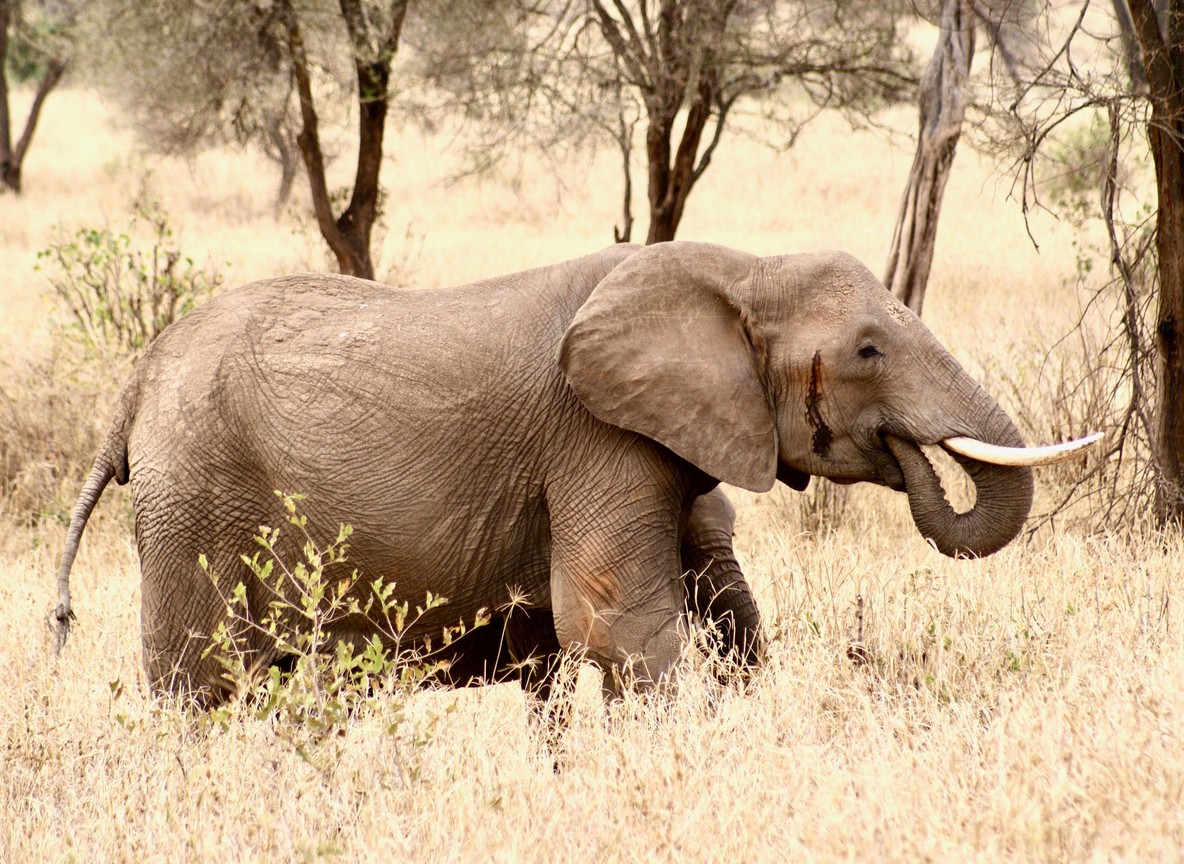
Tsavo’s elephants are not a separate red-colored population. Their appearance comes from the local soil. The dust is rich in iron and coats the animals during dust-bathing and wallowing, giving them the rusty tone that has become one of the most recognizable visual signatures in Kenyan wildlife travel.
That detail matters because it shows how strongly Tsavo’s identity is tied to place. The famous look of the elephants is not an isolated attraction. It is part of the ecology of heat, soil, insect defense, and landscape texture. That is also why Kenya coast to Tsavo safari articles so often focus on this one image. It communicates the difference between coast and bush immediately.
What the East Usually Feels Like
Tsavo East often feels wide and exposed. The terrain invites long sight lines, and the wildlife can appear in broad compositions rather than close, compressed clusters. Elephants are the most emblematic sighting, but zebra, giraffe, buffalo, antelope, predators, and extensive birdlife all contribute to the sense that this is a full wildlife landscape rather than a single-species destination.
This is also where the mood of the trip becomes clear. Travelers who like big horizons, patience, and the gradual reveal of a large ecosystem often respond strongly to Tsavo East. Travelers who prefer more immediate concentrations of wildlife sometimes find it less instantly legible than smaller parks. Neither reaction is wrong. It simply reflects what kind of safari experience the person values.
Day 3: Tsavo West, Mzima Springs, and Volcanic Country
If Tsavo East is about openness, Tsavo West is about contrast. The land shifts. Slopes rise, vegetation changes, and the geology becomes more visible. For readers planning a Tsavo West safari Diani Beach route, this difference is one of the strongest reasons to include both sections in the same trip.
Mzima Springs
Mzima Springs is one of the most unusual natural stops in southern Kenya. Clear water emerges from underground volcanic filtration and creates a spring system that supports hippos, crocodiles, fish, birds, and green vegetation in the middle of otherwise dry country.
What makes Mzima memorable is the contradiction. The water looks calm and almost delicate, but it is part of a serious hydrological system that shapes life in the surrounding landscape. For travelers used to associating safari with dry dust alone, Mzima adds an entirely different texture.
Shetani Lava Flow and Volcanic Terrain
The Shetani Lava Flow gives Tsavo West another identity altogether. Dark lava fields, broken ground, and stark surface textures create a setting that feels closer to geological time than to the classic safari postcard. This is where the phrase tsavo east west safari from Diani really starts to make sense. The itinerary works because it connects two distinct visual and ecological worlds under one broader park system.
The shift from Mzima’s clear water to volcanic black rock in the same general region is one of the reasons Tsavo West often feels more varied than first-time readers expect.
Tsavo East vs Tsavo West
The easiest mistake is to think of Tsavo East and Tsavo West as near-duplicates. They are related, but experientially they are not the same.
| Feature | Tsavo East | Tsavo West |
|---|---|---|
| Overall feel | Open, dry, expansive | Varied, broken, more topographic |
| Signature image | Red elephants and long plains | Springs, lava, volcanic terrain |
| Best for | Big-sky atmosphere and classic Tsavo identity | Landscape variety and geological interest |
| Viewing style | Long sight lines | More mixed visibility depending on terrain |
| Emotional tone | Raw and elemental | Dramatic and layered |
For a short safari Kenya coast itinerary, this difference is useful because it helps explain why the route does not feel like repeating the same park twice. Instead, it feels like reading two chapters of the same ecosystem.
Walking Safari: What It Adds
Some Tsavo itineraries include a guided walking component, usually outside the core park areas on appropriate land where walking is permitted and properly managed. Not every operator includes this, and not every traveler will prioritize it, but it can change the entire tone of a short safari.
Walking slows the experience down. Instead of covering distance, the focus shifts to signs, tracks, smell, and scale. Red dust becomes more than a color. It becomes surface evidence. Animal movement becomes something interpreted from the ground rather than only seen from a vehicle window.
For travelers comparing vehicle-only options with itineraries that allow a walk, it helps to think about what they want from the trip. If the goal is coverage, drives remain essential. If the goal is immersion, even a short guided walk can leave a stronger impression than another hour on the road.
Practical Expectations
Best Time to Go
Tsavo works year-round, but conditions change with rainfall. Dry months usually make wildlife easier to see because vegetation is lower and animals gather more consistently around water. Green periods can look beautiful and feel quieter, though road conditions and visibility may vary.
What to Pack
- Neutral clothing suited to heat and dust
- A light extra layer for early starts
- Sun protection
- Binoculars
- Closed shoes if walking is part of the plan
- Camera gear that can handle both wildlife distance and landscape shots
What This Trip Is Best For
This route is especially good for travelers who:
- are staying in Diani and want to add inland wildlife without overextending the trip
- enjoy contrasts in scenery
- want more than a single overnight safari
- are interested in Tsavo as a landscape, not just a wildlife checklist
Explorer Notes
- Do not expect Tsavo East and West to feel alike just because they share a name.
- If scenery matters as much as animals, Tsavo West often becomes a favorite.
- If the trip is mainly about the iconic red-soil elephant experience, Tsavo East usually carries that emotional weight.
- Ask whether Mzima Springs is a core stop or only a possible add-on.
- Confirm whether any walking component is actually included and where it happens.
Frequently Asked Questions
How long is the drive from Diani to Tsavo?
Travel time depends on the specific section and routing, but Tsavo is close enough to make a 3-day road safari practical from Diani.
Is it worth doing both Tsavo East and Tsavo West in one trip?
Yes, if the goal is variety. The two sections differ enough in feel and landscape to justify pairing them in a compact itinerary.
What is the main difference between Tsavo East and Tsavo West?
Tsavo East is more open and strongly associated with red elephants and long plains. Tsavo West is more varied, with springs, lava, hills, and more geological drama.
Is Mzima Springs really worth the stop?
For many travelers, yes. It offers a very different kind of Tsavo experience and breaks up the dry-country imagery with clear spring water and resident aquatic wildlife.
Is three days enough?
Three days is enough for a strong introduction to both sections, though it remains a compact itinerary rather than a deep exploration of the whole Tsavo system. Readers who already know they want to widen the route beyond Tsavo can compare it with the 5-day Tsavo and Amboseli route guide.
Conclusion
A 3 day safari Diani Beach Tsavo route works because it combines manageable logistics with genuine ecosystem contrast. It is not only a way to see wildlife after a beach stay. It is a way to understand how much the landscape of Kenya can change in a matter of hours.
For readers planning from the coast, the strongest reason to choose this itinerary is not speed alone. It is the chance to experience both the red-open identity of Tsavo East and the spring-and-volcanic character of Tsavo West in one compact inland chapter. That combination is what makes the route memorable.
Turn this reading into a real itinerary with help from a Kenya-based safari team.
Start Planning Your Safari