Amboseli works very well for families, but the version that works is not the same trip you would build for a couple or a solo traveller. The pace needs to be realistic, the accommodation needs to be practical, and the logistics need to stay simple enough that nobody is exhausted before the first game drive.
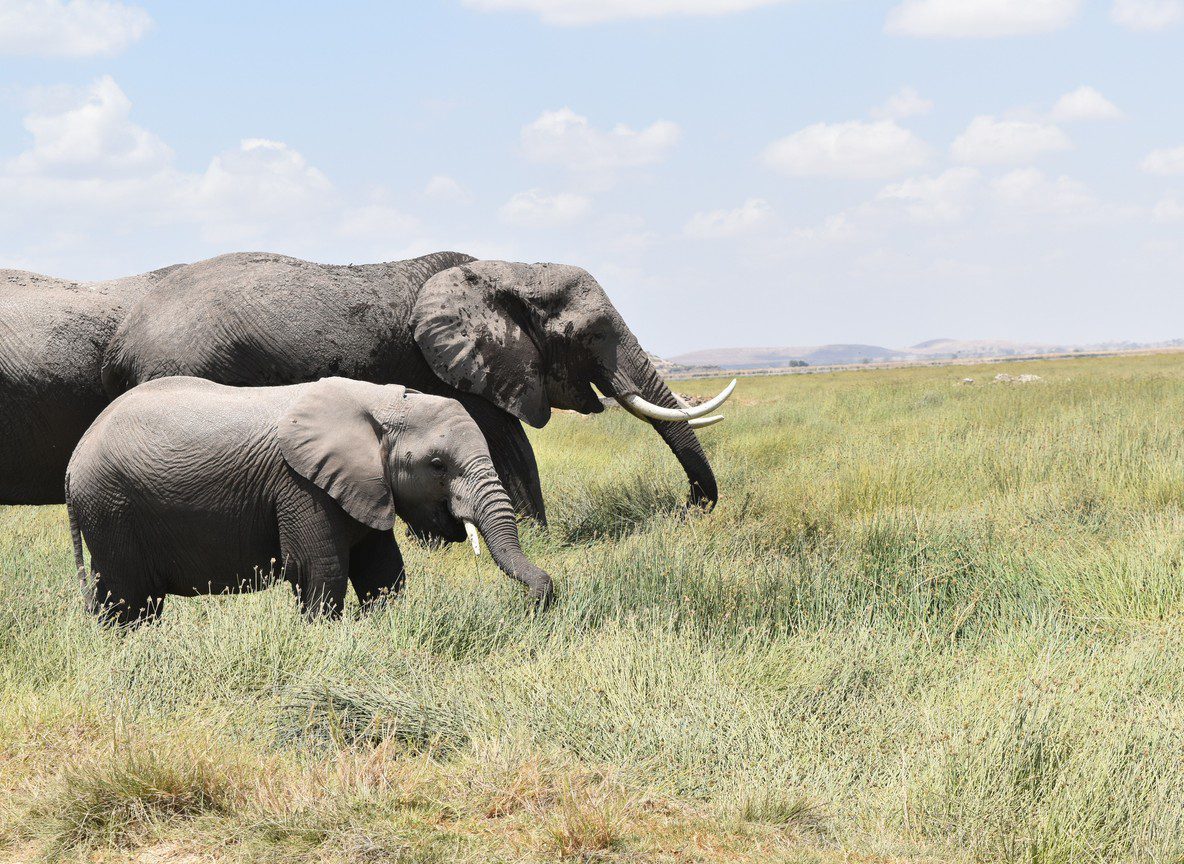
The park is close enough to Nairobi to make it genuinely accessible. The road transfer runs around four to five hours depending on the route and the state of the road. The wildlife payoff comes quickly because elephants in Amboseli are visible in large numbers and in open terrain that children can read easily. There is no tracking through dense forest or long drives between sightings. The park rewards patience but not specialist knowledge, which makes it a strong first safari for younger children.
The strongest formula for most Nairobi-based families is two nights, road travel, a family-friendly lodge or camp, and a calm drive schedule that includes proper midday rest.
Why Amboseli Suits Families Better Than Many Parks
A few things make Amboseli particularly appropriate for family trips from Nairobi.
The drive from Nairobi is manageable. It is long enough that children need entertainment and snacks, but not so long that it becomes a source of tension. Most families with children over five handle it without difficulty.
The wildlife is easy to appreciate. Elephants in Amboseli are large, visible, and often in groups. They cross roads, gather at wetlands, and move across open plains in ways that young children can follow without requiring detailed explanation. The experience is immediate.
The park does not require very early starts to produce results. Elephants are active across a longer morning window than cats, which means a 6:30am departure rather than a pre-dawn scramble suits families better.
The trip can be genuinely short. Two nights is enough to produce a meaningful elephant and wildlife experience. That keeps the total commitment manageable for families balancing school schedules or limited leave.
Road vs Fly: Which Transfer Works for Families
Road travel usually makes more practical sense for Nairobi-based families, and the reasons are straightforward.
It costs significantly less than a charter flight, which matters when you are paying for multiple seats.
It handles luggage more easily. Family travel tends to involve more bags than a couple’s weekend, and road transfers accommodate that without baggage restrictions.
The route through Namanga or via the Amboseli road is workable. It is not entirely smooth, but it is manageable in a good safari vehicle.
The case for flying improves when the children struggle with long drives, when the family is time-constrained, or when the adults want the trip to feel more premium. Flying takes around 40 to 50 minutes from Wilson Airport and arrives fresh rather than dusty. If one or two children under five are in the group, the flight genuinely reduces friction.
The right answer depends on what the adults are more worried about: cost or fatigue.
How Long Should a Family Amboseli Trip Be
One night is too compressed for most families. It forces rushed timing, produces anxiety about maximizing limited hours, and gives children only one morning window.
Two nights is the most practical minimum. It allows a proper first-afternoon game drive on arrival day, a full second day, and a calmer departure on the third morning. Children handle this length well and adults leave feeling like they actually had a safari rather than a preview.
Three nights works well when the family wants a slower pace, when children are younger, or when there is interest in spending more time at the lodge between drives. It also gives more flexibility if weather or road conditions affect timing.
The instinct to compress the trip to save money or time often produces the opposite effect: a rushed experience that everyone finds harder than expected.
What Families Need From a Lodge or Camp
A family-friendly lodge in Amboseli is not just one that accepts children. It is one that has the physical setup to make a family stay comfortable and practical.
The room configuration matters most. Families need space for two adults and one or more children in the same accommodation unit, or adjacent units with easy connection. Placing a child in a separate tent 50 metres away does not work for families with younger children, regardless of how luxurious the tent is.
Meal flexibility matters for younger children. Camps that can offer an earlier dinner or a simplified children’s menu avoid the daily negotiation that drags down the rest of the stay.
Easy access to the park gate matters more for families than for other traveller types. Every 20 minutes of unnecessary transfer time on a short trip is 20 minutes a child spends sitting in a vehicle without seeing wildlife.
A pool or outdoor space for midday rest changes the structure of a family day completely. Children can decompress properly while adults take a break, which means everyone is better prepared for the afternoon drive.
Timing: When Does Amboseli Work Best for Families
June through October is the safest all-round window for first-time family trips. The dry season makes wildlife viewing easier, road conditions are generally more predictable, and the Kilimanjaro backdrop is often clearer in the early mornings.
January through March works well too. The vegetation is greener, there are fewer visitors than peak season, and the wildlife remains strong. UK and US school half-term holidays in February fall in this window, which makes shorter trips feasible.
April and May carry more rain risk. Roads inside the park can become difficult in heavy seasons, and the overall predictability drops. Families on tight schedules or with younger children should generally avoid these months unless they are specifically looking for lower prices and are comfortable adapting.
The Daily Rhythm That Works for Children
The structure that works best for most family safaris in Amboseli follows a simple pattern.
Arrive in the early afternoon after leaving Nairobi before 8am. Check in calmly, let children settle and eat. Do a gentle late-afternoon game drive that lasts about two hours. Dinner and an early night.
The second full day starts with a proper dawn game drive, the best slot in Amboseli for elephant activity near the wetlands. Return to camp for breakfast. Rest through midday. Optional afternoon drive if energy allows.
This rhythm is calmer than adults often plan for, but it is the pattern that consistently produces a trip children enjoy rather than endure. The temptation to fill every hour with activity is understandable but counterproductive on short family safaris.
The first elephant sighting on the first afternoon does a remarkable amount of good for the rest of the trip. Children who see something significant early carry that energy forward. A first drive that produces nothing but distant views of dust sets a harder tone.
What to Prioritize in the Budget
If the family budget is limited, spend it in this order.
First priority is the right room configuration. A family that cannot sleep comfortably has a bad trip regardless of the wildlife.
Second priority is enough nights. A one-night trip costs nearly as much in transport and park fees as a two-night trip but delivers a fraction of the experience.
Third priority is a lodge with genuinely easy park access. Near-gate stays or inside-park options reduce wasted time significantly on short family itineraries.
Lower priority, within reason, are luxury room upgrades, restaurant quality above a certain baseline, and extra-premium properties whose main advantage is aesthetic rather than functional.
Explorer Notes: Getting the Formula Right
The cleanest Nairobi-to-Amboseli family formula is road transfer, two nights, a family-friendly lodge with proper room configuration, and a departure early enough to arrive before 1pm on day one.
That structure gives enough wildlife value, enough rest, and enough simplicity for the trip to feel enjoyable. When the plan looks impressive on paper but tiring to execute, simplifying it is almost always the right call.
For more planning detail on Amboseli’s wetland zones and what drives elephant movement through different parts of the park, touringinsights.com has useful seasonal and spatial context.
Practical Planning
Key questions before booking: Does the room sleep your entire family in one unit or connected units? Can the camp provide an earlier dinner service? How long is the transfer from the gate to the lodge itself?
External reference: trunktrailssafaris.com has detailed itinerary guidance for families from Nairobi, including camp recommendations filtered by minimum age and room configuration.
One rule worth keeping: If any part of the plan looks hard on paper, it will feel harder in practice with children. Amboseli rewards calm, simple planning more than ambitious scheduling.
Turn this reading into a real itinerary with help from a Kenya-based safari team.
Start Planning Your Safari