Kenya offers two of Africa’s most compelling elephant safari destinations in one country. Amboseli and Tsavo are only a few hours apart by road, but the elephant experience in each park is distinctly different — different habitat, different atmosphere, different photographic aesthetic, and different emotional character. Understanding what sets them apart helps you choose the park that fits what you actually want from an elephant safari.
The Core Difference in Plain Terms
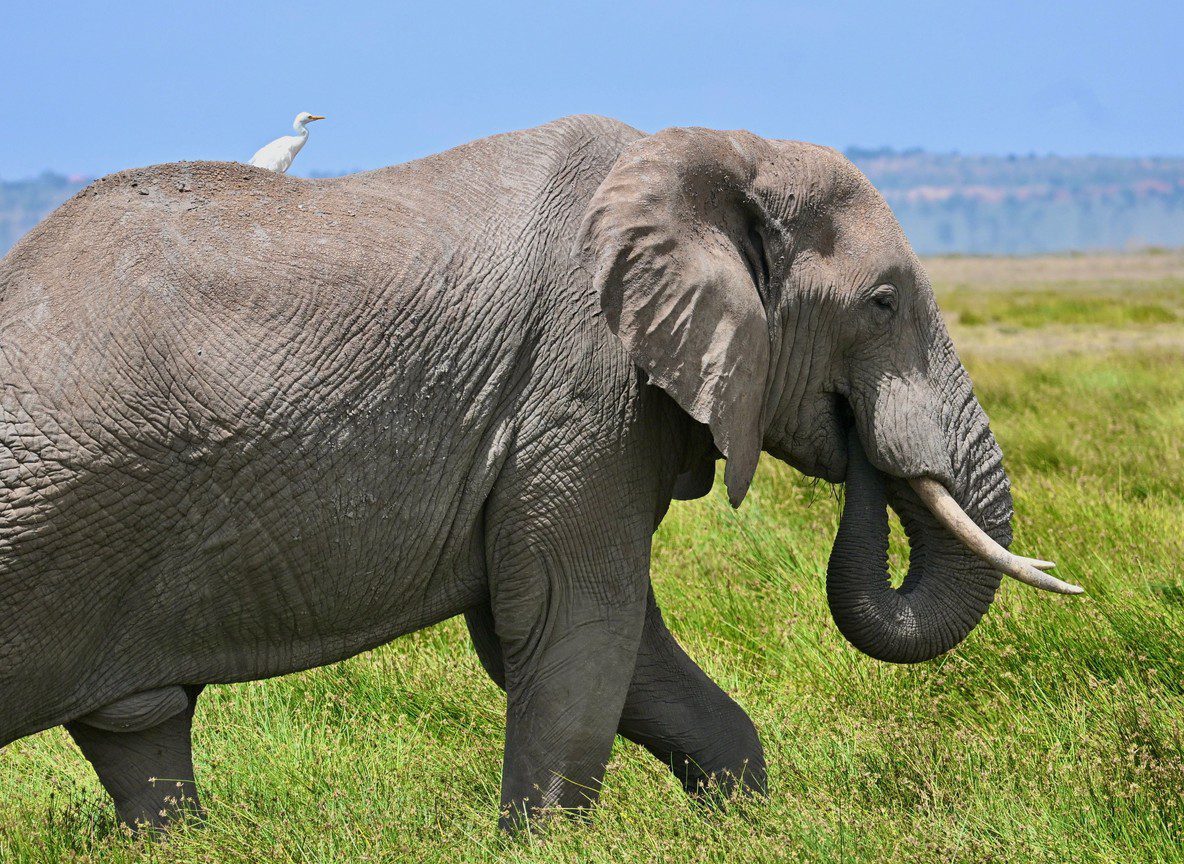
Amboseli elephants are famous for visibility, family-group behaviour, and the research legacy of the Amboseli Elephant Research Project, which has documented individual animals and family units continuously since 1972. The park’s open terrain and permanent swamps create conditions for reliably close, detailed elephant observation. The population is well-studied, family groups are frequently observable in relaxed conditions, and the Kilimanjaro backdrop adds a visual dimension unique to this ecosystem.
Tsavo elephants — particularly in Tsavo East — are famous for their size, their distinctive red-dust colouration, and the scale and wilderness character of the ecosystem. Tsavo East is one of the largest national parks in the world, and the elephants that move through its acacia savanna and volcanic lava fields have a different visual identity from the swamp-wading, family-oriented elephants of Amboseli. They appear frequently coated in the red laterite soil that gives them their distinctive appearance, and encounters often happen against vast, open, austere landscapes.
Visibility and Viewing Quality
Amboseli is the more reliable park for close, detailed elephant observation. The permanent swamps — Enkongo Narok and Longinye — anchor family groups throughout the year. Because water and forage are concentrated in these swamps, elephants are predictably present and often approachable to within metres in an open vehicle. The flat terrain means nothing obstructs sight lines.
Tsavo’s wildlife density is lower relative to its size. Encounters can be spectacular — large groups of red-dusted elephants at the Aruba dam, or families moving through the Galana River corridor — but they are less predictable on any given game drive. The vastness of Tsavo means you cover more ground between sightings, and the savanna is denser than Amboseli’s open plains.
For travellers who want guaranteed close elephant encounters, particularly on a shorter visit, Amboseli is the more dependable choice.
The Red-Dust Phenomenon in Tsavo
One of Tsavo East‘s most photographed characteristics is the red colouration of its elephants. The red laterite soil of the Tsavo ecosystem is taken up by elephants during dust-bathing and wallowing — a behaviour elephants use for thermoregulation and skin protection. In Tsavo’s landscape, this produces a striking visual contrast between the dusty red-coated animals and the greyish-green acacia scrub.
Amboseli’s elephants do not have this colouration. The soils around the Amboseli swamps and plains are pale grey-brown, and elephants seen there appear in their natural greyish-brown skin. Neither is inherently “better” — they are different visual aesthetics that produce very different photographs.
For wildlife photographers specifically, the choice between parks partly comes down to which elephant aesthetic they want to capture.
Family Groups and Behaviour
Amboseli’s long-term research has revealed the depth and complexity of elephant family structure. Individual elephants in the park have documented histories — their family units, their age, their past relationships, their calves — that extend back decades. The matriarch-led family system is on display in the park in a way that is particularly readable because of the open terrain and the relatively habituated nature of the population.
Observing a family group in Amboseli with a knowledgeable guide means you can understand what you are looking at: which animal is the matriarch, how old the juveniles are, how the family is structured, what the calves’ behaviour signals.
Tsavo’s elephants are less thoroughly documented on an individual basis, though research also occurs there. Family groups are present and observable, but the experience has a different quality — more anonymous, more part of a vast landscape, less like a guided encounter with known individuals.
Scale and Landscape
Tsavo’s landscape is dramatically larger and more varied than Amboseli. Tsavo East covers approximately 13,000 square kilometres, Tsavo West another 9,000 — the combined Tsavo area is larger than Wales. Amboseli covers 392 square kilometres.
This scale difference shapes the emotional experience of the safari. An Amboseli safari feels intimate: you are circling a well-defined ecosystem where the swamps, the plains, and the mountain are all visible from Observation Hill. A Tsavo safari feels expansive: even after several days you have not covered the park, and the sense of wilderness is more intense.
Neither quality is superior. They serve different preferences.
Photography Comparison
| Photographic Goal | Amboseli | Tsavo East |
|---|---|---|
| Family groups in open country | Excellent | Good |
| Mountain backdrop | Unique (Kilimanjaro) | Not available |
| Red-dust elephant colouration | Not applicable | Distinctive and strong |
| Wilderness scale in background | Moderate | Strong |
| Swamp and water scenes | Excellent | Aruba dam area |
| Individual animal documentation | Exceptional (AERP legacy) | Good |
Best For
Choose Amboseli for elephants if you:
- Are visiting Kenya for the first time and want the most reliable elephant encounter
- Want family-group behaviour observable in open terrain
- Care about the Kilimanjaro backdrop as a photographic element
- Are interested in conservation context and the AERP research legacy
- Have a shorter trip and want efficient, high-quality sightings
Choose Tsavo for elephants if you:
- Are a repeat Kenya visitor wanting a different elephant aesthetic
- Want the distinctive red-dusted Tsavo elephant look
- Prefer a wilder, more expansive safari landscape
- Are combining Tsavo with Amboseli as part of a southern Kenya circuit
- Want the experience of vast, open bush rather than a concentrated ecosystem
Combining Both Parks
For travellers who care deeply about elephants, a southern Kenya circuit combining both parks is the most complete approach. Spend two nights in Amboseli for the family herds, research context, and Kilimanjaro views, then transfer east to Tsavo West for a different landscape mood, or continue to Tsavo East for the red-dust elephant experience near the Galana River.
The road link between Amboseli and Tsavo West via the Kimana area makes this circuit practical without returning to Nairobi between parks. See the Amboseli and Tsavo road link guide for routing details.
Quick Summary
| Factor | Amboseli | Tsavo |
|---|---|---|
| Elephant visibility | Excellent | Good (lower density over larger area) |
| Family behaviour observation | Excellent | Good |
| Red-dust elephant look | No | Yes (Tsavo East) |
| Kilimanjaro backdrop | Yes | No |
| Wilderness scale | Moderate | Extensive |
| Best for first-time visitors | Yes | Less so |
| Best for repeat visitors | Yes | Yes |
| Research and conservation context | Deep (AERP) | Moderate |
For more on Kenya’s elephant viewing options, see the Amboseli elephants guide and the Tsavo national park guide on Touring Insights.
Prefer a different route, budget, or travel style? This plan can be adapted to fit.
Customise Your Trip