
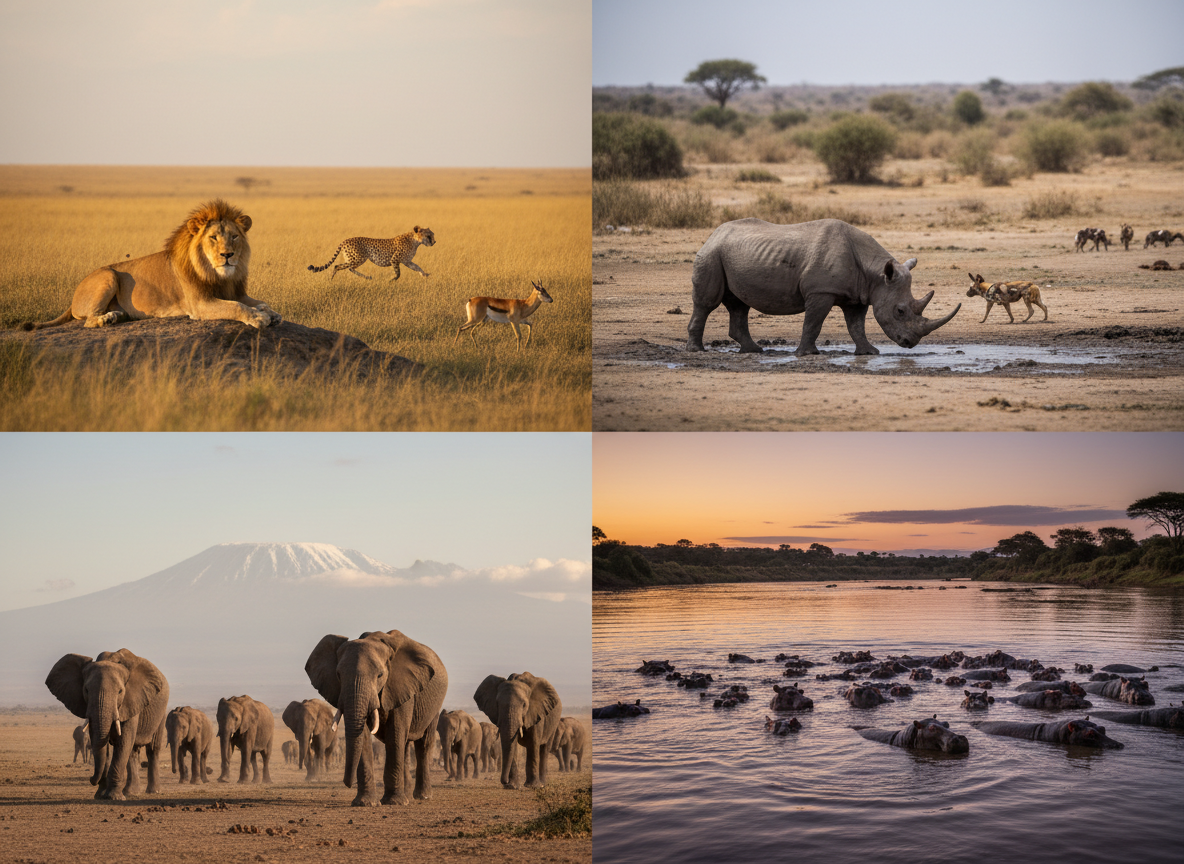
These options may appear in the same planning conversation, but they do not deliver the same safari. Wildlife style, road time, camp feel, and the kind of stories you bring home all shift with the choice. That is why big five vs big seven vs big nine kenya matters.
Trunktrails Safaris helps travellers make this decision every week. We are Nairobi-based and Kenyan-owned. We weigh real drive times, wildlife strengths, camp standards, and what guests actually want from the trip, not brochure shortcuts. That makes the recommendation easier to trust.
Here is the honest big five vs big seven vs big nine kenya comparison, the same way we break it down before a safari is booked.
What Are the Big Five
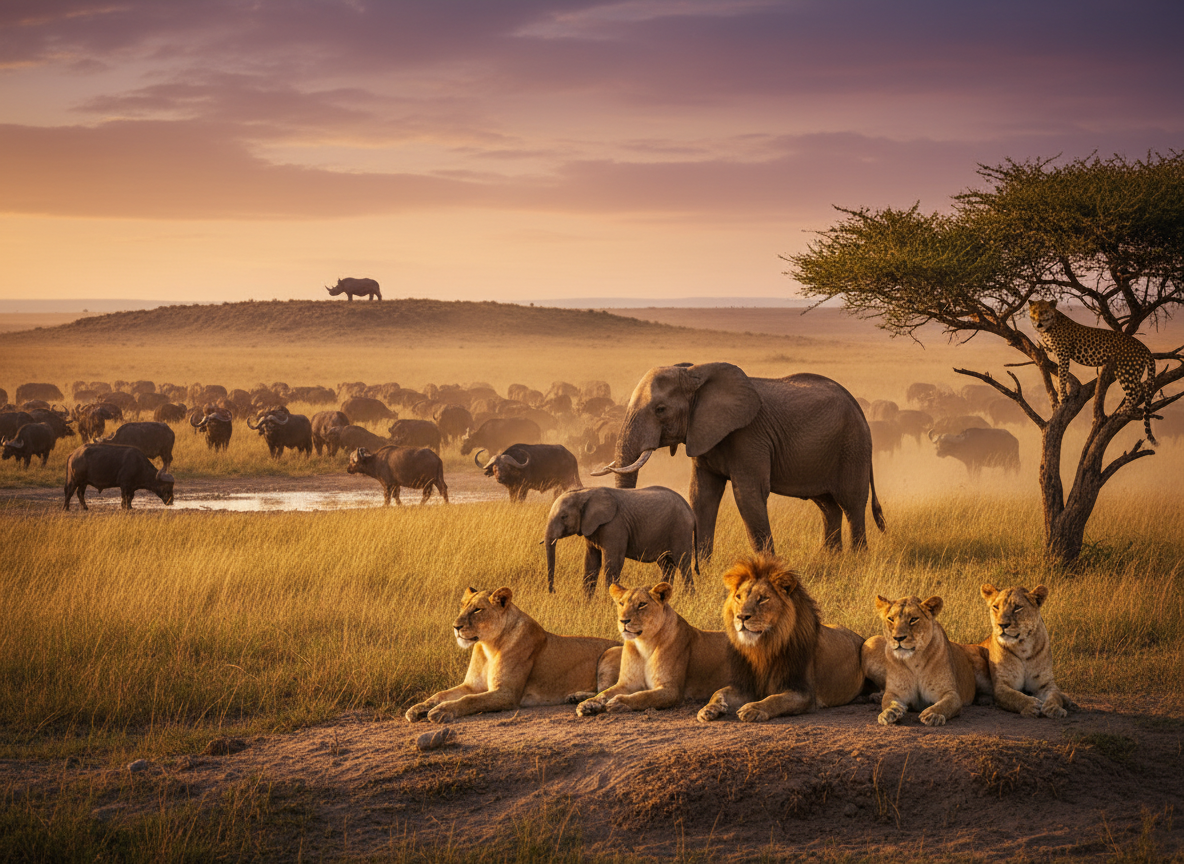
The big five africa animals are: lion, leopard, elephant, buffalo, and rhino.
The term was originally coined by big-game hunters in the 19th century to describe the five most difficult and dangerous animals to hunt on foot in Africa. The five were not chosen for their size or beauty alone: they were chosen for their unpredictability, aggression when threatened, and difficulty of approach.
Today, the Big Five are the most sought-after wildlife sightings on any Africa safari. Completing a “Big Five game drive”: seeing all five in a single day or over a safari stay: is a common bucket-list goal.
The Big Five in Kenya
| Animal | Where to See in Kenya |
| Lion | Masai Mara (excellent), Amboseli, Tsavo East and West |
| Leopard | Masai Mara (good), Samburu, Laikipia |
| Elephant | Amboseli (iconic Kilimanjaro backdrop), Masai Mara, Tsavo East (red elephants), Samburu |
| Buffalo | Masai Mara (large herds), Aberdare, Tsavo |
| Rhino | Ol Pejeta (black rhino: best in Kenya), Lake Nakuru, Lewa, Masai Mara conservancies |
What Is the Big Seven
The big seven safari kenya expands the Big Five by adding two marine species: great white shark and southern right whale. The Big Seven concept originated in South Africa, where the Garden Route and Hermanus region offer land-based whale watching and great white shark diving alongside the classic Big Five.
The Big Seven is a South Africa-specific marketing concept. It is less relevant to Kenya safari planning: Kenya does not have great white shark or southern right whale habitat. The term is occasionally used loosely in East Africa to add other charismatic species (cheetah and wild dog being two common additions), but this is not a standardised definition.
For a Kenya safari, the big seven animals africa concept is best understood as a South African construct that you will see referenced in safari marketing but which does not have a fixed, universally agreed Kenya equivalent.
What Is the Big Nine
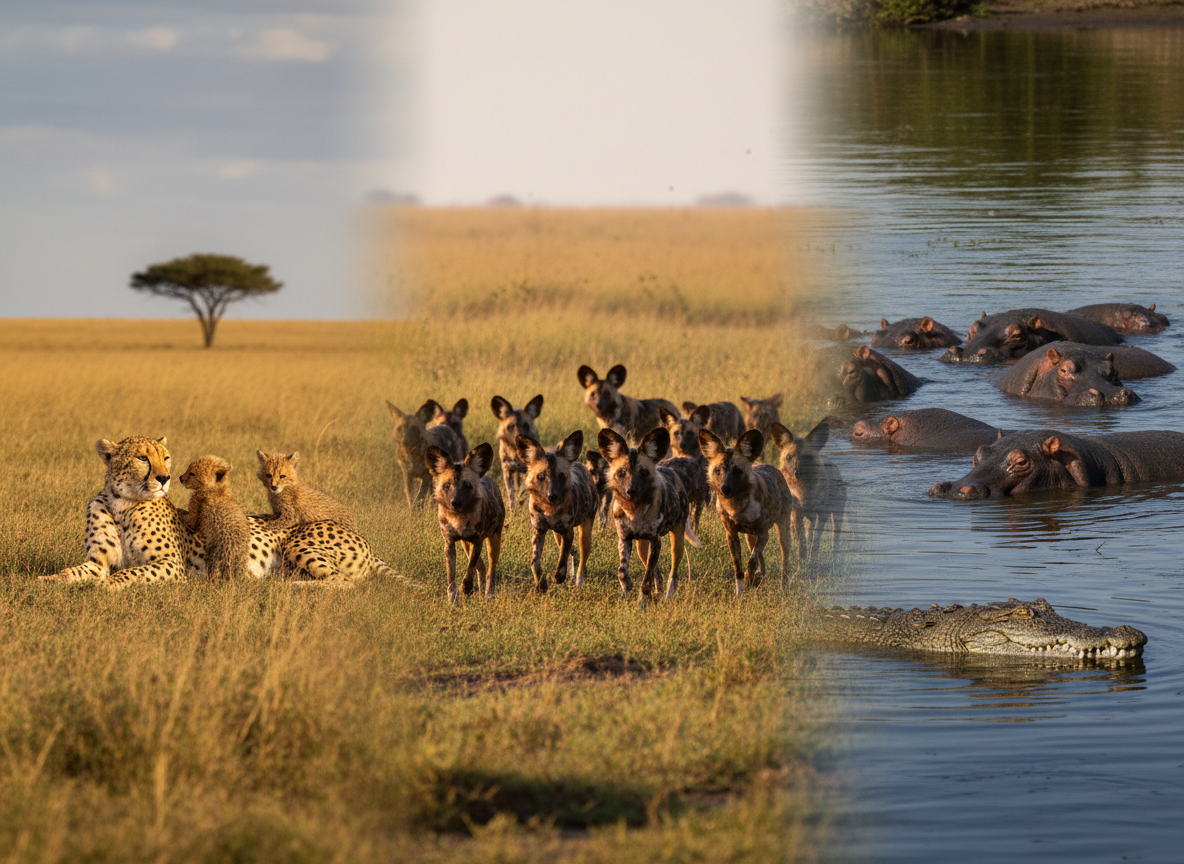
The Big Nine is a more recently coined term, particularly used in East Africa and specifically in Kenya, to acknowledge species that rival the Big Five in safari desirability. The most commonly cited Big Nine adds: cheetah, wild dog (painted wolf), and hippopotamus to the Big Five.
Some operators use slightly different lists, but cheetah and hippo appear most consistently.
Why Cheetah, Wild Dog, and Hippo
Cheetah: Africa’s fastest land animal and one of the most compelling predators to watch on a game drive. Cheetah hunts are extraordinary. The Masai Mara has one of the best cheetah populations in Kenya.
African Wild Dog (Painted Wolf): One of Africa’s most endangered predators and among the most skilled pack hunters. Wild dog sightings are rare and considered by many wildlife enthusiasts to be more exciting than any Big Five encounter. Kenya’s Laikipia Plateau is one of the best places in Africa to see wild dogs.
Hippopotamus: Africa’s most dangerous large mammal by kill statistics. Hippo pods in the Mara and Talek rivers are one of the defining Masai Mara wildlife experiences. They are abundant, highly visible, and frequently dramatic in behaviour.
The Big Nine in Kenya
| Animal | Where to See in Kenya |
| Lion | Masai Mara, Amboseli, Tsavo |
| Leopard | Masai Mara, Samburu, Laikipia |
| Elephant | Amboseli, Masai Mara, Tsavo East, Samburu |
| Buffalo | Masai Mara, Aberdare, Tsavo |
| Rhino | Ol Pejeta, Lake Nakuru, Lewa |
| Cheetah | Masai Mara (excellent), Amboseli |
| African Wild Dog | Laikipia (best in Kenya), rare elsewhere |
| Hippopotamus | Masai Mara (Mara and Talek rivers), Lake Naivasha |
Does Completing the List Matter
The Big Five vs Big Seven vs Big Nine conversation can create a checklist mentality that misses the point of safari. The most memorable safari moments are rarely completing a list: they are the unexpected: a leopard dragging a kill into a tree at 6am, a cheetah mother teaching cubs to hunt, a single elephant drinking alone at a waterhole at dusk.
That said, the big five animals masai mara framework is genuinely useful for:
- Helping first-time visitors understand the headline species to look for
- Choosing between parks (Ol Pejeta for rhino, Masai Mara for cheetah and lion)
- Setting expectations for what is achievable on a given itinerary
At Trunktrails Safaris, we brief every client on which species are most likely on their specific itinerary: not to create pressure to complete a list, but to help travellers make the most of every game drive.
Quick Comparison: Big Five vs Big Seven vs Big Nine
| List | Animals | Origin | Kenya Relevance |
| Big Five | Lion, leopard, elephant, buffalo, rhino | Historical hunting term | Core Kenya safari species |
| Big Seven | Big Five + great white shark + southern right whale | South Africa marketing | Minimal in Kenya context |
| Big Nine | Big Five + cheetah + wild dog + hippo | East Africa/Kenya usage | Very relevant to Kenya safari |
Which Should You Focus On
For a Kenya safari, the Big Five is the classic target: achievable at the right parks with the right timing. The Big Nine is a more realistic and representative list for the Masai Mara ecosystem, where cheetah and hippo are among the most reliably seen and most exciting wildlife encounters.
Wild dog requires a Laikipia-specific visit (Ol Pejeta, Lewa, or Borana) to reliably encounter: they are present but rare in the Masai Mara.
Trunktrails Safaris designs itineraries that give you the best realistic probability of encountering the full range of Kenya’s most compelling wildlife: not just a checklist, but a genuinely rewarding safari experience.
Ready to Plan Your Kenya Safari? Talk to Trunktrails Safaris
Trunktrails Safaris designs tailor-made tours and safaris for every traveller and every budget. From green-season adventures to private luxury camps, our tours and safaris are built by a Nairobi-based team that speaks to you directly, not through a call centre. Most WhatsApp enquiries about our Kenya tours and safaris get a reply from Trunktrails Safaris within the hour.
WhatsApp: +254 113 208888
Email: info@trunktrailssafaris.com
Website: https://trunktrailssafaris.com
KATO Member | TRA Licensed | Native Kenyan Owned | Conservation First | 24/7 Support