The guided vs self-directed game drive question comes up for almost every first-time safari planner, and the answer shapes every hour you spend in the bush. This is not simply a budget decision or a preference for company. The choice determines what you see, how much of it you understand, and whether a day in the field becomes a meaningful wildlife encounter or a long, quiet drive with occasional distant animals.
Both formats have legitimate uses. But they suit different parks, different regulations, and different expectations.
What a Professional Guide Reads in the Field
The gap between a guided and self-directed game drive starts on the ground, literally.
Track Reading
A trained field guide in the Maasai Mara can look at a set of prints pressed into dust or soft mud and reconstruct a narrative: a female leopard, roughly two hours ahead of you, moving north toward the seasonal stream. That reading comes from interpreting track depth, claw extension, stride length, and the direction of pressed grass blades. None of it is guesswork. It is practiced skill built over years of daily field time.
No smartphone app, printed field guide, or wildlife documentary replicates this. The practical outcome is straightforward: your guide finds the leopard. A self-directed driver almost never does.
Behavioral Prediction
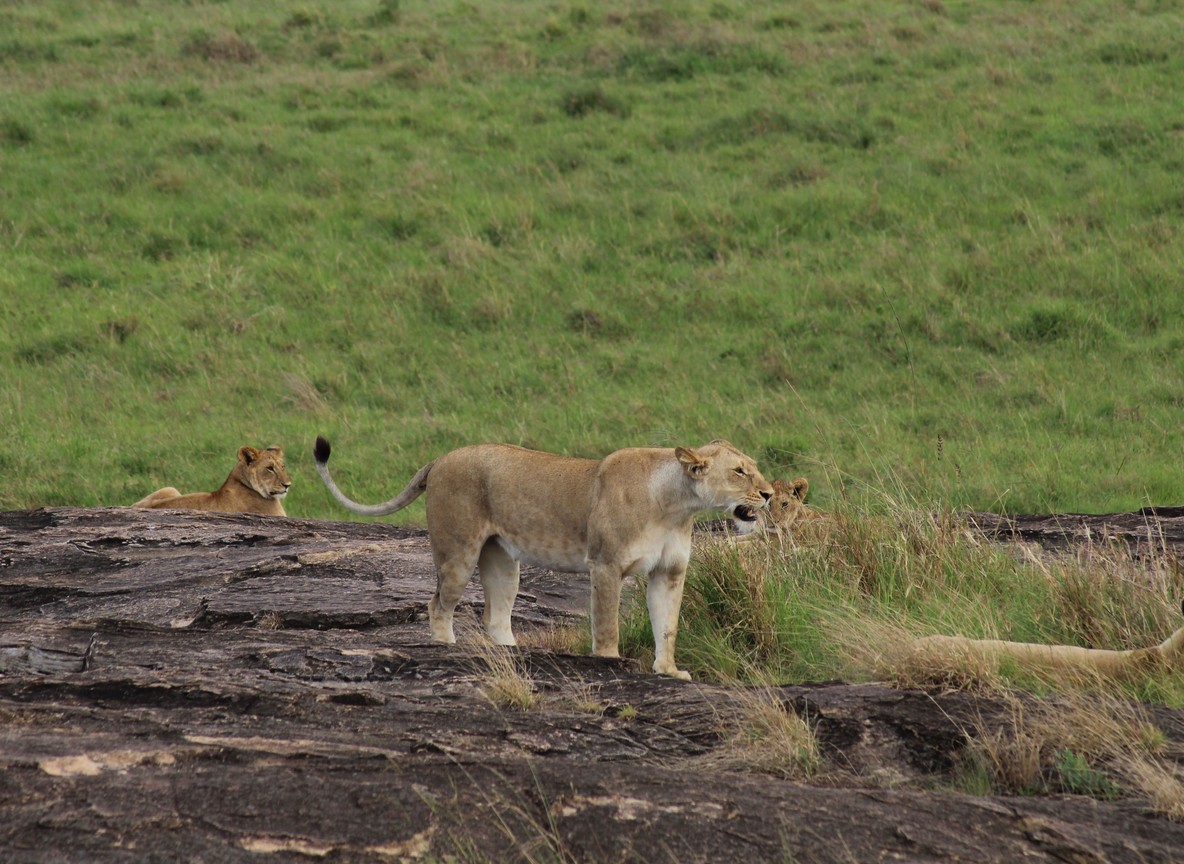
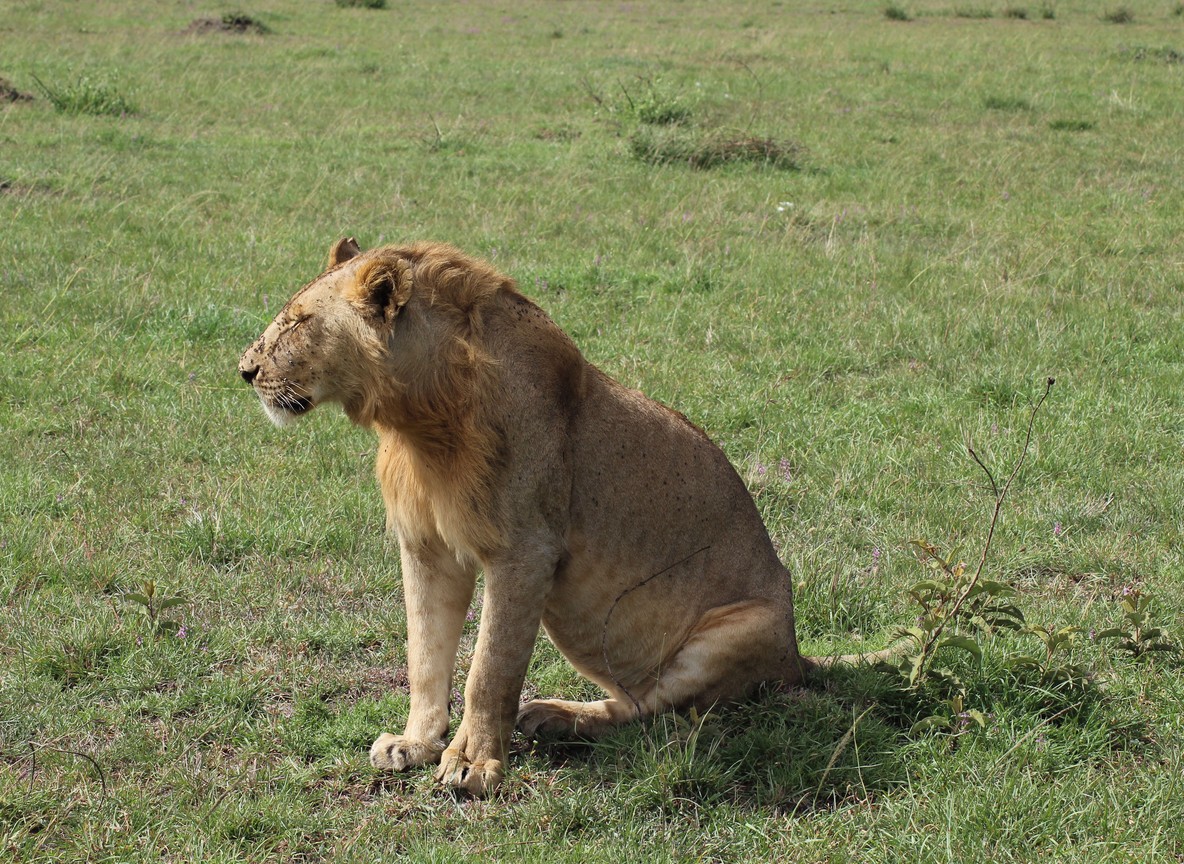
A lion lying flat under an acacia looks inert. A trained guide reads the angle of the ears, the direction of the eyes, the tension across the shoulder, and says: give it five minutes. What follows is a warthog crossing the clearing and a lion that was never as relaxed as it appeared.
This kind of predictive behavioral reading is not something a first-time visitor can replicate, or even a well-traveled one without formal training. The difference between watching wildlife and experiencing wildlife often lives in this interpretive layer.
The Guide Radio Network
Guides working the same territory communicate continuously. When one locates a cheetah hunt in progress, a leopard at a kill, or a crossing building on the Mara River, others are notified immediately. Your guide participates in this network and repositions you in real time when something significant is happening nearby.
Self-directed drivers have no access to this channel. They see what happens to be visible from the track they are on and miss the action unfolding two kilometers in another direction.
Accumulated Local Knowledge
A guide who has worked the same territory for a decade or more knows individual animals by name, by territory range, and by seasonal behavior pattern. They know where a resident cheetah coalition hunts in the dry season based on gazelle fawning routes. They know which lion pride controls which ridge. They know to check the lugga first because a leopard has been denning there for six weeks.
That knowledge belongs to people who spend every day in the field. It does not appear in any app, field guide, or travel forum.
The Safety Factor in Big Game Territory
The Maasai Mara is not a managed enclosure. Lions walk through camp after dark. Elephants charge vehicles that position too close. Buffalo are consistently ranked among the most dangerous animals in Africa and behave unpredictably at close range. Hippos emerge from rivers at night and have a well-documented tendency toward aggression when surprised.
A professional guide knows the exact distance to hold from each species: close enough to observe clearly, far enough to avoid triggering a defensive response. They know when to hold position, when to reverse, and when an apparently calm animal is actually escalating. Self-directed visitors frequently misjudge these thresholds, producing either a missed encounter because they parked too far back, or a genuinely dangerous one from approaching too close at the wrong angle.
Professional guides also carry emergency communication equipment and know the fastest exit routes from any location if a vehicle breaks down near dangerous game.
Park Rules and Where Self-Direction Is Permitted
The Maasai Mara National Reserve requires visitors to travel in official game drive vehicles accompanied by a licensed guide. Private vehicles are not permitted for game drives inside the reserve. This is not a recommendation; it is park policy.
For the core Mara experience, covering the open plains, the Mara River crossing areas, and the main lion pride territories, a guide is not optional. It is the only legal means of access during a game drive.
The private conservancies bordering the reserve, including Olare Motorogi, Naboisho, and Mara North, operate on an exclusive basis. They require a booked camp stay and include guided activities by design. Self-directed driving is not part of the offering in any of them.
Kenya does permit self-drive safari in certain other parks, particularly Lake Nakuru and Amboseli, where road networks are simpler and navigation is more forgiving. In those settings, a self-directed approach can work well for independent travelers with solid wildlife knowledge and a reliable GPS. The Mara, however, is not on that list.
The Photographer’s Case for a Specialist Guide
Wildlife photographers gain an additional layer of value from an experienced guide: vehicle positioning for light and angle.
A guide who works regularly with photographers understands shooting windows, the importance of a clean background behind the subject, and the patience required to wait for the behavioral moment rather than settling for a static portrait. They position the vehicle with the sun behind the camera, the subject at eye level, and the foreground uncluttered. They read the animal closely enough to anticipate a yawn, a stretch, or a charge and hold the vehicle steady as it builds.
Photographers who have driven themselves and later traveled with specialist guides consistently report that positioning and anticipation alone justify the cost difference, independent of everything else the guide contributes.
Explorer Notes
- Guide seniority matters. A guide with ten or more years in the Mara will show you fundamentally more than an entry-level guide covering the same tracks. When booking, ask how long your assigned guide has worked in this specific ecosystem.
- Engage actively. Ask what your guide is reading in the tracks, in the animal behavior, in the landscape before the sighting resolves. The information transfer is what makes the drive worthwhile beyond the sightings themselves.
- Request photography positioning early. Most guides will hold for the right light and angle if you tell them at the start of the drive that photography is a priority.
- Conservancy drives differ from reserve drives. Private conservancies allow off-road driving, walking, and night game drives. The national reserve permits none of these. If those activities matter to you, factor that into where you stay.
- Early departure is worth the alarm. Predators are most active in the first two hours after sunrise. A 06:00 departure consistently outperforms a 08:30 start for the quality of encounters.
Guided vs Self-Directed Game Drive: The Practical Reality
In the Maasai Mara specifically, the guided vs self-directed game drive comparison resolves quickly on the regulations side. The reserve requires a licensed guide; conservancies require a guide by design. The more useful question is how to get maximum value from the guided format you will be using.
Ask questions throughout the drive, about behavior, ecology, and individual animal identification. Request your guide’s interpretation of what they are reading before it resolves into a sighting. Stay curious rather than passive. The most rewarding game drives are collaborative, between a guide who knows the landscape thoroughly and a traveler who pays attention to what is being shown to them.
Passivity wastes the most valuable resource on any guided drive: the person sitting beside you.
Every trip described here can be tailored: dates, budget, camps, and pace built around you.
Get a Personalised Safari