A safari from Diani Beach Tsavo Amboseli route works because it combines two inland landscapes that do not repeat each other. Readers leave the coast and enter Tsavo’s red-earth openness first, then move onward into Amboseli’s mountain-backed plains and swamp-fed grazing areas. The result is not just a two-park safari. It is a sequence of strong ecological contrasts held together by a coherent route.
This guide explains why Tsavo East and Amboseli pair so well from the coast, what each park contributes to the journey, how to think about the route logistically, and why the inland chapter becomes more memorable when readers allow the two parks to remain distinct rather than flattening them into one generic safari block. Readers deciding where this sits in the broader coast logic can also pair it with the main Safari from Diani Beach guide.
Why These Two Parks Pair So Well
Tsavo East and Amboseli combined safari works because the parks complement rather than duplicate one another. Readers do not move from one version of savannah into another nearly identical one. They move between different visual systems, different wildlife moods, and different route textures.
The pairing succeeds through contrast:
- Tsavo offers scale, dry-country feeling, and red-earth identity
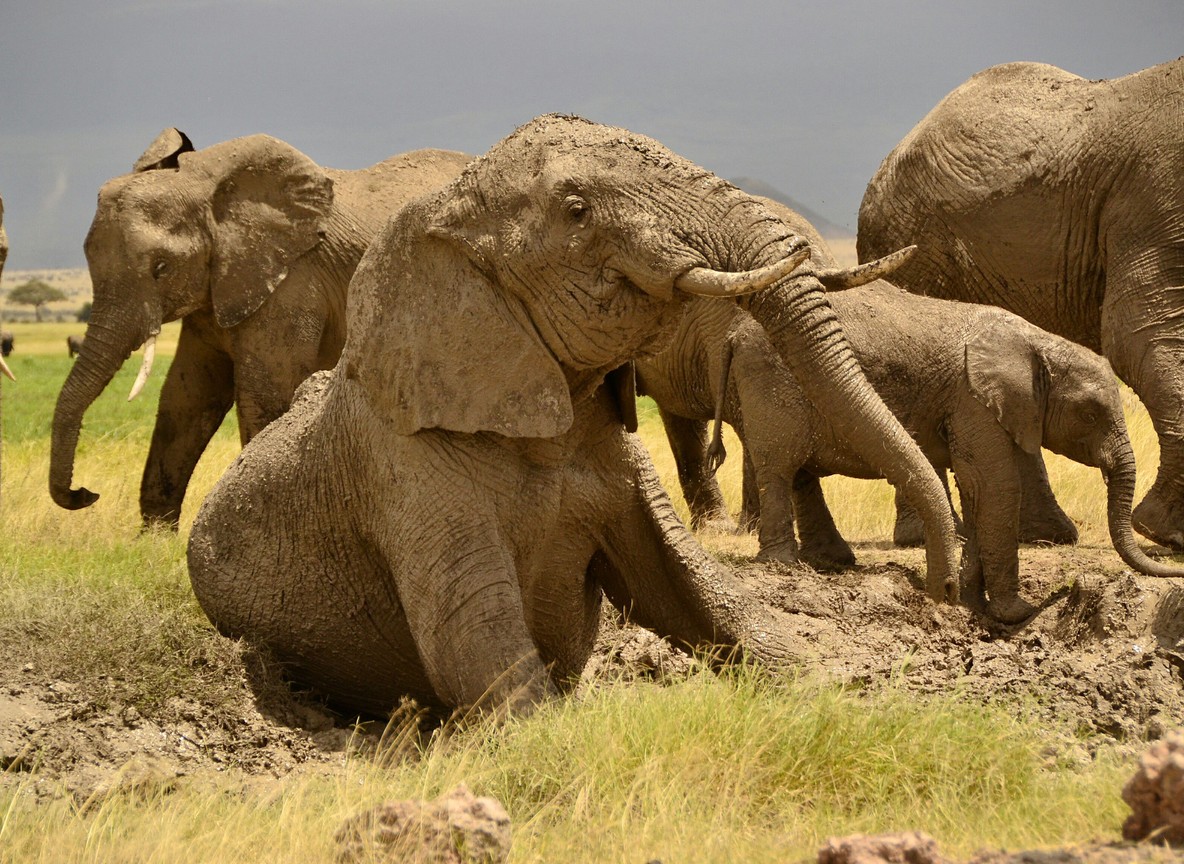
- Amboseli offers mountain drama, swamps, and elephant-centered imagery
- the route between them gives the journey shape rather than forcing an abrupt jump
That contrast is what makes the combination stronger than either park alone on many coast-based itineraries. The Tsavo side of the equation is clearer when read with the Tsavo National Park guide.
Tsavo East as the Opening Chapter
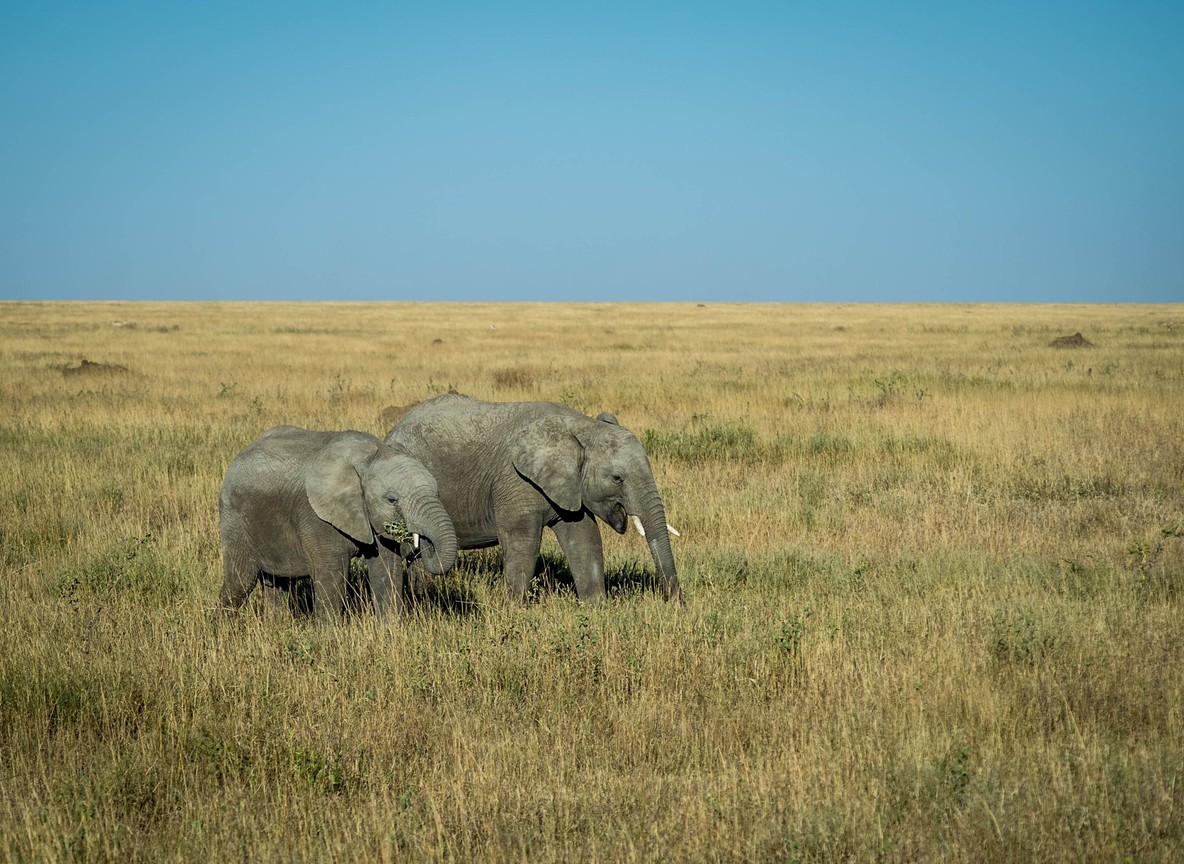
Tsavo East makes a strong first inland chapter because it pulls readers out of beach rhythm quickly. The landscape feels broad, dry, and more severe than many first-time safari visitors expect. That is part of its strength.
Its role in the route is to establish:
- a sense of wilderness scale
- the visual identity of red soil and open plains
- the first real separation from the coast
- a safari mood that feels expansive rather than concentrated
Readers often come away from Tsavo remembering the atmosphere as much as any single sighting.
Amboseli as the Second Chapter
Diani Beach to Amboseli safari logic is powerful because Amboseli changes the emotional register of the route. After Tsavo’s dryness and scale, Amboseli introduces a more iconic and visually composed landscape: elephants, open grassland, and the possibility of Kilimanjaro dominating the horizon.
This park matters in the sequence because it adds:
- a stronger sense of visual theater
- a different elephant experience
- a tighter, more immediately legible wildlife setting
- a final inland note that contrasts cleanly with Tsavo before the route turns back toward the coast
The park is especially useful for readers who want the inland chapter to build rather than simply continue.
Why the Route Feels Narratively Complete
The strongest Tsavo East Amboseli safari routes from the coast feel like a journey rather than a list. That is because each stage answers the previous one. Beach calm gives way to Tsavo’s harsher openness. Tsavo’s red dust then gives way to Amboseli’s wider sky and water-fed plains. By the time readers return to the coast, they feel the route has said something complete.
This is an important distinction. A good multi-park route does not just accumulate places. It creates progression.
The Inland Transfer Matters
One of the less obvious strengths of this route is that the transfer between parks has meaning. It is not merely time to be endured. The shift through corridor country helps readers feel the geography linking the parks rather than imagining them as detached points on a map.
That matters because the route gains force when:
- inland movement feels continuous
- the parks relate to one another geographically
- the second park feels like a next chapter, not a reset
Readers who allow for this transition usually understand the route more deeply.
Pacing the Route Properly
One of the most common mistakes in Kenya coast to Amboseli or Tsavo-Amboseli planning is over-compression. Two parks can fit neatly into an itinerary, but only if readers give them enough time to retain their separate character.
Good pacing usually means:
- enough time in Tsavo for the landscape to register as more than transit
- enough time in Amboseli for the park’s visual identity to unfold properly
- not treating the return to the coast as an afterthought
Without that pacing, the route risks becoming movement without depth.
What Kind of Reader This Route Suits
This two-park inland extension often works best for readers who want:
- more than a single quick safari stop
- a stronger sense of inland variety
- one route that includes both scale and iconic mountain-backed imagery
- a safari chapter substantial enough to balance a coast stay
It is especially strong for first-time Kenya travelers who want the coast and bush to feel equally important rather than letting one dominate the whole trip.
Why Tsavo and Amboseli Should Not Be Read the Same Way
Readers sometimes collapse all safari parks into one generalized expectation, but this route rewards more careful attention. Tsavo and Amboseli should not be approached as equivalent containers for the same animals.
Tsavo is often about:
- scale
- distance
- atmosphere
- the texture of a larger, drier system
Amboseli is often about:
- visual concentration
- elephants
- the power of mountain framing
- a more immediately iconic scenic image
The route becomes richer when readers let each park keep its own identity.
How the Coast Changes the Inland Reading
Because the journey begins and ends in a beach environment, the inland section feels sharper than it might on a purely safari-focused trip. Coast travel makes readers more sensitive to the dryness, dust, dawn rhythm, and wildlife intensity of the inland chapter. Then the return to the coast reframes everything again. Readers comparing this with the city-to-coast version can also read the Nairobi to Diani route guide.
This is one reason the route stays memorable. The beach does not dilute the safari. It gives the safari stronger edges.
Why the Return to Diani Matters
The return to Diani is part of the route’s meaning, not just its logistical conclusion. After inland mornings, long drives, and wildlife attention, the coast feels different. It becomes less like the trip’s starting point and more like its release.
That is why the route often works better than a standalone inland circuit for readers who want contrast without fragmentation. The coast closes the sequence properly.
Readers who want the shortest contrast version of this route can also compare it with the 3-day Diani Amboseli or Tsavo comparison guide and the 5-day Tsavo, Amboseli, and Tsavo East route guide.
Explorer Notes
- Tsavo East and Amboseli work because they contrast clearly rather than competing for the same role.
- Tsavo provides the route’s scale and wilderness texture.
- Amboseli provides the route’s visual climax and elephant-centered drama.
- The transfer between parks should be treated as part of the story, not dead time.
- The return to Diani gives the inland chapter a stronger sense of completion.
Frequently Asked Questions
Why combine Tsavo East and Amboseli from Diani Beach?
Because the two parks offer different safari atmospheres and create a stronger inland chapter together than either one alone for many coast-based trips.
Is this route too much for a short coast holiday?
It can be if compressed too aggressively. The route works best when readers allow enough time for both parks to feel distinct.
Does Tsavo feel very different from Amboseli?
Yes. Tsavo is generally drier, broader, and more atmosphere-driven, while Amboseli is more visually concentrated and strongly associated with elephants and Kilimanjaro.
Is the transfer between the parks just a logistical necessity?
No. It helps give the route continuity and makes the two-park journey feel geographically connected.
Why return to Diani after the inland safari?
Because the coast provides a strong closing contrast and allows the inland chapter to resolve into a different kind of rhythm.
Conclusion
A safari from Diani Beach Tsavo Amboseli route succeeds because it does more than combine two popular inland parks. It creates a sequence with real contrast and internal logic. Tsavo opens the inland chapter with scale and red-earth wilderness. Amboseli reshapes it with elephants, swamps, and mountain-backed imagery. Diani then receives the traveler back into a completely different sensory world.
That is what makes the route enduring. Readers remember not only the parks, but the way the journey moved between them and back again.
Every trip described here can be tailored: dates, budget, camps, and pace built around you.
Get a Personalised Safari