Northern Kenya is the part of the country that most first-time safari travellers never reach. The Masai Mara and Amboseli take most of the attention, and reasonably so, but the northern half of Kenya contains landscapes and wildlife experiences that are genuinely distinct from anything the southern circuits offer.
The terrain shifts from highland cedar forest to open thornbush scrubland to volcanic desert to the jade waters of Lake Turkana. The wildlife includes species you will not find reliably anywhere in the south. The sense of space, far from the organized circuits of the Mara, is something that is difficult to describe and difficult to forget.
This guide covers the core parks and conservancies of northern Kenya, the route logic that connects them, the seasonal timing that shapes access, and the planning decisions that determine whether a northern circuit works well or exhausts you.
Why Northern Kenya Requires Different Planning
Southern Kenya safari circuits are relatively forgiving of loose planning. Camps are numerous, roads are manageable, and if one option does not work out you can usually find another without sacrificing much. Northern Kenya has narrower margins.
Drive times are long, camp options in remote areas are limited to a handful of properties, some routes require proper 4×4 capability and convoy awareness in wet conditions, and the distances between destinations are real. Good northern Kenya itinerary design starts with geography rather than a wish list.
A well-designed northern circuit moves logically between sectors, uses transfer windows that account for real road conditions, and builds in enough nights at each stop to absorb the place rather than simply transit it. The reward for this level of preparation is an experience that feels genuinely remote and unhurried. Wildlife sightings are often exclusive to your vehicle. The guides who work these areas carry knowledge of terrain and animal behaviour that goes beyond what is possible in high-traffic zones.
Samburu National Reserve
Samburu is the operational anchor of most northern Kenya circuits and the most accessible of the northern destinations. Sitting at roughly 270 metres elevation along the Ewaso Nyiro River, it offers reliable year-round game viewing because the river is a permanent water source in an otherwise arid landscape.
The wildlife at Samburu includes the so-called Special Five, a set of species specific to the northern arid and semi-arid zone that do not occur reliably in the Masai Mara or Amboseli:
- Grevy’s zebra: Distinguishable from the common zebra by narrower stripes and larger, more rounded ears
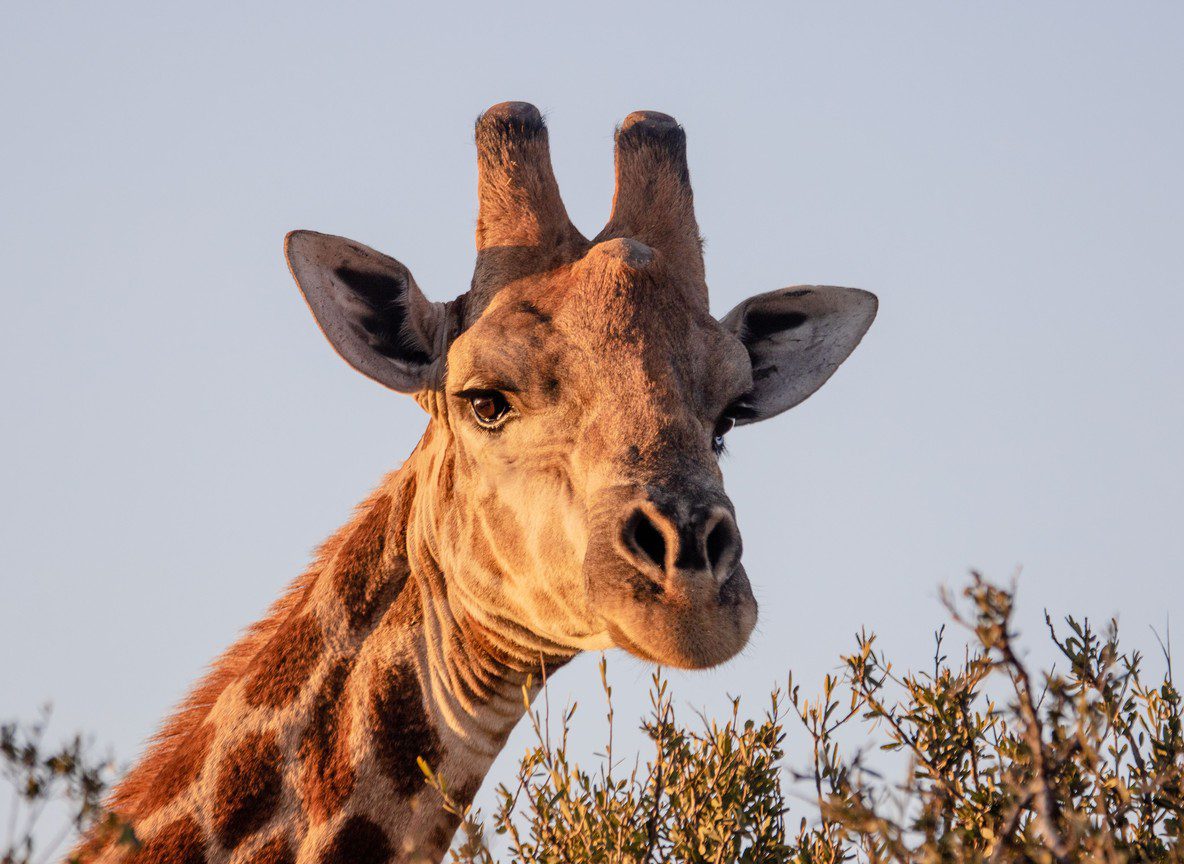
- Reticulated giraffe: Larger and more sharply defined polygonal patches compared to the Masai giraffe of the south
- Beisa oryx: A large, striking antelope with long straight horns
- Gerenuk: A long-necked antelope that browses standing on its hind legs to reach higher branches
- Somali ostrich: Males have blue-grey rather than pink legs and neck skin
For travellers interested in East African wildlife diversity, Samburu is not merely a stopover on the way north. It is a destination worth planning multiple nights around.
The riverine forest along the Ewaso Nyiro supports large elephant herds and strong lion and leopard populations. Crocodile activity along the banks is regular and predictable. Game drives along the river are consistently productive in any season. Most camps offer two drives per day with the flexibility to spend extended time at productive sightings when the guide reads something developing.
Buffalo Springs and Shaba National Reserves
Buffalo Springs and Shaba National Reserves border Samburu to the south and east respectively. Including them expands the effective habitat you cover and provides useful variation in landscape and vegetation type.
Buffalo Springs has more open plains and less dense riverine vegetation than Samburu, which changes the game viewing character and increases visibility at distance. Shaba, famously associated with Joy Adamson who completed her work on leopards there in the early 1980s, has a more rugged volcanic landscape with hot springs and doum palm groves that create distinctive habitats not found in the other reserves.
Combining all three reserves over a four to five night stay in the area gives good species variety and flexibility when conditions differ across zones on any given morning.
Namunyak Conservancy and the Mathews Range
North of Samburu, the Mathews Range rises to over 2,600 metres and supports montane cedar and podocarpus forest in dramatic contrast to the dry lowlands below. The Namunyak Wildlife Conservation Trust, covering over 850,000 acres of community land, is one of Kenya’s most successful community conservation initiatives. It is governed and managed by Samburu community members and protects significant populations of elephant, lion, leopard, and greater kudu.
Namunyak is primarily a walking destination. The lowland areas are used for game drives and night drives, which are not available inside national parks but are permitted in this private conservancy. Walking with armed rangers through the lowland forest and bush is possible at selected camps and adds a dimension to wildlife observation that no vehicle can replicate.
The Reteti Elephant Sanctuary, located within Namunyak, is the first community-owned elephant orphanage in Africa. Day visits can be incorporated into Namunyak itineraries. The sanctuary rescues and rehabilitates orphaned and abandoned elephants with the majority of care staff drawn from the local Samburu community, and releases healthy animals back into the wild.
Sera Conservancy: Black Rhino Tracking
East of Namunyak, in the same Mathews Range landscape and part of the same community conservancy network, Sera became Kenya’s first community owned and managed black rhino sanctuary when ten rhino were reintroduced there in 2015. The population has grown steadily since, with white rhino introduced more recently alongside the black rhino programme.
Sera is also the only place in East Africa where visitors can track black rhino on foot with an armed ranger and tracker team, rather than viewing them from a vehicle. It is a slow, deliberate activity built around reading tracks and signs rather than a guaranteed sighting, and it suits travellers who want the community conservation story of Namunyak’s Reteti sanctuary paired with a comparable experience built around a different, harder to see species.
Marsabit National Reserve and the Chalbi Desert
Marsabit is an isolated massif of highland forest rising from the surrounding arid scrubland at roughly 1,700 metres elevation. The mountain generates its own microclimate, drawing moisture from the sky and supporting forest habitat that is home to large elephant herds, buffalo, greater kudu, and a rich bird community in the forest zone.
Lake Paradise, a crater lake inside the reserve, is one of Kenya’s more unusual wildlife-watching environments: a permanent water source enclosed by forest, with elephant, waterfowl, and forest species accessible from the rim and the surrounding tracks. The atmosphere of Marsabit is markedly different from any of Kenya’s savanna parks.
The Chalbi Desert, extending north and east of Marsabit toward the Ethiopian border, is one of Kenya’s most demanding landscapes. A flat, salt desert of volcanic origin, it can be traversed by vehicle in dry conditions on established tracks, but requires preparation, convoy discipline, and competent navigation. The cultural dimension is significant: the Gabbra community has lived in and around the Chalbi for generations and their relationship with this extreme environment is remarkable to witness.
Lake Turkana
Lake Turkana is the world’s largest permanent desert lake and one of East Africa’s most significant archaeological sites. Fossil discoveries at locations including Koobi Fora have fundamentally shaped the understanding of human evolution. The lake stretches roughly 300 kilometres from north to south and holds a distinctive jade-green colour from suspended algae, a visual quality unlike any other body of water on the continent.
The southern shore around Loiyangalani is the most accessible entry point for safari travellers. The area holds Nile crocodile in large numbers, varied fish eagle and water bird species, and the cultural richness of communities including the Turkana, El Molo, and Rendille peoples who have lived along the shore for generations.
The Turkana Festival in Lodwar, known as Tobong’u Lore and typically held in December, draws communities from across the northern region for music, dance, and trade. With careful timing, a Lake Turkana visit can coincide with this gathering and add significant cultural depth to the overall itinerary.
Route Planning Framework: 6 to 10 Days
Most first-time northern Kenya visitors follow a sequence that builds logically from south to north and covers ground in an order that matches road quality to available days:
Days 1 to 3: Nairobi to Samburu sector, incorporating Buffalo Springs or Shaba for habitat variety.
Days 4 to 5: Samburu to Namunyak and the Mathews Range. This can be an overland drive of approximately three to four hours or a short flight into the Namunyak airstrip.
Days 6 to 7: Namunyak to Marsabit, either via overland drive of five to six hours or with a fly-in option to preserve a full activity day at Marsabit.
Days 8 to 10: Marsabit to Lake Turkana, or a return to Nairobi by road or flight depending on remaining days and physical preference.
A ten-day itinerary covering this sequence, with three nights at Samburu, two nights at Namunyak, and two to three nights at either Marsabit or Lake Turkana, gives enough time at each stop to absorb the landscape rather than simply transit it.
Best Months to Visit Northern Kenya
| Month Range | Conditions | Notes |
|---|---|---|
| January to March | Dry and stable, broad route access | Value window with lower demand; excellent overall |
| June to September | Dry-leaning, high demand | Peak season at Samburu; book ahead |
| October to November | Variable, some short rain | Good value; route flexibility helpful |
| April to May | Long rains, some roads challenging | Requires flexible planning; some camps close |
January to March is a particularly strong window that is frequently overlooked. Conditions are dry and stable, wildlife is active across Samburu and the conservancies, and visitor numbers are lower than the June to September peak.
Fly-in, Overland, or Hybrid
Overland travel gives you terrain continuity and the gradual landscape transition that is itself one of the rewards of a northern circuit. Fly-in protects time and reduces the physical demands of long transfer days. Hybrid planning, driving the Nairobi to Samburu leg and flying northern extensions, typically delivers the best balance for itineraries of seven nights or more.
Most travellers who review the actual drive times against available activity days end up choosing a hybrid approach for any northern circuit that extends beyond Samburu.
Practical Planning Points
Seven to ten days is the recommended minimum for a northern circuit that goes beyond Samburu alone. Samburu as a standalone destination works well in four to five nights. Adding Namunyak and either Marsabit or Lake Turkana requires at least seven nights to avoid the trip becoming a sequence of transfer days.
Private vehicle use is strongly recommended for northern circuits, particularly in conservancy areas. The flexibility to extend a sighting, change direction without group scheduling, and adapt pace to what the morning produces is more valuable in northern Kenya than on a standard southern circuit.
Book dry-season dates early. High-demand windows in top Samburu and Namunyak camps can tighten quickly from March onwards. Small conservancy camps with capacity of 10 to 16 guests fill across the June to September window months in advance.
Where to Go from Here
For detailed cost structure and what each tier actually includes on a northern circuit, see our northern Kenya safari cost guide. For route-specific road conditions and transfer planning, see our northern Kenya road conditions guide. For itinerary planning and operator support, Trunktrails Safaris builds bespoke northern Kenya circuits with route logic matched to field realities and guest profile.
Prefer a different route, budget, or travel style? This plan can be adapted to fit.
Customise Your Trip