Most Kenya safari routes pass the southern Rift Valley lakes and stop there. Lake Baringo, 150 kilometres north of Nakuru at 970 metres altitude, sits at the end of that road — a freshwater lake that most visitors never reach and serious wildlife travellers are quietly glad about.
The numbers alone are striking. Over 470 recorded bird species. The highest hippo density of any freshwater lake in Africa. Rocky escarpments above the waterline holding Verreaux’s eagles and Hemprich’s hornbills. And almost no one here on a busy day.
What Makes Baringo Different
The Rift Valley lakes split into two categories: the alkaline soda lakes (Nakuru, Bogoria, Magadi) where flamingos gather and the freshwater lakes (Baringo, Naivasha) with a completely different ecology. Baringo is the northernmost freshwater lake in the chain.
The combination of open water, papyrus swamps, acacia scrubland, and the rock faces of the Tugen Hills creates a habitat range that produces an extraordinary species list. Three features separate Baringo from every other lake safari in Kenya:
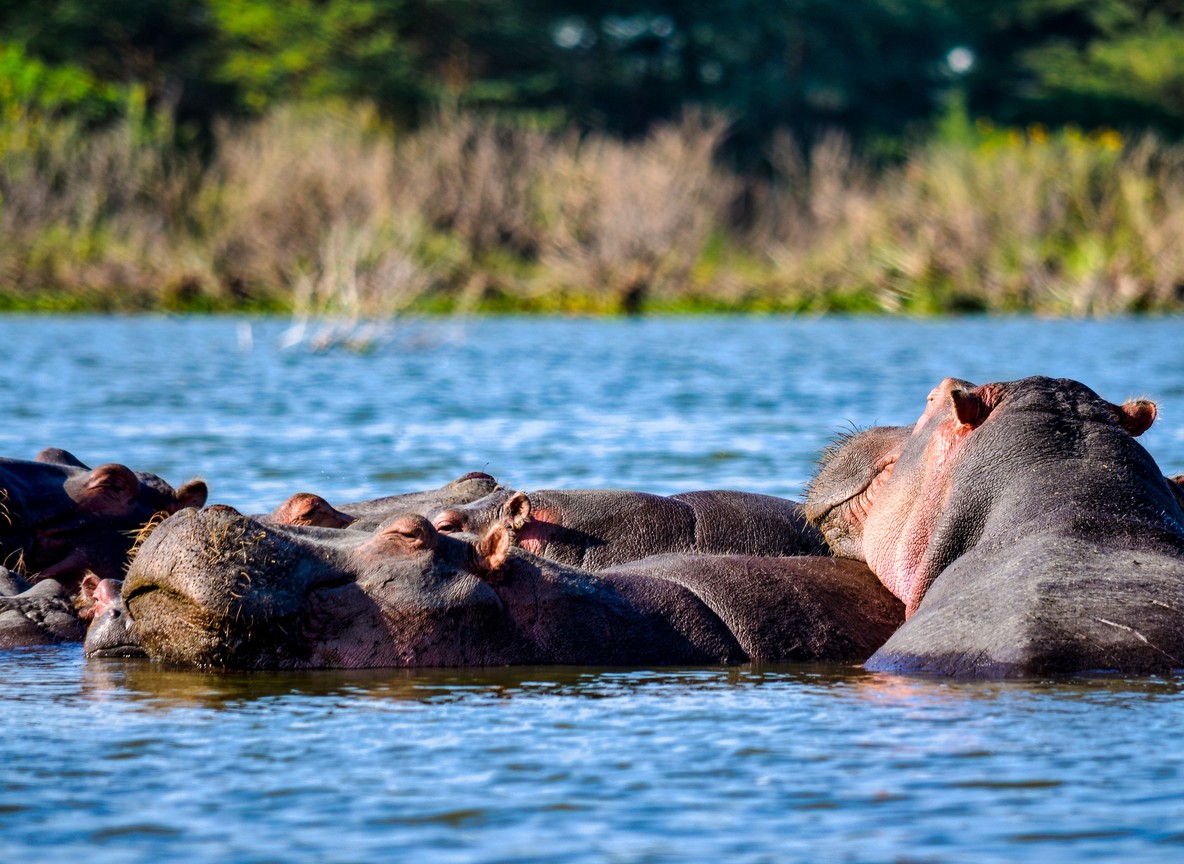
The hippos. The pods at Baringo are habituated to boats. A morning or late afternoon boat safari brings you within metres of animals that are vocal, active, and easy to photograph in the shallower bays near the papyrus beds. The hippo density here is unmatched on any freshwater lake in Africa.
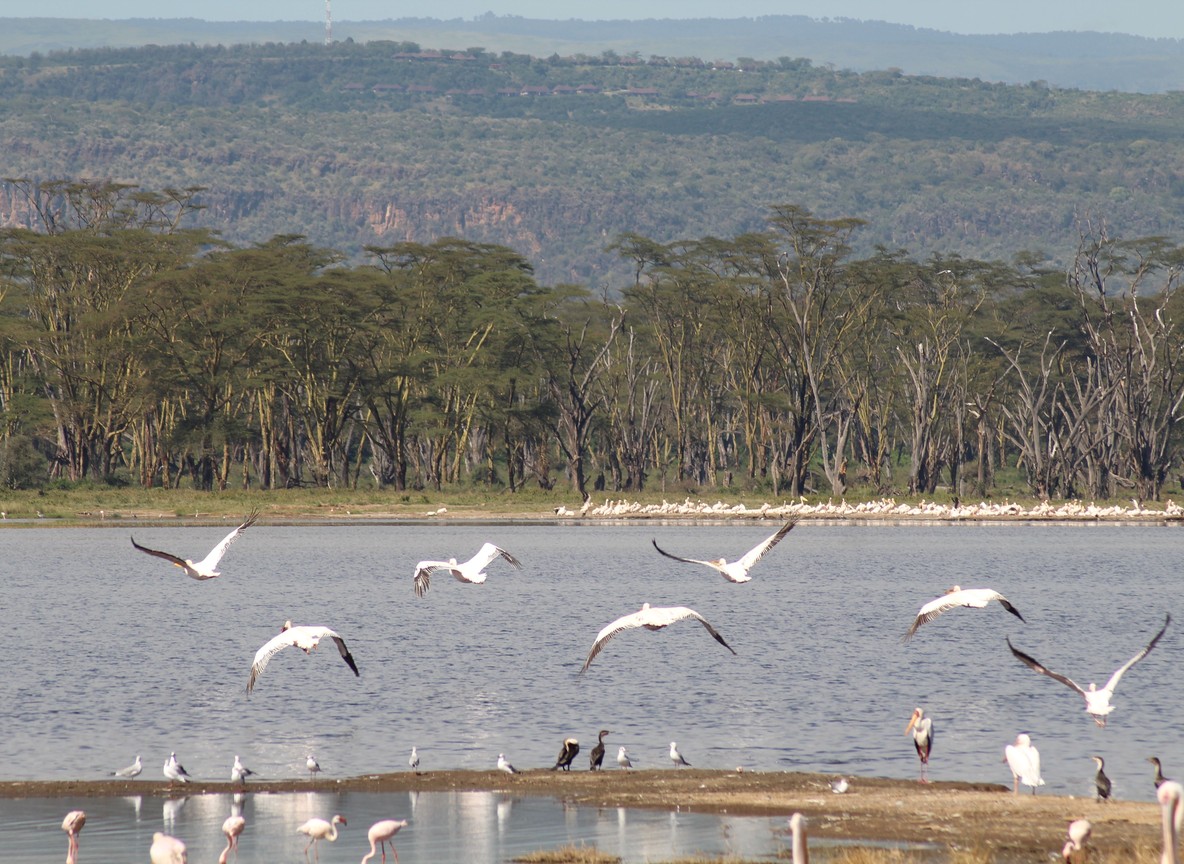
The boat-level birding. A dawn pass on the water covers Goliath herons, African fish eagles, giant kingfishers, pied kingfishers, and malachite kingfishers in a single run along the papyrus edge. Add the October to April window when Palearctic migrants arrive, and the water surface becomes one of the finest birding spots in East Africa.
The escarpment species. The Tugen Hills cliffs hold birds you do not find at any Big Five park. Verreaux’s eagle is one of the most striking raptors in Africa and one of the most reliably seen here. Hemprich’s hornbill and bristle-crowned starling round out a target list that draws specialist birders from across the continent.
Lake Baringo Birds: What the 470 Species Actually Means
The UK’s total national bird list is around 600 species. Baringo’s 470+ at a single lake catchment puts that figure in context.
| Habitat | Key species |
|---|---|
| Open water | African fish eagle, Goliath heron, great white pelican, grey heron |
| Papyrus swamps | Papyrus yellow warbler (near-endemic), African jacana, lesser moorhen |
| Acacia scrub | D’Arnaud’s barbet, white-bellied go-away-bird, grey-backed camaroptera |
| Rocky escarpments | Verreaux’s eagle, Hemprich’s hornbill, bristle-crowned starling |
| Shoreline (migrants) | Sandpipers, little stint, ruff (October to April) |
The papyrus yellow warbler deserves a separate mention. It is a papyrus specialist found at only a handful of sites across Africa. Baringo is one of the most reliable. For birders building a lifetime list, this alone justifies the trip.
African fish eagles are present in large numbers. Their call — one of the definitive sounds of sub-Saharan Africa — carries across the water well before you see the bird. On a morning boat, you will hear and then photograph them plunge-diving for fish at close range against a papyrus backdrop. This is the image that defines Baringo for most visitors.
The Boat Safari Experience
No Baringo visit is complete without time on the water. Local boatmen and conservancy-affiliated guides run morning and late afternoon trips from the main camp shorelines.
A standard morning boat safari covers 1.5 to 2 hours and typically includes:
- Approach to hippo pods in the northern shallow bays (20 to 50 animals visible at once in good conditions)
- Fish eagle perches along the papyrus edge with active fishing behaviour
- Breeding cormorant and darter colonies on the rocky western islands
- African skimmer colonies on sandbanks (seasonal — peak March to May)
- Crocodile basking sites along the eastern shore
Water levels at Baringo fluctuate with rainfall patterns in the Tugen Hills catchment. The lake has risen and receded noticeably in recent years. Camp managers will brief you on current conditions and which sections are most productive — this is one of the reasons staying on the lakeshore rather than in Baringo town matters.
The best time on the water is the first 90 minutes of daylight. Hippos are active on the surface, light is low and warm, and the lake surface before the afternoon wind picks up is glass-calm. Afternoon departures at 16:00-17:00 catch the end-of-day activity window.
When to Visit Lake Baringo
Baringo is productive year-round but each season has a distinct character.
January to March: Dry conditions, lower water levels concentrating animals near the shore. Palearctic migrants still present through March. Good road access throughout.
April to May: Long rains season. Lake level rises. Some camp access tracks flood. Birding quality drops slightly as vegetation thickens, but breeding activity peaks across many species. Fewer visitors, quieter camps.
June to October: Prime season. Clear skies, stable temperatures, reliable road conditions. This is when the combination with Samburu (3 hours north) and Bogoria (30 minutes south) makes the most practical sense.
October to November: Short rains arrive alongside the peak migrant window. Serious birders rate October and November at Baringo as underrated. The combination of resident species and fresh arrivals from Europe and Central Asia pushes the daily list high.
Combining Baringo with a Kenya Circuit
Baringo works best as a node in a northern route rather than a standalone destination for most travellers. Two combinations stand out.
The Rift Valley circuit: Nairobi to Lake Nakuru (flamingos, rhinos) to Lake Bogoria (greater flamingos, hot springs geysers) to Lake Baringo (birding, hippos, escarpment species) to Samburu National Reserve (Samburu Special Five), returning to Nairobi or continuing to the Masai Mara.
This seven to ten day route is one of the most species-diverse wildlife circuits in Kenya and one of the least congested. You cover flamingos, rhinos, hippos, 470+ bird species, Grevy’s zebra, and reticulated giraffe without once dealing with a vehicle queue.
The birding circuit: Lake Baringo combined with Lake Bogoria and Nakuru gives you three lake ecosystems in two to three days. The alkaline-to-freshwater contrast is dramatic and the cumulative species list is extraordinary.
Lake Bogoria is worth building in if the schedule allows. Its hot springs are visually spectacular and greater flamingo numbers here often rival anything at Nakuru in a good year.
Accommodation at Lake Baringo
The best camps sit on the western shore with views toward the Tugen Hills. The choice of camp significantly affects the experience because shoreline access matters for early morning boat departures.
Island Camp is the most atmospheric option in the area, situated on one of the lake’s islands and accessible only by boat. Mornings here start with African fish eagles calling from trees directly outside your tent. The isolation is genuine — staying on the island removes you from road traffic and ambient noise entirely.
Roberts’ Camp on the western lakeshore is one of Kenya’s longest-established birding camps and provides direct beach access with a comfortable mid-range setup. It has a loyal following among birding travellers who return season after season.
For a two-night stay, a comfortable shoreline camp is the right call. For four or more nights — which is what a serious birding visit to Baringo warrants — Island Camp’s habitat access and isolation justify the premium.
Practical Travel Notes
Getting there: Baringo is 260 kilometres northwest of Nairobi via the A104 highway. Driving time is 3.5 to 4 hours. The road is sealed throughout. Kampi ya Samaki on the western lakeshore is the main access point for accommodation.
No commercial flights serve Baringo directly. Private charter operators fly into a small airstrip on the western shore — a practical option for travellers combining Baringo with a wider northern Kenya circuit who want to avoid covering the same road twice.
Money: Baringo town has ATMs that are unreliable on weekends and during heavy usage periods. Arrive with enough cash for incidentals. Most camp stays can be settled with cards for the main accommodation payment.
Health: The lake’s mosquito population is significant, particularly at sunset and in the wet season. Malaria prophylaxis is strongly recommended. All reputable camps provide nets and most have standing protocol for guests staying near the water.
Mobile coverage: Safaricom has service at the main camps. The Tugen Hills escarpment and more remote sections of the eastern shore have no reliable signal.
Explorer Notes
A few things that improve a Baringo visit:
Go to the Tugen Hills at least once. Most visitors stay focused on the lake but the cliffs and rocky faces above it are where the specialist escarpment species live. A guide with local knowledge of the cliff sites makes the difference between a general bird list and sightings of Verreaux’s eagle and Hemprich’s hornbill.
The hippo encounter at Baringo is more intimate than anything at Naivasha or on most East African river safaris. The boats can approach within a few metres in calm conditions. A quality telephoto lens is less critical here than almost any other hippo destination because the closeness compensates for focal length.
Ask camp staff about current crocodile activity on the eastern shore. Baringo crocodiles are large and the east-shore basking sites can be extraordinary at the right tide of day.
Conclusion
Lake Baringo is the kind of destination that rewards the traveller who goes slightly beyond the standard Kenya circuit. It is not a difficult trip — the road is paved, the camps are comfortable, and the logistics are simple. What it asks is that you be curious enough to turn left when everyone else turns right.
The 470 bird species will not all appear on a single visit. But enough will to make any birder’s list impressive, and the hippos at dawn will make any photographer’s day.
Next Steps
For the full Rift Valley circuit context, see the Lake Nakuru safari guide and the Lake Naivasha safari guide for how Baringo fits alongside Kenya’s other Rift Valley destinations.
For northern Kenya route planning that combines Baringo with Samburu, trunktrailssafaris.com covers the full circuit logistics.
Every trip described here can be tailored: dates, budget, camps, and pace built around you.
Get a Personalised Safari