A Tsavo East day trip Diani Beach plan usually begins with a simple question: is one day enough to make leaving the coast worthwhile? The honest answer is that a day trip can absolutely deliver a real wildlife experience, but it cannot replicate the deeper rhythm of a proper overnight safari. Readers who understand both sides of that equation usually make better decisions and enjoy the route more.
This guide looks at what a Tsavo East day trip from Diani can realistically offer, what it inevitably misses, why the park is still worth the drive, and how readers should think about the tradeoff between convenience and immersion. Readers who want the broader coast-to-bush planning picture can pair it with the Diani Beach safari overview.
Why Readers Consider This Route
The appeal is obvious. Diani Beach sits close enough to Tsavo that a one-day inland safari is logistically possible. That makes the route attractive to readers who:
- are based on the coast
- have limited time
- want one meaningful wildlife contrast during a beach stay
- are unsure whether they want to commit to a full overnight bush chapter
This is why the route remains popular. It offers access without demanding a complete restructuring of the trip. Readers deciding whether one day is enough often compare this route directly with the 2-day Tsavo East safari guide and the 3-day Tsavo East and West itinerary.
What Makes Tsavo East Worth the Drive
Even on a short outing, Tsavo East is not a token safari landscape. The park matters because it introduces one of Kenya’s strongest inland visual identities: red-earth open country, long-distance visibility, and wildlife that often feels spread across a far broader scale than many first-time readers expect.
Tsavo safari from Diani Beach works because Tsavo offers:
- a dramatic shift from coast to bush
- strong elephant associations
- a landscape that feels immediately wild
- enough ecological identity to make even a short visit memorable
Readers do not need several days to feel the force of that contrast.
What the Day Trip Actually Gives You
A Diani to Tsavo day trip delivers a compressed but genuine safari chapter. The route usually means early departure, a substantial inland drive, a focused wildlife window, and return to the coast by evening. This is not a half-hour novelty excursion. It is a serious day of movement and wildlife viewing.
What readers often gain from the day trip:
- a first close encounter with Tsavo’s red-earth environment
- the possibility of elephant and broader plains-game sightings
- a strong sense of inland Kenya’s scale
- a decisive contrast to the beach chapter
For many readers, that is enough to make the outing feel worthwhile.
The Red Elephants Question
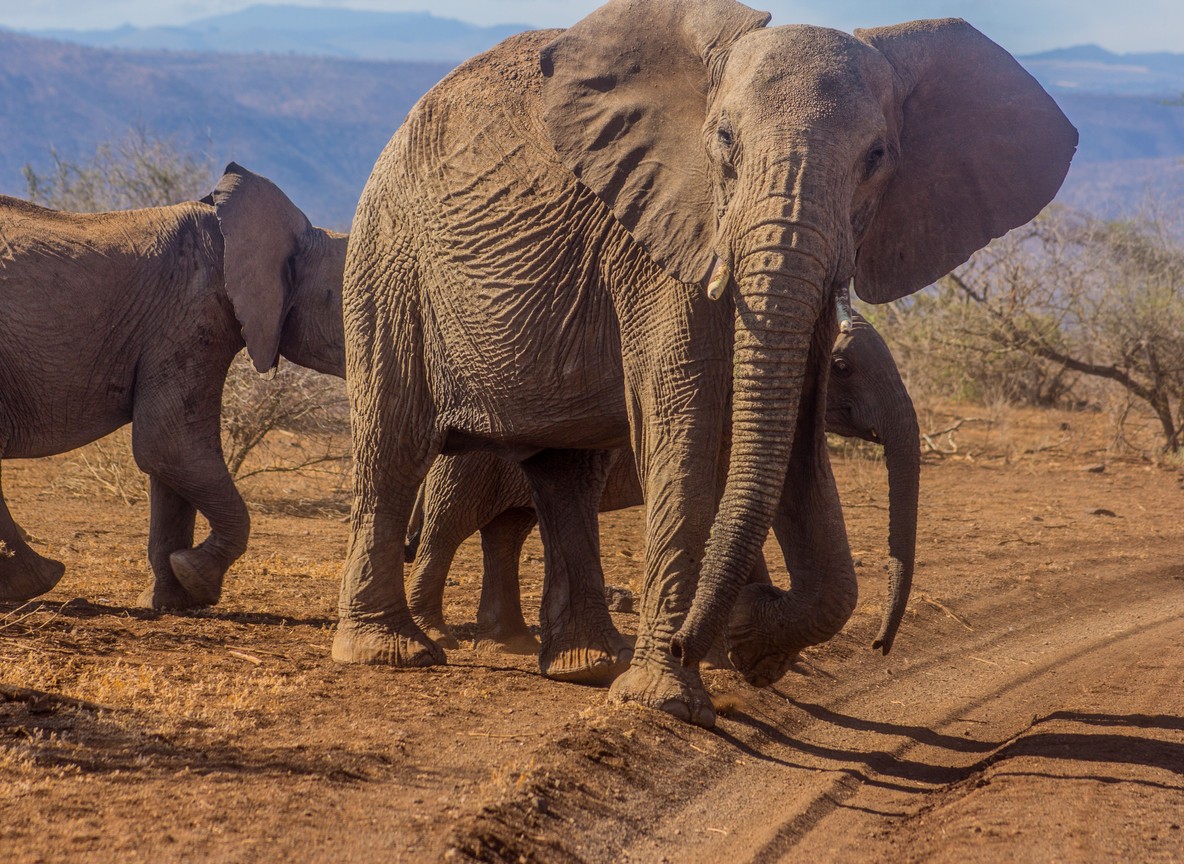
Red elephants Tsavo is one of the main reasons the park stays vivid in travel imagination. The image matters because it ties animal behavior directly to landscape. The elephants take on the color of the iron-rich soil through dusting and rolling, which makes the relationship between wildlife and terrain visible at a glance.
Readers often remember this because it turns the park into something more specific than just another safari destination. Tsavo’s color becomes part of the animal story.
What a Day Trip Cannot Give You
This is the part that matters most in planning. A one day Tsavo safari can be excellent, but it misses the two most important wildlife windows: the earliest dawn period and the late-evening period. Those are often the times when the bush feels most alive, temperatures are lower, and predator movement or general wildlife activity can be more rewarding.
This does not make the day trip a bad idea. It simply defines its ceiling.
Readers should understand that a day trip usually means:
- no full dawn game-drive rhythm inside the park
- no evening slow-down into sunset wildlife movement
- less time to let the landscape unfold
- a more compressed encounter with the park’s atmosphere
The route still works. It just works as an introduction, not as a full version of Tsavo.
Why the Tradeoff Can Still Be Worth It
For readers based at the coast, the real comparison is often not between a day trip and a perfect multi-night safari. It is between a day trip and no inland wildlife chapter at all. Seen that way, the route becomes easier to evaluate.
The day trip is often worth it when:
- time is genuinely limited
- the goal is contrast rather than full immersion
- readers want one strong inland wildlife memory during a coast stay
- the trip would otherwise remain entirely beach-based
That is a legitimate use of the route. Not every good travel decision has to maximize depth at all costs.
Day Trip Versus Overnight
The most useful planning question is not “Is the day trip good?” but “What kind of experience do I actually want?”
Day Trip
Best for readers who want:
- convenience
- one inland contrast chapter
- a strong but compressed wildlife outing
Overnight
Best for readers who want:
- dawn and dusk wildlife rhythm
- more time in the landscape
- a less rushed relationship with the park
- a safari that feels like a true inland phase rather than an excursion
This comparison matters because both formats can be valid, but they answer different travel needs.
Why the Route Works Emotionally
The day trip has unusual emotional force because it starts on the coast and ends back there. Readers leave the ocean behind before sunrise, move inland into dry-country wildlife territory, then return to reef-and-palm calm by evening. That single-day arc is dramatic enough to make the outing feel larger than its duration.
This is one reason the route remains so popular even with its limitations. It compresses two very different Kenyas into one day.
How to Think About the Day Honestly
The best way to approach this route is without pretending it does everything. Readers should not oversell it to themselves as a complete Tsavo experience. It is better understood as:
- a real wildlife outing
- a strong coast-to-bush contrast
- a time-efficient introduction to Tsavo
- not a replacement for an overnight stay
That honest framing usually leads to greater satisfaction. The trip can then succeed on the terms it actually offers.
Reader Decision Rule
If the reader’s priority is simply to experience the inland shift and see whether Tsavo belongs in a future longer safari, the day trip is a strong option. If the priority is to feel the full bush rhythm, maximize dawn-and-dusk conditions, or let the park’s scale work over time, then an overnight stay is the better answer.
The route is therefore less a yes-or-no question than a fit question.
Readers who need the wider ecological frame for the route can use the full Tsavo parks guide instead of treating this day trip as the whole Tsavo story.
Explorer Notes
- A Tsavo East day trip can be genuinely worthwhile without pretending to be a full safari replacement.
- The coast-to-bush contrast is part of what gives the route its force.
- Tsavo’s red-earth identity makes even a short visit visually memorable.
- The main sacrifice is the dawn-and-dusk wildlife rhythm.
- The right choice depends on whether the reader wants convenience or deeper immersion.
Frequently Asked Questions
Is a Tsavo East day trip from Diani Beach really possible?
Yes. It is a long day, but the route is workable for readers based on the south coast.
Is one day enough to make the safari worthwhile?
Often yes, if the goal is a strong wildlife contrast and introduction to Tsavo rather than a complete bush stay.
What do readers miss by not staying overnight?
Mainly the dawn and late-evening wildlife windows, along with a fuller sense of the park’s atmosphere.
Why are Tsavo elephants described as red?
Because they dust themselves in the park’s iron-rich soil, which colors their skin and shapes the park’s most famous visual identity.
When should readers choose an overnight instead?
When they want more immersion, more wildlife timing flexibility, and a less compressed inland chapter.
Conclusion
A Tsavo East day trip Diani Beach plan is worth considering because it gives readers a real, time-efficient way to leave the coast and step into one of Kenya’s most distinctive wildlife landscapes. Tsavo’s scale, elephants, and red-earth atmosphere come through even in a compressed visit.
The key is honesty. A day trip is not the whole bush story, but it can still be a strong one-day chapter inside a wider coast stay. Readers who understand both its value and its limits usually come away satisfied.
If this guide has you ready to travel, a safari specialist can handle the route, camps, and logistics end to end.
Want to Book a Tour With Us?