Nairobi Kenya is one of those cities that is easy to underestimate from a distance. Readers often approach it as an airport, a safari gateway, or a quick prelude to somewhere else. Once they spend real time in it, that flattening begins to break down. Nairobi is not only a transit point into national parks and coast routes. It is a capital with its own pace, contradictions, cultural depth, green space, and surprisingly strong wildlife presence.

This guide reads Nairobi as a city rather than a waiting room. It looks at where it sits geographically, what makes it distinct within East Africa, which experiences matter most, and why the city can sharpen a reader’s sense of Kenya before the journey widens into other landscapes.
Where Nairobi Sits
Nairobi is the capital of Kenya and one of East Africa’s most influential urban centers. Its location in the central highlands gives it a cooler feel than many first-time readers expect from an equatorial city. That high-altitude setting matters. It shapes the climate, the light, the urban vegetation, and the city’s sense of physical openness.
The city also sits at an unusual intersection of functions. It is at once:
- a national capital
- a business and diplomatic hub
- a wildlife gateway
- a city with residential, historical, and green districts that feel very different from one another
This combination is one reason Nairobi resists simple description.
Why Nairobi Feels Distinct
Many African capitals are discussed through commerce, politics, or infrastructure alone. Nairobi is harder to reduce in that way because wildlife and green space remain unusually close to the city’s identity. Readers do not need to travel far from urban districts before the landscape starts changing tone.
That is part of why the city often surprises visitors. It can move quickly between:
- heavy traffic and business density
- leafy suburban calm
- conservation-oriented attractions
- expansive parkland on the edge of the capital
The result is a city that feels less singular than many outsiders expect. It is not one mood. It is several overlapping ones.
Wildlife in a Capital City
The most internationally famous aspect of Nairobi is that it places wildlife unusually close to urban life. Readers usually encounter this first through things to do in Nairobi Kenya lists, but the deeper point is more structural: Nairobi is one of the few capitals where wildlife is not only a symbolic national story but a visible part of the city’s travel logic.
Nairobi National Park
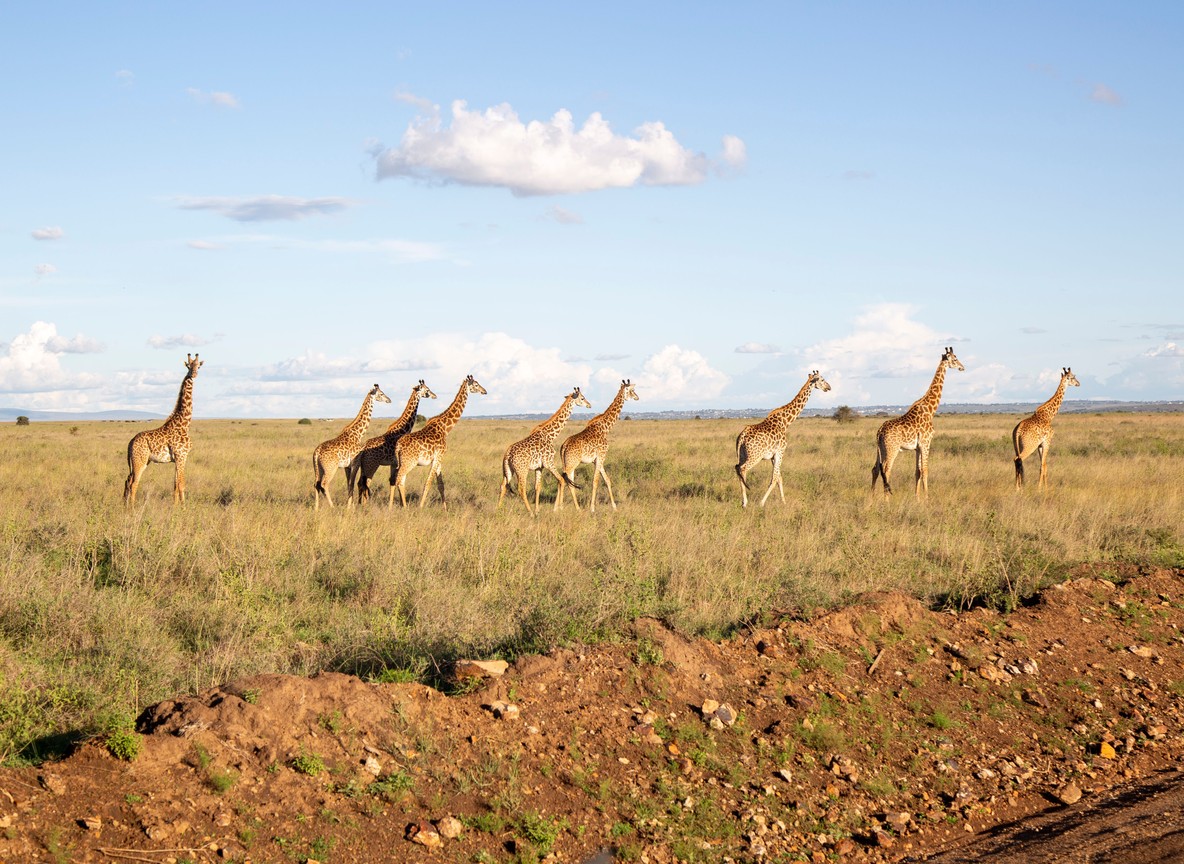
Nairobi National Park is the clearest expression of that identity. The park gives readers a version of Kenya’s wildlife story without requiring a full safari departure from the capital. The skyline and the grassland exist in the same visual frame, and that juxtaposition explains a great deal about why Nairobi feels globally distinctive. Readers planning that visit usually benefit from the separate Nairobi National Park Safari guide.
Conservation Stops
The city also supports close-range conservation experiences through places such as the Nairobi Giraffe Centre and the David Sheldrick elephant orphanage. These are not substitutes for larger ecosystems, but they do something different. They make conservation feel immediate and legible before readers head deeper into the country.
This is why Nairobi can be such a strong opening chapter. It introduces wildlife through access, context, and scale.
Neighborhoods and Urban Contrast
One reason a proper Nairobi travel guide matters is that the city cannot be understood through one district. Readers moving only through airport corridors or one hotel zone do not really see Nairobi. Different areas reveal different versions of it.
Karen and the Southern Edge
Karen often feels greener, slower, and more spacious than first-time visitors expect from a capital city. It is where many of the city’s best-known conservation and heritage attractions cluster, which makes it one of the easiest areas for readers to build a coherent day around.
Westlands and Commercial Nairobi
Westlands represents a more commercial and contemporary city rhythm. Restaurants, hotels, nightlife, and business movement make it one of the most recognizably modern urban zones in Nairobi’s visitor geography.
Central Nairobi
Central Nairobi matters because it holds the city’s institutional and historical core. It is where readers begin to understand the capital as something built over time rather than assembled only for tourism. Government buildings, older city fabric, transit pressure, and street-level intensity all give the center a different kind of narrative value.
Places That Give the City Shape
Places to visit in Nairobi Kenya are most useful when they are treated not as isolated attractions but as different ways of reading the city.
Important examples include:
- Nairobi National Park for the wildlife-city edge
- the Giraffe Centre for accessible conservation
- the Sheldrick nursery for species recovery storytelling
- Karura Forest for urban nature and movement
- the Karen Blixen Museum for literary and colonial-era context
- central-city landmarks for institutional and historical orientation
Readers do not need to do all of these to understand Nairobi. They do, however, help reveal its range.
Karura and Urban Green Space
One of the easiest ways to misread Nairobi is to imagine it as all traffic and built density. Karura Forest corrects that quickly. The Karura Forest guide shows how urban Nairobi also contains room for walking, cycling, birdlife, tree cover, and a slower pace that feels far removed from the city’s busiest roads.
That matters because Karura is not simply a park. It is part of the explanation for why Nairobi can feel breathable even while functioning as a major capital.
History, Memory, and the City
Nairobi is not only a modern gateway city. It also carries layered histories that readers often begin to notice through museums, architecture, memorial spaces, and neighborhood patterns. Colonial railway origins, independence-era memory, postcolonial growth, and present-day global ambition all sit inside the same urban frame.
This makes the city especially useful for readers who want more than activity lists. Nairobi can be read as a place where national history and future-facing energy coexist, sometimes comfortably and sometimes not.
Food, Rhythm, and Everyday City Life
The city’s appeal also lies in ordinary rhythm. Cafes, roadside stalls, neighborhood markets, hotel breakfasts, traffic windows, and evening meeting points all shape the reader’s sense of Nairobi far more than a single landmark can.
This is why a trip to Nairobi often becomes memorable through smaller things:
- coffee culture and restaurant variety
- the contrast between hectic roads and calm compounds
- the way weather and light soften the city at altitude
- the sense that people are moving through several Nairobis at once
Readers who give the city time usually find that its texture matters as much as its attractions.
How Nairobi Fits Into a Wider Kenya Journey
Nairobi also matters because it organizes movement through the rest of the country. It is the hinge between city and safari, between international arrival and domestic routing, and between first impressions and larger landscapes.
That role works in several directions:
- as a beginning point before a safari
- as a return point where readers re-enter urban Kenya after the bush
- as a short standalone city break
- as a place where conservation, history, and urban life can all be experienced before the trip expands elsewhere
Readers who spend time in Nairobi often understand the rest of Kenya differently afterward. Readers with only a short stop often start with the dedicated Nairobi layover guide, then decide which city chapter fits their timing.
Explorer Notes
- Nairobi is strongest when treated as a destination, not just a transfer city.
- Wildlife is part of the city story, but not the whole story.
- Neighborhood contrast matters more than many first-time visitors expect.
- Karura, Karen, and the city center each reveal different versions of Nairobi.
- The capital works best as both gateway and subject in its own right.
Frequently Asked Questions
Is Nairobi only worth visiting as a safari gateway?
No. It works as a city destination in its own right, especially for readers interested in urban wildlife, conservation, history, and neighborhood contrast.
What makes Nairobi different from many other capitals?
Its unusual combination of wildlife access, highland climate, diplomatic importance, and green space gives it a very distinct urban identity.
Which area is easiest for first-time visitors to understand?
Karen is often one of the easiest because it combines conservation sites, heritage stops, and a calmer neighborhood feel.
Does Nairobi have meaningful green space?
Yes. Karura Forest and Nairobi National Park are two of the clearest examples, though the city’s greener character appears in other districts too.
How many days should readers give Nairobi?
Usually at least one to three days if they want to understand more than the airport-hotel-safari pattern.
Conclusion
Nairobi Kenya is worth reading as a full destination because it contains more than one version of itself. It is a capital, a wildlife threshold, a historical city, a green city in parts, and a practical gateway into the rest of the country. Readers who rush through it often leave with only its logistical face. Readers who stay longer begin to see its structure.
That is what gives Nairobi staying power. It does not ask to be admired in one simple way. It asks to be understood through contrast: park and skyline, suburb and center, conservation and commerce, memory and motion.
Have questions about this itinerary or destination? Get answers from a safari specialist before you commit.
Inquire More